Published
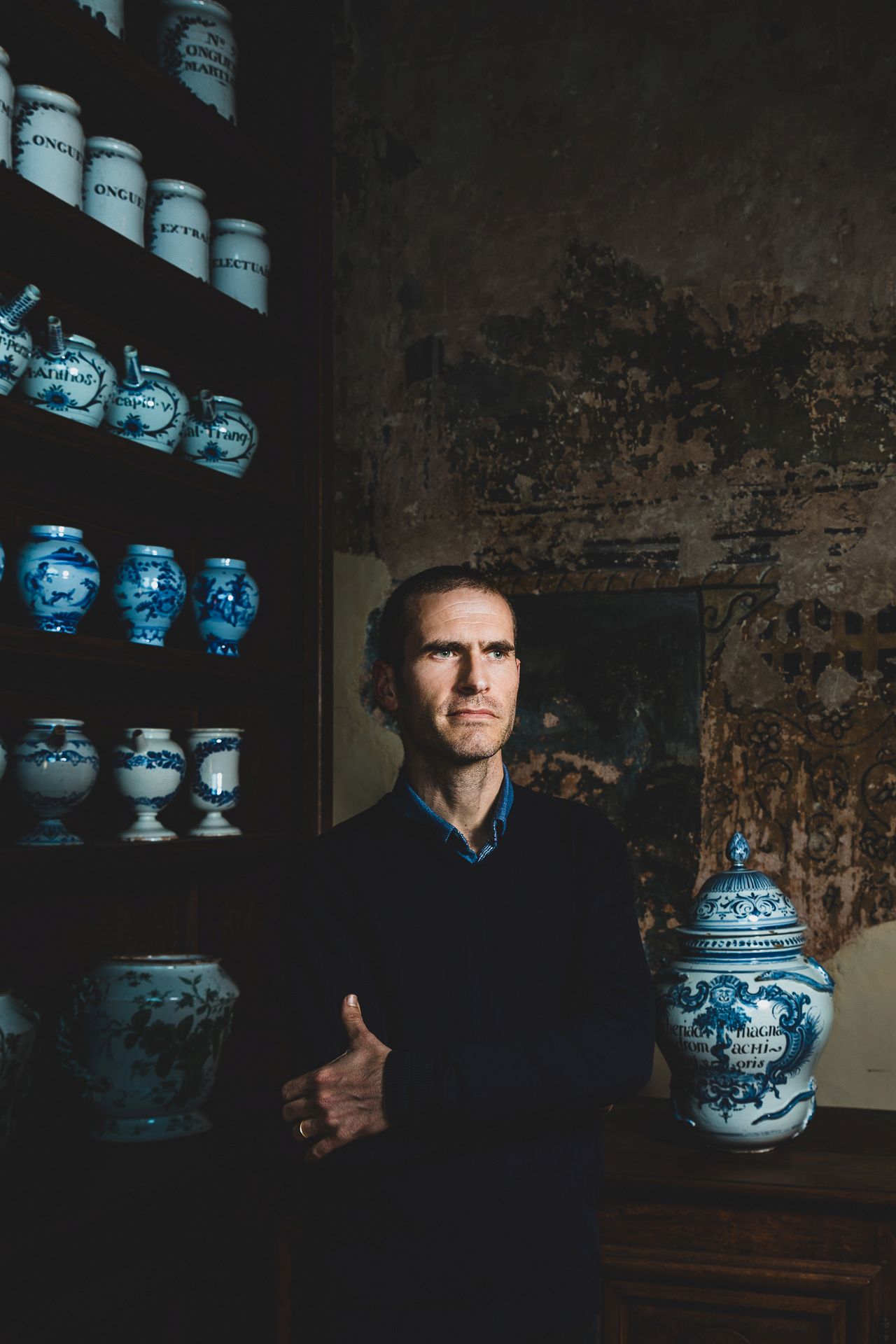
Name: Melaine Dalibert
Occupation: Composer, Pianist
Current Release: Melaine Dalibert teams up with David Sylvian for Vermilion Hours, released as part of the Mind Travels Series.
Recommendations for Rennes, France: The Oniris gallery, with its very precise artistic choices
Topics I am passionate about but rarely get to talk about: Running. I can't imagine a day without getting off the ground for a few strides.
Cinema, too.
If you enjoyed these thoughts by Melaine Dalibert and would like to stay up to date with his work, visit him on Facebook.
For a deeper dive, read our earlier Melaine Dalibert interview.
Where does the impulse to create something come from for you? What role do often-quoted sources of inspiration like dreams, other forms of art, personal relationships, politics etc play?
The creative spark is a very mysterious phenomenon.
Personally, I feel in a state of constant alertness and searching. Sometimes, unexpectedly, ideas become clear, and their formalization can be accomplished. I sometimes dream of music, without being able to grasp it upon waking.
I think it's safe to say that what drives me to compose is the need to find a solution to a musical enigma. Politics has nothing to do with it.
The visual arts, which I really appreciate, can be a stimulus for writing, but once you're working, it's all about a very specific technique, unique to music.
For you to get started, do there need to be concrete ideas – or what some have called a 'visualisation' of the finished work? What does the balance between planning and chance look like for you?
Yes, I need to have a preconceived idea of the music before I start writing it. Especially with my algorithmic compositions, which are sort of "character studies" whose behaviour must be precisely determined, a bit like characters in a novel.
But in its development, the music inevitably imposes its natural trajectory on us, and eventually escapes our control.
Is there a preparation phase for your process? Do you require your tools to be laid out in a particular way, for example, do you need to do 'research' or create 'early versions'?
There are no rules for me.
Sometimes my writing can be very fluid and effective. Other times, drafts remain incubated for several months or years before reaching fruition.
Do you have certain rituals to get you into the right mindset for creating? What role do certain foods or stimulants like coffee, lighting, scents, exercise or reading poetry play?
I have a fairly orderly life, organized around two imperatives: one hour of running and three hours of piano practice (and therefore reading repertoire) per day.
Coffee also occupies an important place in my life ;)
For your latest album Vermilion Hours, what did you start with? If there were conceptual considerations, what were they?
Vermilion Hours, was born from a desire to deepen my collaboration with David Sylvian through the electronic processing of two algorithmic piano compositions.
Tell me a bit about the way the material on Vermilion Hours developed and gradually took its final form, please.
In my algorithmic compositions, the development of the work is entirely subject to a generative program.
But what interests me is submitting this rigorous writing to an organic instrumental gesture, which reminds us that sensory experience is the purpose of music.
Many writers have claimed that as soon as they enter into the process, certain aspects of the narrative are out of their hands. Do you like to keep strict control or is there a sense of following things where they lead you?
I agree with this: the practice of writing has always led me to this observation: Music imposes its own direction and conditions our choices.
We create the conditions and constraints for it to find its way, but we always end up somewhere we hadn't fully imagined.
There are many descriptions of the creative state. How would you describe it for you personally? Is there an element of spirituality to what you do?
I see the creative state as a moment of deep sincerity.
If you don't feel the inner need to complete a piece, then there's no point in persisting.
Once a piece is finished, how important is it for you to let it lie and evaluate it later on? How much improvement and refinement do you personally allow until you're satisfied with a piece? What does this process look like in practise?
I don't have a set protocol for this. I have a different and evolving relationship with each of my productions, and I try to maintain a little detachment from it.
There are days when we want to forget certain pieces, and then they come back to us and we consider them again ... sometimes we rework them …
How do you think the meaning, or effect of an individual piece is enhanced, clarified or possibly contrasted by the EPs, or albums it is part of? Does each piece, for example, need to be consistent with the larger whole?
While I appreciate the idea that each track on an album can stand on its own, I sometimes see certain compositions as breathing spaces, interstices between two larger pieces.
They are often "objets trouvés" finding their meaning in the pieces surrounding them, and their value in their coexistence.
What's your take on the role and importance of production, including mixing and mastering for you personally? In terms of what they contribute to a song, what is the balance between the composition and the arrangement (performance)?
I attach particular importance and care to the production of the recordings I make: I actively participate in the mixing and mastering sessions for my albums.
But I don't see this work as a substitute for or salvage a weak composition: the writing must be accurate and precise; post-production is a way to enhance and reveal it.
Music and the accompanying artwork are often closely related. Can you talk about this a little bit for your current project and the relationship that images and sounds have for you in general?
What I would avoid above all is an illustrative approach to the relationship between artwork and musical subject matter. The image should not "narrate" the music, but rather stimulate the listener's willingness to enter into the music.
The ambiguity of the image is an important criterion in the selection of my covers.
After finishing a piece or album and releasing something into the world, there can be a sense of emptiness. Can you relate to this – and how do you return to the state of creativity after experiencing it?
Generally, I arrange the conditions so that a project is still underway while a previous one is about to be completed. That's how I move forward.
I would love to know a little about the feedback you've received from listeners or critics about what they thought some of your songs are about or the impact it had on them – have there been “misunderstandings” or did you perhaps even gain new “insights?”
I am obviously my own first critic, and I make my choices only from within myself.
My work can take different directions, exploring voices that some would consider contradictory; this can create a certain confusion, because it has become a habit to categorize artists, to reduce them to a certain expression.
To me, this is confusing aesthetics and technique.
Creativity can reach many different corners of our lives. Do you personally feel as though writing a piece of music is inherently different from something like making a great cup of coffee? What do you express through music that you couldn't or wouldn't in more 'mundane' tasks?
There is a craft element in every artistic act, found in a sum of small everyday gestures. It's even considerable!
But it is accompanied by a very specific motivation, one that doesn't seek to satisfy a utilitarian need. It's a quest, step by step, that consists of refining our own technique, in line with our emotional sensitivity.