Published
Name: Mess Esque
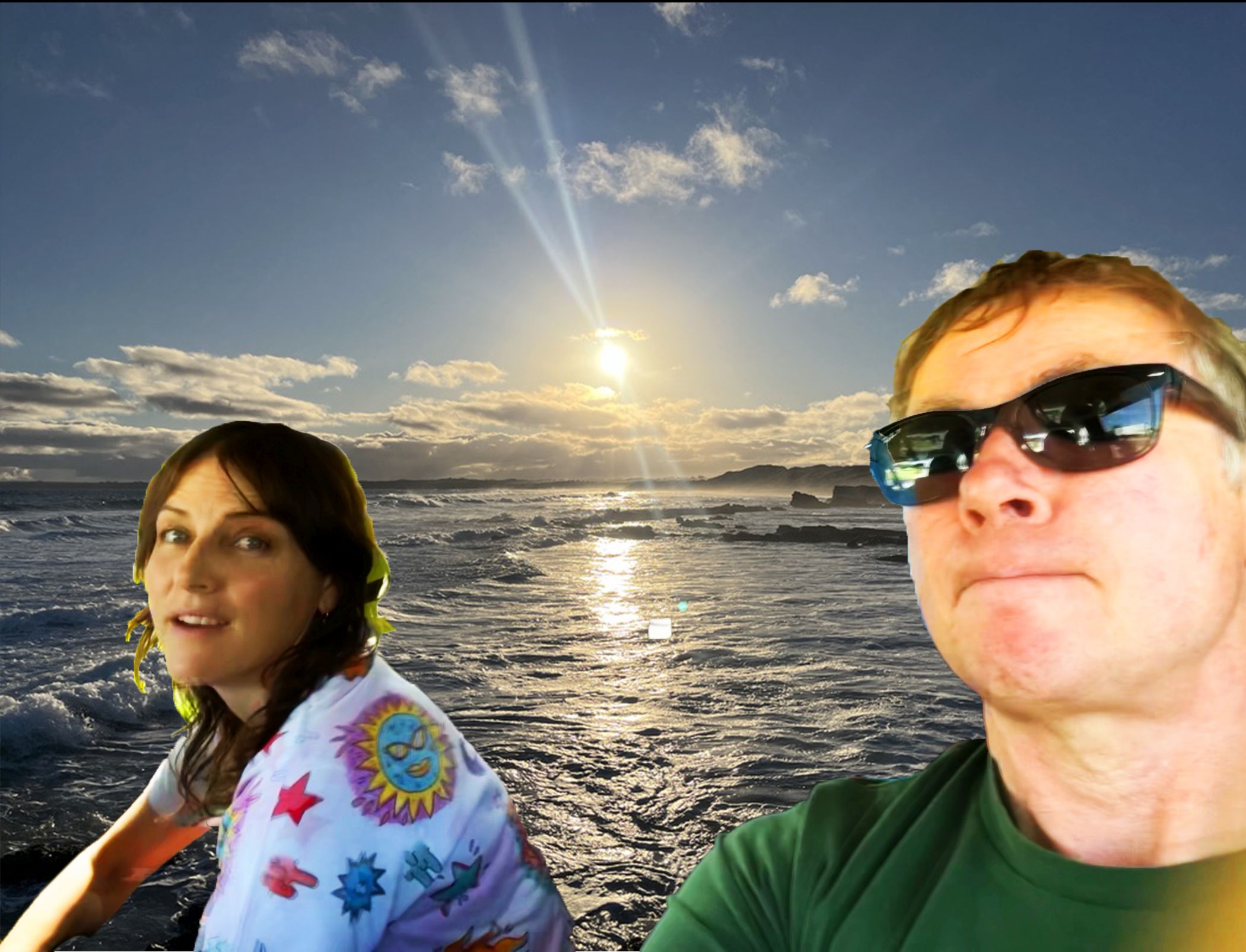
Members: Helen Franzmann, Mick Turner
Nationality: Australian
Current release: Mess Esque's new album Jay Marie, Comfort Me is out via Drag City.
Global Recommendations:
Mick: Melbourne, Australia where I am from and live now, for whatever reason is a magic place for music especially alternate and independent grass roots music, and I love it deeply for that reason. When I was younger it gave me the space and opportunity to make and celebrate music and it hasn't changed, only gotten better. Melbourne is Australia's music Mecca. Rich and diverse and awesome.
Helen: I am from Brisbane. There is a tropical wildness to my city, nature is winning. There is a huge and deep body of water “The Enoggera Reservoir” where I like to swim. When we toured with Big Thief in Australia we all swam there in the evening light. It was a nice time. If you visit, be sure to climb Payne Rd to the back entrance, walk down the hill, and swim out to the centre. At sunset is best!
If you enjoyed this Mess Esque interview and would like to know more about the duo and their music, visit them on Instagram, and Facebook.
Where does the impulse to create something come from for you? What role do often-quoted sources of inspiration like dreams, other forms of art, personal relationships, politics, etc. play?
Mick: I'm sure it's an evolutionary thing, socially and biologically, peoples who were drawn to be creative and cultures that celebrated creativity, communication and expression thrived.
Personally all I know is that I wake up in the morning and I want to make things.
Helen: They all play a part: dreams, curiosity, other forms of art, working at the hospital, childhood memories - particular feelings and frustrations, physical surroundings, politics - there’s a kind of undercurrent to everything that rises up when making.
I also just want to improve; this helps keep me at it.
For you to get started, do there need to be concrete ideas – or what some have called a 'visualisation' of the finished work? What does the balance between planning and chance look like for you?
Mick: I might have a broad idea of an angle to approach a body of work, but the realisation comes with the process.
Helen: Lyrically I plan and form, but melodies feel more left to chance and often land in a way that can surprise, which I enjoy.
Is there a preparation phase for your process? Do you require your tools to be laid out in a particular way? For example, do you need to do 'research' or create 'early versions'?
Mick: I have my studio set up ready to record most of the time. Having to set things up when I get inspired can really stifle the energy. It's good to use the in-between times to tidy up and prepare for future art making so it's ready.
Some creations take a lot of work, and some happen with one pass.
Helen: I listen for a long time and then catch ideas on my phone. Later, to record, I need a quiet cupboard and a few hours without interruption.
Do you have certain rituals to get you into the right mindset for creating? What role do certain foods or stimulants like coffee, lighting, scents, exercise or reading poetry play?
Mick: If I'm sitting there and only shit is coming out I'll challenge myself, try something I don't think I can do, something really hard that I really don't want to attempt. I don't always succeed but I always learn something good and come out better for it.
And it's good to spend some time really thinking about what I'm doing, look at what I've made that I think has power, and what it is that gives it that power.
Helen: Writing and recording late at night for this album was helpful, sometimes sleep deprivation brings a delirious magic to things.
Pencil, paper and a couple of microphones.
For your latest release, what did you start with? If there were conceptual considerations, what were they?
Mick: Each piece was a concept in itself. Each started with an idea born from improvisation.
Helen: Each song made its own way between us, to and fro, mostly starting with a bare-bones instrumental.
Tell me a bit about the way the new material developed and gradually took its final form, please.
Mick: We worked these pieces into being the way we have always done, each separately modifying the piece then handing back to the other until we were satisfied.
Helen: There were particular songs that I felt strongly about like ‘That Chair’.
Mick had sent me some music way back in 2019 and it wasn’t until my sister passed away last year that I felt clear about the lyric/melody. Mick then added another section after the chorus which cracked the song open further so I wrote another part over that.
This collaboration has so many near misses and different versions of songs. We took the album title ‘Jay Marie, comfort me’ from a line in that song.
What makes lyrics good in your opinion? What are your own ambitions and challenges in this regard?
Mick: I wrote some lyrics in only one song - “Armour your amor.” It was a challenge I set myself, but I had had the idea for this song for a long time but was always too unconfident to try. I think it worked, for me anyway.
I don't know how to define what it is in a lyric that might make it talk to me.
Helen: Honesty and mystery. Something that sits in the space between knowing and not knowing.
What are areas/themes/topics that you keep returning to in your lyrics?
Helen: Cycles of life and nature. Yearning and grief. Bodies, organs, dreams. Psychology.
Many writers have claimed that as soon as they enter into the process, certain aspects of the narrative are out of their hands. Do you like to keep strict control or is there a sense of following things where they lead you?
Helen: Both exist at differing times - sometimes there is a clear direction and a firm hand and at other times I’m following my nose to see where I’m led.
There are many descriptions of the creative state. How would you describe it for you personally? Is there an element of spirituality to what you do?
Mick: 100%, music is how I communicate with God.
Helen: Yes, it is when I feel most connected and excited about life.
Once a piece is finished, how important is it for you to let it lie and evaluate it later on? How much improvement and refinement do you personally allow until you're satisfied with a piece?
Mick: How long is a piece of string? Really you could keep working a piece forever and some people do and consequently they never end up doing much at all. Deadlines can be a saviour.
Helen: We had pretty clear feelings about when a song was finished and let that be the guide. Some took months (“Crow’s Ash Tree”), and others were done with one take (“Let me Know You”).
Once that final decision was made neither of us revisited the songs much until we had to learn them again for these tours coming up.
How do you think the meaning or effect of an individual piece is enhanced, clarified or possibly contrasted by the EPs, or albums it is part of? Does each piece, for example, need to be consistent with the larger whole?
Mick: Once it’s out there and you can't touch it anymore it has become what it is and each piece is consistent by its grouping.
Helen: Each piece exists in a separate place and I don’t consider the grouping at all, Mick and I are the link with this music and I hope that that in itself brings a consistency to the body of work.
In terms of what they contribute to a song, what is the balance between the composition and the arrangement (including production, mixing and mastering)?
Mick: Depends.
Helen: Nick Huggins’ mixing of this record brought a new depth to the compositions, he has a great ear and is the reason Mick and I started collaborating. He is a good friend to us both. Mick’s hand in the production is crucial to our sound.
Every song is different in relation to how these things impact the final result.
After finishing a piece or album and releasing something into the world, there can be a sense of emptiness. Can you relate to this – and how do you return to the state of creativity after experiencing it?
Mick: This doesn't happen to me, I'm always ready to move on to the next thing.
Helen: I’m not sure that I relate. I'm generally filled with excitement about what’s to come.
I would love to know a little about the feedback you've received from listeners or critics about what they thought some of your songs are about or the impact it had on them – have there been “misunderstandings” or did you perhaps even gain new “insights?”
Mick: Feedback that uncovers something, a quality or effect, of a piece that I didn't see before is so good to discover.
Helen: Mick said in an interview recently that he thought all of the songs were about dreams or talking to children which I found fascinating and funny.
I’m curious to know what people think the songs are about, but I don’t linger there very long as everyone brings their own story when listening.
Creativity can reach many different corners of our lives. Do you personally feel as though writing a piece of music is inherently different from something like making a great cup of coffee? What do you express through music that you couldn't or wouldn't in more 'mundane' tasks?
Mick: That coffee is going to get drunk and that's the end of it. A piece of music gets recorded, immortalised and preserved and accessed and experienced by potentially anyone, over and over as many times as they like.
That composition will get recreated to live audiences. It will travel the world with or without its creator, it will still be around after the creator has long left this mortal coil. I love coffee but there is no comparison.
Helen: Coffee feels more of a science to me. Music allows me to express things that I explicitly don’t express everyday. Subliminal ideas, moods and feelings rise through playing music.
Maybe a barista feels the same about their perfect brew.