Published
Name: Micah Thomas
Occupation: Pianist, composer, improviser
Nationality: American
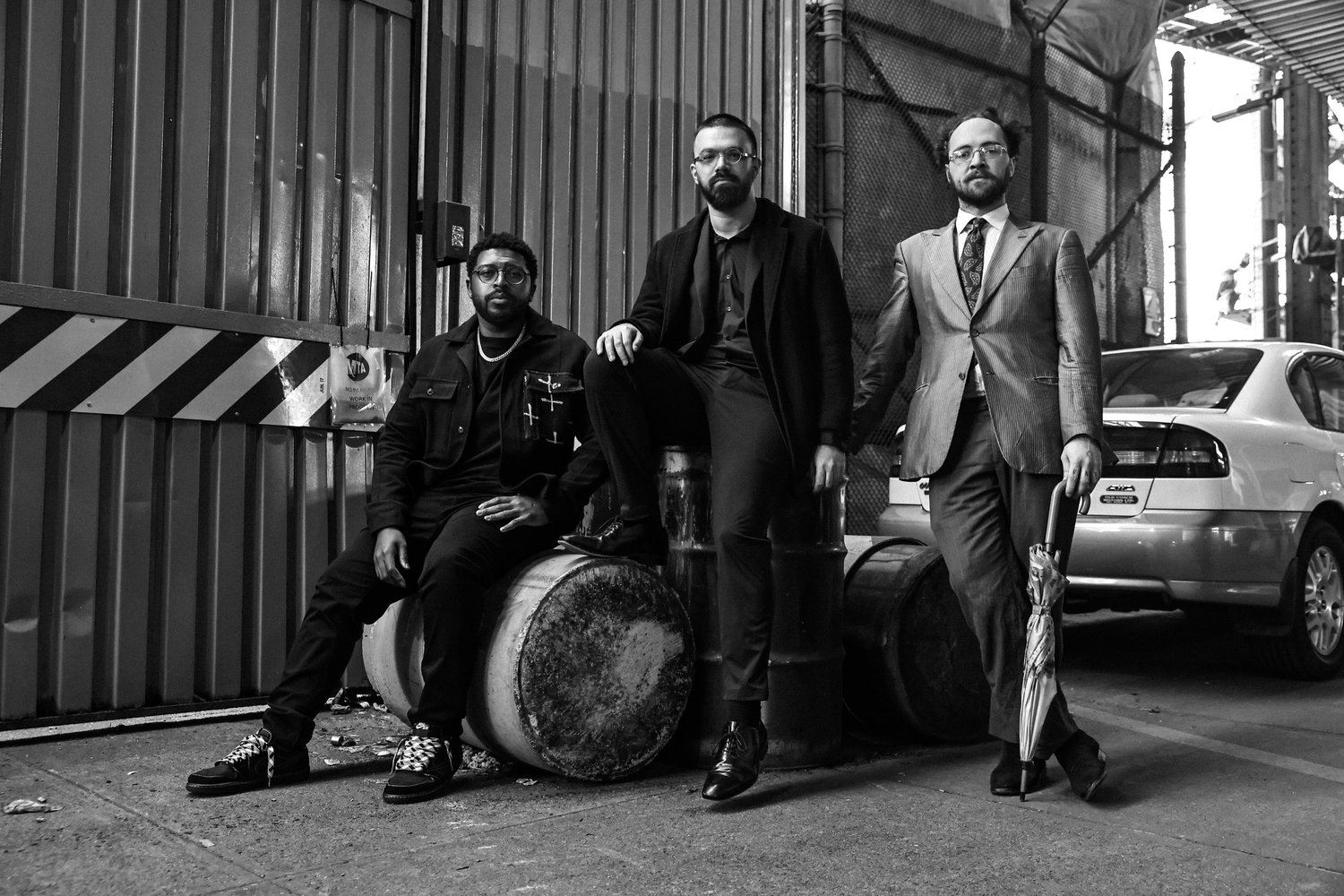
Current event: Micah Thomas performs with his Trio at Ladbroke Hall on Friday 11th April as part of their Friday Jazz Series. For more information and tickets, visit their website.
Current release: Micah Thomas's most recent album is Mountains, out via Artwork.
Recommendation for Ohio: Anyone who knows me well knows exactly what I'm going to say - if you ever find yourself in Ohio, go to Graeter's Ice Cream and get yourself a black raspberry malt.
If you enjoyed this Micah Thomas interview and would like to know more about his music, visit his official homepage. He is also on Instagram, and Facebook.
What were some of the musical experiences which planted a seed for your interest in jazz?
The first thing was my dad’s record collection. He had a lot of CDs of Miles Davis, John Coltrane, Thelonious Monk, BB King.
I was studying classical piano from the age of 2, but one of my teachers when I was around 7 years old, Wes Hamrick, started teaching me jazz as well, and I kept studying both throughout the rest of my childhood.
What does the term jazz mean today, would you say?
It’s not a term that I am particularly attached to, both because it’s been seen as offensive or irrelevant throughout its history by some of the musicians that have been put under that label, and also because the influences on my music are pretty broad and don’t always fit into a common understanding of that category.
I’ve been criticized for not playing “jazz chords” before, and things like that, even though those categories don’t really exist in my mind the same way they seem to exist for some critics.
I think one of the tricky things about the term “jazz” is that it means so many things, and depending on what particular branch of the “jazz umbrella” you’ve been exposed to, and how high quality your exposure has been, you’ll find really different connotations.
Is it cocktail music? Restaurant scene music for movies? Big band music? Is "jazzy" what happens when pop musicians play chords with more extensions? What do Louis Armstrong, Charlie Parker, Miles Davis, and John Coltrane have to offer that transcends the common stereotypes of the word "jazz"? Can we really say that John Coltrane and Albert Ayler and Count Basie play the same genre of music? Is Benny Goodman jazz, but not James Brown or Mahalia Jackson?
Anyway, I’m not offended by it personally and I use it when necessary in order to help people have an initial understanding of some of my musical references, but it’s not a word I particularly care for or find meaningful.
As of today, what kind of materials, ideas, and technologies are particularly stimulating for you?
Recently, I’ve been thinking about the invasiveness and specificity of meaning that comes in language, and thinking about when music gives me the same experience.
Talking in any human language is kind of like entering a flow state for me, which I find fascinating because we spend so much time trying to learn how to pay more attention, when conversations are immediately a portal into an activation of a similarly heightened level of attention.
I’ve been listening to a lot of Bach and realizing that one of the things that makes his music so powerful is that it talks to you on a similarly rational, complex, and specific level, to the point where you can really start to think in Bach’s language like you would in English.
Where do most of your inspirations to create come from – rather from internal impulses or external ones? Which current social / political / ecological or other developments make you feel like you need to respond as an artist?
I suppose I see external and internal impulses as being unavoidably interrelated - we don’t have ultimate control over the external factors that drive our internal impulses, but we also don’t have an objective view over the external factors that is separated from ultimately internal impulses.
I’ve realized that the kind of art I try to create and that I’m drawn toward has the ability to offset some negative forces in the world - capitalism, the reduction of the attention span through social media, and just a general feeling of there being a lot of obstacles from connecting to other human beings on a real and compassionate level.
The music I play is very social and involves a radical involvement with and acceptance of the other musicians I’m creating with, as well as a demand for focused presence and vulnerability, and a resistance to easy answers and shallow reward.
That kind of music has kept me sane in so many ways, and I am thankful to have been able to see my music help other people in a similar way.
Music has become a lot more global, and incorporating elements from other parts of the world or the musical spectrum is commonplace. Do you still think there are city scenes with a distinct, unique sound? How does your local scene influence your work?
Cedric Easton is a drummer that’s like a big brother to me. We both grew up in Columbus, Ohio, and I remember talking to him about this.
I think there is something about the soulfulness and the slower pace of some of the music I was around in Ohio that may have influenced my values. I think New York music often feels like the city feels - sensory overload, and frenetic. I haven’t checked out the West Coast scene enough, but I imagine it feels more like the West Coast.
I definitely feel a difference listening to European music vs American music, let alone say French music vs Scandinavian music vs Eastern European music or what have you. I think there’s still definite differences.
What role do electronic tools and instruments play for your creative process?
In terms of creating through electronics, that’s been a regular companion for me.
I’m nowhere near the level of expertise of some of my peers, but my ignorance is partially what makes it fun for me. I definitely think you can create something worth creating even if you aren’t an expert in the medium you are creating in.
Thanks to technological advances, collaboration has become a lot easier. What have been some of the most fruitful collaborations for you recently and what approaches to and modes of collaboration currently seem best to you?
I value the slow build of a relationship with another person that I want to create with. I find that as I learn more about the person’s preferences and personality and background and perspective, the music we create really gets enhanced.
When I’m a sideman, I consider it my job to serve the other person’s sensibility and vision as much as I can. When I’m the project leader, I often prefer to make decisions on where the music will go based on the other musicians rather than dictate a preset vision from the jump or try to “correct” something when it doesn’t go the way I expect. I see of the main personal benefits of music in my life as a self-educational process and waiting to see what I can learn from each person I collaborate with is an important part of that education.
The two bands I've played with the longest are my trio with Dean Torrey and Kayvon Gordon, who appear on my album Reveal, and Immanuel Wilkins' quartet, who have recorded three records together.
I've been playing with both of those groups for 7+ years now, and they have completely shaped who I've become as a person and as a musician.
Jazz has always had an interesting relationship between honouring its roots and exploring the unknown. What does the balance between these two poles look like in your music?
To give an over-generalization of how it is for me, I see the honouring the roots portion as happening in the practice room and the exploring the unknown portion as what happens on stage.
I do my research and my studying before the concerts, so that when I’m in the concerts I can just follow my imagination and not worrying about labelling anything as “traditional” or “modern”, because my imagination has already been informed by tradition.
It’s not that black-and-white - the unknown is in tradition (and there are obviously many musical traditions) - but in terms of creating analytically vs open-mindedly, that’s how I tend to divide the work.
How much potential for something “new” is there still in jazz? What could this “new” look like?
Plenty of potential. We can’t even fathom where things will go, or how human perspectives will evolve, and we’ve never really been able to. So many factors influence how we hear music - colonial, economic, geographic, technological, etc.
It’s not like any musical tradition is this linear progression. Artists create from the current moment, and it’s not even necessarily about some idea of “raw data” in the music as much it is a more holistic thing; a combination of a lot of different variables like texture, range, timbre, rhythm, emotion, different understandings of harmony and its relationship to the natural world, narrative effects, healing effects, and however else you want to divide our experience of listening to music - and these divisions and relationships can interact with each other in infinite ways.
For many artists, life-changing musical experiences take place live. How do you see that yourself?
I’ve had terrible days and weeks completely turned around by a life-giving concert of music. I will feel more clear-headed, more emotionally stable, more inspired, more in love with life.
And I’ve been very thankful to participate in concerts myself where people in the audience have told me they felt the same way.
Improvisation is obviously an essential element of jazz, but I would assume that just like composition, it is transforming. How do you feel has the role of improvisation changed in jazz?
Improvisation, or spontaneous composition, and premeditated composition have always worked together in jazz like mixing colours.
Many variations of jazz have different combinations of spontaneous and premeditated composition, and it’s not as straight-forward as one section is premeditated, and one section is spontaneous. Often, it’s more like certain elements at certain times are spontaneous and certain elements are premeditated, often simultaneously. Sometimes the harmony is premeditated, sometimes it’s spontaneous. Sometimes the form that you’re improvising is premeditated, sometimes spontaneous.
In so many different ways, the material that jazz musicians create on can have a variety of limits.
What, would you say, are the key ideas behind your approach to improvisation?
Trusting and cooperating with myself; being in the moment; radical acceptance of the musicians I'm playing with; a love for JS Bach, Louis Armstrong, Charlie Parker, John Coltrane; finding the upper room; look for what heals.
The Montreux Festival intends to preserve its archive of recordings for future generations. Do you personally feels it's important that everything should remain available forever - or is there something to be said for letting beautiful moments pass and linger in the memories of those that experienced them?
As long as there is room for what people are creating now, I'll be happy.