Published
Name: Michael Begg
Occupation: Composer, sound artist, musician
Nationality: Scottish
Current event: This interview deals with Michael Begg's recen trip to Antarctica. "The opportunity arose," as Michael explans, “When the Friends of the Scott Polar Research Institute in Cambridge, England decided to try a new approach to their long standing and successful artist residency programme and instead send a musician to Antarctica in a tour of duty to be hosted by the Royal Navy." Over the coming months, various works, both musical and audiovisual will work with the materials collected during this trip. Out of Whose Womb Comes the Ice will premier at Sonica Glasgow on September 27th 2024. It will be performed at Intermediale Festival, Poland on October 26th 2024. A screening of the film version will feature in Nordic Music Days, Glasgow Oct/Nov 2024.
Current release: An album is scheduled for release on the Italian label, Glacial Movements, in 2025.
If you enjoyed these thoughts by Michael Begg and would like to find out more about his work, all of his profiles can be found via his linktree. For earlier thoughts on the topic, read our interview with him about Data Composition and Music for Human Survival.
Over the course of his career, Michael Begg has collaborated with a wide range of artists, including Chris Connelly, Clodagh Simonds’s Fovea Hex, and Hans-Joachim Roedelius.
[Read our Chris Connelly interview]
[Read our Hans-Joachim Roedelius interview]
[Read our Hans-Joachim Roedelius interview about Ego as an Energy and doing IT]
[Read our Hans-Joachim Roedelius interview about Collaboration]
The overarching theme for much of your work at the moment seems to be encapsulated by your goal of “establishing new musical forms for the anthropocene in the margins of classical and experimental music.” Why do you feel as though the anthropocene needs new forms?
That particular form of words was contrived as a formal artist statement for Black Glass Ensemble. Such statements don’t sit too easily with me. That said, the anthropocene, despite recent moves to declare that we are not there yet, presents uncharted waters. We have not been here before. We have not been told in such terms that the conditions for our survival are in our hands. It goes hand in hand with solastalgia which differs from the more common term climate anxiety in as much as climate anxiety anticipates a catastrophe whilst solastalgia takes the position that we are in the midst of it.
To frame that, to absorb that, to respond to that is not solely political or scientific, it is existential. I think that merits new approaches, new cultural experiments.
It comes at a time when it could also be argued that our need and our use for music is in a transition period. The business models have been ruined. The way we consume recorded output have mutated beyond recognition. Our relationship to artists and their output is very different. Devalued at present, and at risk in the future. So, it is in our interests to find new models for delivery, new composition processes. New relationships between sound makers and listeners.
In our previous interview you mentioned that part of the work with data is to establish “just how acute the situation is in the Southern ocean and Western Antarctica.” After your work on location - just how acute is it?
It’s very bad. That shouldn’t be any surprise, of course. But here we are, still saying it.
While I was down there I enjoyed the company of the onboard hydrographic research team and a visiting ice expert from the Canadian coastguard. The hydrographic team were in a curious position because on one hand they were excited by how close they could get to the land to chart the seafloor in places where it had never been possible before. The trouble was that they could only get this far in because the glacier had retreated so much. Our short term survey needs enjoyed a great success on account of our long term failure to stabilise the ice.
The Canadian coast guard told me that this was the second season in which the sea ice in the Weddell Sea was negligible. What we were seeing in the water was glacier ice, breaking away and having no sea ice present to slow it down.
For years climate deniers have, I think, rested on the fact that Antarctica was still a mystery and still managed to recoup its summer losses in terms of ice. Scientists knew that there were multiple triggers waiting but because they weren’t clearly cyclical it was very difficult to predict what would give first and when. The general agreement was that when the first point of failure arose the rest would follow at pace.
It looks increasingly like one or two of the major glacier ice shelves are on the point of collapse. If Pine Island glacier shelf was to fail, the ice sheet would simply pour out into the sea. This alone would raise global sea levels by 50cm, and play havoc with the food chain and the broader ocean currents.
Weddell Sea is basically taking on the position of a last refuge for cold water sea life. It is the last pure environment on the planet. And yet the signatories of the Antarctic Treaty still cannot come together as a whole to endorse the application for it to become a Marine Protected Area.
I also witnessed how avian flu had jumped species and started wiping out seals down in South Georgia. It’s all adding up.
Intriguingly, you also said that data revealed “a planet that achieved its own balance, a balance that would reassert itself upon our demise.” Can you talk just a little bit about that data and what that statement means, exactly?
I meant that in the great scale of metrics of elements supporting life, our survival is contained within a very small area of that scale. We could easily wipe ourselves out, and we’ll disturb the overall system and wipe out many species as we go. But once we’re gone life will still be here. Without us.
As I understand it now, balance is a poor choice of word because there is no balance in the system. It's more a process of endless mutation and adaption. Either way, we’re not that important to that system of adaptation, mutation and renewal.
Simply, we’re absurdly lucky to find ourselves here. So why do we flirt so continually with the end? 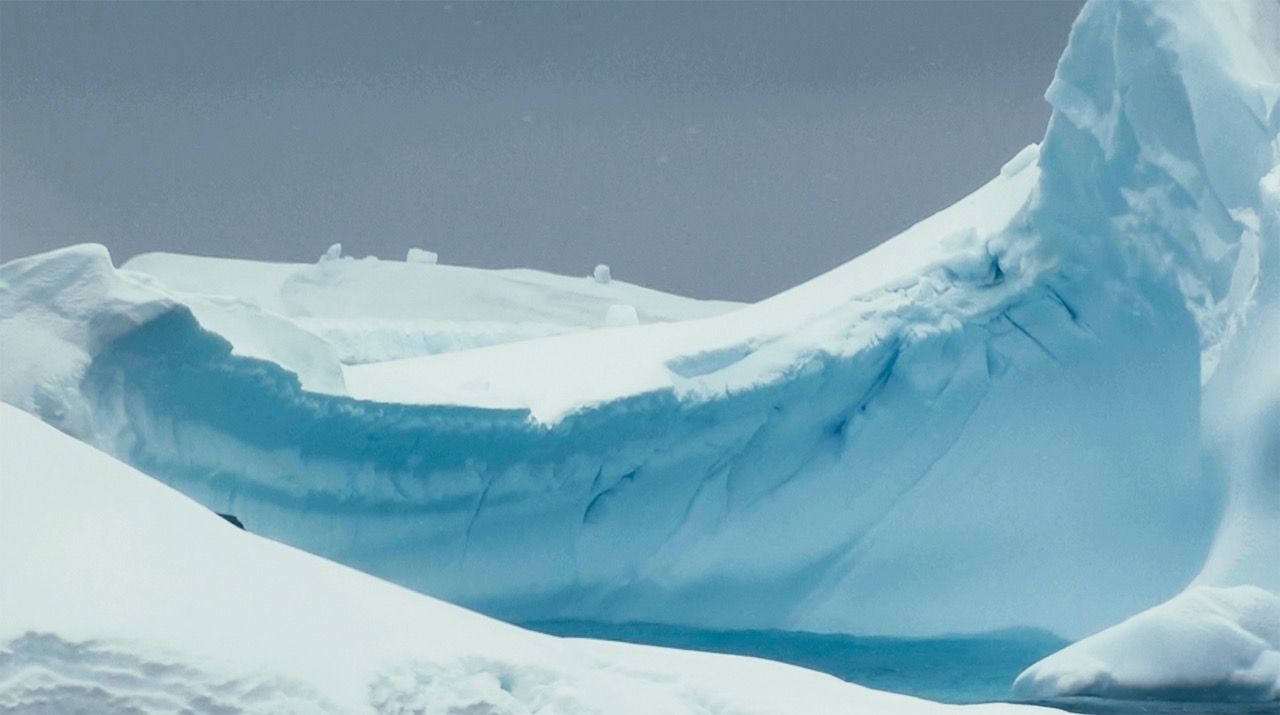
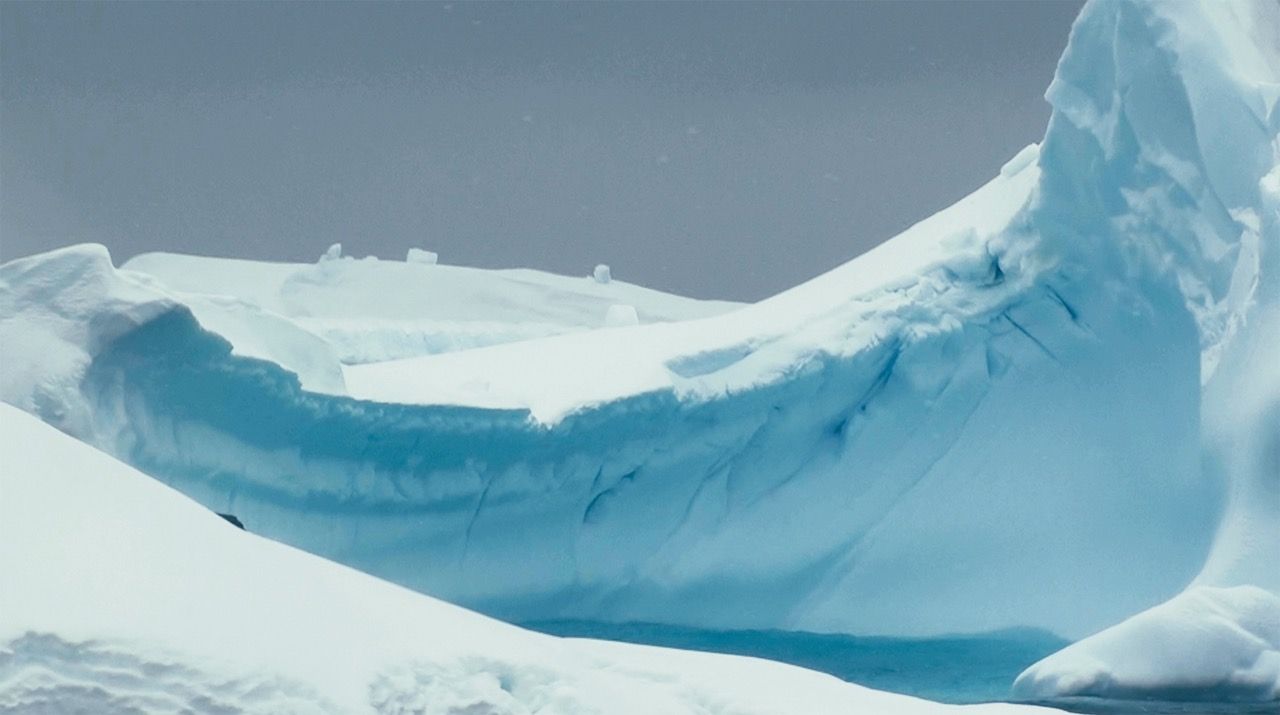
Blue Ice Image by Michael Begg
Can you tell me a bit about the actual trips themselves? What were your impressions and memories?
Solitude and abandonment. I met with the ship in the Falkland Islands, headed east to South Georgia, then south into the Weddell Sea, around the South Shetland Islands, down the peninsula, through the Lemaire Channel to Detaille, then back to the Falklands via Deception Island and the Drake Passage.
The crew of HMS Protector couldn’t have been more accommodating. They did everything they could to assist me - including leaving me alone for hours on end to record anything and everything.
A flick book of memories would call up abandoned whaling stations, whale bones, screaming seals, ice canyons on open water that looked like Manhattan. A sense of being engaged with deep time and, I suppose, a background panic surrounding the vulnerability of it all.
What were some of the sonically most striking places from your Antarctica visit for you personally? How would you describe the acoustic landscapes?
Technically, the challenge was to keep wind out of the recordings, and getting far enough from the ship to avoid the sound of the engines.
On water one became tuned in to the variation of ice sounds, from the sparkle of brash to the groans of larger bergs. In the deep south you could hear the myriad pops and crackles of air bubbles snapping open having been trapped for thousands of years. I became attuned also to the different surfaces I was walking on, because there was so little sound arising from elsewhere; different kinds of stone, different resonances. 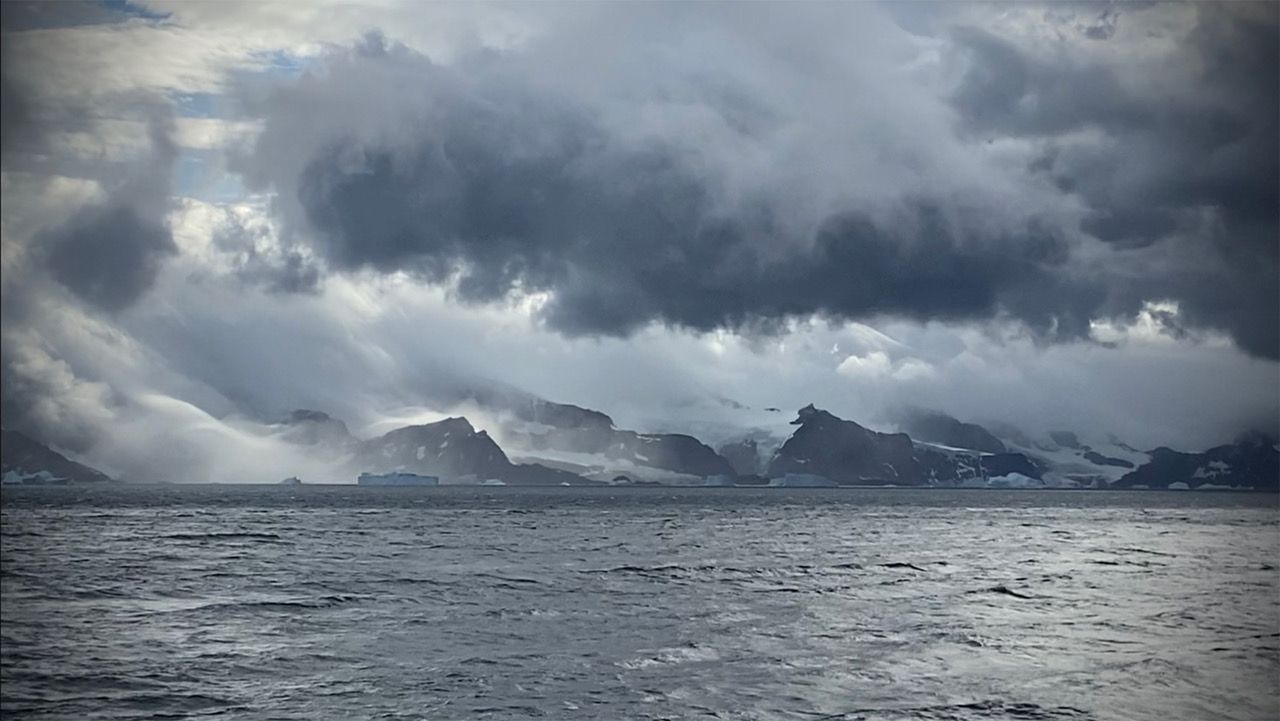
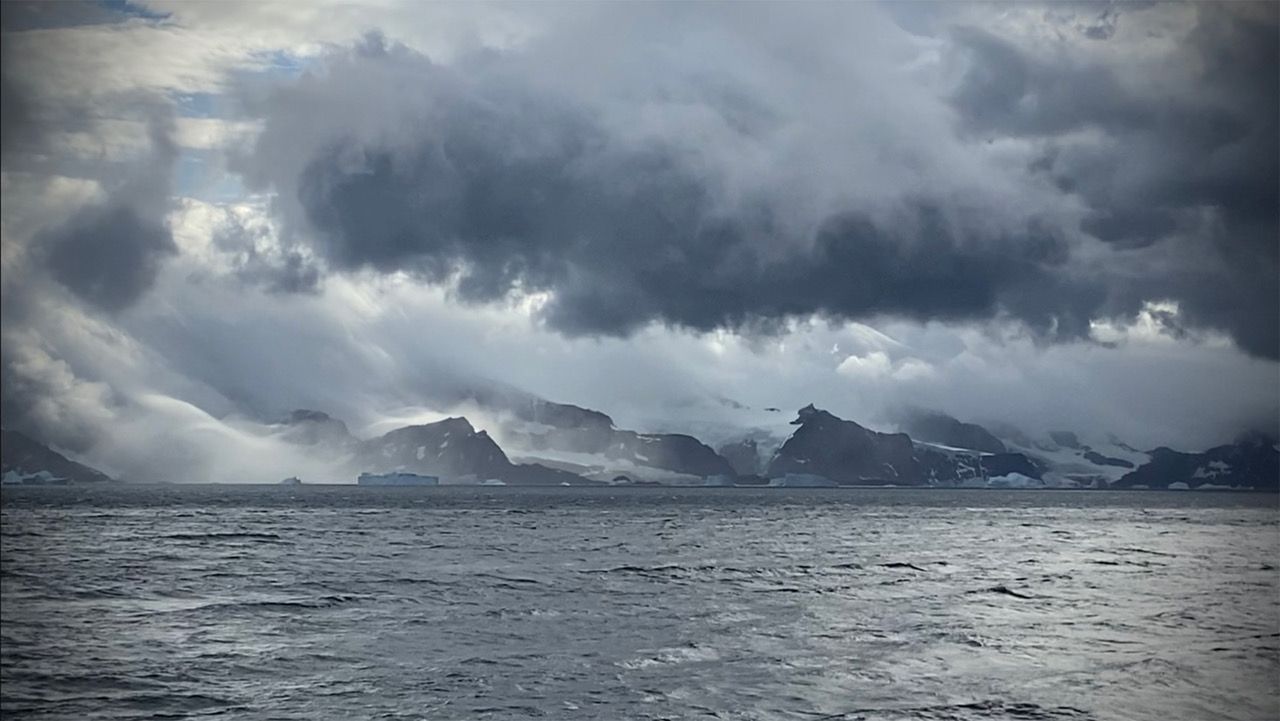
Antarctic Storm Image by Michael Begg
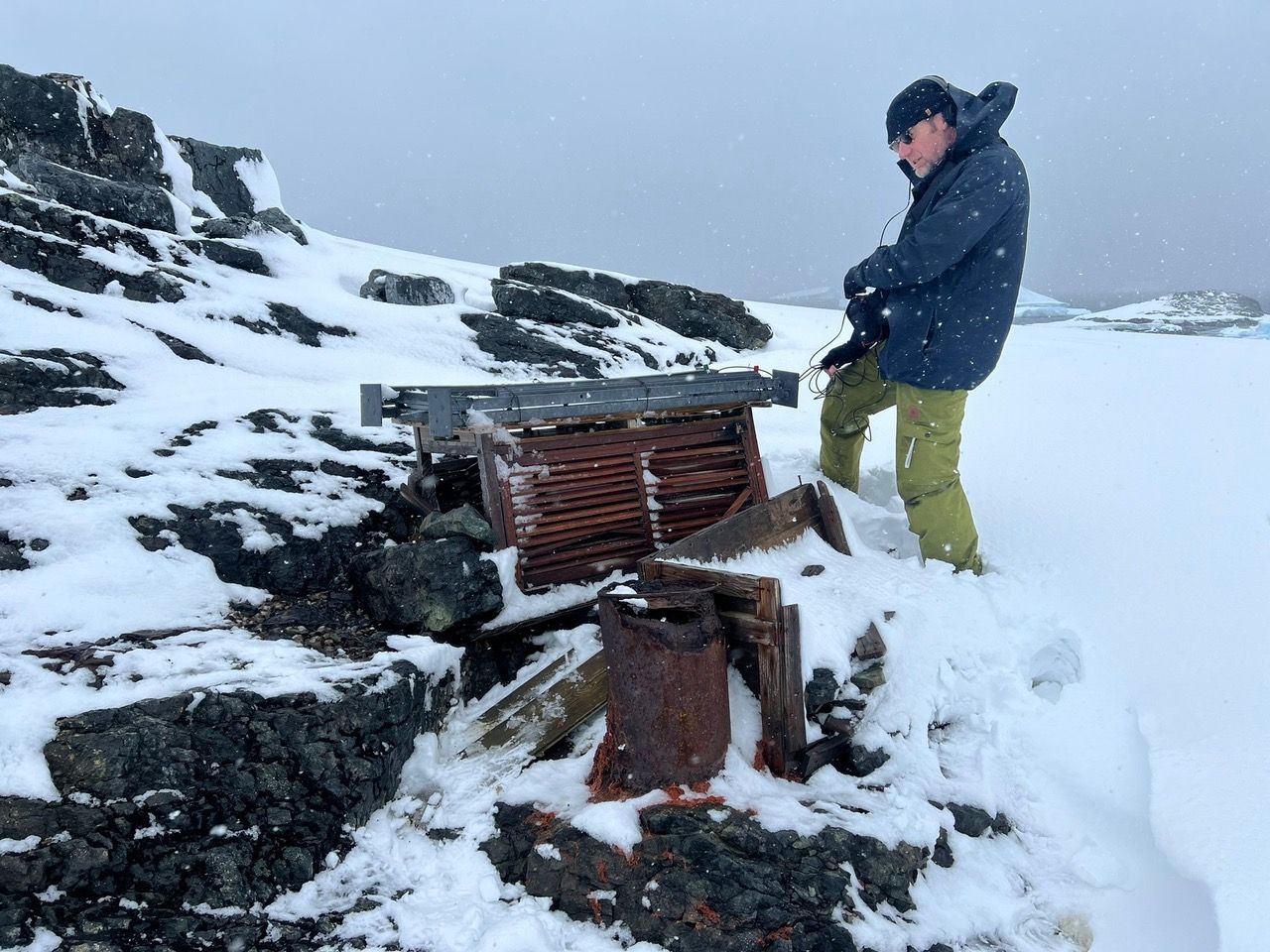
The human sounds tended to be found on the abandoned bases; seal calls refracted through fat rendering vessels, wind whistling around steel stabilisation cables.
Sound didn’t travel far. I always got the sense that any projected sound would be absorbed by the ice and fall short of any horizon.
The new forms of music you spoke about earlier seem to be related to data. What, precisely, does that entail?
My work with scientists to find ways to turn their data into music continues to excite me, and I think there is a lot more ground to open there. It is not data sonification. Rather, it is data composition, and the process of bringing that together means that there tends to be really interesting discussion in which the objective science and the subjective response have to work together to arrive at a place that is aesthetically pleasing whilst remaining faithful to the science.
In acknowledging that this is music that comes from rather than being projected into the world means that I am increasingly examining the balance between composed sound and the context in which that work sits. I’ve held for some time now, the sense that when we entered the age of recording at the end of the 19th century we took music out from its natural context and isolated it in the studio.
I’ve previously made efforts to artificially apply contexts during the recording and performing process, for instance by introducing rehearsal tapes into performance, or live fragments into studio recordings, or adding recordings from interior spaces into recordings, or performance spaces, or playing recordings on location and recording the combined output. So this is perhaps a manifestation of that activity.
I’ve been playing with this since reading too much Burroughs, and getting irritated by Amazon reviews of live classical music that draw reference to squeaking chairs and audience sniffs.
You make an important distinction between data sonification and data composition. What does this look like in practise?
The difference, basically, is that once the sonification has been established - being the accurate representation of numerical data in sound, there comes an aesthetic process that seeks to make the work musically interesting, as well as faithful to the source data and representative of the consequences of the data findings. It introduces the personal, the subjective, the emotional response into the work, and, if successful, articulates some process in our world in a surprising, yet recognisable way.
In science, data is at the heart of the work. In music, however, we can make a choice as to whether we want data to be a point of departure. Why do you feel it is, as you say, “essential” for you to go down the latter route?
I don’t see data as a point of departure. I see data as the information which is to be presented musically. Not in all of my work, but in this work I would become uncomfortable if my approach or my results drift too far from the source.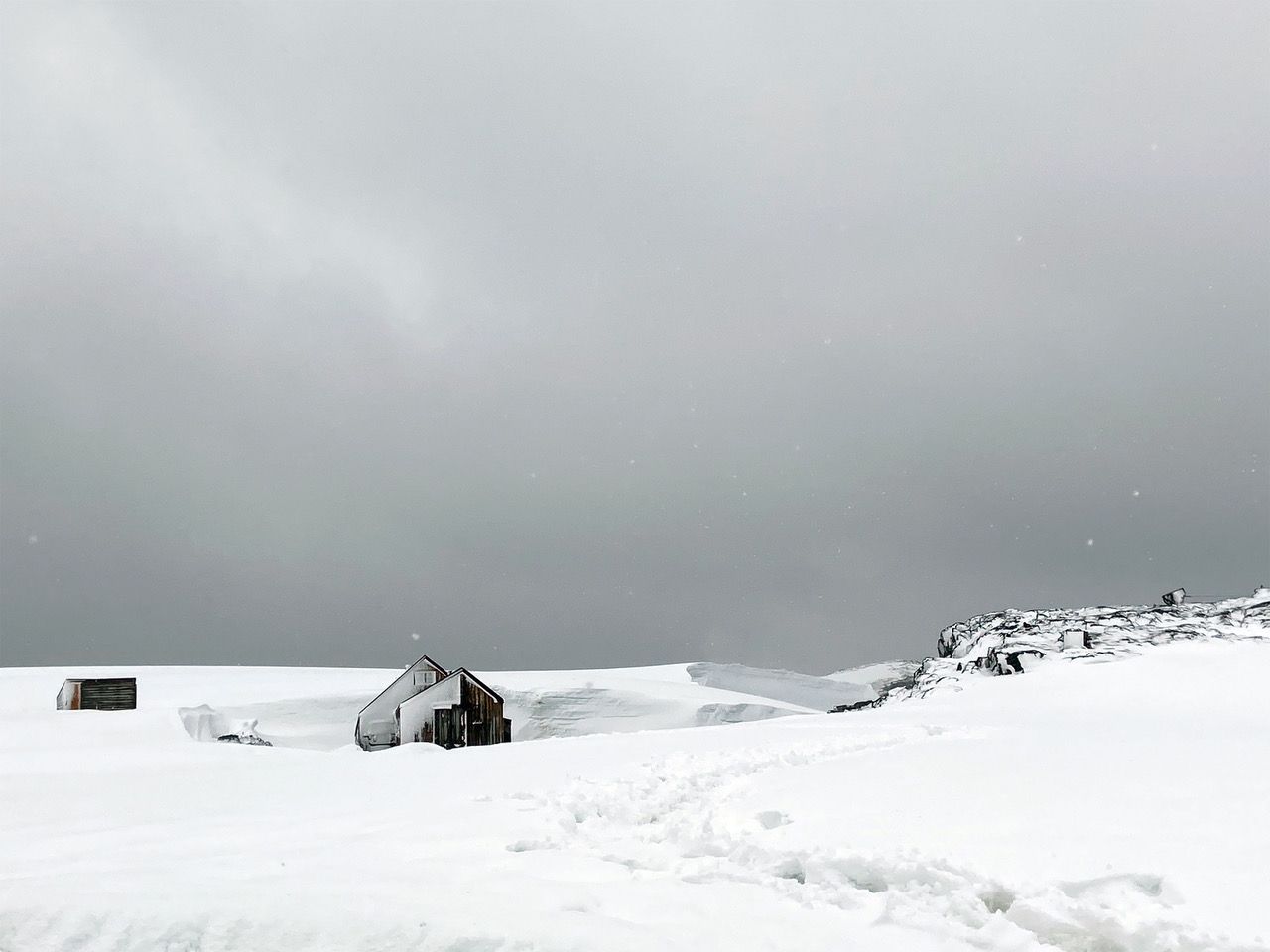
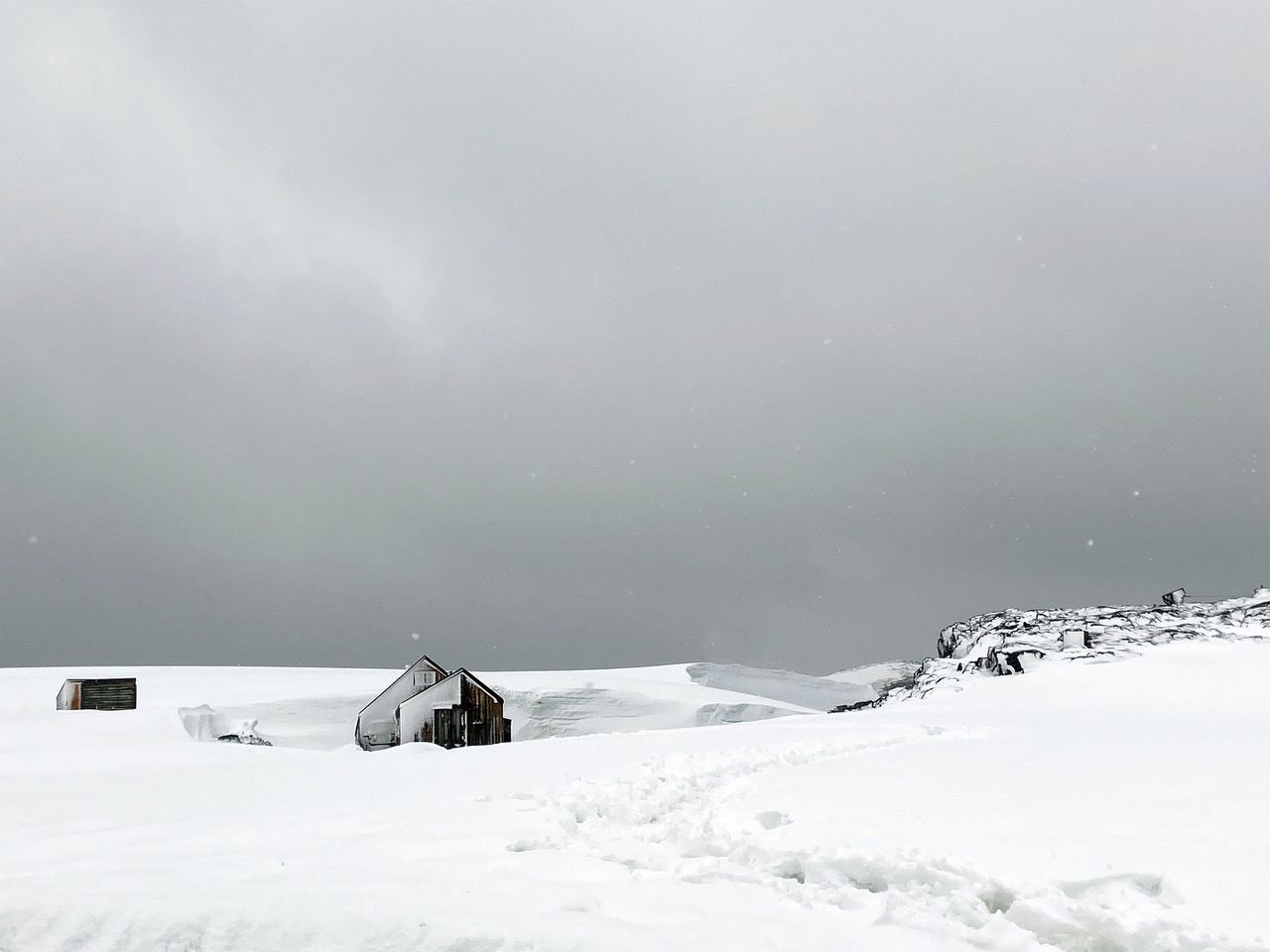
Antarctic Base Image by Michael Begg
What you're describing can be seen as two things: A more functional approach to music as part of which its value is measured by its usefulness. Or an embedding of music into the rituals of daily life, which would mark a return to a state where sound is truly the soundtrack of our lives. What's your perspective on these two scenarios and what's your take on them?
I did start to touch on this earlier, but I will happily confess to not having answers. I think there is room for a new music that is aligned to science, that allows for that kind of direct representation of something in or of the world.
If music has usefulness it is because it has always been deeply, deeply precious to our human experience. Our human experience is having to deal with some very deep uncertainties, and profound anxieties.
Music has to be there to assure us that the experience is recognised.
Is it imaginable that science can fulfill some of the typical roles that art used to have as well? How could this look like?
It's an interesting proposition - though I would query what you mean by what art ‘used to have’. Has it lost something?
There are likely many scientific outputs that could be re-framed as art. I would not want to be the one who has to delineate what is art and what is science. Especially now when we are seeing such moves to bring science and art closer together. And it's not just music. It is in the ascent in painting, printmaking, landscape art, sculpture and poetics.
There is an appetite for producing work that speaks to deep time, considers time in terms of cycles rather than past and future, and seems to be alert to producing work that shows its origins and the process of its creation as an integral part of the finished work.
That could be weathered printing plates, land art that proclaims its ephemerality, or musical works streaming data and field recording within the fabric of the finished work. These are empirical leanings common to art and science and deserve attention. With this new unity and this emerging collectivism perhaps we can successfully achieve what both art and science are presently failing to do in isolation.