Published
Name: Michael Jaeger
Nationality: Swiss
Occupation: Saxophonist, clarinetist, composer, improviser
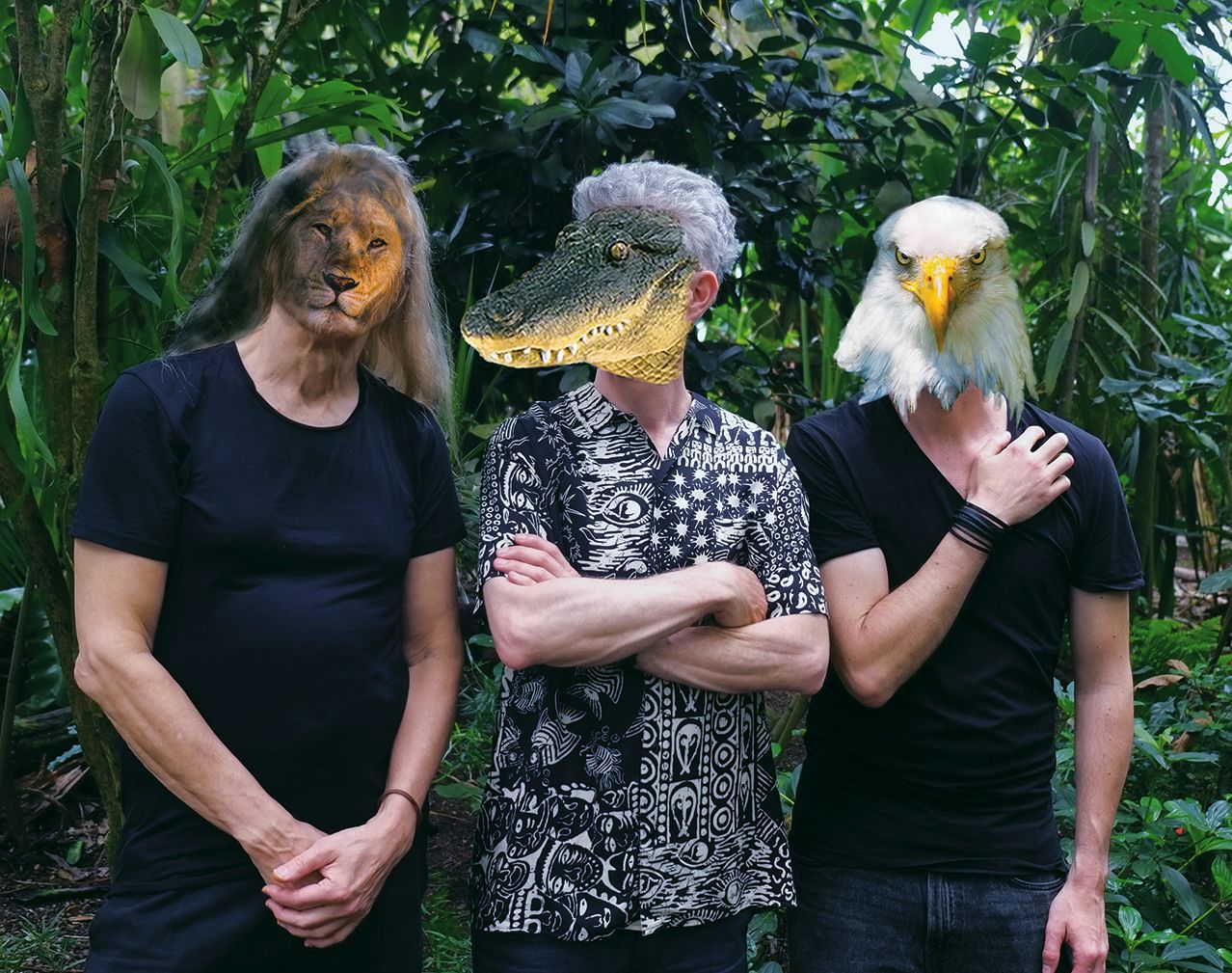
Current Release: Michael Jaeger's new album Zoomorphisms with Mein einziger Freund, also comprising Vincent Membrez (synths) and Gerry Hemingway (drums, vocals), is out via Unit.
If you enjoyed this Michael Jaeger interview and would like to know more about his music, visit his official homepage. He is also on Instagram.
What were some of the musical experiences which planted a seed for your interest in jazz?
My brother and I used to play in a huge, enchanted garden when we were kids. When we were in the house, we would play music together. We would improvise.
When I was ten and I heard John Coltrane's "My Favorite Things" on the radio, it was an epiphany for me. I was hearing something completely new and yet very familiar.
I had been exposed to jazz as a child and had a lot of experience improvising. For me, jazz was like discovering a distant continent that gave me an immense amount of freedom.
By the way, my brother and I can be heard today in the trio "Blooming Rhythms" with trumpeter Peter Schärli. (see Youtube video to the right)
What does the term jazz mean today, would you say?
For me, jazz music is like a backyard or a wasteland where children always gather to play. No architect ever planned this open space, it just happened. Time and again, new generations of musicians are drawn to this wasteland, and they need the open space that jazz provides.
I am very happy that there are so many more female musicians helping to shape jazz today. The era of male jazz is finally over.
In recent years there has been a lot of discussion about cultural appropriation and cultural identity. As a result, I listen to the singer Tom Waits differently now. I recognize the great black voices of jazz in his singing. I bow to African-American identity and culture in jazz, and it doesn't bother me when Tom Waits sings like a black man.
I see jazz as a stream of consciousness fed by different cultures and identities. We shouldn't confuse jazz with something you can own.
Many people perceive jazz as a genre with high barriers of entrance, both for listeners and musicians. What have your own experiences been in this regard?
In answer to your question, I am reminded of the great gesture of the late, beloved Miles Davis, who stood with his back to the crowd, wearing sunglasses, and played ice-cold, muted trumpet notes. As if to say: "Fuck you all!” Or the black bebop musicians around Charlie Parker and Dizzy Gillespie, how they could increase the tempo and complexity of their melodies to such an extent that a white musician could not even think of playing along. The audience in the club was all white, male and upper class ...
There seems to be a long tradition of elitism in jazz! The myth of "difficult jazz" has always been constructed by elites, whether black or white. The elites understandably want to claim the cultural value of jazz to distinguish themselves. Insiders versus outsiders. Elite versus underclass.
My compositions for my sextet with Greg Osby were so difficult at times that the owner of a large jazz club told me after the gig that I should be careful that people still understood our music. But isn't the jazz club the right place for unbiased listening, for "deep listening"?
So let's listen more closely: What musicality has been at the heart of jazz over the last hundred years? Put simply, I see two highly complex systems united in jazz, which developed independently of each other over a very long period of time, long before jazz was even conceivable.
The first is swing and polyrhythm, which originated mainly in Africa. And second, functional harmony within the twelve-tone system as we know it from Europe. Perhaps it is only thanks to this beautiful mixture that jazz can so easily combine two important human impulses: Movement and Emotion. Movement is expressed through the rhythmic system. And evaluation - our ability to have feelings and emotions and to weigh them against each other - is made audible through melody and harmony.
This is how jazz succeeds in telling good and great stories. Jazz music is a cosmopolitan world music, diverse, multinational, basically open to all, with countless “dialects” and yes, often quite complex and tricky. But unlike the “jazz genre”, jazz music is not elitist!
When I listened to Charlie Parker's solo as a child, I couldn't recognize any melodies. I remember exactly how I could hear a mad rush. I was told at the time that I should listen to “Bird” for another twenty years and that I would learn to really understand him. And that's how it was!
What, would you say, are the key ideas behind your approach to improvisation?
I see three different aspects of music making equally hidden in improvisation: improvisation as a creative activity, as a zone of learning and growth, and as an example of the healing power of music making.
First, I see improvisation as the creative human activity par excellence. Second, I see improvisation as the heart of the human capacity for self-motivated, lifelong learning, made possible by the joy of playing. And third, improvisation is a way of putting ourselves into a kind of healing trance and experiencing how music can have a therapeutic effect.
To explore and understand these aspects, I have developed a model of improvisation: When we improvise, three different roles of our personality are active at the same time: The skill ego or the owner, the inventor ego or the creator, and the social ego or the broker. Our three roles operate simultaneously in areas as diverse as physical perception, emotional evaluation, and musical action.
Both the roles and the areas of activity have conscious parts that we control. But there are also unconscious parts that are guided by the process. We are like a puppet whose strings are controlled by the same puppet. A seemingly paradoxical situation. We lead and are led. In the creative space of music, by improvising we bring back together what belongs together: body, mind and soul. Improvising makes us “whole” and takes us beyond everyday understanding and being.
Jazz has always had an interesting relationship between honouring its roots and exploring the unknown. What does the balance between these two poles look like in your music?
The bound and the unbound. Over the years I have developed both extremes in various projects and formations.
On the one hand, the tonal action, exemplified in the jazz standard with its functional harmony. This is my narrative, dialogical, rapturous, hymnic side, oriented towards tradition and especially towards John Coltrane and my teacher Nat Su.
Listen to my composition "Dance around in your bones" by my quartet Michael Jaeger KEROUAC.
On the other hand there is atonal or multitonal action. My free, completely free play with music, sound, noise. This is my experimental, anarchistic, wild, impetuous, unconventional side, turned towards the unknown.
As a concrete example, I can highly recommend my recently released recording with Gerry Hemingway and Vincent Membrez. On the album Zoomorphisms we improvise freely, leave a lot behind and encounter surprising things. By the way, as a trio we are called «Mein einziger Freund”.
There are various models to support jazz artists, from financial help to mentorships/masterclasses. Which of these feel like the best way forward to you?
Public cultural support from the city, canton and state is vital for jazz, improvisation and creative music!
A great example of private funding is the Swiss foundation "Arvore", which supports jazz musicians with living expenses for four years. Once in this foundation, there are no conditions for the artists.