Published
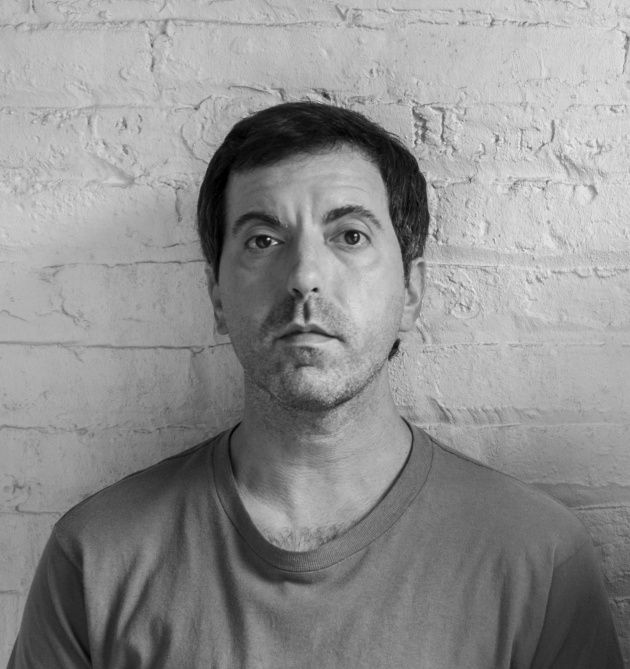
Name: Michael Vallera
Occupation: Guitarist, producer, sound artist, photographer
Nationality: American
Current release: Michael Vallera's new album The Other World is out via Torn Light.
Recommendations on the topic of sound: My old professor and mentor Robert Snyder has a book on the MIT Press entitled, Music and Memory, which is a wonderful survey of the affect our memory has on our psychological relationship with music, and the metaphorical nature of how we understand and process sound and music. His work and voice as a writer and educator have been invaluable to me over the course of my time as a musician and artist.
If you enjoyed this Michael Vallera interview and would like to stay up to date with his music, visit his official homepage. He is also on Instagram, and bandcamp.
How do listening with headphones and listening through a stereo system change your experience of sound and music?
I think the biggest difference is obviously the context of space.
I typically wear headphones out on walks or when traveling, and while it is more immersive in one sense, it prevents noticing other sounds and activities happening around you, which I suppose can sometimes be beneficial. I prefer listening on a stereo system because of how the sound is integrated into a larger realm of the environment, and can begin to include other happenings, sounds etc.
Both have their place and I feel I am constantly shifting back and forth between those modes of listening.
Tell me about some of the albums or artists that you love specifically for their sound, please.
One of the first big impressions on me regarding production is the album E Luxo So from Labradford.
I discovered the Kranky label in undergrad and was listening through any releases from them that I could find, and this record completely blew my mind in terms of the sound space it created.
The work of Mika Vainio, Seefeel and GROWING were all very important to me as well during that time.
[Read our Mika Vainio interview]
Do you experience strong emotional responses towards certain sounds? If so, what kind of sounds are these and do you have an explanation about the reasons for these responses?
Because I grew up playing guitar, and it is still my main instrument, a lot of the sound palette that the electric guitar generates is something I am very sensitive to. This can be as it exists in more traditional music and in experimental uses.
I think the specific frequency and voicing of that instrument is wired into my aesthetic sensibility for sound and what I tend to gravitate towards.
There can be sounds which feel highly irritating to us and then there are others we could gladly listen to for hours. Do you have examples for either one or both of these?
I am very sensitive to intrusive sound in buildings that I have lived in, and hearing someone walk on the floor above me in an apartment building is immediately anxiety inducing.
There are many types of environmental sounds that I enjoy, particularly the sound of distant road traffic when it begins to take on the characteristics of a low wind, or the movement of a river.
Are there everyday places, spaces, or devices which intrigue you by the way they sound? Which are these?
I like the experience of when everyday places are changed through sound by means of weather.
I love the way rain, wind or heavy storms interact with and charge the landscape and pieces of architecture through sound and reflections.
Do music and sound feel “material” to you? Does working with sound feel like you're sculpting or shaping something?
While I grew up surrounded by music in the form of records and the radio at home, most of my education was in the visual arts. So I think I approach how I work with sound and the guitar in a very sculptural sense.
The balance, weight and symmetry of sounds and how particular events unfold over the course of a track or record are arranged using a lot of sensibilities that come from visual formalism.
How important is sound for our overall well-being and in how far do you feel the "acoustic health" of a society or environment is reflective of its overall health?
Sound is generally something I wish was taken more seriously in the fabric of our daily lives.
I don't mean that pertaining to things like volume or sound pressure levels, although those things are important for the overall health of our hearing. I suppose I mean I wish it was paid more attention to, the nuances of our sonic environment and the spaces we inhabit and pass through.
I think there is a great poetic loss for our reality without a specific attention and respect paid to the sounds happening all around us, and their affect on our mental and physical state.
Sound, song, and rhythm are all around us, from animal noises to the waves of the ocean. What, if any, are some of the most moving experiences you've had with these non-human-made sounds?
Recently I was in Paris recording at the INA-GRM studios and participating in a performance as part of their Focus series. I was staying in a small studio apartment just up the road from the Radio France building, which is in a very old residential area of the city, so it was very quiet compared to other neighborhoods.
In the morning, there was a beautiful mix of birdsong and a few people who were doing repairs to an adjacent building, slowing moving slabs of material, dragging on the ground as they took it into the facade. I will never forget hearing that surprisingly delicate and wonderful combination of sound each morning as I got up to begin my day.
We can surround us with sound every second of the day. The great pianist Glenn Gould even considered this the ultimate delight. How do you see that yourself and what importance does silence hold?
I really cherish moments of silence and have always actively tried to incorporate it as a main element in my music. Allowing silence to puncture and highlight the sounds happening before and after it, I just think it is something I have always been attracted to throughout my life and across many varieties of music.
I remember discovering Morton Feldman in grad school, and his use of space and silence as major compositional elements completely changed how I thought about its use in music.