Published
Name: Michele Ducci
Nationality: Italian
Occupation: Singer, songwriter
Current release: Michele Ducci's Nuba Live Tape is out via Monotreme. Also still available is his recent full-lengh album SIVE.
Global Recommendation: There is a philosophy summer school called Praxis. It is held every summer. It was founded by a great philosopher and friend of mine, Rocco Ronchi. Although Forlì, in Italy, is a sort of wasteland that looks like just a gigantic pizza restaurant, that school is a light for research and boasts among the best researchers (also in the scientific field) on the international scene. It’s something that always puts me in a good mood!
Topic I rarely get to talk about: Together with my partner Letizia we have an immense love for cats. Nuba is my cat's name, and the cover photo of one of my latest singles, ‘It's Hard to be Easily Loved’, is of one of our cats, Eco - they are best friends. We keep a page on Instagram (feline communism) where we put photos of cats from all over the world. It moves me to see how these four-legged friends are an example of love and a proof that as animals we are not only dedicated to war, but also to purr.
I believe that cats are intermediaries with the divine and I would like a sort of feline socialism for the future. I was moved to see the people dedicated to the care of cats in Palestine. We should keep love in mind if we don’t want to die out for our little friend/no friend battles.
Bergson said that it would be necessary in the future to provide that additional souls necessary for the main function of the universe to be realized even on this refractory planet: a machine to produce gods.
If you enjoyed this Michele Ducci interview and would like to know more about his music, visit him on Instagram.
We have a speaking voice and a singing voice. Do these feel like they are natural extensions of each other, ends on a spectrum or different in kind?
I have always been fascinated by acoustic paraeidolia, since one of my first albums (Things.Yes by M+A) where my voice and other spoken voices, even in Norwegian, are edited as if they were deliberate melodies: the melody is to the sound as the meaning of a sentence is to the preposition. It is like when we see a face in the clouds …
I happened to listen recently by chance to a complete edition of a Bossanova music recording by Toquinho and Vinícious de Moraes.
The record is practically all instrumental. But the two at first talk. A voice takes for a few seconds an inflection that is an involuntary melody caught in its nascent state. There are no words, there is no real melody, but I was captured and captured, cultivated, by the generating axis of both. It’s a sort of horizon experience.
I think that sounds do not resemble each other by association: they modulate themselves, growing into almost involuntary melodies, almost landscapes, which are in the words and the melody as the meaning is in a preposition. The almost melody, the almost landscape, is a whole that is given in a stretch, in a detail, in a limit that explodes it extending the space for intensity in a strong emotion.
Like a rising or setting sun seems to unveil the face of the universe, in those five seconds of speech it seems that there is the almost melody and the almost landscape of all the saudade: undivided and contiguous participation with what we see divided and far away: no longer an image, but an acoustic, an immense wave field, which spreads its waves in the ears, in the eyes, in the pores.
Motherese may have been the origin of music, and singing is possibly the earliest form of musical expression, and culture in general. How connected is the human voice to your own sense of wellbeing, your creativity, and society as a whole?
The philosopher Giordano Bruno said that the soul of the world was to be thought of not as a point or as a line, but as a voice that is complete in everything and in any part everything.
There is a non-human element in the voices that fascinates me: the rhythm of the melody. There is something in singing that makes humans similar to the wind, to birds, to the flow of water, to the falling of rain. Singing makes us similar to those communications that are made, for example, in migratory processes. The telegraph seems to be one of those very important inventions for music: it is a uniqueness that seems like a telepathic entanglement ...
I often enjoy thinking about the sound of water slapping on a rock somewhere, in an unknown place, without me being there to listen to it ... It’s something similar to unperceived matter. I believe that singing is a form of meditation and distance communication practice.
When you're writing song lyrics, do you sense or see a connection between your voice and the text? Does it need to feel and sound "good" or "right" to sing certain words? What's your perspective in this regard of singing someone else's songs versus your own?
I always write improvising. I’ve always written in English. It’s a language I love because it always sounds very good. It is less hard than the Italian language and has many sound things that are like ghost notes when you play an instrument. The “h” for example.
I remember that when I was younger I was very fascinated by the fact that to sing, “I said to myself, ‘Wake up.’”, I could make the “to my” almost inaudible. I thought it was too long and instead the sound could be shortened by taking a rhythm that has always fascinated me.
When I sing other people’s songs I go to see the rhythm of their pronunciations: it’s like incorporating a living system. Bellissimo! 
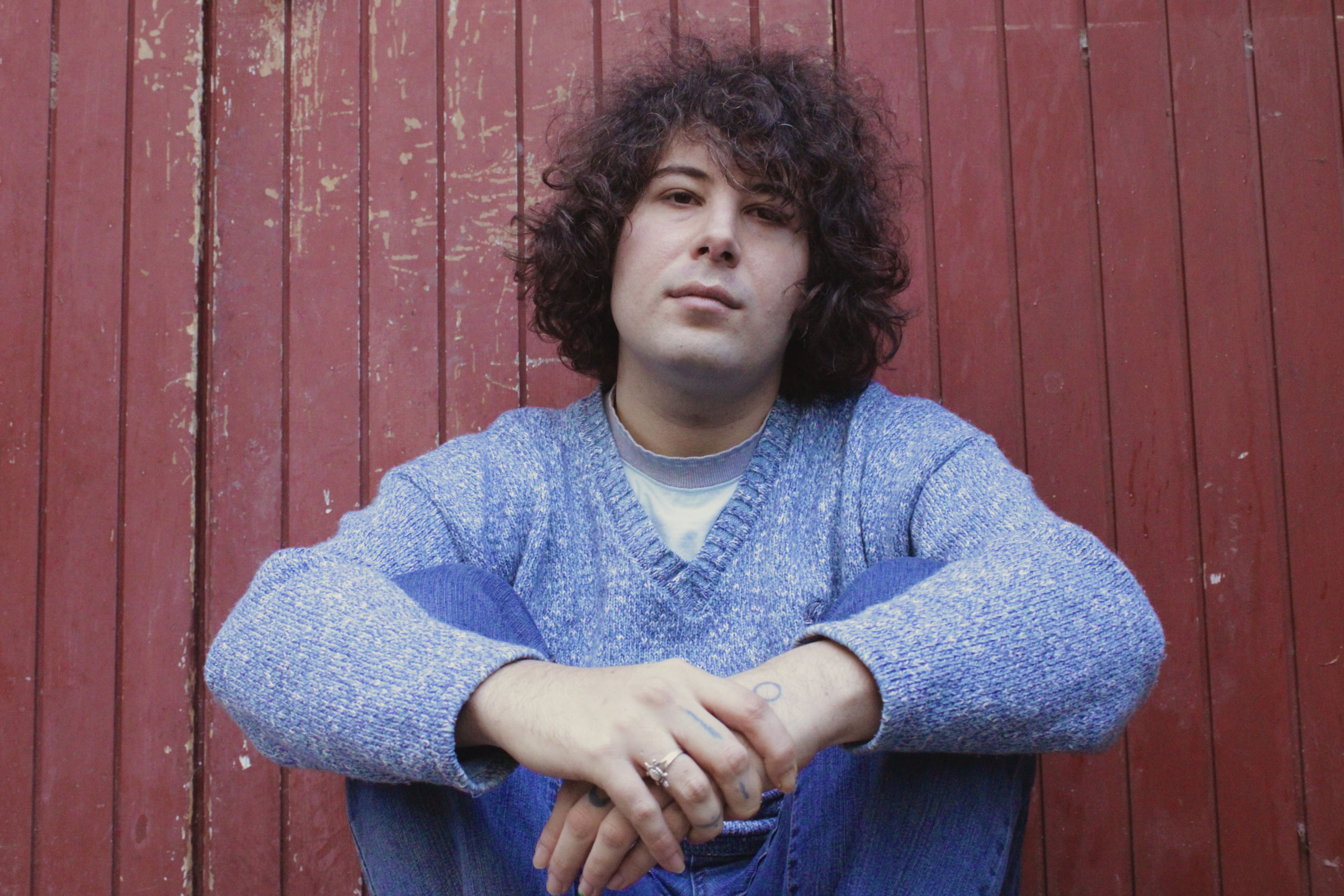
Michele Ducci Interview Image by Letizia Mandolisi
How would you describe the physical sensation of singing? [Where do you feel the voice, do you have a visual sensation/representation, is there a sense of release or tension etc ...]
The where is always in the middle of the two eyes, which I always keep closed: it seems that all the energy ends up there. It’s like moving to a higher form of confusion and concentration.
It is not given to me either as a representation, or as a visual sensation: I feel like I am returning to something that is time and place in their total purity. It’s like when we’re in a different time zone but we always breathe the same. It is like returning to the breath that passes in all breaths, to the time that passes in all times: it is an immense space.
I am caught between two jets, one that tends towards the future and the other that tends to the past, simultaneously. In those moments it seems that it is the melodic line itself that becomes me while I am only a medium.
If you're also playing other instruments, how does the expressive potential of these compare to your own voice?
All are instruments, like the strings of the voice. Everyone somehow sings: even the sound of the radiators.
What I like about singing is the alienating effect, even of crowds, that there is in someone who sings. We talk a lot, often the words are commands, as human we say horrible things, we even pronounce death sentences with our voice. When someone sings it’s in a kind of other world. The songs that are made to a child who is afraid of the dark, those who have to endure the fatigue of work. It’s no longer a communication, but something deeper, where you split in something else ... in a river, in a ray of sunshine, in a steep mountain ...
Even when a song is a feeling it never imitates hearing in general, but it really goes “as tears go by”. It’s not imitation, it looks like the transfer to another entity.
As a singer, it is possible to whisper at the audience, scream at the audience, reveal deep secrets or confront them with uncomfortable truths. Tell me about the sense of freedom that singing allows you to express yourself and how you perceive and build the relation with the audience.
My concerts are very quiet. I don’t talk much. I really make myself a medium for the song. I’m very shy so I can’t do otherwise.
This question is very nice. I don’t think I experience freedom. To be honest, I think it’s really a liberation from freedom (and possibility) the central experience I have with singing:
you exhaust everything possible, all the freedom of the subject ego that we often think sovereign, and I find myself dealing with the limit (I called this situation with a neologism ‘impassage’: It’s not the dead end, but a crossing, a push, a force, that seems to get me when nothing is possible anymore and seems to be in a dead end: it’s not the power to do what you want, but a force without possibilities and precisely for this absolutely real.)
I experience the creative evolution of the real, not the freedom of the possible. There are no escape routes, only escape lines.
When did you first consciously start getting interested in singing? What was your first performance as a singer on stage or in the studio and what was the experience like?
Always! The first performance was on the beach in Calabria in the summer at the age of 6, where I enjoyed singing “Crueza De Ma” by Fabrizio De Andre.
It’s always been one of the most beautiful things for me: a sense of total fusion with everything.
What are the things you hear in a voice when listening to a vocalist? What moves you in the voices of other singers?
The truth of style: when a singer not only sings (which often bothers me because it seems to me an exercise in narcissism more than music) but is sung by other forces.
It is these inaudible forces that a singer makes audible that move me and make me move in the voice of someone or something.
How do you see the relationship between harmony, rhythm and melody? Do you feel that honing your sense of rhythm and groove has an effect on your singing skills?
I think it’s a trinity that goes in unison. The harmony is spent producing the effect of a melody, often it is the melody that seems to be a harmony: it is the rhythm, hearing in duration these incessant exchanges that are heard in the foreground.
The voice, like a wave of the sea, takes all this and is in all this: If it wasn’t always on the verge of shipwreck, it wouldn’t be a melody.
Strain is a particularly serious issue for many vocalists. How do you take care of your voice? Are the recipes or techniques to get a damaged voice back in shape?
I’m not very good at this: I smoke and I like red wine. I don’t have techniques. Hic, a song on my album SIVE, was for example, recorded with a practically hoarse and almost lost voice.
I really love hearing everything, even the problems, and making them come up. Sometimes they have an exhausted splendour that I love.
The only thing that saves me every time are ginger and chili :) !
What were some of the main challenges in your development as a singer/vocalist? Which practices, exercises, or teachers were most helpful in reaching your goals - were there also "harmful" ones?
To have found my timbre shade. I’ve made a lot of genres and sung all kinds of things: from rap, to gospel ... From the writing of SIVE and for NUBA I found myself, without even wanting, to understand how important it is to find your own tone.
“By your side” from NUBA is a song that I love for this!
The most useful thing I did as a child was to sing over the songs I listened to until it was unrecognizable whether my voice was also there or not, until I completely merged with who was singing …
Unbridled exercises where I didn’t just have to sing above but enter, with my voice, inside.
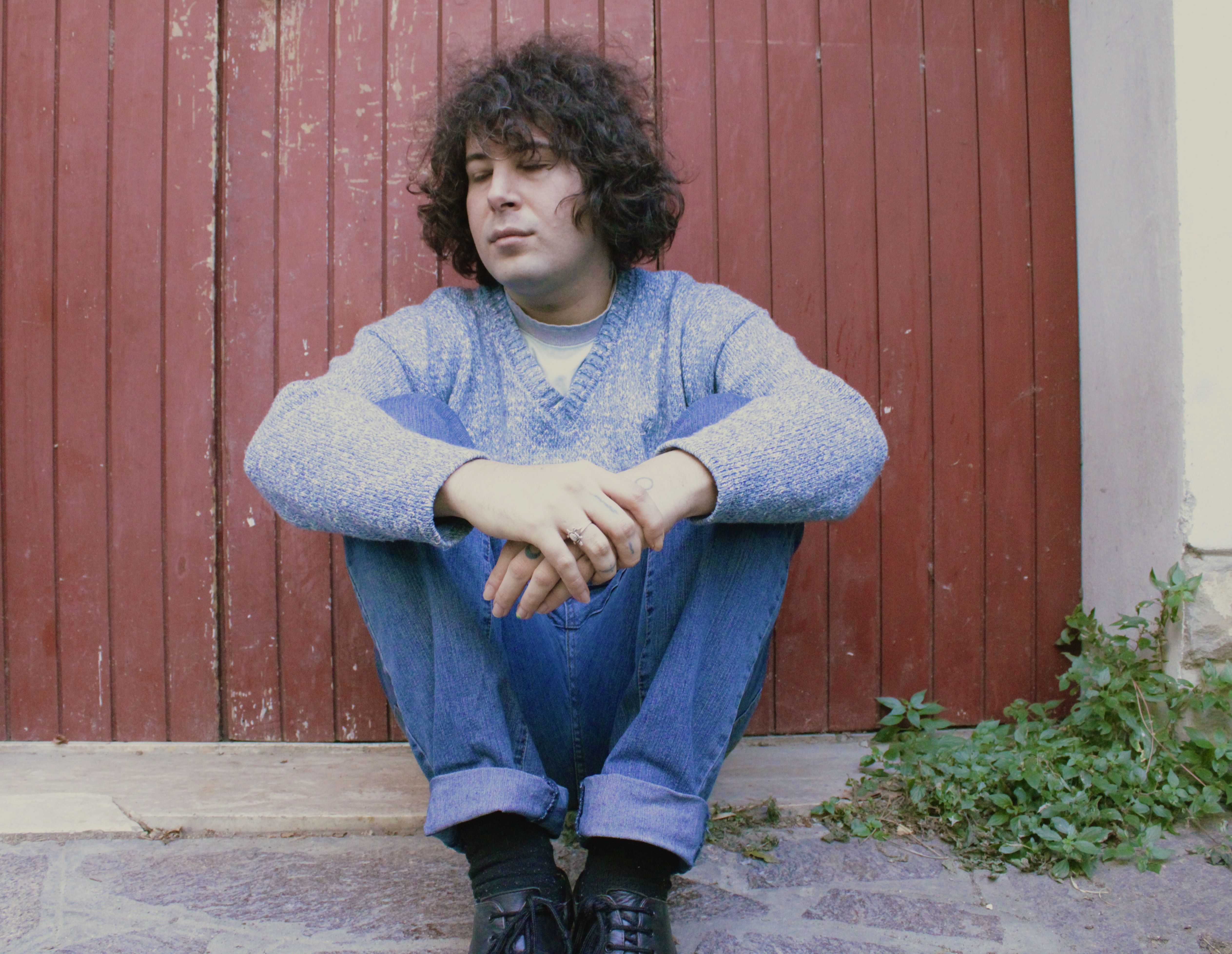
Michele Ducci Interview Image by Letizia Mandolisi
How has technology, such as autotune or effect processing, impacted singing? Has it been a concrete influence on your own approach?
It is never said enough that even reverb, for example in dream pop, is a note corrector: it removes, makes the note less clear, etc.
But I don’t think it’s the problem. Often, even without auto tune, the problem is that many artists do not know what to say and have remained in a sort of eternal puberty.
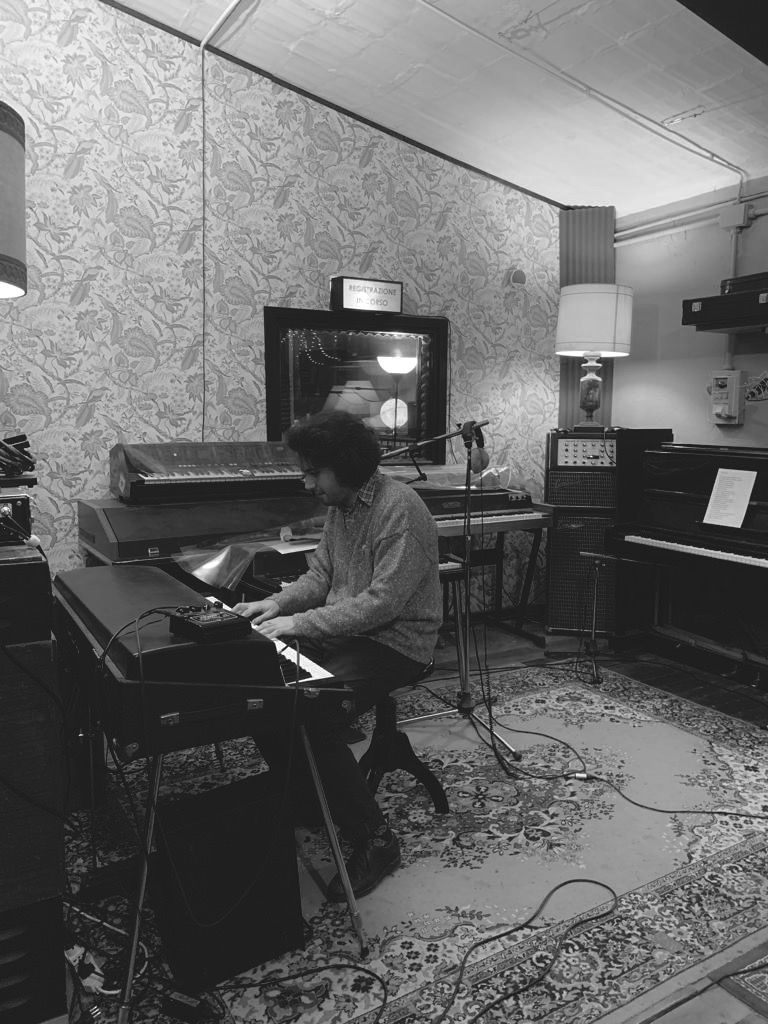
I always try to work in a short time, all live, without editing. I do it precisely because the effect that must be recalled most of all is that of the life that lives.
For recording engineers, the human voice remains a tricky element to capture. What are some of the favourite recordings of your own voice so far and what makes voices sound great on record and in a live setting?
Don’t put up a mountain of voices and use a good microphone: I use De Facto’s DPA both live and in the studio.
One of the things I like the most about my last NUBA Live Tape work was just the voice work.