Published
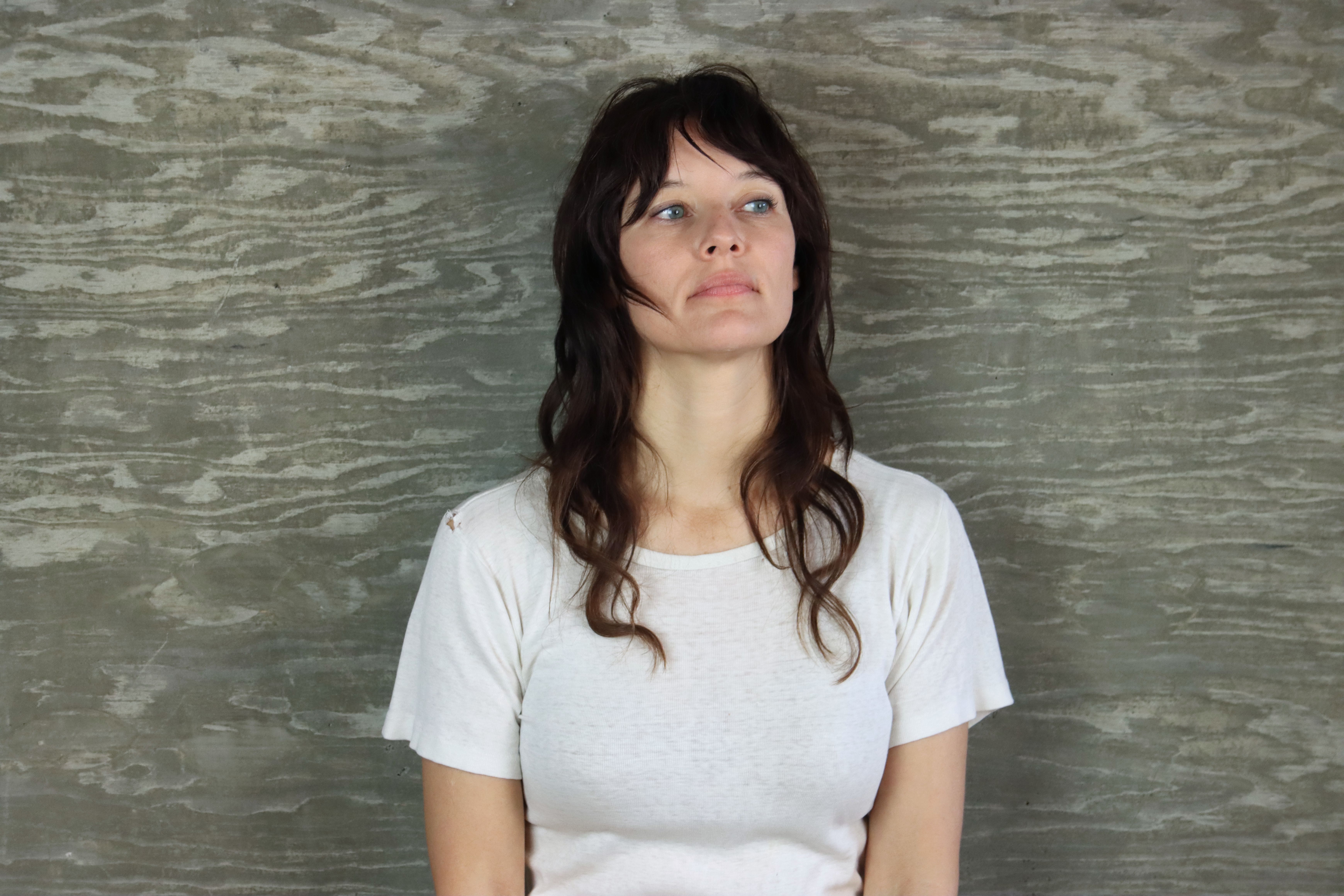
Name: Michelle Moeller
Nationality: American
Occupation: Composer, performer
Current release: Michelle Moeller's Late Morning is out via AKP.
Recommendations on the topic of sound: I love Crucial Listening, a podcast where experimental musicians and sound artists discuss the albums that are important to them.
If you enjoyed this Michelle Moeller interview and would like to stay up to date with her music, visit her official website.
Do you think that some of your earliest musical experiences planted a seed for your interest in sound?
I was a very nerdy kid, and got pretty obsessed with our living room piano at a young age.
We had a VHS copy of Amadeus that I watched a million times. I tried to copy his upside down playing technique and dressed up as Mozart for Halloween in 3rd grade. I actually won a costume contest but they mistook and announced me as George Washington.
Do you experience strong emotional responses towards certain sounds? If so, what kind of sounds are these and do you have an explanation about the reasons for these responses?
Generally my interests are pretty broad, but I’ve always been a sucker for interesting jazz chord voicings, and occasionally go down rabbit holes of studying them in books or on youtube (thanks Barry Harris!)
“Nest,” from my album Late Morning features an outro inspired by some favorite chord voicings (thank you Mark Levine!)
Are there places, spaces, or everyday devices which intrigue you by the way they sound? Which are these?
Preparing piano has certainly sent me in the direction of repurposing everyday objects.
I went through a big magnet phase, both in the making of audiovisual work and also for piano preparation. I love finding objects that make interesting percussive sounds inside the piano’s body … Christmas ornaments, chopsticks, marbles, bamboo straws, you name it.
Lately I’ve been in a glass phase, both in terms of the characteristic of their sounds and the way they interact with light. I have a new audiovisual piece that utilizes prisms, light bulbs, and glass beads.
For some, music equals sound, to others they are two distinct things. What is the relation between music and sound for you? Are there rules to working with sound, similar to working with harmony, for example?
There was a time in my life where music and sound felt separate in a way that challenged me. After spending a lengthy chapter confronting this cleft, I feel that the two are more integrated in my practice nowadays.
My approach to making music is sort of like intuitively fumbling the dark, taking one step at a time without knowing where it will lead. Sometimes I’m working on a piano sketch that's lyrical or catchy, sometimes I’m working on a synth tone that's harsh and piercing. Sometimes these ideas merge and compliment one another, sometimes they are better left on their own.
I try to let things develop naturally, allowing relationships to reveal themselves in their own time.
For your own creativity, what were some of the most important things you learned from teachers/tutorials, other sound artists, or personal experience?
In grad school, my professor Laaetitia Sonami said “trust your attractions,” which has always really stuck with me.
Sometimes an interest emerges from seemingly nowhere; could be a work or artist from another discipline, an evocative word or phrase, or something as simple as a shape or color.
The more I trust these mysterious impulses, even without fully understanding them, the more intuitive and productive my own creative practice becomes.
How and for what reasons has your music set-up evolved over the years and what are currently some of the most important pieces of gear and software for you?
For years, I dabbled in hardware synths only to find that my piano brain kept interfering with a sense of creative freedom. When I started using Max MSP for synthesis, a different world opened where I could focus intensively on timbre and texture without worrying about harmony or rhythm.
This software is a critical component of my electroacoustic work for piano and computer, which relies upon interactive systems that aim for the sweet spot between pleasing and spontaneous.
"Leafless," for CP70 Yamaha electric grand and computer, is an example of such a system.
Late producer SOPHIE said: “You have the possibility with electronic music to generate any texture, and any sound. So why would any musician want to limit themselves?” What's your take on that and the relevance of limitations in your set-up and process?
Electronic music was always a bit daunting to me for this very reason. I find the lack of limitation overwhelming.
Part of the reason I’m drawn to MAX is the sense of limitation imposed by the language, which has a steep learning curve and tedious interface. The cumbersome nature of the software forces a slower pace and encourages me to fully digest and explore every mechanism I build, stretching it in a number or directions, applying it in a variety of scenarios.
Could you describe your creative process on the basis of one of your sounds, pieces, or live performances that's particularly dear to you, please?
My audiovisual piece, “Observatory,” really illustrates the value of learning to trust my own attractions.
I started obsessing over magnets, primarily through two points of inspiration, “Kanta Horioparticle” by Kanta Horio ...
... and Takis: Moving sculptures by a pioneer of kinetic art.
I really didn’t know what I was doing, but I started collecting magnets and nudging them around. Eventually, I used a contact mic to capture their motion and mapped this data to a synthesis patch I was developing in Max MSP.
In relation to sound, one often reads words like “material”, “sculpting”, and “design”. How does your own way of working with sound look like? Do you find using presets lazy?
I don’t judge anytone for using presets, but it's not a mode of working that I find inspiring. I like starting with a hunk of clay and shaping it from scratch.
It's a little silly but I savor the feeling of having earned a sound through struggling to make it.