Published
Name: Sabine Wenzl aka Mieke Miami
Occupation: Singer, songwriter, saxophonist, multi-instrumentalist, composer, improviser, producer
Nationality: German
Current release: Mieke Miami's new album Birdland is out via Edition Dur, order it at Dussmann. Catch her record release party as part of the Stadtbad Live series at the E-WERK Luckenwalde. About recording her very personal version of the Dusty Springfield classic “Son of a Preacher Man,” she says: “I didn't decide or choose the song, it just came to me. But when it was there, since it was there I had to deal with it. I am not Dusty Springfield, and so I made some adjustments to the text so I didn't feel awkward singing it. I tried to approach it with a certain casualness and laconicism. My favourite part in it are the flute / bass clarinet comment-kind of reedsection arrangements, I think they very much add to this vibe.”
If you enjoyed this Mieke Miami interview and would like to keep up to date with her music, visit her on Instagram, and Facebook.
For a deeper dive, read our earlier Mieke Miami interview.
There are many references to the past on Birdland. Still, the album sounds very fresh.
Thank you!
In the polarity created by Simon Reynolds - Futuremania vs Retromania - where do you see yourself?
I really can't answer that because this is something I never think about, I just aim for making something that feels true and honest to myself. Generally speaking, since the past is very long and the present just an instant of course there is more to discover in the past.
Why can music from the past quite often feel more relevant than something from the present?
Because great art is timeless. Music from the present will soon be music from the past, and time will show what/which of it outlasts. Music from the past has already gone through this process.
What were some of the influences from the past that played a role for Birdland?
A very concrete musical influence from the past is the second part of “Parrots”.
It is a re-harmonized version of the jazz standard “Sweet love of mine” by Woody Shaw, and of course “Son of a preacher man” which I have covered.
Then there's lots of old Instrument, like my Selmer Mark VI Saxophone which is maybe 50 years old and an old “Weltmeister” organ , that's an East German brand of super solid organs that were built for Kindergartens. And our beloved moog Opus 3, just to name a few of my favourites.
I adore the writing and arranging of Duke Ellington and listen to his music a lot. So without really having studied or transcribed his music I guess some of that subconciously has found a way in my music, at least I like to think so ...
Speaking from the inside of my mind: my own past and experiences. We are all products of the past, right?
Have you ever been at the original location of Birdland in New York – or its follow-up space?
Well, the original Birdland closed in the 60ies I think. Although I have been to New York several times and went to lots of jazzclubs I can't remember having been to it's follow- up. Those famous, established clubs are pretty expensive and the exiting stuff mostly happens in smaller venues anyway.
Did the legendary albums recorded at the venue play an important role for you?
To be honest I have an unpopular opinion about live albums - the magic of an evening, the atmosphere, the exitement of the moment rarely conveys on a record. Musicians, especially jazz musicians play differently for a live audience, longer solos, more extrovert, bolder than in the studio. And that has to be so and live it's as I said magic sometimes. But when you listen back, stripped from all the surroundings it loses something.
So I prefer recordings made in the focus of studio atmosphere, aimed only at the listeners ears.
Birdland seems to also have a symbolic meaning for the album. What does it stand for, would you say?
Generally Birdland stands for saxophone icon Charlie “Bird” Parker, the birth of bebop. It represents Afro- American heritage and culture. From there, jazz has spread all around the world, causing hundreds of jazzclub-owners all over the planet to name their local venues after it.
So they did in my hometown Hamburg. I went to the Hamburg “Birdland” as a teenager to the sessions that were very confusing to me, to figure out what they were doing there.
It's also a little hello to my new home in the area of Brandenburg, home of many birds. The city I live in, Luckenwalde, even has a pelican as heraldic animal. That's what it means to me.
Tell me a bit about putting together the band and the general approach for the album, please.
I just sit down and write music and when I feel ready I call the guys and rent a studio. For this one, we had two studio recording sessions. I prepared those sessions by making demos or even pre-productions.
This first session we did at beautiful Bonello studios in Berlin Wedding with the same musicians I had already worked with on the previous album. There is for one my husband Benautik on keys, the drummer Hanno is his childhood friend, but all three of us also studied music together at the Berlin Jazzinstitut. The other two, Alex on Guitar and Jörg on bass I met through Benno and Hanno's projects and I loved their playing, their sound and their kindness. We recorded the songs that have vocals on them
The second session, the jazz session, I did in an old cinema with a jazz sextett. Before writing for this session I had spent a month only listening to lots of jazz, especially Yusef Lateef. I was very happy to have alto-saxophonist Roman Ott join me, who had been my saxophone mate in music school and with who I have a mysterious musical connection. We hadn't played together in years so that was super nice. I played saxophone and flute on that session, no singing.
All the material from the sessions then underwent intense editing and overdubbing and re-recording and mixing and hours and hours and hours of work by me and my producer Benjamin Spitzmüller.
What do you still remember about the songwriting and recording of the album?
Well, half of the songs I wrote in the mornings between 9 and 12 when our son was in kindergarten. So that was interesting.
On a private level there were some dark and stressful things happening, but I kept on and things got lighter. The dark things found their way into the music, though. As well as some revelations about my personal history emerging into the music and texts, especially in “Fire” and “7 Miles to Jordan”.
I also have vivid memories of writing “Whispering Pines” on a most wonderful family vacation in Ireland, giving myself a break from this dark world.
There is a dreamlike, hazy, occasionally mysterious mood which floats over the music. What role do memories and dreams play for your creativity?
A very big one, and so does the idea of a drug high! Which is funny because I don't even do drugs. But I very much like the idea of a slightly surrealistic, trippy, Alice-in-wonderland kind of world in my music.
Anselm Kiefer once said: “An artist only ever depicts what he experienced in his childhood and youth [...]. [There is no other material for artists than the secrets of their childhood years.” Is that something you can relate to?
The album cover from the digital release is a picture that used to hang in our home when I was a child. My father had brought it from Singapore in 1976. I used to get lost in that picture, wondering about its meaning. I have carried it around with me ever since, still feeling the same about it. So yes! I can relate.
Until I was 6 years old I went trough the world with undiscovered extreme short sightedness and astigmatism. So my memories and experiences are extra-blurry (haha) and enigmatic.
I'd like to add that carrying and giving birth to a child, and being a mother is an incredible deep experience as well, so for me that is something that definitly adds to my material.
I absolutely love the music on Birdland, but I love the production and feel of the music just as much. What kind of sound were you looking for and how did you go about achieving it?
My idea of sound is very much influenced and shaped by my producer and mixing engineer Benjamin Spitzmüller, who together with Max Weissenfeld developed the sound of legendary “Philophon” records.
Were there any “vintage” pieces of equipment involved in the making of it?
The entire album is produced on a 1963 Siemens vintage mixer. Most of the sounds are recorded analog in a chain with two old pultec EQ and an American vintage limiter from the late 50s.
After the analog mix all sounds were digitally converted and the final mix is done without using plugins.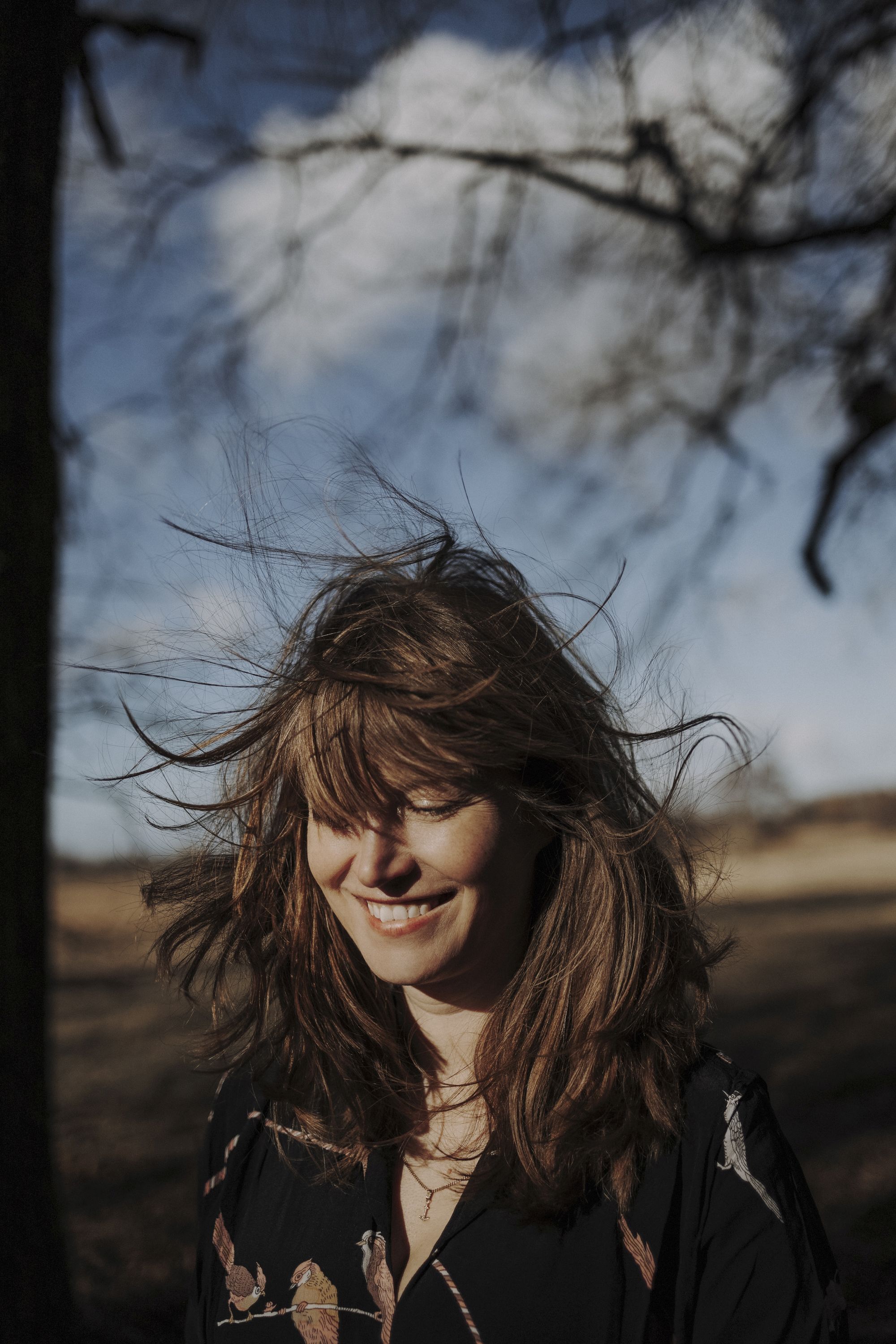
Mieke Miami Interview Image by Dovile Sermokas
What is your sound ideal in general? Do you tend to prefer a sound where the music sounds like the band is playing in your living room or the kind of magical reality that Sgt Pepper evokes?
It won't surprise you that I am absolutely aiming for the magical reality. In fact I find the idea of seeing the actual musicians before my inner eye rather bleak.
Music is for me detatched from the person who operateds the instrument or even the singer. It's more like nordic light floating through the room or a trigger for an imaginary movie.
I just spoke to saxophonist Jerome Sabbagh and he told me: “For my albums, don’t really do edits. We just try to play like we would at a concert, and record it as well as possible. It puts everyone in a different mindset.” Is that a philosophy you can subscribe to as well? What was the balance between spontaneity and refinement like for Birdland?
Since I don't have much financial scope for rehearsals or long studio time I SHOULD come to the studio with extra-clear preproductions ...
This time I have to say that the first of our two studio sessions was very poorly prepared by myself. I had somehow hoped that going into the recording only with some sketches would make interesting stuff happen. I am sure that would have been the case with the wonderful musicians I am with, but facing the supertight schedule it was a bad idea. So the material underwent intense post-productions and lots of overdubs.
The second session with the jazz sextett went better. Funnily enough that time the musicians played my tune “Parrots” so well that it was somehow too well and I ended up deleting almost the whole session of that tune and using my oddly shakey, poorly recorded demo as basis .
Sonja Eismann makes several references to hip hop in her liner notes. Are these actually intended? What's the relationship, for you, between jazz, your own music, and hip hop?
I love hiphop, but I wouldn't say its a concious influence on my music. Except for the rhythm of one vocal line in “The tiger and the snake.”
Next to Benjamin, Sonja Eismann was the only person to get that, which made me happy.
What does jazz mean in 2024, would you say?
I don't know what jazz means in 2024. I have to catch up with the current artists to be able to answer that question. And I will! But not now.
But jazz, at least spirit-wise, will always be relevant on a universal level.
In our previous interview, you said: “When I'm drunk I like to talk about saxophone mouthpieces.” Let's imagine you're totally wasted – what would you tell us about them?
(This only works with a fellox saxophone player)
If you're asking me: Forget those modern mouthpieces! All you need is a good old Otto Link metal. Happyness! And Hemke reeds! Hemke reeds are best. Have you ever tried those Alexander reeds? Man, I hate those! They feel perfect for the first 5 minutes and then poof … over! Dead.
By the way-do you keep your reed in schnaps so they last longer? Talking of schnaps - waiter!