Published
Name: Mike Casey
Nationality: American
Occupation: Saxophonist, composer, improviser
Current Release: Mike Casey's new album Valencia is out now.
Recommendations: I find myself revisiting these 2 quite a bit lately: Zule Guerra - Montuno; Nancy Wilson singing “The Island”
If you enjoyed this Mike Casey interview and would like to know more about his music, visit his official website. He is also on Instagram, Soundcloud, and twitter.
Do you think that some of your earliest musical experiences planted a seed for your interest in improvisation?
Yes. My earliest memories of this are my mother singing songs about “anything”. She would improvise melodies and lyrics about random things all the time around the house.
Subconsciously this was my introduction to improvisation, better expressed as spontaneous composition.
When did you first consciously start getting interested in musical improvisation?
Consciously it was when I first picked up the saxophone, mostly because I’ve always been fond of creating spontaneously and making my own rules.
Plus at a young age I hated reading music. I later learned how to read pretty well, but I was originally so belligerent about that, I would memorize entire method books and songs in wind band to avoid having to really learn how to read music.
Looking back, I am glad I learned to hear deeply first before learning to read. That’s how most languages are learned, anyways … and when I play or compose, I am speaking.
Which artists, teachers, albums or performances involving prominent use of improvisation captured your imagination in the beginning?
Sonny Rollins was my first obsession - Tenor Madness album in particular, especially “The Most Beautiful Girl In the World” and “My Reverie”.
That and Miles Davis “Bye Bye Blackbird” with Trane as well as B.B. King really drew me in in the very beginning at a young age.
My parents are jazz fans and always had something playing in the house.
Tell me about your instrument and/or tools, please. What made you seek it out, what makes it “your” instrument, and what are some of the most important aspects of playing it?
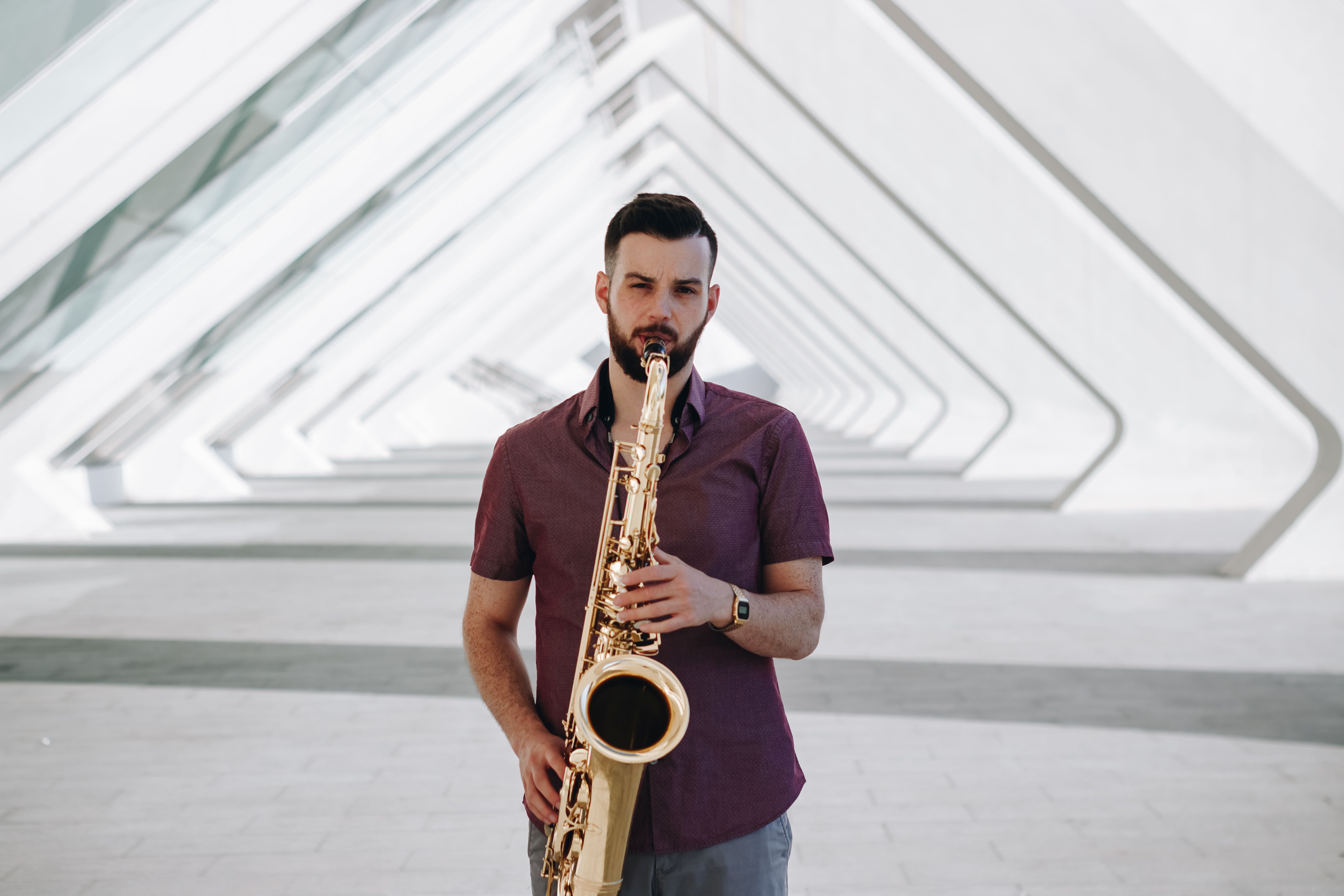
Currently, I play the Yanagisawa 991 series on both alto & tenor. While I guess I am now mainly more known for tenor because most of my released recordings feature tenor than alto, I have been playing alto longer. See alto example from album “Law of Attraction”:
I’ve customized them quite a bit to be a “match set”, added oversized metal resonators to allow for a broader tonal colour palette (something I’m obsessed with), and I no longer play the original neck. The necks - from 2018 onward - is actually a newer Yani neck from the WO series which is 1 model newer than my 991s (I believe I play the final 991 models before they were discontinued). I also removed the thumb rest to allow for even more resonance.
I’m really really obsessed with sound & resonance from every angle and that’s part of what led me to learning to mix & master my own music too, which is increasingly the case for my most recent releases. I am not really a “gear head” though and have generally had the same reed/mouthpiece/sax setup for I think 11 or so years now, excluding the neck change in 2018.
When I play the saxophone, I want to feel resonance enveloping my entire being and the whole space. The saxophone has the power to vibrate the cells of the body. The more resonance I can create, the more light I can emanate from my soul, and the more room I have to play with as an artist. I want to spread light, through sound.
How would you describe your own relationship with your instrument – is it an extension of your self/body, a partner and companion, a creative catalyst, a challenge to be overcome, something else entirely?
Definitely an extension of self, but also an endless well of inspiration. When I write melodies and basslines on the sax (mainly my preference these days), my compositional voice changes VS doing the same on the piano.
It’s also a healing device. I instantly feel better when I start playing, even if it’s just long tones and appreciating resonance.
Derek Bailey defined improvising as the search for material which is endlessly transformable. What kind of materials have turned out to be particularly transformable and stimulating for you?
Harmonic minor starting from the 5th. Whole tone. The blues. Any groove that’s a bit off kilter. Telling a story with a single note. Rhyming phrases. Intervallic leaps but for lyrical reasons. Challenging yourself to extend an idea a little bit further.
Do you feel as though there are at least elements of composition and improvisation which are entirely unique to each? Based on your own work or maybe performances or recordings by other artists, do you feel that there are results which could only have happened through one of them?
Absolutely. This is the basis for artistry itself.
When you're improvising, does it actually feel like you're inventing something on the spot – or are you inventively re-arranging patterns from preparations, practise or previous performances? What balance is there between forgetting and remembering in your work?
At my best, yes it feels like I’m composing something unique to me and to the music at hand on the spot. Part of this is that for the last 10ish years I have by and large not only massively decreased the amount of jazz I listen to on purpose to avoid subconscious copying/re-arranging - and when I do listen, it’s mainly strictly for enjoyment as a fan not for study as a musician - but also, because about 2/3rds of my practice time now involves “free improvising”.
I still do practice on forms of course, particularly after finishing a new composition, but that kind of practising is mainly just technical and ear-training based - not creativity based. All of this to set myself up so that in the moment, I can create as freely as possible with less references and be truly spontaneous.
Are you acting out parts of your personality in your improvisations? If so, which are these?
Yes. I come from a culture of endless questioning and wordplay, irony, satire. My culture cries and wails in music. Another part of my cultural background leans more towards poetry. I think all of these cultural traditions come through in my approach.
In addition to that, I have ADHD which has certain pros and cons. Lots of pros for the artistic process, some of which include sensitivity and easily achieving a high level of attunement, focus, or maybe you could call it tunnel vision, but aurally.
When I listen back to myself and even other players sometimes, I feel like I can hear the ADHD in my music.
In terms of your personal expression and the experience of performance, how does playing solo compare to group improvisations?
I used to do 1 song solo saxophone in shows - usually a ballad like “Darn That Dream,” “My Ideal,” or “It Could Happen to You.” I miss doing that! It’s a really fun challenge both physically and creatively.
One is you’re talking with yourself, another is talking with others.
In your best improvisations, do you feel a strong sense of personal presence or do you (or your ego) “disappear”?
I feel a strong sense of personal presence, but I wouldn’t call it ego.
In a live situation, decisions between creatives often work without words. From your experience and current projects, what does this process feel like and how does it work?
It’s one of the best things about music to me. An example of this could be “The Beauty of Everyday Life” from the new album Valencia, particularly the piano solo later on and the guitar/harp trading in the beginning.
Even though as the producer and composer I had set up the environment for that to happen, I really would have never predicted - or particularly in the case of the piano solo, encouraged - those kinds of solos. But I love how both came out, it works perfectly in a way that even surprised me. Or even how the sax solo climaxes - that wasn’t planned but works better than I could have hoped.
This was only the 2nd time this group of musicians had played together - we had 1 rehearsal then this session, and we had only met a few months prior.
Stewart Copeland said: “Listening is where the cool stuff comes from. And that listening thing, magically, turns all of your chops into gold.” What do you listen for?
Lately I’ve been focusing on the following when I listen: delivery, dynamics, storytelling, decision-making, setup of ideas, and the fine line between composition and production.
I have always been fascinated by the many facets of improvisation but sometimes found it hard to follow them as a listener. Do you have some recommendations for “how to listen” in this regard?
Yes. First, surrender to any expectation that you have to understand or follow what’s going on to enjoy it. You don’t. You can enjoy the conversation and the flow of energy without knowing the language at all.
Second, if you did want to follow it, I would recommend the following exercise: expansion by confinement. Say it’s a record with sax, piano, bass and drums. Commit to listening to a song 6 times. The first time, listen as you normally would. The next 4 times, concentrate and listen deeply to one individual instrument for the whole song each time. The final time, relax and listen to the “full song”.
Something that can make this exercise easier if you remove elements. Like, maybe focus on a trio recording. Or a composition that has more of a modal vibe or vamp. That way you’re listening a bit more for rhythm and melody than harmony rather than a lot of information on all 3.
Within my catalog, “Remote” ...
... or “Space Chill” fit that description and could be good places to try this. There’s still a fair amount of complex harmonic moments happening with the solos but it’s layered against a vamp rather than a lot of other harmony.
Lastly, remember that improvisation is really about storytelling but remember that tension and release play a big part of that. Listen to how any given artist connects their ideas, or if you can’t grasp that, ask youself where you think the artist is “releasing their ideas” and where the others in the band are “catching” them.
In a way, improvisations remind us of the transitory nature of life. When an improvisation ends, is it really gone, just like a cup of coffee? Or does it live on in some form?
Ideas live on as vibrations forever.
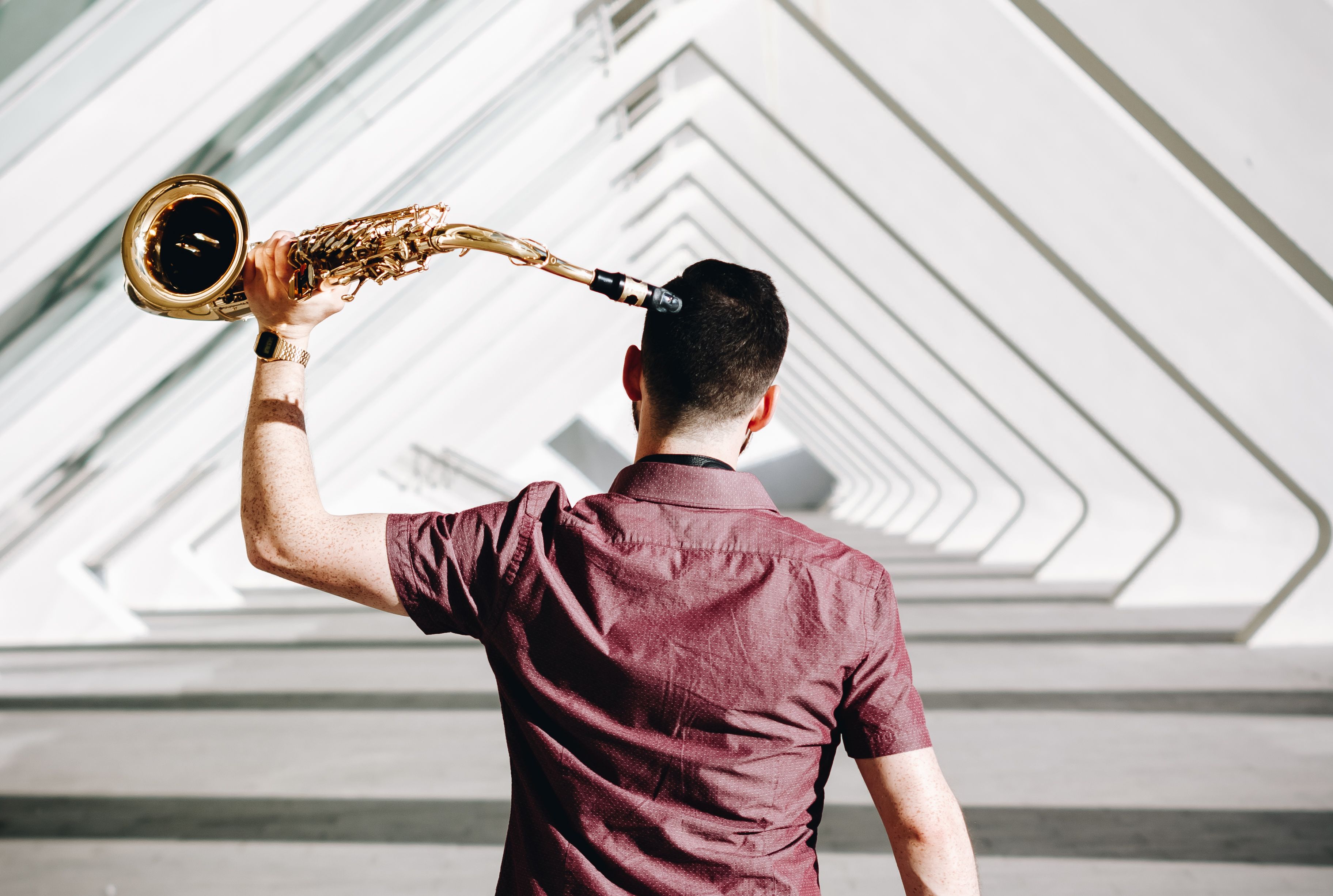
Mike Casey Interview Image by Hernan Arnez