Published
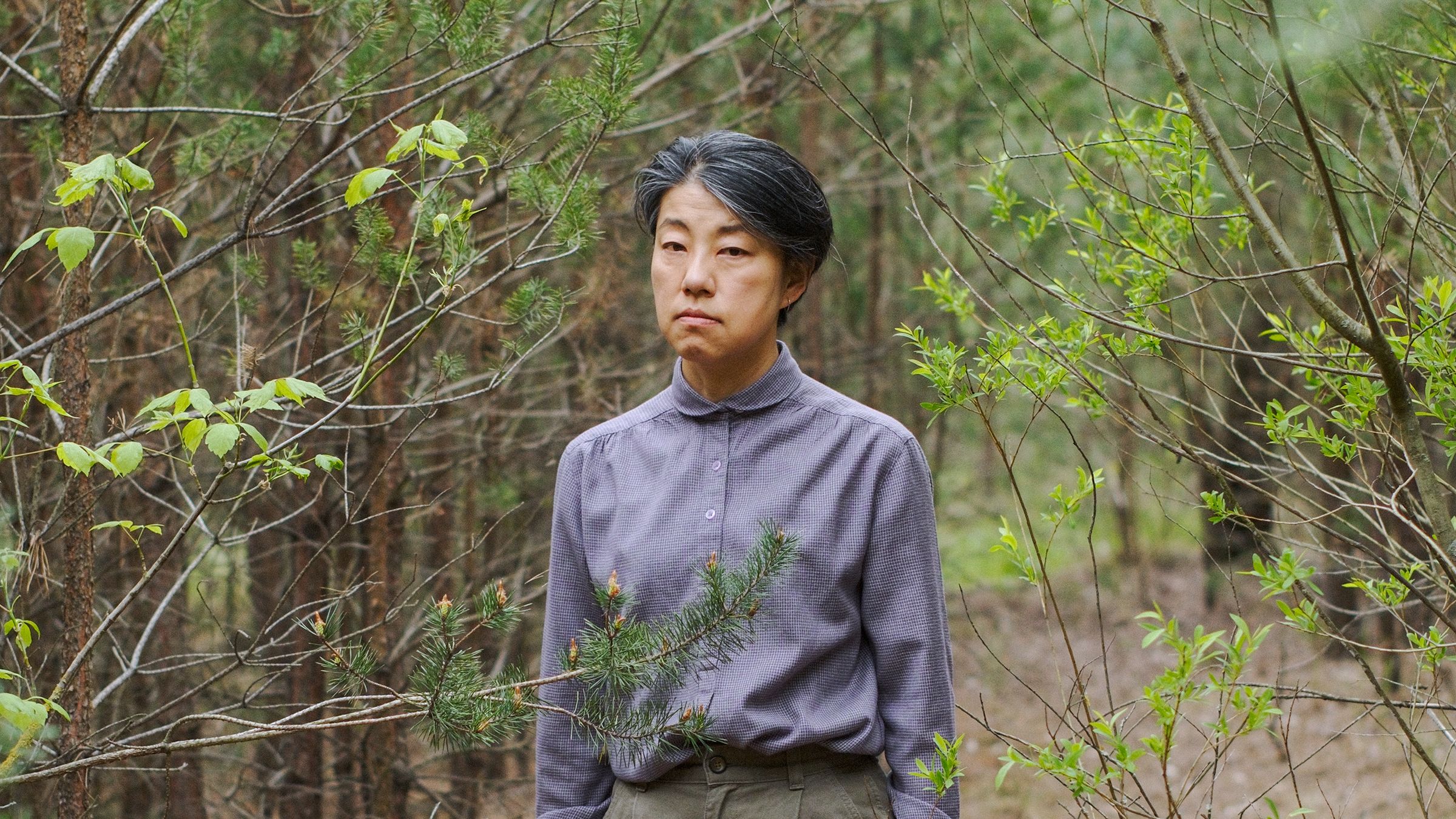
Name: Miki Yui
Occupation: Composer, sound artist
Nationality: Japanese, Germany-based
Current release: Miki Yui's As If LP is out via Hallow Ground.
Recommendations: I prefer not to impose anything on anyone … let’s go to bookstores or follow your instinct in the ocean of the Internet and see what speaks to you.
Nonetheless, my favorite bookstore is Zabriski Buchladen für Kultur und Natur in Berlin. I also like reading the blog THE HUM, especially on Sound and Democracy, also because it is related to my current artistic research project “We are more alike than we are different.”
If you enjoyed this Miki Yui interview and would like to stay up to date with her music, visit her official homepage. She is also on Facebook.
For the thoughts of one of her collaborators, read our Carl Stone interview.
Do you think that some of your earliest musical experiences planted a seed for your interest in sound?
The most important experience took place in my childhood.
Before listening to any music, I remember being sick out of school, lying in my bed alone, listening to the sounds around me was the initial experience.
Later, this became an inspiration for my first album small sounds released in 1999.
Do you experience strong emotional responses towards certain sounds? If so, what kind of sounds are these and do you have an explanation about the reasons for these responses?
I love badly recorded sound, there is something mysterious that makes me curious.
Sounds that triggers my imagination attract me. A strange resonance, not straight rhythms or interesting vibrations that permeate my body physically - they eliminate borders, also the border between inside / outside.
For some, music equals sound, to others they are two distinct things. What is the relation between music and sound for you? Are there rules to working with sound, similar to working with harmony, for example?
Sound can be music, depending on the perception of a listener.
I am an autodidact, and my approach is purely instinctive, without any rules. The only thing I care about while working with sounds is that, through my processing, those sounds gain their own life, become entangled with other sounds, ideally also with the existenting sounds in the room where my music is played back, to transform into a lively and unique space experience.
This is my idea of music.
What were your very first active steps in terms of working with sound and how would you rate the gains made through experience?
In1994 I moved from Tokyo to Düsseldorf, Germany and entered Art Academy. There, I started using video for my creation. Soon I realised that my fascination was in sounds rather than in the visuals.
I started to record whatever sounds I found around me on a simple cassette recorder. I was attracted by subtle sounds that triggered my imagination and shifted my perception towards the acoustic environment.
Eventually, I studied how to work in a sound studio at the Media-art Academy in Cologne. These early pieces became my first album small sounds in 1999.
For your own creativity, what were some of the most important things you learned from teachers/tutorials, other sound artists, or personal experience?
Oh, so many things I learned from the predecessor as well as my collaborators, Klaus Dinger (NEU!), Rolf Julius, Carl Stone, Asmus Tietchens, or Rie Nakajima ...
I guess, the most important thing is to stay true to your quality and keep your own attitude as an artist and keep working no matter what.
How and for what reasons has your music set-up evolved over the years and what are currently some of the most important pieces of gear and software for you?
My relationship with equipment oscillates between controllable and uncontrollable.
I started working with diverse microphones, mobile recorders and Pro Tools. I don’t use a computer in my live-set, my live instruments are the mixer, samplers and sometimes a sequencer.
2020 I started playing around with a modular synthesizer in my studio. Since I do not know much about how it works, it enables me to integrate a chance operation in my composition.
Already as a little kid, I was drawn to all aspects of electronic/electric music but I've never quite been able to put a finger on why this is. What's your own relationship to electronic sounds, rhythms, productions like – what, if any, are fundamental differences with “acoustic“ music and tools?
I like both and I love the mixture of both. For me, they are all just different sounds.
Maybe electronic sounds come from an artificial fictional space, and it touches me differently.
Late producer SOPHIE said: “You have the possibility with electronic music to generate any texture, and any sound. So why would any musician want to limit themselves?” What's your take on that and the relevance of limitations in your set-up and process?
Without any limitation, an art piece would be boring. To create something with a limitation brings about its unique quality.
Since I am an autodidact, I am limited from the beginning and I enjoy struggling within my limitation.
Could you describe your creative process on the basis of one of your sounds, pieces, or live performances that's particularly dear to you, please?
It is difficult to choose one. Every piece is so special to me. Let’s take the latest album As If. These six pieces are emerged through the process which I had least control on. Most pieces come purely from the modular, as they emerged, they surprised me, and they are perfect just as they are. They only had to be adjusted so they can be published on vinyl.
A few songs on the album have samples mixedin. In the process of mixing, I often find myself putting things blindly together to see if something happens. As I then carefully work on the mix, different sounds start to talk to each other.
In relation to sound, one often reads words like “material”, “sculpting”, and “design”. How does your own way of working with sound look like? Do you find using presets lazy?
Being lazy or not lazy is also part of the artistic process.
Presets are alright when they are interesting, though mostly they are not. It depends on what one listens to, what one does with what is there.
To some, the advent of AI and 'intelligent' composing tools offers potential for machines to contribute to the creative process. What are your hopes, fears, expectations and possible concrete plans in this regard?
My understanding on AI is too little. I am rather interested in other kinds of intelligence, which are not programmable.
I guess AI is good within a non-artistic context to help people in a pragmatic way. Art is made by and made for human beings.
However, I am ready to be positively surprised by AI in the future.
How important is sound for our overall well-being and in how far do you feel the "acoustic health" of a society or environment is reflective of its overall health? What importance does silence hold in this regard from your point of view?
I guess awareness towards the environment and finding the right balance is key.
Whether or not it is healthy or not healthy is up to the individual mind and body to decide. So is whether or not it is enjoyable or not.
There is no absolute silence, there is only a shift in our perception.
Tinnitus and developing hyperacusis are very real risks for anyone working with sound. Do you take precautions in this regard and if you're suffering from these or similar issues – how do you cope with them?
Same as in the previous answer, I try to survive my work-process by shifting my perception.
Contrary to when I just started out, however, I now avoid getting stuck in listening too loud and too long.
Seth S. Horowitz called hearing the “universal sense” and emphasised that it was more precise and faster than any of our other senses. How would our world be different if we paid less attention to looks and listened more instead?
I believe in the holistic view that no sense works separated from the others.
Having said that, I think it is more calming sometimes to close your eyes and let all your senses open. There more to discover in ourselves as well as in the world.