Published
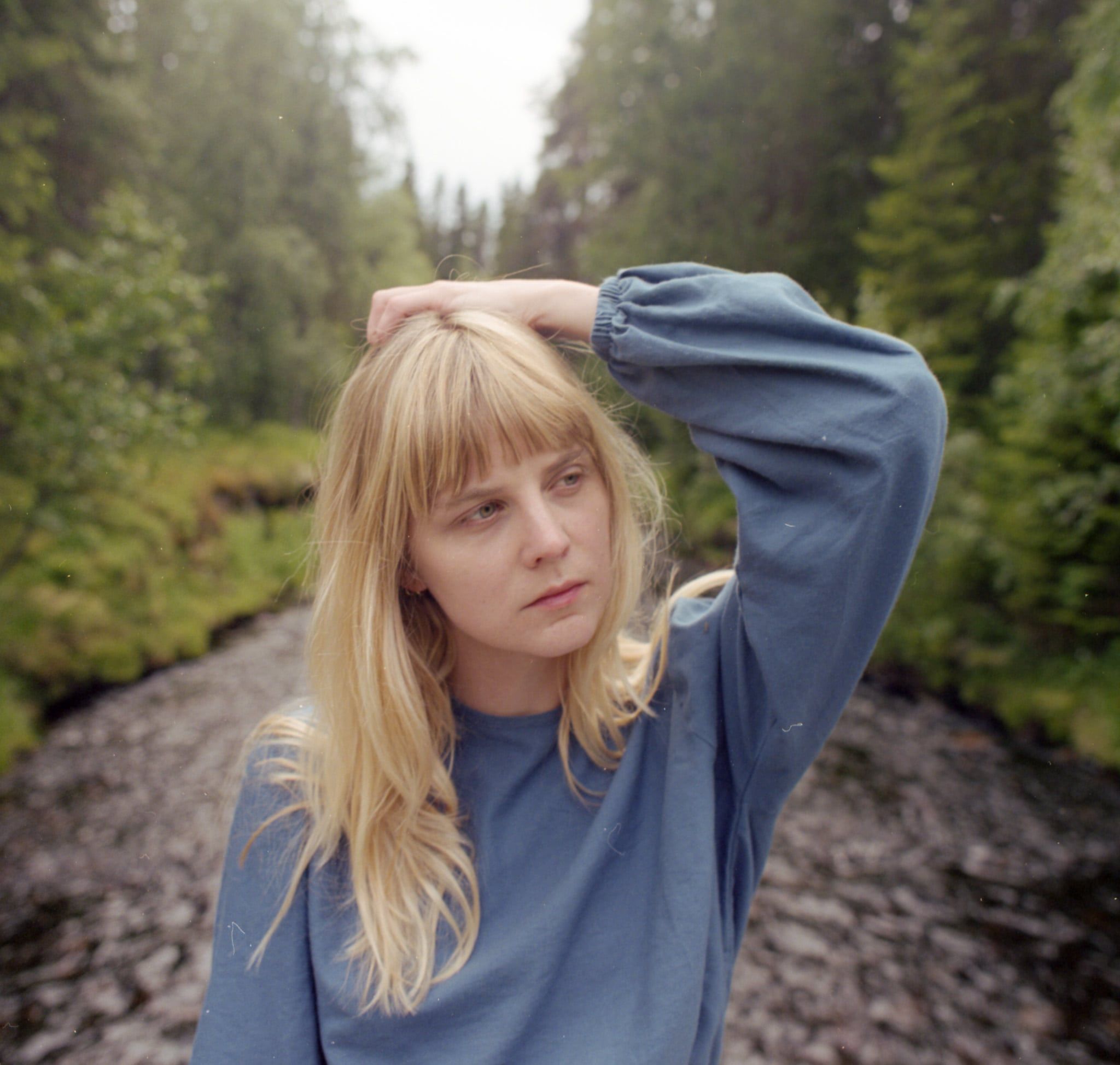
Name: Caroline Blomqvistaka Minru
Nationality: Swedish
Occupation: Singer, songwriter
Current release: The new Minru album Thin Places is out soon via PACAYA. Her new single “Dearest Life” is already available for streaming.
Recommendations for Gothenburg, Sweden: I live outside Gothenburg, and while the city itself is quite charming, I’d recommend exploring the nature surrounding it. The archipelago is very special, wild and peaceful at the same time. I would recommend to come in summer, bring a book, swimming things, and something good to eat. And then just spend the day between the sun-warmed rocks and the salty, cool sea.
Topic I am passionate about but rarely get to talk about: Space. I know almost nothing but I can’t stop learning little nerdy facts. Most nights I fall asleep listening to space podcasts, much of which I don’t understand, but it’s grounding in a strange way to hear about the vastness and chaos of it all. Knowing that everything happening here on Earth is unfolding against this immeasurable, indifferent expanse somehow really calms me down.
If you enjoyed this Minru interview and would like to stay up to date with her music, visit her official homepage. She is also on Instagram, Facebook, and bandcamp.
When it comes to experiencing strong emotions as as a listener, which albums, performances, and artists come to mind?
I thought about this recently.
There are songs that just have something that hits you the first time you hear them, and you don’t even know why. And then there are songs that are connected to an emotional event you’ve lived, so much that they become inseparable from that experience. The song alone might not have impacted you in the same way, but once it’s connected to that memory, it becomes a vessel for it.
For me, one artist who always brings out some kind of emotional release is Nick Drake. Maybe it’s partly the warmth in those early seventies recordings, the analog textures that just transmit a feeling of nostalgia.
But also, there’s just something so magical about his music, how he writes. This deep, almost naive honesty that feels completely unguarded, yet never self-centered.
There can be many different kinds of emotions in art – soft, harsh, healing, aggressive, uplifting and many more. Which do you tend to feel drawn to most?
I’m not sure this counts as an emotion in the literal sense, but in terms of an “emotional state,” I think curiosity is something I always strive for. It can be really challenging, especially in the hecticness of everyday life. But when you reach that state of soft openness, it’s like the world really starts to reveal its magic. Children are naturally so good at this, and I find that profoundly beautiful and inspiring.
I recently read the book The Expedition by Bea Uusma, and it fascinated me for that reason. It tells the story of three men who vanished on a polar expedition in 1897, and over a century later, the author becomes obsessed with uncovering how they actually died. She digs through archives, speaks with forensic experts and even travels to the Arctic to find new clues.
And what’s so amazing is how powerful her curiosity is. Even though she probably knows that she will never find the full answer, she just can’t let go of the mystery.
In as far as it plays a role for the music you like listening to or making, what role do words and the voice of a vocalist play for the transmission of emotions?
It think when it comes to vocals, it’s often very little about perfection and more about presence. You can tell when someone is truly emotionally present while singing. I think that comes from something ancient, an instinct we have as humans to listen for emotion in each other’s voices.
So when I record, I really try to create a space where I’m actually feeling what I’m singing rather than just capturing a take. Because the take that carries the feeling will always win over the one that’s technically cleaner.
When it comes to lyrics, I’m drawn to those that balance the literal and the symbolic, the everyday and the dreamlike in one. The Swedish songwriter Anna Ahnlund often writes lyrics like that, so if you understand Swedish, I really recommend listening to her music.
Basically, when a song feels relatable but carries a touch of surrealism at the same, those are the kinds of lyrics really inspire me.
Maybe it's because that's how life really is, in-between the mundane moments that make up our lives there is also so much unexplainable strangeness happening to us.
When it comes to experiencing emotions as as a creator, how would you describe the physical sensation of experiencing them? [Where do you feel them, do you have a visual sensation/representation, is there a sense of release or a build-up of tension etc …]
Songwriting can be hugely cathartic for me, but it can also sometimes be the total opposite, meaning it can bring up a lot of of anxiety, especially when I really want to finish a song or an album but am still on the search, for that word or that song or that part.
And there can be this build-up of tension after working on something for a long time, when the doubt starts to creep in: Am I ever going to finish this? or What if I mess it all up by not getting that part right?
But the feeling of finishing something, because when it's done you just know - it’s an incredible feeling. I think that’s why a lot of creative people do what they do, because it really brings this deeper sense of fulfilment and purpose, to finish something you’re really proud of.
When it comes to composing / songwriting, are you finding that spontaneity and just a few takes tend to capture emotions best? Or does honing a piece bring you closer to that goal?
I think it depends on the song. Some songs need a slower process to really reveal themselves. Letting things take time is part of their creative, and emotional, process.
On this new album though, one of the songs I'm the most happy with is “Dearest Life.” It’s one of those songs that almost wrote itself, which is probably why I like it so much. I wrote and recorded it in one afternoon, and the first recording I made is the one that ended up on the album.
At first, I felt unsure about that take, since I was working with very basic recording equipment. So while recording the rest of the album, I tried to re-record it with better mics and stuff, but none of the new takes never worked, which was really frustrating. When I played the recordings for friends, they all said the same thing: Why don’t you just use the demo? It’s perfect as it is.
Since then, I’ve promised myself to always have a good recording setup when I write, especially for vocals, because you never know if the first take, or any of the first takes, might end up being the final one. It’s just usually really hard to recreate the same feeling months later in a studio compared to when you actually wrote the song.
For Thin Places, what kind of emotions were you looking to get across?
I wrote Thin Places between 2021 and 2023, so it’s quite some time ago.
So when I talk about the album now, I have to try to reconnect with the place I was in back then, with the state of emotions that shaped the album. It was also during the time when I experienced a depression for the first time in my life, so feelings of anxiousness and defencelessness definitely influenced the songs.
What mattered the most to me at that time was to create something that felt honest. I wanted to really know the meaning behind each word on the album. There aren’t any filler words or songs on this album, which is probably why it ended up feeling quite sparse and stripped down. It was important for me that the album felt cohesive, in its atmosphere. Like stepping into one single, uninterrupted space for 30 minutes.
I wanted it embody intimacy and the natural world, which is why I included mostly acoustic instruments and field recordings, like birds, rain, and thunder. Those elements aren’t just decoration but central to the mood I wanted to capture.
In terms of emotions, what changes when you’re performing live on stage, with an audience present, compared to the recording stage?
When you're in the recording stage, you have the luxury of time, time for a re-take, time to tweak, time to react to what you’ve just played. But when you play live, you only get one chance. It’s the here and now: the sound in the room, the bodies in the audience. It more vulnerable in a way, but also more truthful to how the music would sound in a real space.
I also feel that the presence of a live audience alters the emotional field of the music somehow. It’s not the same as imagining a passive listener, which is often the case in the studio. Suddenly there is this shared synergy and attention from the audience and the band, that shapes how you feel and hear the music, even as the songwriter.
That’s why I like to play songs I’ve just written live in front of a real, physical audience, before I even record them. You learn so much about a song that way, not just on an arrangement level, but on an emotional level too. Sort of how the song wants to be, outside your own brain.