Published
Name: Miramar
Nationality: Puerto Rican (Rei Álvarez), American (Laura Ann Singh), Chilean (Marlysse Rose Simmons-Argandoña)
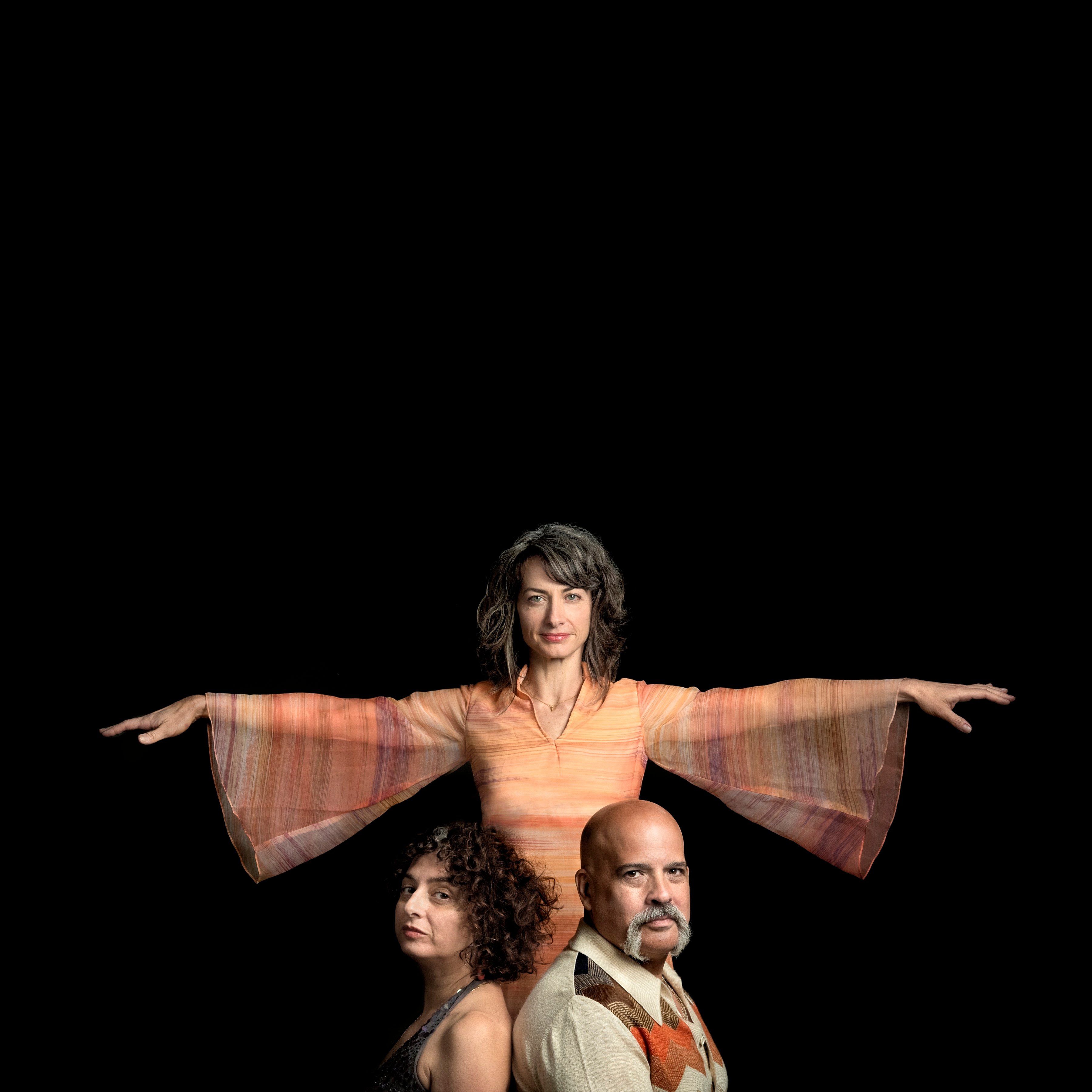
Members: Rei Álvarez (vocals), Laura Ann Singh (vocals) Marlysse Rose Simmons-Argandoña (keyboards)
Current release: Miramar's new album Entre Tus Flores is out via Ansonia.
Global Recommendation:
RA: When someone visits my hometown, my recommendation is always to visit any historic area. That's where the most culture (arts, food and music) will be found.
LAS: Wandering around the VMFA is a great way to spend an afternoon and eating dinner at Celladora.
Topic I rarely get to talk about:
RA: Aside from music, art and food, my greatest passion is my toy collection. Since I know most people won't understand it, I don't talk about it other than the occasional mention. It's very personal for me anyway, and it's kind of nice that most people don't know.
When it comes to talking about art and music, I am most passionate about the intent with which things are done. The reasons for something give it its value.
LAS: My greatest passion is probably Brazil and my lifelong attempt to absorb as much as I can about it culturally and linguistically. I find every language, every culture fascinating and always feel a little sad watching people speak a language I will never have time to learn or understand.
It's absolutely amazing to me that entire worlds exist within our one world, and that somehow we can still connect and appreciate each others' expressions of self and community. I think I'm drawn to music because it's a vehicle for all of that.
If you enjoyed this Miramar interview and would like to know more about the band and their music, projects, and upcoming live dates, visit their official homepage. They are also on Instagram, Facebook, and bandcamp.
Do you think that some of your earliest musical experiences planted a seed for your interest in writing lyrics or poetry? How and when did you start writing?
Rei Alvarez: I only started writing lyrics after starting to write music for Bio Ritmo in the early 90s. I attribute my inspiration mostly to my love for romantic emotion and the need to express it poetically.
My mother, who is both a poet and musically gifted, is responsible for sparking the interests that led me to art and music.
Entering new worlds and escapism through music and literature have always exerted a very strong pull on me. What do you think you are drawn to most when it comes to writing?
RA In writing, I am mostly drawn to the challenge of saying something that's already been said in a different way. We all have the same laments, yet everyone's experience is different. Escapism is a big part of it as well, even in something such as trying to find (or maybe creating) beauty within sadness.
Laura-Ann Singh: I love those moments when a songwriter or lyricist or poet voices something that resonates deeply individually and across human experience, when you feel completely seen or understood but also realize that this feeling isn't unique to you. It's a very powerful thing, and hard to do because so much has been written!
But I also love when a story takes you in and makes you forget that you're even listening to a story. It makes you invest by inventing your own little story lines to fill in gaps. That's when I know it's good.
What were some of the artists and albums which inspired you early on purely on the strength of their lyrics? What moves you in the lyrics of other artists?
RA: The lyrics which have moved me the most are those of the poet / composer Sylvia Rexach.
When it comes to lyrics I look for figuratively speaking styles that paint a relatable picture or feeling in my mind, and that might carry a heavy sadness.
Have there been song lyrics which actually made you change (aspects of) your life? If so, what do you think, leant them that power?
RA: I'm drawn to sad lyrics, which always seem the most real to me. This "realness" lends them a strength that inspires me to work at climbing out of my own sadness and finding light in the dark.
LAS: There are definitely songs that have inspired me to change course, evoked something so powerful in me that they literally shaped my life! I think it goes back to the resonance that each of us feels, and it's so deeply individual. What destroys all my defences and changes my heart might just not even touch someone else. It's very mysterious.
It is sometimes said that “music begins where words end.” What do you make of that?
RA: "Music begins where words end" because lyrics are not necessary for music to connect with, move and influence the listener.
LAS: I think that the unique thing about sung music is the words. It sounds very simple, but it's very important! Obviously, music can move us deeply when it's wordless, and words can pierce us without music. But I think we open our hearts and minds to words differently when they are sung.
A human voice can imbue sung words with such joy or pain or longing, the interpretation really lies so powerfully with the singer. I think that music can take words where they can't go alone. Not better or worse, just different.
I have always considered many forms of music to be a form of poetry as well. Where do you personally see similarities? What can music express which may be out of reach for poetry?
RA: Music is similar to poetry in that they are both a dance, a universal language based on rhythm. However, music can connect on a deeper level that does not depend on language.
LAS: I can hear a poem in a language I don't understand, and not feel anything. I can hear a song in a language I don't understand and be moved to tears or want to dance, or want to understand so much that I learn all I can about it ... even though it was foreign or unknown to me.
I think poetry is often for insiders (of a language, a culture, etc) but lyrics in music are a bit more open ended, a little more of a calling together and welcoming outsiders.
The relationship between words and music has always intrigued me. How do you see it? In how far can music take you to places with your writing you would possibly not have visited without it?
RA: Words and music call to each other through the inspiration they cause between them, like a chain reaction.
A poem can suggest a musical mood through its rhythm or message, but the feeling of a musical piece, when further defined through words, often takes me to unexpected ways of communicating it.
What are areas/themes/topics that you keep returning to in your lyrics?
RA: The human social and romantic experience is for me the most interesting and complex topic of songwriting, because it's about the relationship between joy and pain.
LAS: I love to explore the ways in which we make meaning. I think how much of what we fuss over is actually meaningless, and how love and death and suffering are the great equalizers.
On the basis of a piece off your most recent release, tell me about how the lyrics grew into their final form and what points of consideration were.
RA: In writing the song "Lo Sabras" the initial challenge was illustrating the relationship between father and son with its complexity and whirlwind of emotions, which are also the cause for the subsequent strong flow of ideas through which it all came together.
Do you tend to start writing with what will be the first line of the finished lyrics? The chorus? At a random point? What are the words that set the process in motion?
RA: When I have an idea for lyrics, there is usually a certain chord progression that I am thinking about that creates a certain mood and gives me a particular palette with which to create the words.
I guess I usually start with what I intend to be the first line, because I believe it's like a first impression, I want to immediately provoke interest and curiosity.
I'd love to know how you think the meaning or effect of an individual song is enhanced, clarified or possibly contradicted by the EPs, or albums it is part of. Does the song, for example, need to be consistent with the larger whole?
RA: I think of an album as different parts that make a whole concept. Otherwise it might just simply be a compilation.
I do believe the parts must have a relationship between them to be part of the greater picture, but don't have to be bound by having to contain similar messages. Every one piece must compliment the others through lyric, mood or idea.
When you're writing song lyrics, do you sense or see a connection between your voice and the text? Does it need to feel and sound “good” or “right” to sing certain words? What's your perspective in this regard of singing someone else's songs versus your own?
I almost never consider my voice when composing lyrics and their melodies.
I naturally compose within my vocal range, of course, but it is more the phrasing and emotion with which the song is performed that matters more than a particular kind of voice.
I would love to know a little about the feedback you've received from listeners or critics about what they thought some of your songs are about – have there been “misunderstandings” or did you perhaps even gain new “insights"?
RA: Often when someone misinterprets a song of mine, I'm reminded of how many ways there are to say something.
That said, the individual moments of inspiration particular lyrics can produce can be just as important as the overall "message" of a song.
Creativity can reach many different corners of our lives. Do you feel as though writing song lyrics or poetry is inherently different from something like making a great cup of coffee? What do you express through music that you couldn't or wouldn't in more 'mundane' tasks?
RA: As an artist, the most important part of any deliberate situation is the aesthetic involved. In order to really enjoy something I have to find some beauty in it, or at least make the attempt.
For example, even if I'm making a cup of coffee at home, I'll do it in the most rustic manner, using a cooking pot and a cloth strainer, because I enjoy it most that way.
Writing songs and lyrics is different in that I am reaching for something higher, trying to create beauty from imagined suggestions.
LAS: I feel like I need space in my life in order to let my mind wander to find songs. Some of my best ideas have been alone in the car or on walks in silence.
Filling up space always leads to a feeling of frantic activity, and I have to push against that to find a song.
RA: Even if there are people who like the same things I do, we all like them for different reasons.
Rather than talk about my particular reasons and risk not making a connection, I prefer a conversation about beauty itself and how or why the things we like are part of it.