Published
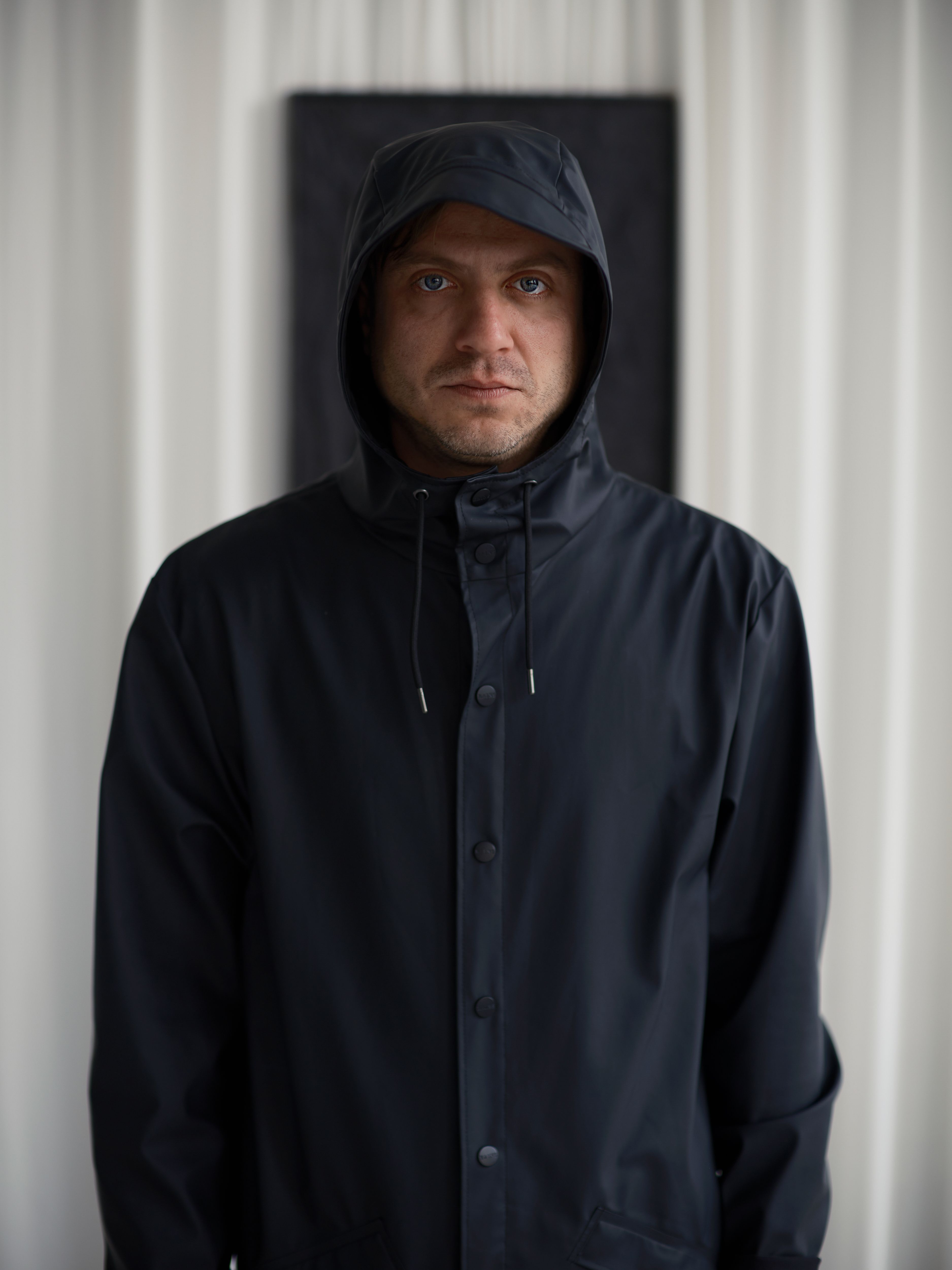
Name: Mischa Blanos
Occupation: Composer, pianist, producer
Nationality: Romanian
Current release: Mischa Blanos's new album Take Control is out via Longcut.
Recommendations for Bucharest, Romania: There’s this place I love, Casa Presei Libere. It’s this massive communist-era building that used to house the country’s main propaganda newspaper. Now, together with a group of artists, we took over part of it to transform that space into something alive again, dedicated to art instead of ideology. We call it Atelierele Scânteia, a nod to its old name. Inside, there’s a gallery called Scânteia+, where I also organize concerts and electronic music events. It’s become a small ecosystem of creativity inside this monument of power.
Topic I am passionate about but rarely get to talk about: Education. I’m also a teacher, and I see teaching as a way to empower people, not to fit them into systems. I teach composition, whether it’s piano, electronic music, or production. With every student, we set the goal of creating a full EP: composing, mixing, mastering, naming each track, developing the artwork, and sometimes even producing a live video performance. I want them to understand the full cycle of creativity, to be ready to step into the world as independent artists from day one. Music education, for me, is not about learning rules. It’s about learning awareness, empathy, and how to truly listen.
If you enjoyed this Mischa Blanos interview and would like to stay up to date with his music, visit his official homepage. He is also on Instagram, Soundcloud, bandcamp, and Facebook.
What were some of the musical experiences which planted a seed for your interest in electronic music?
I started with classical music, the piano was my whole world. I went through all the academic steps: music school, conservatory, endless hours of practice. But at some point, I started to feel that the piano alone couldn’t express everything I had inside.
When I was a teenager, I was already messing around in Cubase, recording sounds, playing in a punk band, then in a rock-electro project. I didn’t think of it as “electronic music” back then, I was just curious, trying to push boundaries. Later, when I moved to Hamburg and then Berlin, everything clicked. That’s when I figured out how to bring those two worlds together, the acoustic side, the piano, with the electronic pump I loved.
One of the first pieces where I felt that connection was “Hammock on the Roof.” I remember playing it live in Berlin, surrounded by cables, synths and piano and thinking, “Yeah, this is it. This is my sound.”
Most genres of music make use of electronic production means. What does the term “electronic music” mean today, would you say?
I think electronic music today is more a medium of thought.
For me, it’s about using electronic tools to express tension between systems, human, social, technological and to explore the fragility inside those systems. That fragility is what interests me the most. How people try to stay human inside structures that constantly push and reshape us.
The piano is my human voice in all this, sensitive, imperfect, while the electronic layer brings in precision, control, even conflict. Together they reflect the world we live in: emotional, mechanical, fragile, but alive.
Disco, house, techno, drum n bass, IDM and many other genres were about a lot more than just music. For you personally, is electronic music (still) a way of life – and if so, in which way?
Absolutely. I don’t separate it from the way I move through the world. Making electronic music is like decoding reality: how control, chaos, and harmony coexist. It’s also a community built on shared frequencies rather than shared ideologies.
For me, it’s about autonomy too. The decision to go independent with my album Take Control wasn’t just financial; it was a political act, reclaiming creative and economic freedom from a system that often exploits artists.
Debates around electronic music tend to focus on technology. What, though, were some of the things you learned by talking to colleagues or through performing and/or recording with other musicians? What role does community play for your interest in production and getting better as a producer?
That vulnerability is the real currency. I used to think it was all about sound design or mix precision, but what I’ve learned through collaboration and simply spending time with other musicians is that it’s about trust, generosity and listening.
The best producers don’t dominate, they respond. Every exchange with other artists has taught me that music is a living dialogue, not a competition. Community keeps you grounded and connected to what really matters.
What kind of musical/sonic materials, and ideas are particularly stimulating for your own work right now?
Lately, I’ve been inspired by my collaboration with Thomas Melchior. We just released our Jupiter EP, and the response was incredible.
Working with Thomas has been a real education, he has such a deep relationship with the history of electronic music. Being in the studio with him taught me to appreciate the essence of a track, to stay intuitive and to let go of perfectionism- a classical curse from my upbringing.
He has this way of picking only the essential elements from my compositions, and that process helped me see my own music from a completely new perspective.
Where do most of your inspirations to create come from – rather from internal impulses or external ones? Which current social / political / ecological or other developments make you feel like you need to respond as an artist?
Both.
The internal part comes from the need to make sense of dissonance: confusion, anger, love, hope. The internal part comes from emotion — from trying to make sense of everything that builds up inside: confusion, anger, tenderness, hope. The external part is the world we’re living in right now: surveillance capitalism, the erosion of truth, climate anxiety, and at the same time, the incredible resilience in communities.
My latest album Take Control came from observing how easily systems manipulate and divide us, and from the urge to reclaim that power, to act together.
On the other hand, my ambient Ebb and Flow EP reflects the opposite side of that spectrum: the inner movement of the mind, the rhythm of tension and release, chaos and calm. I live for making music, not the other way around.
What were some of the recent tools you bought, used, or saw/read about which changed your perspective about production, performing, and making music?
Mixing Take Control in Dolby Atmos completely changed the way I hear and experience sound.
I spent days in the studio with my sound engineer and it felt like the music came alive around us: the piano, the drums, the voice, everything was right there in the room with you. It opened up a new dimension of spatial awareness and intimacy.
It’s not just mixing anymore, it’s sculpting space.
How, would you say are your live performances and your recording projects connected at the moment? How do they mutually influence and feed off each other?
They’ve started to merge, but not in the traditional “live set” sense.
Whether I’m performing with live electronics or combined with piano, what matters to me is the space for imperfection. Live performance is where the machine becomes human. In the studio, everything can be controlled, shaped until it’s perfect. On stage, it’s the opposite, sound reacts to the room, to the audience, to my own state of mind.
I try to bring some of that imperfection back into the studio, to make the music feel alive, not just engineered. It’s a constant exchange: the stage teaches me to let go and the studio reminds me how to listen.
Even if AI will not entirely replace human composition, it looks set to have a significant impact on it. What does the terms composing/producing mean in the era of AI, do you feel?
It means curating intelligence, both human and artificial. The composer becomes more of an orchestrator of relationships: between emotion, data and chance.
The challenge is to keep the soul inside the system. Machines can simulate creativity, but they don’t long for anything. That longing, that need to make meaning, will always remain human.