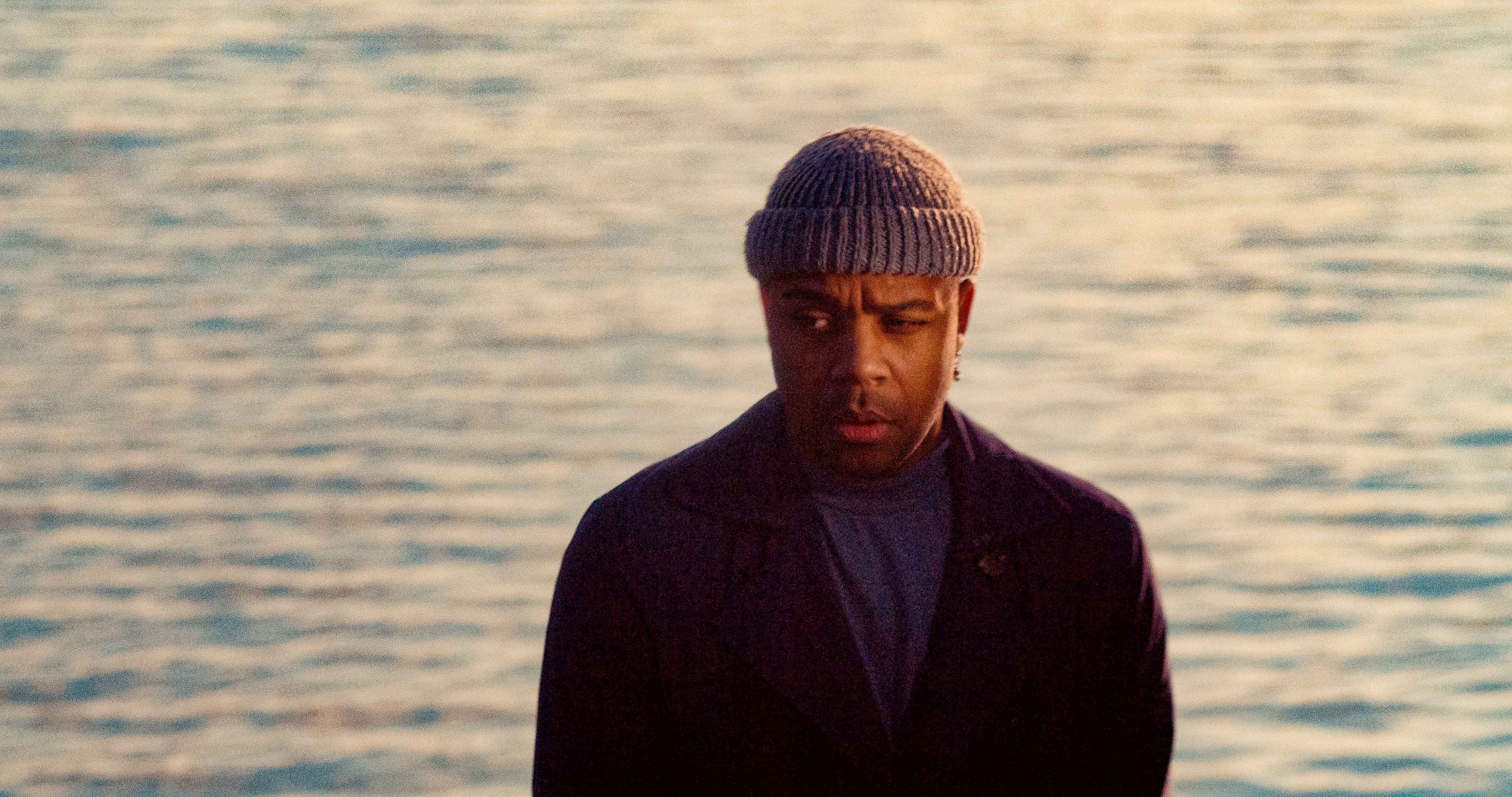
Published
Name: Mobley
Occupation: Singer, songwriter, multi-instrumentalist, writer, performer, producer, filmmaker
Current release: Mobley's new album We Do Not Fear Ruins is out via Last Gang.
Topic I rarely get to talk about but I am passionate about: I think I must be an anthropologist at heart because I’ve almost never encountered a topic having to do with people that I didn’t find endlessly interesting. At this moment, the main ones kicking around my head are the relationship between life and entropy, cognitive semiotics, alternatives to the nation-state paradigm, and cathode-ray tube cameras.
If you enjoyed this Mobley interview and would like to know more about his music, visit his official homepage. He is also on Instagram, Facebook, Soundcloud, and bandcamp.
Where does the impulse to create something come from for you? What role do often-quoted sources of inspiration like dreams, other forms of art, personal relationships, politics etc play?
For as long as I can remember, I’ve heard music in my mind constantly. Only when I was older did I realize that not everyone experiences that. Then I realized that much of the music I was hearing didn’t exist out in the world. That second realization made the work of pulling those sounds into material reality completely irresistible to me.
Now that I’ve been making music for some time, I find that (however gratifying it is) the joy of creation in and of itself isn’t enough to justify the sacrifices it requires to keep going. What really moves me at this stage is finding ways to put my abilities in service of people and ideas that I care about.
For you to get started, do there need to be concrete ideas – or what some have called a 'visualisation' of the finished work? What does the balance between planning and chance look like for you?
No. For the most part, I haven’t been gifted with the ability to see the end from the start.
I’m just following the ideas where they lead me, trying to hold on tight so I don’t lose them. If I’m successful, eventually we’ll crest a hill and I can see the destination. At that point, I feel confident taking the wheel and guiding the thing home. Up until then, though, I’m at the mercy of random inspiration.
This is a fact that made the process of creating my upcoming album, We Do Not Fear Ruins, particularly challenging. It’s a speculative fiction concept album and I went into it with a clear picture of the narrative, themes, and sonic world that I wanted to convey.
This meant I had to learn to be patient and disciplined in waiting for the right ideas to come along.
Is there a preparation phase for your process? Do you require your tools to be laid out in a particular way, for example, do you need to do 'research' or create 'early versions'?
My workspace is in my home and I go to great lengths to make sure that it’s always set up to start working on an idea with as little fuss as possible. In my process, friction is the worst enemy of creativity.
The more I feel as though I’m free to create the instant that an idea arrives, the easier I find it to leave myself open to that realm.
Do you have certain rituals to get you into the right mindset for creating? What role do certain foods or stimulants like coffee, lighting, scents, exercise or reading poetry play?
No rituals, really.
Like many people, though, some of my best ideas come to me in the shower.
For We Do Not Fear Ruins , what did you start with? If there were conceptual considerations, what were they?
We Do Not Fear Ruins, is a concept album and the story came first.
It centers on a man named Jacob Creedmoor, a stevedore and aspiring musician in the early 80s in an alternate universe-NYC. He’s a dissident and gets arrested and taken to a black site where he’s placed in suspended animation.
Jacob is the speaker on every song on the album and so I used his perspective and history to inform my approach to the songs, both lyrically and musically.
What makes lyrics good in your opinion? What are your own ambitions and challenges in this regard?
I don’t think there’s any set of intrinsic criteria by which lyrics one can assess lyrics to be “good”. Let’s set aside, for now, lyrics I might consider “bad” because their content is somehow harmful. For me, lyrics are functional and the success or failure of a lyric turns entirely on how well it performs its function.
Sometimes lyrics are all about meaning and a good lyric is one that’s pithy and emotionally/intellectually impactful. Sometimes lyrics are barely even linguistic, instead focusing on sound and rhythm and musicality. In that case, a good lyric is one that plays its role in the arrangement/composition. Sometimes more idiosyncratic questions like “Do these words sound good/right coming out of this person’s mouth?” are the most important consideration.
At the end of the day, I think my rule of thumb is the same for lyrics as it is for art in general: taken on its own terms, does this thing produce in me or others the reaction that it seems to intend?
What are areas/themes/topics that you keep returning to in your lyrics?
Almost all of my lyrics are, in one way or another, about the human condition.
Sometimes it’s obvious (as in my song “No Exit”, which takes its title from a play by French existentialist philosopher Jean-Paul Sartre), but even when I’m writing about something intimate like romantic love, I’m trying to approach it with a wide lens.
Many writers have claimed that as soon as they enter into the process, certain aspects of the narrative are out of their hands. Do you like to keep strict control or is there a sense of following things where they lead you?
Without veering entirely into a philosophical rant about the nature of agency and free will, I’ll say that I tend to think that any sense of control I have over anything is, at bottom, illusory. That applies as much to artistic work as anything else.
That said, we’ve collectively decided that there is social utility in placing responsibility for things on the most immediate actors, so I’d never use my lack of real control over my work as a way of abdicating my responsibility for the things I make.
There are many descriptions of the creative state. How would you describe it for you personally? Is there an element of spirituality to what you do?
There’s certainly a metaphysical aspect for me. If I were to try to describe it in a somewhat grounded way ...
I think that, in everything we do, we are constantly drawing on the shared heritage of all humanity, which is to say the collective knowledge, experience, struggles of our many trillions of ancestors (human and otherwise). We don’t give this much thought in our mundane comings and goings. For me, inspired creativity means attuning oneself (consciously or not) to that vast wealth of ideas and, at once, drawing from it and adding to it in some small measure.
Subjectively, I find it to be an ecstatic, transcendent, and ultimately, addictive experience.
Once a piece is finished, how important is it for you to let it lie and evaluate it later on? How much improvement and refinement do you personally allow until you're satisfied with a piece?
I usually depend on external factors to tell me when a piece is done (or, rather, when I’m done working on it). In the absence of externally-imposed deadlines, I’ll invent reasons why work must be done by this or that date and time. I’m usually disciplined enough to budget in some small period of “sleep on it” time, but not always.
After that, I like to take some time away from whatever I’ve made and then come back to it to learn whether/how I like it. I almost always find things to criticize, but likewise invariably find things to appreciate that I hadn’t noticed before.
How do you think the meaning, or effect of an individual piece is enhanced, clarified or possibly contrasted by the EPs, or albums it is part of? Does each piece, for example, need to be consistent with the larger whole?
It’s certainly my preference to create songs/tracks whose meanings build upon each other’s, not just across a single release, but throughout my entire catalog.
That said, especially for “emerging” artists, the systems of distribution (namely the streaming and social media platforms) are so powerfully biased toward the short form and the new, I completely understand why many artists are more interested in putting their time and energy toward standalone works.
In terms of what they contribute to a song, what is the balance between the composition and the arrangement (including production, mixing and mastering)?
In my process, composition, recording, and production are all usually concurrent processes.
For example, I routinely find myself making decisions about what vocal reverb I’ll use before I even finish writing the lyrics. As a result, there’s this roiling feedback between each phase of creation as decisions made in one area impact future decisions made in another.
As such, I think of them as being fairly coequal, with a slight edge going to composition since it’s the basis/impetus for the other work.
After finishing a piece or album and releasing something into the world, there can be a sense of emptiness. Can you relate to this – and how do you return to the state of creativity after experiencing it?
Maybe it’s because my process is so solitary (the mastering engineer is usually the only other person to put direct fingerprints on my work), but I can’t say that I’ve ever felt a sense of emptiness upon releasing something.
Frustration, perhaps, at the struggle to break through the noise, but that’s hardly connected to the work itself.
Creativity can reach many different corners of our lives. Do you personally feel as though writing a piece of music is inherently different from something like making a great cup of coffee? What do you express through music that you couldn't or wouldn't in more 'mundane' tasks?
Not at all. To make art is to invest oneself in the making or doing of a thing. It’s my view that the extent to which any “mundane” task feels artless is directly proportional to the degree to which capitalism/profit-seeking has alienated us from the people and/or purpose that task serves.
As an artist, I have the luxury (and the onus) of thinking about it and almost every time I find myself doing something that truly feels artless, that thing is a superfluous demand being imposed on me or it’s something that would benefit from artfulness if time allowed.
Most people would make a great cup of coffee every time, if only they “had the time”. Photography is an art, but everyone hates their driver’s license photo – not because it must be that way, but because (for the most part) the person taking the picture is not given room to care much how you (or they themself, for that matter) feel about the photo.
Cooking is an art and there must be legions of excellent cooks among the 2 million people working in McDonald’s restaurants. But the preparation of food at McDonald’s is self-consciously artless at the individual level because industrial-scale efficiency and replicability are the heart of their corporate profit strategy.
I can only imagine that an ideal society is a society of artists, which is to say a society full of people who are free at all times to invest themselves fully in whatever they do.