Published
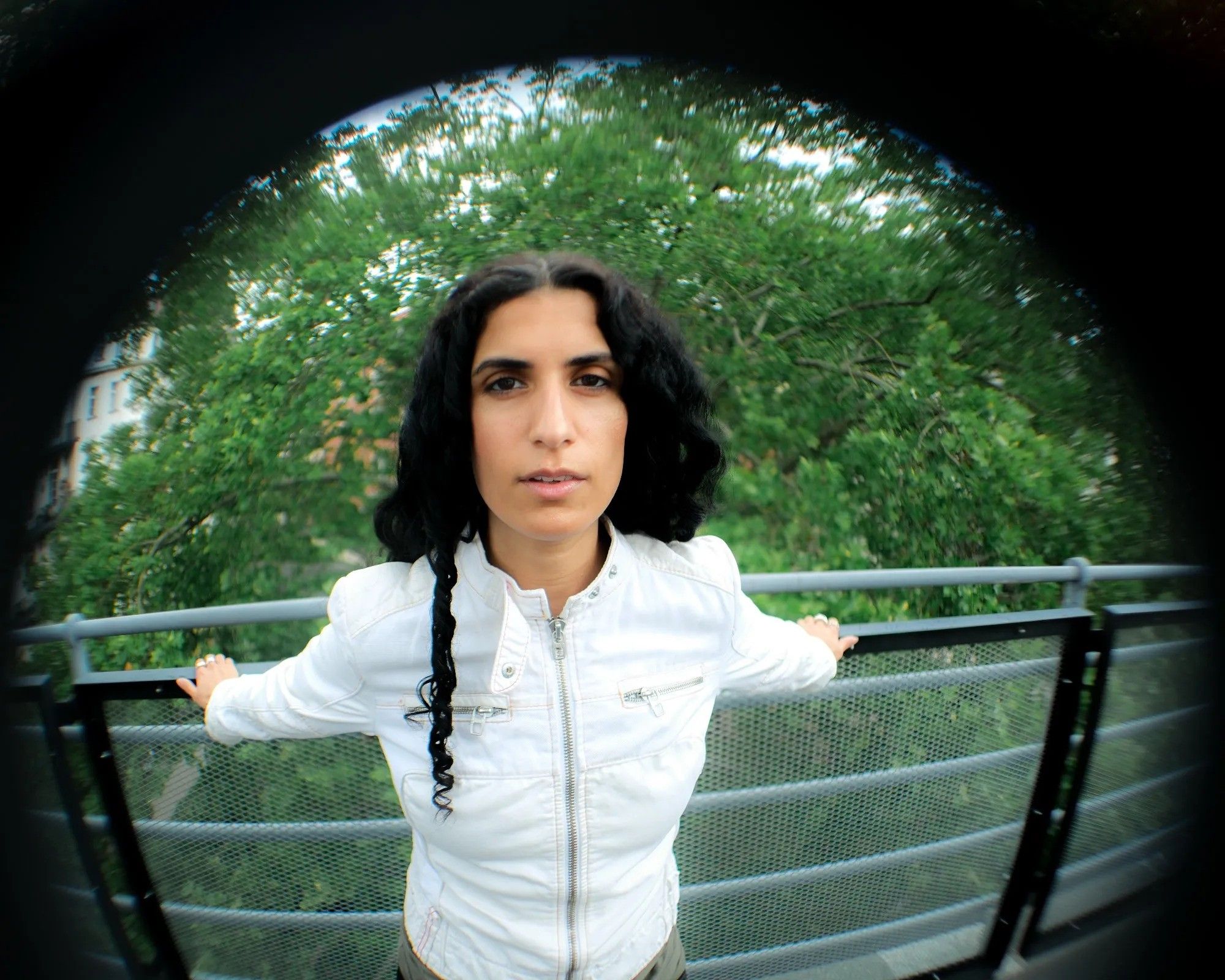
Name: Mohajer
Nationality: Swedish-Persian
Occupation: Producer, DJ
Current release: Mohajer's track “Pause” is part of the compilation Various Artists 02, out via SEVEN.
Recommendations: Music: Phosphorus – Pillar Of Salt – 1999; Art: David Medalla, Museo Tamayo, Mexico city
If you enjoyed this Mohajer interview and would like to stay up to date with her music and live performances, visit her on on Instagram, and Soundcloud. She also has an artist page on the SEVEN website.
Do you think that some of your earliest musical experiences planted a seed for your interest in DJing? How and when did you start DJing?
It all started when I was 14 in my punk rock era. Me, my sister, my neighbor and her best friend decided to start a girl band. I couldn’t play anything, so I just picked up the bass and got hooked straight away. We used to rehearse every week and even played some little shows at the youth house.
Then when I was 16, my sister and her best friend showed me the label Ed Banger and I got completely obsessed with all their releases. That was really my first proper intro to electronic music.
Around then I saw this ad in a Swedish newspaper for a one-month DJ course in Gothenburg, so me and my best friend signed up. After that we started a DJ duo, had our first gig a couple months later, and soon after we threw our own party.
Today, DJs are rarely just DJs. Very often, they can be producers who are also DJs or DJs who are also producers. Where do you see yourself on this spectrum and what kind of potential issues and cross-pollinations does this create?
I really like the balance of doing both.
It keeps me stimulated, especially when producing – it’s like diving into a universe where I can take any direction.
What were some of the most important insights you gained from teachers/tutorials, other DJs, or personal experience? What does it mean to be a “better DJ?”
To not overthink and just do my own thing.
For you, is there still listening outside of looking for music for your next sets? If so, what do you prefer to listen to and how does it possibly nonetheless have an influence on your performances?
I love dub in all styles and could listen to it all day. You can definitely hear the influence in my productions and in some of my sets.
When digging, what are you looking for? Is the process all about taste for you, or is it about “going beyond taste?”
I love to dig on YouTube and just fall into playlist after playlist.
Sometimes I’m looking for something really specific, but mostly it’s just following the rabbit hole.
On the basis of one of your most recent gigs, tell me about how the preparation- and decision making process works during a gig with regards to the inclusion of key records, the next transition and where you want the set to go?
Depends on the vibe of the gig – sometimes I plan a little path with tracks I really want to play.
But mostly I just pack options and feel it out once I’m there.
There must be endless ways of “matching” two or more tracks. How do you prefer to do it? What makes two tracks inherently “matchable” and what constitutes a great transition?
When two different genres or vibes just lock together and make sense in the moment – that’s the most satisfying feeling.
How would you describe the experience of DJing, physically and mentally? Do you listen – and deejay - with your eyes open or closed?
It’s kind of like being in a flow state – half dancing, half problem-solving.
Do you engage with audiences/dancers - and how? Taking one of your online DJ mixes as an example, how does the experience and the way you deejay change when you subtract the audience?
With a crowd it’s all about energy exchange – if they’re with me, I go deeper.
At home, recording a mix is way more focused, maybe even too focused sometimes.
Collaboration is a key part of almost every aspect of music making, but it is stil rare in DJing. Tell me about your own views on back-to-back DJing, interactions with live musicians or other forms of turning DJing into a more collective process.
When a b2b makes sense, it can be really fun. But there are so many now that it’s slowly getting a bit overboard.
How important is dancing for our wellbeing on a personal and even on a societal level?
Super important – it boosts the happy hormones.
Especially in the light of advances in AI, where do you see the role of humans in DJing versus that of technology? Can AI act as a collaborator or creative stimulus?
No, I don’t think so – and I hope not.
Tinnitus and developing hyperacusis are very real risks for anyone working with sound. Do you take precautions in this regard and if you're suffering from these or similar issues – how do you cope with them?
Three years into DJing I had 2 gigs in one day and ended up in a friend’s studio listening to super loud music. The next day my ears were in crazy pain and super sensitive. The doctor said I had moved my eardrum and couldn’t play until it healed, so I had to take a few months off.
After that I got custom earplugs and wore them strictly for years. Now I wear them almost all the time. The trick is to put them in before even entering the club.
Let's imagine you lost all your music for one night and all there is left at the venue is a crate of records containing a random selection of music. How would you approach this set?
This is my worst nightmare. I’ve dreamt so many times that I show up without my USB sticks.
I’d probably just roll with it, pick the best from the crate and half freaking out.