Published
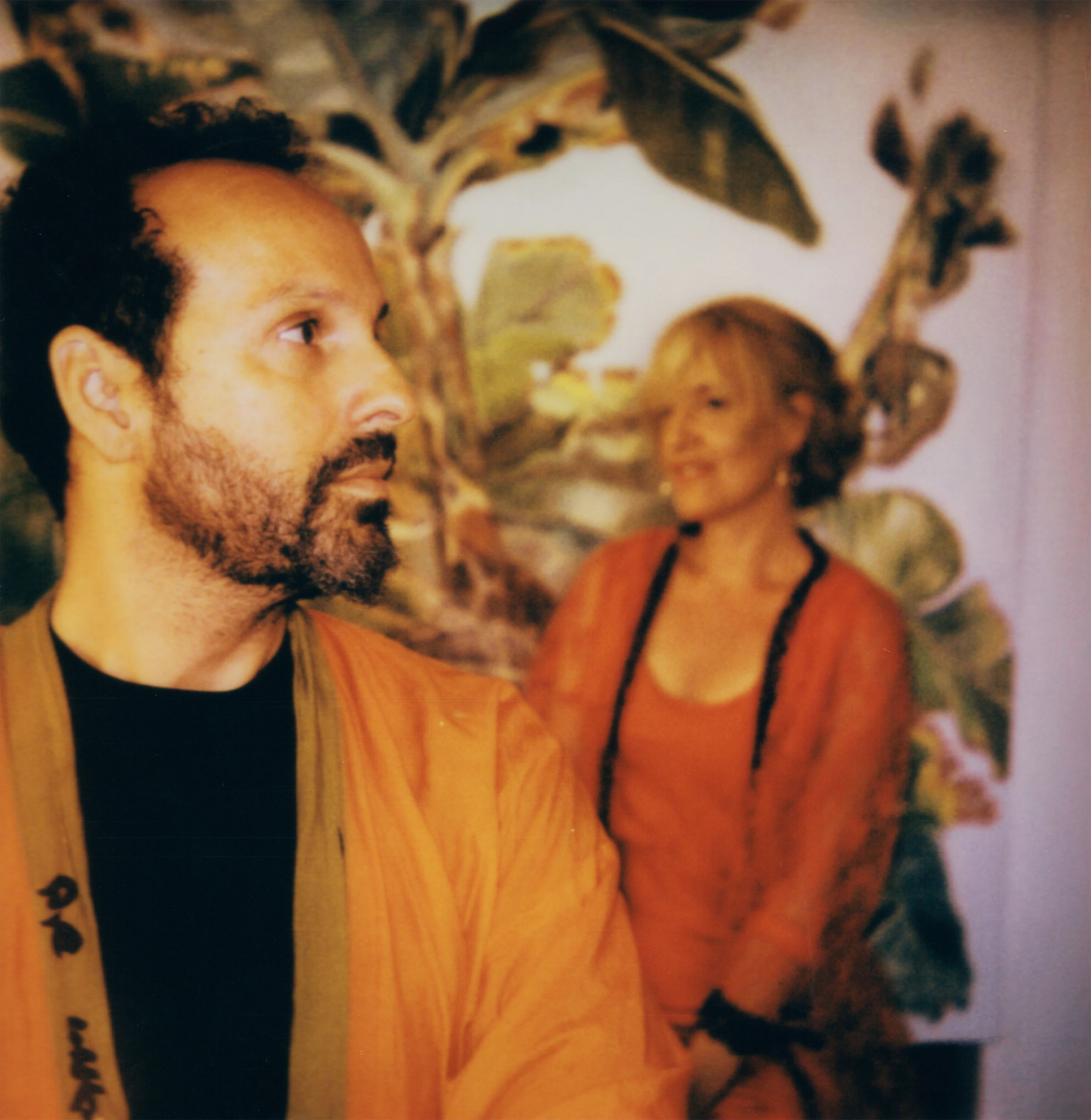
Name: Marcelo Frota aka MOMO.
Nationality: Brazilian, London-based
Occupation: Singer, songwriter
Current Release: MOMO.'s new album Tum Tum Tum is out via Agogo.
Local Recommendations: If you're in London, I'd recommend going to Cafe Oto, my favourite spot to listen to music. And you can go blind, not even knowing who will perform. It's always fantastic!
If you're in Rio, go to the Arpoador beach very early in the morning or early evening.
Things I am passionate about but rarely get to talk about: Science, really. I'd love to talk more with doctors and pilots. I'm fascinated by both. Maybe it's strange, but perhaps not: they're deeply scientific fields that somehow sit right next to magic. The precision, the knowledge, the responsibility, and yet there's something in what they do that still feels mysterious to me.
If you enjoyed this MOMO. interview and would like to know more about his music, visit his official homepage. He is also on Instagram, and bandcamp.
Where does the impulse to create something come from for you? What role do dreams, other forms of art, personal relationships or politics play?
I don't think inspiration comes from one place.
It can come from dreams, from relationships, from a painting in an exhibition, from a smell, from a conversation you overhear on the street. Whatever I've been living and whatever I've been capturing at that moment tends to find its way into the songs. I don't usually sit down thinking, "Now I'm going to write about this subject." It's more about paying attention and allowing life to enter.
I don't really separate the sacred from the ordinary. We experience both every day. Sometimes inspiration comes from something very simple. You just have to remain open enough to notice it.
For you to get started, do there need to be concrete ideas? What does the balance between planning and chance look like for you?
Usually not. In fact, if I know too much beforehand, I get suspicious.
I like leaving space for surprise. I don't like arriving at the studio with everything rehearsed and preconceived. I prefer discovering things while making them.
There's definitely a balance. First there's the instinctive part, where you follow your curiosity and allow things to happen. Then another part arrives that's more practical and rational, where you decide what stays and what goes. I don't think one exists without the other.
Is there a preparation phase for your process? Do you have rituals?
Not really. My preparation is mostly living life. Going to exhibitions, listening to music, walking around London, spending time with my family.
I don't have elaborate rituals. I drink coffee. I collect notebooks. I write little things down. But mostly I just try to stay receptive.
For Tum Tum Tum, what did you start with? If there were conceptual considerations, what were they?
With Tum Tum Tum, I wanted to capture the feeling of playing live. During the tours for Gira, I realised how much I loved the interaction between musicians, especially the rhythmic side of the band. I felt we were really listening to each other and playing well together.
I wanted to preserve that energy. So we recorded live in a room in South London, without click tracks, allowing accidents and intuition to become part of the record.
Tell me a bit about the way the new material developed and gradually took its final form.
Some songs had existed for years. Some had been left out from previous records. Others appeared during the recording process itself.
I like arriving at the studio without everything figured out. Sometimes a song starts from zero there in the room. I enjoy composing and shaping things together with the musicians.
The record eventually became shorter and more concise than Gira. The songs seemed to want to say what they needed to say and move on.
What makes lyrics good in your opinion? What are your ambitions and challenges in this regard?
I don't really think of lyrics as poems. By the time I'm writing words, I already understand them as something inseparable from melody.
For me, lyrics work when they serve the phonetics of the musical idea. The vowels, the consonants, the rhythm of the words, the way they sit inside the melody — all of that matters enormously.
A beautiful text on paper doesn't necessarily become a good lyric. A good lyric is one that becomes one with the melody.
What are areas, themes or topics that you keep returning to in your lyrics?
I think the themes change according to what I'm living and what I'm paying attention to at that moment.
In the beginning of my career, I was very auto-referential. The first albums were very much about me, my world, my relationships and my feelings. They were much more introspective.
Over time, I started wanting to communicate in a broader way. I've been writing a lot more in collaboration, and I think that has helped me move towards more plural and universal themes rather than always talking about myself. That's been an important turning point for me as a songwriter.
I'm still interested in intimacy and personal experience, but now I try to find the points where those experiences connect with something more collective.
Do you like to keep strict control or is there a sense of following things where they lead you?
I think it's both.
There's the part where you surrender and follow the music where it wants to go, and then there's another part that's more rational, where you edit and make decisions. Creation happens between these two places all the time.
How would you describe the creative state? Is there an element of spirituality to what you do?
There is a spiritual aspect to it, although I don't necessarily mean religion.
For me, music already exists. It's in the air. It's everywhere. It's in the trees, in the honk of buses, in people's conversations. It's part of life itself.
The work is allowing yourself to receive it, to stay open enough to notice it. Inspiration is connected to something abstract but also very powerful. If you allow yourself, you can almost experience a kind of cosmic download.
You become connected to something larger than your own ego, and your role is simply to listen carefully enough to bring it into the world.
Once a piece is finished, how important is it to let it lie and evaluate it later on?
Very important.
I often need to forget what I've made for a while and then come back to it with fresh ears. Returning later allows me to hear it more like a listener.
Sometimes what I thought was essential isn't. Sometimes imperfections become the very thing that gives the music life.
How do you think the meaning of a piece is enhanced by the album it is part of?
I still believe in albums.
Individual songs need their own identity, but they also illuminate one another. A record creates meanings and emotional journeys that isolated songs sometimes don't have.
I love that aspect of making albums.
In terms of what they contribute to a song, what is the balance between composition and arrangement?
I don't separate them that much.
Sometimes an arrangement completely changes the emotional meaning of a song. I often sing horn arrangements to musicians in the studio rather than writing them down. The arrangement becomes part of the composition itself.
I'm very interested in that threshold where songs stop belonging only to me and become collective.
Can you talk about the relationship between music and artwork?
I experience music visually.
I often find myself looking at a painting in a museum and wondering what it would sound like. Colours feel musical to me. Images, sculpture and visual art have always been very important in the way I understand sound.
They're not separate worlds.
After finishing and releasing an album, there can be a sense of emptiness. Can you relate to this?
Yes. You've lived with that music for a long time and suddenly it belongs to other people.
There can be emptiness, but eventually curiosity returns. What still moves me after all these years is the sound itself: being in a room with musicians, making friends through music, playing together and hearing something unexpected happen.
That surprise has never left me.
What have listeners taught you about your own work?
People often hear things I never consciously intended.
They bring their own stories and experiences to the songs, and I really like that. Sometimes listeners understand aspects of the music that I hadn't noticed myself.
I think songs stop belonging entirely to their authors once they're released.
Do you personally feel that writing music is inherently different from something like making a great cup of coffee?
I think all creative acts require attention and care.
But music allows me to express things that I don't fully understand yet. It gives shape to contradictions and feelings that are difficult to articulate in everyday life.
Sometimes music helps me understand what I think only after I've already written it.