Published
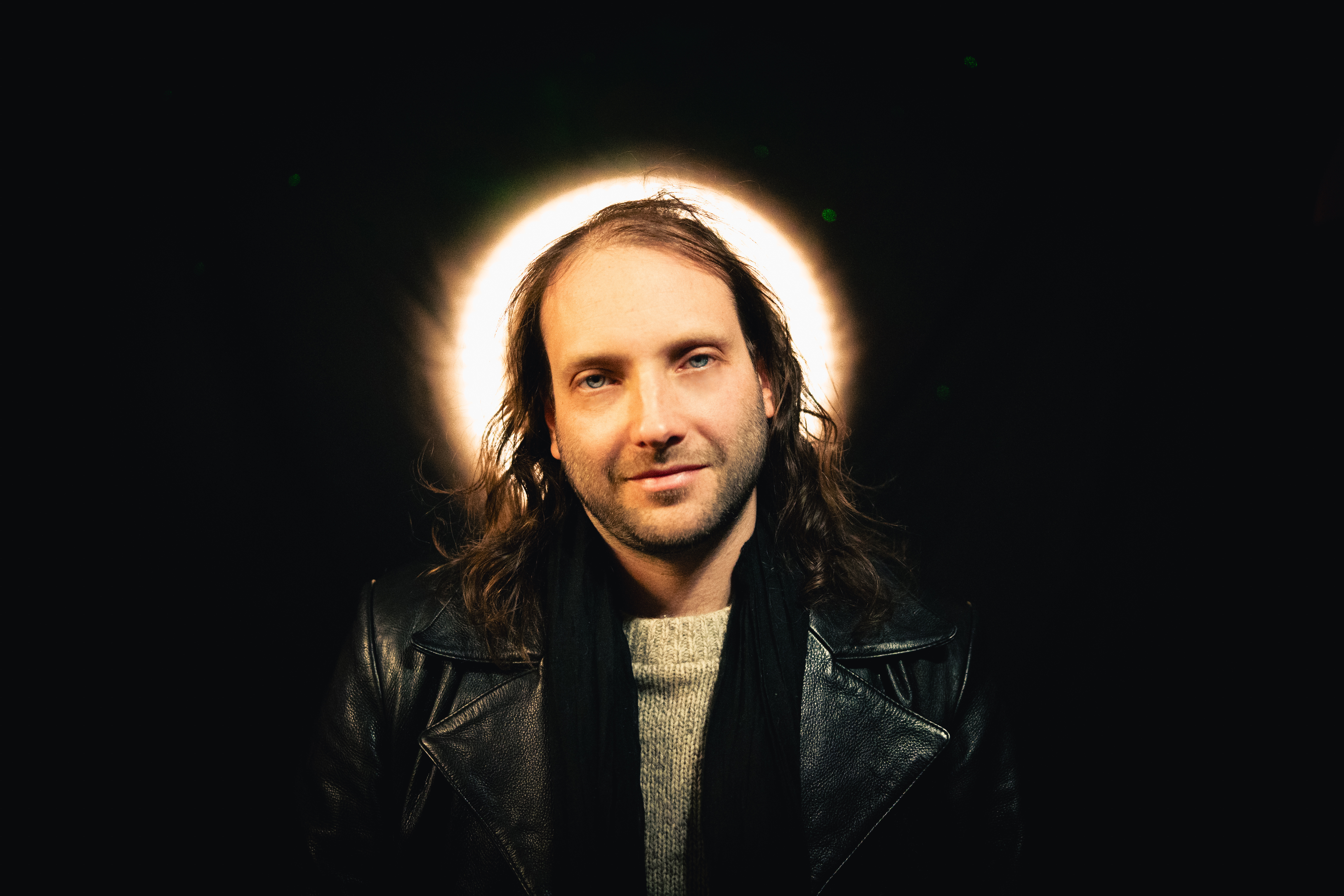
Name: Morris Kolontyrsky
Nationality: American
Occupation: Guitarist, songwriter, producer, sound artist, composer
Current release: Morris Kolontyrsky's new album Origination, featuring Steve Roach, is out via Projekt.
If you enjoyed this Morris Kolontyrsky interview and would like to stay up to date with his music and upcoming live dates, visit him on Instagram, and bandcamp.
Origination makes for a deep listening experience. But, just as in Blood Incantation, the titles suggest there is something deeper going on here. Why are you finding music a good vessel for discussing big, sometimes existential questions?
The track names on Origination are more of a guided meditation than anything else. Their seemingly deep or esoteric connections are only insomuch as one allows. I find them to be a starting point for a mood or an entry to the journey that unfolds in the music.
Music has always been a therapeutic force in my life. For Origination I’m not necessarily asking any questions but rather focusing on the within and a stillness of being.
The vessel in question is an age-old medium for tuning out external forces in favor of attempting to reach some sort of temporary nirvana.
Just like you, I've been fascinated by the cosmos in all forms of art and I've often wondered, why. What draws you to it, would you say – the scientific aspects, the spiritual elements, a canvas for something personal?
It’s safe to say almost everyone alive has had a moment where they look out into the night sky and wonder. Every living being is tied to the cosmos as much as we’re tied to existence.
The varying degrees of science and objective understanding versus the spiritual ties are just a sliding scale for me. My curiosities extend towards both equally.
Many people may regard the music on Origination as escapism. Interestingly, one of the pieces has the word “returning” in it, which is the exact opposite of escaping. How do you see the relationship between the physical world in which you make the music and the worlds you are building with the music?
The physical world exists only (for the purpose of this conversation/question) to make sound and to experience the auditory functions of the music.
The synths, guitars, effect pedals, recording equipment etc are a crucial aspect to creating what many regard as the vessel of escapism. The physical body then is another.
The sensations you feel when listening to the recorded output begin with the tangible and seep into the ethereal.
I listened to your impressions releases on your bandcamp account and was surprised by how different Origination turned out to be in comparison, in just about every way. Can you talk about the concrete triggers for this particular sound and approach?
The “Impressions” series is a collection of demos that were sitting around on my hard drive collecting dust. My wife and I would listen to various tracks late at night to fall asleep to.
It’s the sound of me learning and navigating a new realm of music. Trial and error to figure out what I wanted my solo music to sound like. To see how far I could go at home alone in my small little studio room.
I figured there was nothing to lose by putting it up online for others to enjoy.
As far as I know there were no guitars at all on Timewave Zero …
… it does in fact have acoustic guitar on both of the album’s tracks.
Ah true, I was thinking of electric guitars! But guitars in general do appear to take on a more important role on Origination. How does creating with different tools – synths vs guitars - lead to different results, do you feel?
The electric guitar’s role in Origination is a nod to some of my favorite musicians. I wanted to explore the ambient / electronic / experimental side of things without forgoing my main musical instrument just like Fripp, Göttsching, and Hillage before me had done.
My take on it is naturally different because I wanted to include “shred” like solos in the conversation thus bridging the metal connection. There are pinch harmonics, tapping sections, dive bombs and other various more metal oriented playing styles all over the album.
[Read our Manuel Göttsching interview]
The synths and outboard hardware for Origination are also crucial to the overall vibe. They are the first paint on the canvas. They set the mood for what guitar will be doing throughout the track. They dictate the emotive aspect of the movement and guide the listener while the guitar entertains along the way.
The way I understood it, the album is based partly on the idea of expanding on our conception of the guitar solo. Can you talk about that a bit, please?
Certainly. The guitar layering on Origination is inspired by many greats before me as mentioned earlier but the real root of it all comes from a Queen song titled “Brighton Rock.”
It’s basically Brian May rocking out for 5 minutes straight without interruption. Going from one phrase into another and carrying the song all the while without it becoming dull or too repetitive.
Guitar wise that’s what I wanted to bring to the table on the record. Sure, the soloing is shrouded in synths and otherworldly ambient passages (thanks to Steve Roach) but the intent remains to emulate that song.
Does this expand the idea of the guitar solo? I’m not sure, but it was a fun challenge.
The press release mentions the synthesizers used on the album. Can you very briefly describe what motivated your choices and what you used them for?
My choices were limited to my inventory. I wanted to make a record using everything within my reach. To utilize all of my gear in a productive way that compliments each synth’s unique attributes.
Now that I’ve achieved that I can allow myself to acquire something new.
For Origination, what did you start with?
A blank mind. An improvisational mood and a clean slate without expectation. Some ambient drones came to fruition shortly followed by the urge to grab a guitar and just start playing.
It was the beginning of 2025, a moment of clarity had arrived and I decided to just go with the wind. Before I knew it I had two demo versions of what would end up being the first two tracks on the record.
I sent them both to Steve Roach and Sam Rosenthal for feedback and potential interest for a release. After working out the details both sonically and conceptually I was struck with the urge to continue to write which resulted in an album three times as long as I had initially intended.
How did the material for the full album take shape?
Originally I had planned for it to only be two side long LP length tracks. The classic A and B side concept which reflects two opposing moods.
After two demo songs and having solidified a relationship with Projekt Records and Steve Roach I felt the music needed to keep growing. Before I knew it, I had more material than I had initially planned on. The LP idea was no longer feasible as the music spoke to a different physical medium.
With that in mind the floodgates opened.
I find it interesting that “space” is an overarching theme but it is also a musical element here. Can you talk about the role and importance of space – and probably on a related note, silence - in your music?
In my opinion space and silence within music are related to the very difficult urge to be patient when creating. Allowing oneself to breathe, listen, and understand what needs to be placed where.
Growing up listening to Jazz and Classical music I was always aware of the importance of rhythmic structure. Less about the notes but more about their context in the greater whole. I think the same thing applies to drone / ambient / experimental music.
Joanna Brouk put it perfectly on her record entitled The Space Between.
Intriguingly, the titles to many of the pieces describe a form of movement and the music, too, defies common ideas about ambient music as “standing still”. At the same time, the effect, at least to me, is one of drifting and submerging. Do you feel you need some form of motion to create actual stillness?
I think you put it greatly, “motion to create stillness”. To sit still requires an active notion of peace. There’s no better example than Steve Roach’s Structures from Silence.
His mastery within the ambient realm has been a massive inspiration for me in many areas of my life. The master of silence and I go back a few years now after we met at a Blood Incantation show in Tucson, AZ in 2023. We’ve stayed in touch about all things synth, life and the infinite exploration of sound which eventually led to his contribution on my solo debut.
In a way his mentorship is what pushed me to keep going and make the album as long as it is.
How did Steve's contributions enter the picture for Origination?
On a technical note, his additions to the album appear in the form of re-processed stems. I sent him each individual track and after he ran them through his magic I re-integrated the revamped soundscapes back into my original mix.
All of the original instrumentation was done at my house in addition to the mixing.
"Spiraling Into Continuous Self" - was that one long live improvisation or something that was pieced together in the studio?
Every track on the album except for “Returning” was recorded in one long take track by track. The whole album was improvised and then chiseled down to capture the best moments.
“Returning” is such a beautiful piece and it flows effortlessly from a strongly Schulze'an beginning through a searching middle section towards a moving finale. How did it come about?
As mentioned above this song was actually the only one that had a slightly different approach.
It’s basically a combination of what was initially recorded as two separate unfinished parts. After melting the two together, Steve’s reprocessed stems mixed back into the fold, and some outboard processing I ended up with the final product.
Creativity can reach many different corners of our lives. Do you personally feel as though writing a piece of music is inherently different from something like making a great cup of coffee? What do you express through music that you couldn't or wouldn't in more 'mundane' tasks?
Making art in general is definitely different from any mundane task. I can’t attest to the art of coffee making as I’m sure there are many people who would tell me there is a creative outlet there somehow but that’s not where my brain goes when thinking of art.
There are all sorts of trades, skills and crafts associated with creation but let’s be clear, we are talking about music. Music is different. Audio intake is different. It’s subjective to a point of it almost being a moot point. It’s nearly impossible nor necessary to agree on opinions here.
Everything I express through music is about the inmost self and the exciting nature of being in the moment. My creation process is literally the antithesis of doing a mundane task. I can’t really compare what I would or wouldn’t do between the two because they don’t exist in the same spheres of life.