Published
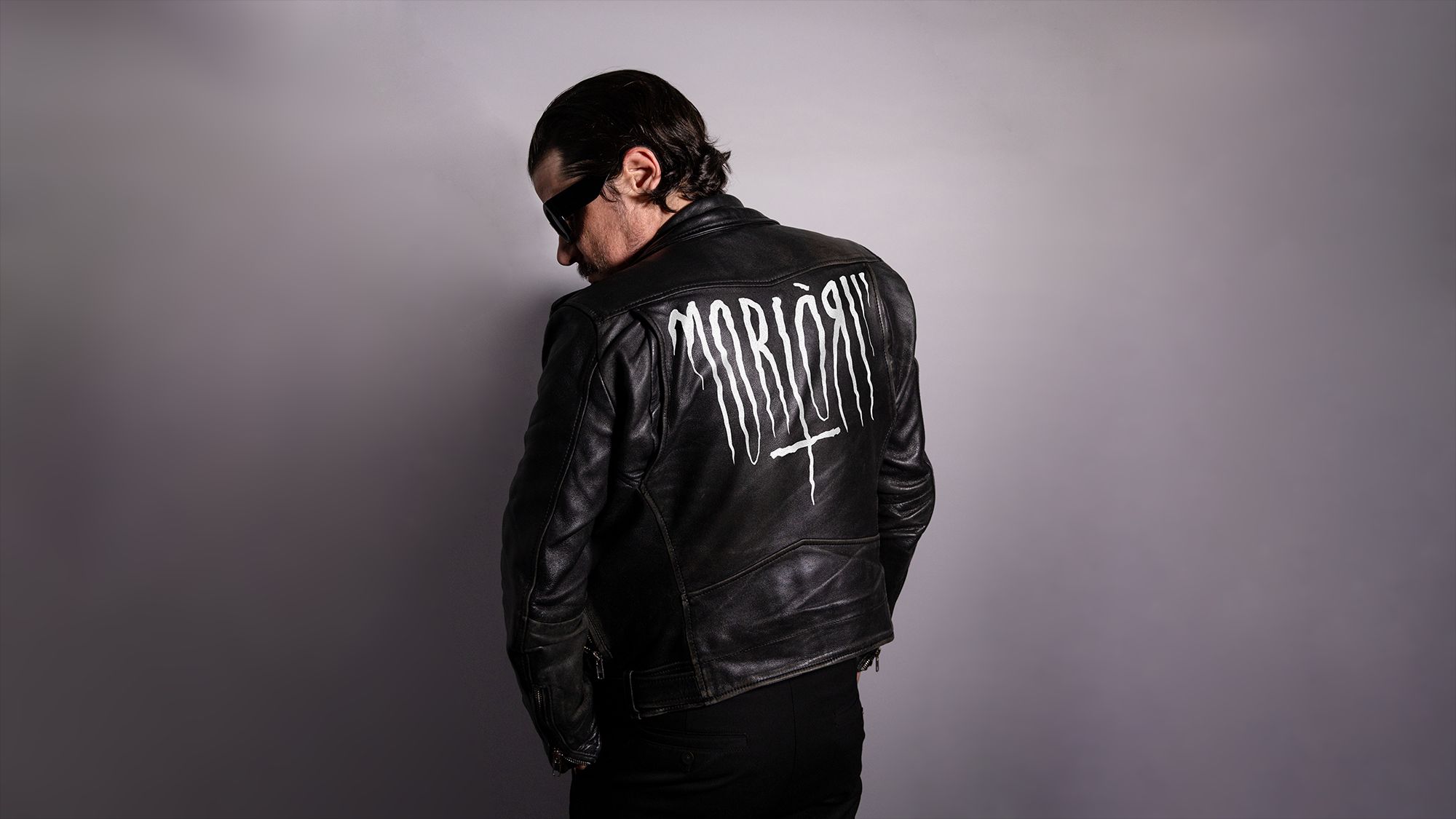
Name: Aris Bassetti aka Mortòri
Nationality: Canadian
Occupation: Designer, musician
Current release: Mortòri's EP A MORT L' AMUR is out via On the Camper.
Global Recommendation: Go to the cemetery next to Bellinzona train station. Sit on my grandpa’s tombstone and try listening to my debut EP. If you don’t hear anything, it means you’re in love. That’s bad news.
Topic I am passionate about but rarely get to talk about: I am obsessed with the dark corners of love.
If you enjoyed this Mortòri interview and would like to know more about his music, visit his official homepage. He is also on Instagram, and Facebook.
If you enjoyed this Mortòri interview and would like to know more, we recommend our Peter Kernel interview (his band with Barbara Lehnhoff), our Young Gods interview (with whom Peter Kernel collaborated), and our Kety Fusco interview (whom he produced).
Do you think that some of your earliest musical experiences planted a seed for your interest in writing lyrics or poetry? How and when did you start writing?
Yes, but I don’t think I chose it. It was more like a possession.
I hated music until 1992. Then, suddenly, I remember hearing a song (I forgot which one) on the radio and feeling like someone was speaking to me in a language I had known in a past life but had forgotten in this one. A voice whispering in my ear: "You're going to lose everything one day. Might as well start writing it down."
I started writing like people start smoking. At first, just to try, just because. Then, it became a need. Now, it’s more like trying to exorcise something that never leaves.
Entering new worlds and escapism through music and literature have always exerted a very strong pull on me. What do you think you are drawn to most when it comes to writing?
I write because my brain is a room with flickering neon lights, and I need to document the shadows moving in the corners. I write because reality is a poorly written film, and someone needs to rewrite the dialogue before the final cut. I’m drawn to what hurts but refuses to kill you.
The things you survive but never quite recover from. The ghosts you invite in because they’re the only ones who truly understand you.
What were some of the artists and albums which inspired you early on purely on the strength of their lyrics? What moves you in the lyrics of other artists?
Nick Cave taught me that you can whisper threats and they will sound like poetry. Leonard Cohen showed me that love songs can sound like a suicide note left in a hotel room. Jacques Brel made me realize that you can scream and spit and sob and people will still not take you seriously until you’re dead.
I’m drawn to lyrics that sound like they were written with blood mixed in cheap wine. The kind that makes you question whether the writer survived long enough to see the song released.
Have there been song lyrics which actually made you change (aspects of) your life? If so, what do you think, leant them that power?
Yes. Some songs have moved furniture inside my head. Some have changed how I saw people I once loved. Some have made me lose friends. Some have saved my life.
The power of lyrics is that they can crawl inside your skull and live there rent-free. They linger in your bloodstream like a slow-acting poison.
It is sometimes said that “music begins where words end.” What do you make of that?
Music begins where the lies end. Where you can no longer hide behind carefully chosen words. Where the voice shakes, even when the lyrics say everything is fine.
Words can be calculated, but music will betray you.
I have always considered many forms of music to be a form of poetry as well. Where do you personally see similarities? What can music express which may be out of reach for poetry?
Poetry is a farewell letter left on a pillow. Music is the scream of the person who found it too late.
Poetry will gently explain sadness to you. Music will shove it down your throat until you choke on it.
The relationship between words and music has always intrigued me. How do you see it? In how far can music take you to places with your writing you would possibly not have visited without it?
Sometimes I write something and it feels like a confession made in a courtroom. Then the music comes in, and suddenly, it turns into a love declaration made with a gun to the head.
Music doesn’t just accompany words, it kidnaps them, tortures them, and forces them to reveal their darkest secrets.
What are areas/themes/topics that you keep returning to in your lyrics?
Love as a Russian roulette with six bullets loaded. The fear of being forgotten before anyone even notices you exist. The terror of waking up one day and realizing you were never important to anyone.
The longing to be caught while falling, but knowing that no one is waiting at the bottom.
On the basis of a piece off your most recent release, tell me about how the lyrics grew into their final form and what points of consideration were.
"La Gata" started as a scene from a film inside my head. A man in a bar. He thinks he is the protagonist. He waits. She walks in. He prepares to smile. She smiles at someone else. In that moment, he ceases to exist. He evaporates from his own story.
The lyrics had to capture that: the slow-motion realization that you were never in the picture. That you were an extra in a movie where you thought you were the lead.
Do you tend to start writing with what will be the first line of the finished lyrics? The chorus? At a random point? What are the words that set the process in motion?
I start with a bruise. A moment I can’t shake off. An image that makes me want to punch a wall.
If it doesn’t hurt, it’s not worth writing.
I'd love to know how you think the meaning or effect of an individual song is enhanced, clarified or possibly contradicted by the EPs, or albums it is part of. Does the song, for example, need to be consistent with the larger whole?
A single song is the moment before the car crash. An EP is the entire accident. My debut EP A Mort l’Amur is the first chapter of my manual on “how to kill love”.
When you're writing song lyrics, do you sense or see a connection between your voice and the text? Does it need to feel and sound “good” or “right” to sing certain words? What's your perspective in this regard of singing someone else's songs versus your own?
There are words I simply cannot sing. They feel fake in my mouth, like stolen clothes that don’t fit. My own songs feel like scars that belong to me. Singing someone else’s song is like walking into someone else’s dream— you’re there, but it’s not yours.
That’s why I choose to sing in Swiss Italian dialect for this project. It’s a very “unmusical” language, full of ugly sounds, but I needed to undress my soul. I needed to feel uncomfortable.
It’s the only way for me to be authentic. And that’s what I need at this point in my life: to be authentic.
I would love to know a little about the feedback you've received from listeners or critics about what they thought some of your songs are about – have there been “misunderstandings” or did you perhaps even gain new “insights?”
Always. People see hope where I only saw ashes and ruins. Or sometimes they laugh, because when I write that the girl I like doesn’t see me, they think it’s funny. But they don’t know it kills me. They don’t know I spent years in therapy because I can’t look at myself in the mirror, because I think I’m too ugly.
Sometimes I think I’ve written the most depressing song ever, and someone tells me, “It gave me strength.”
It’s like shooting a balloon, expecting blood, but instead, confetti comes out. But that’s okay.
Creativity can reach many different corners of our lives. Do you feel as though writing song lyrics or poetry is inherently different from something like making a great cup of coffee? What do you express through music that you couldn't or wouldn't in more 'mundane' tasks?
I couldn’t express the same things through mundane tasks because mundane tasks keep you alive. Music, on the other hand, forces you to confront the fact that being alive and actually living are two very different things.
You can’t pour existential dread into a cup of coffee. You can’t stir heartbreak into your pasta sauce. But you can take all of that, all the unsaid things, the ugly truths, the moments you wish you could erase, and turn them into a song.
And that song can either save you or destroy you, and sometimes both. That’s the difference.