Published
Name: múm
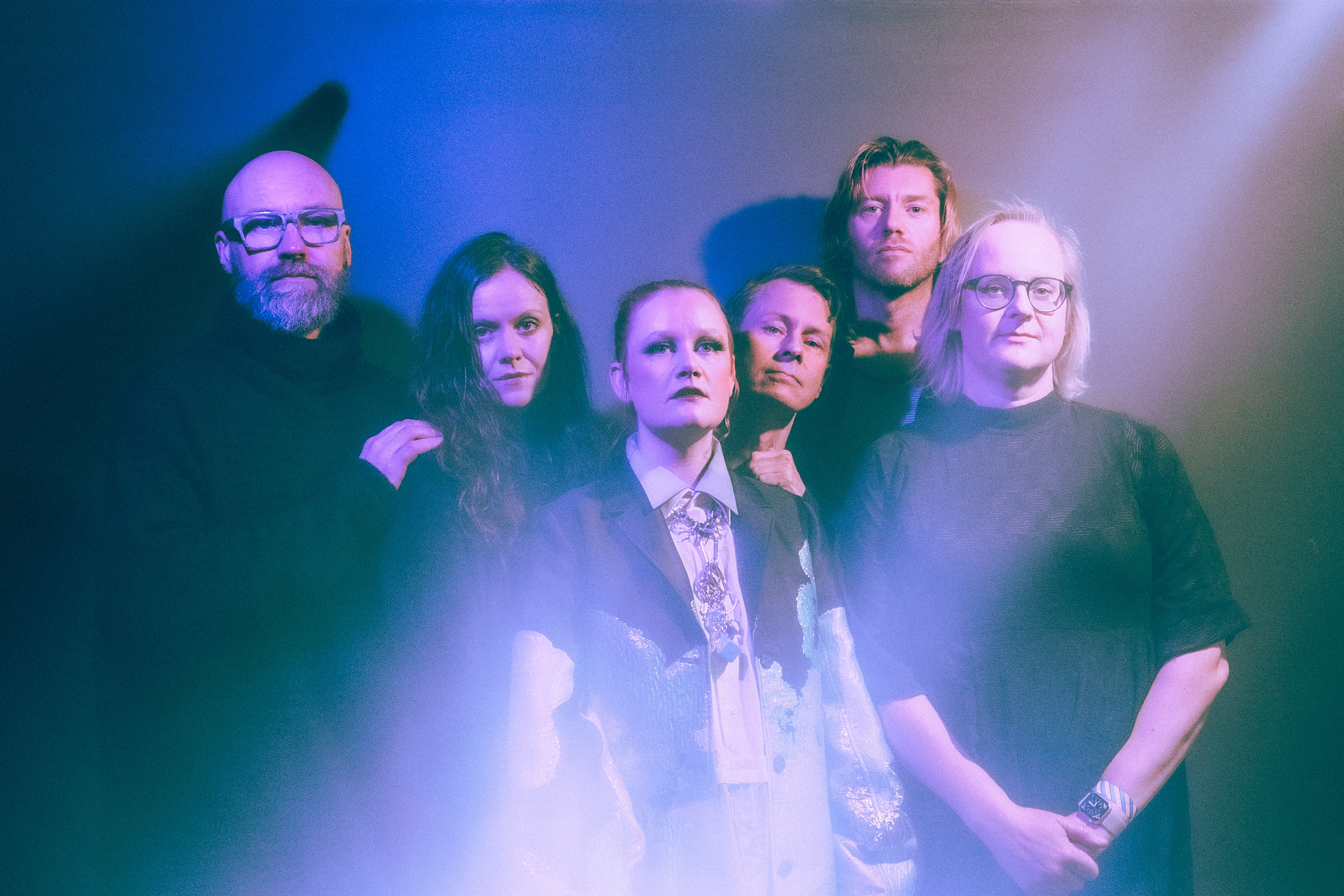
Members: Gunnar Örn Tynes, Örvar Þóreyjarson Smárason, Gyda Valtysdóttir, Kristín Anna Valtysdóttir
Interviewee: Örvar Smárason
Nationality: Icelandic
Current release: múm's new album History of Silence is out September 19th 2025 via Morr.
Recommendations on the topic of sound: I did write my BA thesis in cinema theory on how silence is used in Fritz Lang’s film M in the context of the early sound era, the culture of 1920s Berlin. But mostly it focuses on the function of silence in the film, symbolic, narrative, aesthetic, technical and political. Haha, but that’s just me tooting my own horn and trying to get someone to read my paper. It’s only available in Icelandic anyway.
[Read our Jeff Mills interview about his work scoring for Fritz Lang's Metropolis]
For a deeper dive, read our Gyda Valtysdóttir interview and our interview with her about her creative process.
If you enjoyed this múm interview and would like to stay up to date with the band and their music, visit them on Instagram, bandcamp, and Facebook.
When I listen to music, I see shapes, objects and colours. What happens in your body when you're listening? Do you listen with your eyes open or closed?
The way I listen to music, where I listen to it, why and how keeps changing.
Sometimes I will only listen to music I am working on, even when doing something completely separate and at other times I can only listen to things I have never heard before.
Tell me about some of the albums or artists that you love specifically for their sound, please.
So picking from random, let’s say … the early tapes of Daniel Johnston, Daydream Nation by Sonic Youth, and Broadcast’s Berberian Sound Studio soundtrack.
I think if I remember correctly … Daniel Johnston might have actually recorded every copy of his first album individually, simply because he didn’t have the equipment to duplicate them. That kind of fragility and effort is impossible to put into words.
Daydream Nation sounds like pure light to me, so bright and relentless.
And Berberian Sound Studio is part machines, part narrative, part hallucination.
They all live in their own sonic weather or dimension.
Do you experience strong emotional responses towards certain sounds? If so, what kind of sounds are these and do you have an explanation about the reasons for these responses?
It really depends on where I am, both physically and mentally. The same sound can feel comforting one day and unbearable the next.
I think it’s more about what the sound resonates with than the sound itself. Some things just strike a nerve and it’s rarely the same one twice. Some nights a drunk man screaming in the street feels irritating and another night it might feel comforting.
There can be sounds which feel highly irritating to us and then there are others we could gladly listen to for hours. Do you have examples for either one or both of these?
The people on my first floor are working on their apartment and there has been a constant drilling and banging for about 2 months now.
But I guess that’s something everyone finds irritating, even the people doing it.
Are there everyday places, spaces, or devices which intrigue you by the way they sound? Which are these?
Some libraries can have the perfect sense of silence, a damp and thick silence without it being overbearing. A soft and warm sense of silence.
Have you ever been in spaces with extreme sonic characteristics, such as anechoic chambers or caves? What was the experience like?
I have worked on a few field recording projects (I am actually working on one now) that involve caves.
I really like to find dripping sounds in caves. When there are different drips spread around a cave, they coalesce into some sort of a changing rhythm, especially if they are not too constant, if they are clearly defined.
So I am working with an ambisonic mic set-up right now, to try and capture the spatial qualities in this kind of a setting.
What are among your favourite spaces to record and play your music?
For me it’s so much about the the time, space and focus coming together. Any place where I can have the peace of mind is good, but even though it sounds simple, this seems to be such a complicated recipe.
We try to put ourselves in a position, at least when starting a new record, where we can combine these things. This time it was a vineyard in the South of Italy and it was actually perfect for the album.
Do music and sound feel “material” to you? Does working with sound feel like you're sculpting or shaping something?
Music is probably the least material of all art forms, at least in the way we tend to consume it today. It doesn’t require a physical surface like painting or sculpture and more often than not it doesn’t even occupy a visible space. That’s where its strange magic lies, it exists in an intangible space.
But sure … it can feel like sculpting. When working with sound, it often feels like shaping something that lacks physical substance, like maybe sculpting smoke or trying to shape light.
How important is sound for our overall well-being and in how far do you feel the "acoustic health" of a society or environment is reflective of its overall health?
I really appreciate attentiveness to acoustics in architecture and I do feel that a positive acoustic environment contributes greatly to the feeling of public buildings for instance.
I don’t make many assumptions on overall societal health, but I guess acoustics could be one of the factors.
Sound, song, and rhythm are all around us, from animal noises to the waves of the ocean. What, if any, are some of the most moving experiences you've had with these non-human-made sounds?
Well, being from Iceland I will need to mention the ocean waves. It’s probably the second most common natural sound in Iceland, the most common being the constant sound of wind we have here … which can sometimes drive me absolutely nuts.
When I was doing a field recording project in Iceland that I mentioned earlier, I realized how extremely prevalent and all encompassing the sound of wind is on Iceland. Trying to escape it is hard work on it’s own.
But it can be beautiful as well. We use it a lot on our album Summer Make Good.
Come to think of it there are a lot of ocean sounds on there as well, but I think most of them were sampled from an album with the sounds of the Pacific. So it’s one ocean ocean impersonating another.
Many animals communicate through sound. Based either on experience or intuition, do you feel as though interspecies communication is possible and important? Is there a creative element to it, would you say?
I was doing a bit of research for a story I’m writing and found that parrots’ have the ability to arrange words in a logical order. This may indicate a basic grasp of grammar. So they might even be able to distinguish between simple and transformed sentences, so in that way it is definitely possible.
Also, I think anyone who has ever had a pet (or any open person who has spent time with an animal) would say that the communication is real, even though it might be built on two vastly different interpretations and understanding of the exchange.
But it’s a fun thing to think about. Mostly of course, we can just appreciate it on an aesthetic level.
Tinnitus and developing hyperacusis are very real risks for anyone working with sound. Do you take precautions in this regard and if you're suffering from these or similar issues – how do you cope with them?
I really should take precautions, but I don’t. I do a lot of DJ-ing as well and that will land me in extremely loud environments.
As well as playing with FM Belfast which is a really loud band. But I never really feel it until the day after, so I forget to take precautions. This is a good reminder.
We can surround us with sound every second of the day. The great pianist Glenn Gould even considered this the ultimate delight. How do you see that yourself and what importance does silence hold?
I can’t really emphasize how important silence is to me. Different types of silence of course, it never sounds the same.
I love being immersed in different sound every day, but it also lights a thirst for silence in me.
Seth S. Horowitz called hearing the “universal sense” and emphasised that it was more precise and faster than any of our other senses, including vision. How would our world be different if we paid less attention to looks and listened more instead?
Or the way things smell? I feel like our sense of smell has the best capacity to transport us through different times and places in our lives, I feel like it is probably our most potent time traveling tool.
There is a song on our first album called “Smell Memory,” I can’t remember the exact story behind why we chose the name, but it always feels like one of our most spot-on titles … since our titles aren’t always very direct.