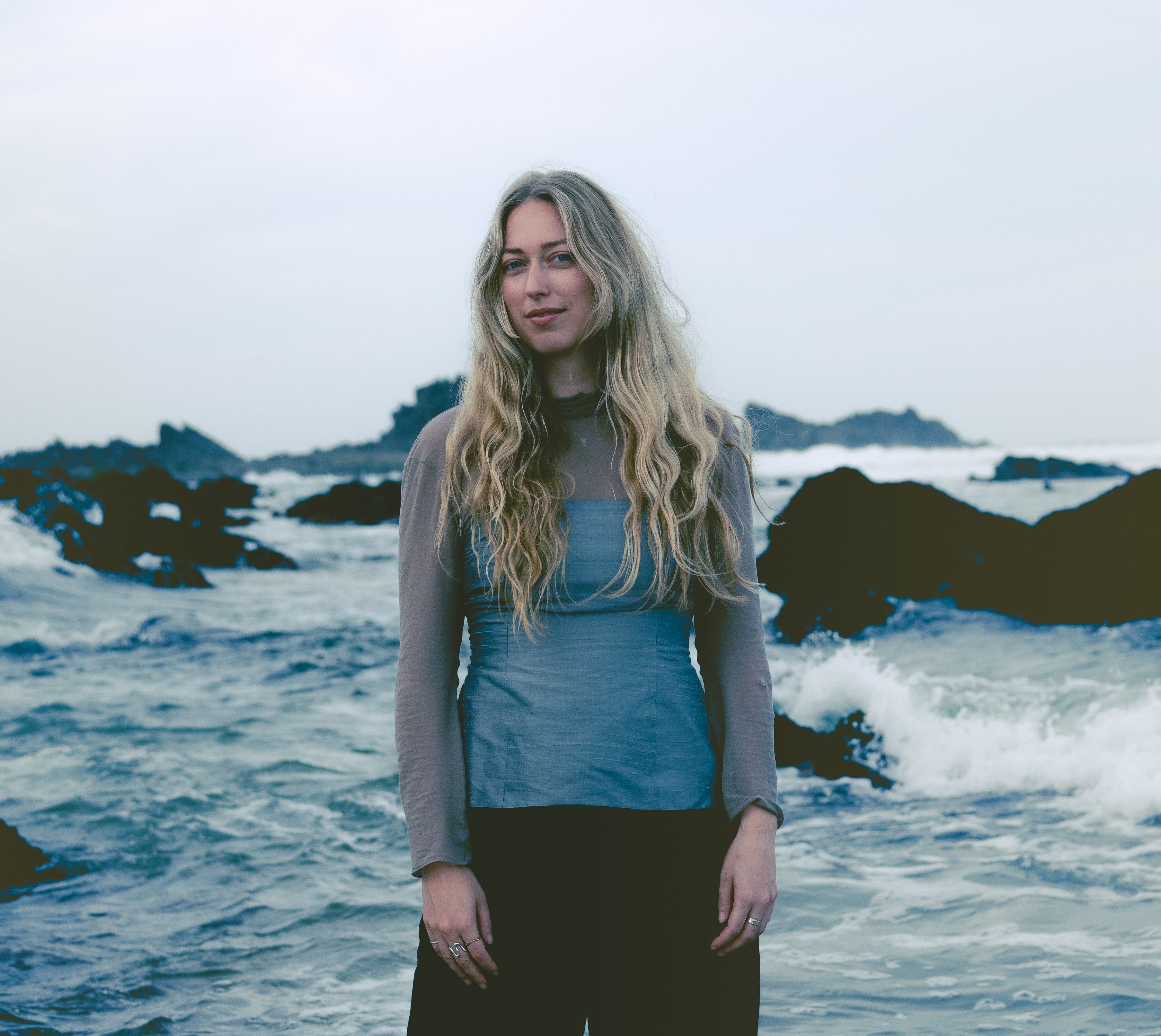
Name: Myra
Nationality: Dutch
Occupation: Producer, DJ
Current release: Myra is one of the artists featured on Decennial Revelry, a compilation celebrating the 10th anniversary of Amsterdam-based club RADION. The release also contains contributions by Beau Didier & Isaiah, Beste Hira, Delano Legito, DJ Europarking, Flits, Hashashin, Laura van Hal, MYRA, and SHE/HER. Buy the release from bandcamp.
If you enjoyed this Myra interview and would like to stay up to date with her music and upcoming live dates, visit her on Instagram, and Soundcloud.
What were some of the musical experiences which planted a seed for your interest in electronic music?
Music has been part of my life for as long as I can remember, even before I was born. My mum was a music teacher and studied at the conservatory, so music was always present in our home. Bedtime wasn’t about stories, it was about songs, sung from music books together with my mum and sister, moments I still carry with me.
When I turned four years old, my mum placed me behind the piano. There was never any pressure; she taught me step by step, always in a playful and curious way. Those early years were filled with acoustic sounds, melodies, and harmony, and even though I didn’t realize it back then, it became the foundation for how deeply I would connect with music later in life.
Around the age of 10 my focus started to shift. I became fascinated by electronic music after watching and listening to Daft Punk’s track "Around the World" on MTV. What began as simple curiosity, slowly evolved into something more serious, pulling me deeper into the world of electronic sounds.
Everything truly clicked in 2012, at the age of 19 when I attended my first techno party: Drift om te Dansen in Nijmegen. The energy, the hypnotic repetition, and the collective movement on the dancefloor were exactly what I had been searching for, even without knowing it.
From that moment, I knew this was the path I wanted to follow.
Most genres of music make use of electronic production means. What does the term “electronic music” mean today, would you say?
At the conservatory I learned that music is called ‘electronic music’ when the sound itself is generated primarily by electronic means like oscillators, rather than by acoustic instruments being recorded. Today electronics are used in almost all sort of genres, so if you really put it like that basically everything could qualify.
In my opinion, real electronic music is when electronic tools are the main element inside a track, like synth timbres, use of drum machines, sequenced patterns and digital textures.
Also, club culture is basically the spine that holds the modern meaning of ‘electronic music’ together. It’s a shared understanding of sound worlds, practices and communities.
Disco, house, techno, drum n bass, IDM and many other genres were about a lot more than just music. For you personally, is electronic music (still) a way of life – and if so, in which way?
Techno is so much more for me than just music!
Techno scenes didn’t start as neutral music spaces, instead they formed as a counteraction. They became a place where people gathered because the dominant culture didn’t make room for them. The club became a space to experiment with new ways of being together, a place where people could claim their own space and show up fully as themselves.
For me personally, dancing is and will always be political in its own way. Hundreds of bodies aligning to the same pulse creates trust without a single word spoken. It’s a basic mutual respect and collective experience, a space that resists competition, exclusion, and the constant control of the outside world.
Over the past 14 years, I did see the scene change and become more commercialized, with rising prices and less focus on club culture. Spaces that once felt like experiments, can now sometimes feel pressured or even transactional. Yet, fortunately, there are still many promoters and clubs where the energy feels authentic, where you can really sense the roots of the scene and its original spirit.
As an artist, I also feel a responsibility to support this. Play for the clubs and promoters who nurture the culture, and keep playing at the very intimate or illegal events where the focus is full on community; it’s all part of keeping the spirit alive.
Debates around electronic music tend to focus on technology. What, though, were some of the things you learned by talking to colleagues or through performing and/or recording with other musicians? What role does community play for your interest in production and geIng beJer as a producer?
Producers like myself often spend hours alone in their rooms, crafting music. It can feel safe that way, especially when imposter syndrome creeps in. But making music together is where the real magic happens.
At the conservatory, I was pushed to share my newest, most vulnerable creations every Friday in a room full of incredibly talented producers. At first, it was literally nerve-wracking. But over time, I realized that the feedback I received was invaluable. It didn’t just give feedback of my work, it gave me concrete tools and insights to be able to grow as a producer.
Through these experiences, I learned that community plays a huge role in developing as a musician. Talking, collaborating, and performing with others opens up new ideas, challenges your perspective, while also making the process infinitely more fun!
Technology may shape electronic music, but connection and shared experience are what truly fuel growth.
What are examples for artists, performances, and releases that really inspired you recently and possibly gave you the feeling of having experienced something fresh and new?
Ooff, this is always a hard question because there are so many talented artists out there!
One person I definitely want to mention is Vera Grace, who I got to know 5 years ago during my studies at the conservatory in Amsterdam. She’s an incredibly creative and open-minded artist, technically skilled, and always focused on her goals while remaining eager to learn. She’s fearless in making choices that feel right and true to her heart, something I really respect.
At the same time, she’s just a genuinely lovely person. Her work and approach in general have been really inspiring to me.
Her recent track "Still Not Still" is a very nice sonic experience, recommended!
Where do most of your inspirations to create come from – rather from internal impulses or external ones? Which current social / political / ecological or other developments make you feel like you need to respond as an artist?
For me, having the urge to create music has always been a combination of external and internal impulses. I’ve always been deeply inspired by the sounds of nature, but lately especially by the waves of the sea.
Last September, I went on a surf and yoga retreat in Morocco, where I meditated every day at the beach. Normally my life moves very fast, but during that retreat I started to slow down and reconnect. I listened closely to the waves, noticing how each one is unique: some gentle and soft, others crashing with full force, all of them never boring.
Their constant change, their unpredictability, although still in a certain rhythm, have become a source of sonic and emotional inspiration.
I’m currently working on a new live set where I’m experimenting with capturing that sense of flow and presence in my music, trying to create textures and rhythms that feel alive, organic, and ever-changing, just like the sea.
Today, electronic music has an interesting relationship between honoring its roots and exploring the unknown. What does the balance between these two poles look like in your music?
Not so long ago, my life circumstances had me living out of my bag for a while, which meant I didn’t have access to a studio. During that time, creating music was only possible ‘inside the box,’ so entirely on a computer. I realized quickly that this approach isn’t really for me.
For my music to feel alive and necessary, I need to engage my body. Tweaking knobs with my hands, triggering drums on a drum machine, modulating sounds in real time; these physical movements are essential to how I connect with the music.
This realization has shifted how I approach production and performance. I now value tools that allow for direct interaction, where the body and the instrument are both part of the creative process. The more I can move, touch, and experiment in real time, the more the music becomes an extension of my impulses, rather than just a sequence on a screen.
How do you see the role of sampling in electronic music today?
I definitely don’t reject sampling, actually to the contrary. As long if it’s used thoughtfully in sounddesign and you can make the samples your own, I’m a strong supporter. Sampling can be incredibly powerful because it allows you to work with textures, timbres, and ideas that might be diffcult to create from scratch.
For me, the key is personalizing and shaping the sample, so it becomes part of your own musical language, rather than just a borrowed sound. You can manipulate it, layer it, process it, or even distort it until it feels entirely yours.
In that way, sampling can be just as expressive and creative as generating your own sounds, and sometimes even more because it connects you to unexpected sources and inspires new directions you wouldn’t have imagined otherwise.
In as far as it is applicable to your work, how would you describe the interaction between your music and DJing/DJ culture and clubs?
For me music, DJing, and club culture are inseparable, they feed into each other in a constant exchange. My productions are made for the club, designed to move people and create shared experiences.
But DJing isn’t just playing tracks; it’s an active dialogue with the crowd, the room, the sound technician, the light technician, the staff and everyone else involved during that particular night. It all together shapes the night, and in turn, the energy of the night shapes how I mix, how I transition, and even later how I approach my own tracks in the studio.
DJing teaches me about flow, building tension, settng the right atmospheres and reading the room, while producing allows me to craft the sounds and textures that make those moments possible.
How, would you say are your live performances and your recording projects connected at the moment? How do they mutually influence and feed off each other?
Lately I’ve been feeling the urge to experiment more in the moment, to create a live performance that allows spontaneity and improvisation, where I can put even more of myself into the music.
Right now, the process of preparing for this live project is already changing the way I produce. I’m thinking more about flexibility, texture, and the ways sounds can evolve in real time, rather than just how a track works in a fixed structure. I’m aiming for it to become a dialogue: the studio feeds the stage, and the stage feeds the studio, with both spaces teaching me new ways to express myself and connect with the people listening.
I’m excited to see how this evolving relationship will continue to shape my music productions in the upcoming years.