Published
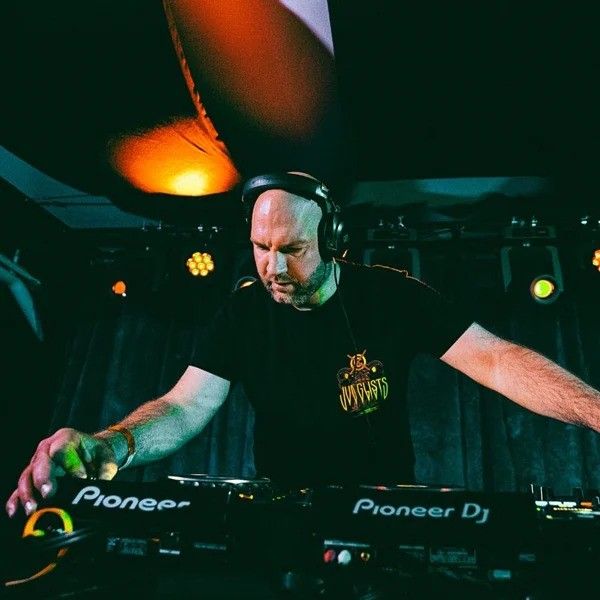
Name: Mark Newton aka N-TYPE
Occupation: Producer, DJ, label founder at Wheel and Deal
Nationality: British
Current release: N-TYPE's new album Typography is out via Wheel and Deal.
Recommendations for Croydon, UK: A little bar called Riff Raff’s. They have a record shop downstairs and it’s a super chill place to hang out.
Topic I am passionate about but rarely get to talk about: My family and friends! They mean the world to me; I can’t big them up enough!
If you enjoyed this N-TYPE interview and would like to stay up to date with his music, visit him on Instagram, Soundcloud, bandcamp, and Facebook.
The path to becoming a producer is a process - but from many interviews, I am under the impression that there are nonetheless one or a few defining moments. If this was the case for you – what were they and why were they so incisive?
There are several key moments in my production career that made a big impact on me and my productions.
I always wanted to make music from an early age, especially once I got a pair of second hand decks on my 14th Birthday. At this time jungle and rave music was my everything and still influences the way I produce even to this day. The use of samples, synths, filters, drums and arrangement.
I actually made a jungle track with my friend in his local studio in about 1996. Sadly I have no clue where the cassette is and we lost contact, but playing with all the synths and Akai sampler was so much fun.
I eventually got a mac as I was doing Graphics at college and I made my first dubstep track on Emagic Logic (I still have this on dubplate) but it felt very static and locked in the computer. The key moment for me was when Propellorheads Reason was released. This looked like my mate’s studio and I loved the fact you worked from a rack and could mess with the wires and link stuff up. This felt more creative to me and I made some wicked sounds.
Most of my early tracks from 2002 till the release of Reason 3 were made in Reason. I still use it as a AU now in Logic. I eventually went back to Logic as I wanted to record stuff and early reason versions didn’t have that.
My next key moment would have been going to the groundbreaking dark garage / dubstep night FWD>>. This coincided perfectly with my early productions and really influenced me. I’d go there and hear all this amazing new music and would literally would want to get home and smash out a beat. This community of producers and DJs became home. The next key moment was then the first all night Dubstep rave DMZ kicked off at 3rdBase in Brixton.
The next moment was working with other producers and learning first hand from some of the best in our genre. I give thanks to Kromestar, Coki, The Others, Benga, Lemon D, Seven, Sleeper and Lost. They gave me their time, taught me some cool techniques and we made some great tracks.
Tell me about one or two of your early pieces that you're still proud of (or satisfied with) in terms of production – and why your content with them.
I really like some of my earliest productions from 2002 / 2003. I didn’t really know what I was doing but I love how creative they were at the time and how the main samples guided the vibe of the tracks. This is also when I really learnt and understood envelopes and LFO which is used a lot in dubstep.
Check out “Square off” and “The Ring” which were made in 2002 & 2003 and eventually got released in 2005 on Southside Dubstars.
In how far, would you say, was your evolution as an artist connected to the evolution of your music set-up and studio? Were there shared stepping stones?
Not really. I think the idea is the most important thing.
I think some of my favourite tracks were built on basic systems.
There are artists who can realise their ideas best with a traditional – or modified – piano interface, others with a keyboard and a mouse, yet others by turning knobs or touching screens. What's your preferred and most intuitive/natural way of making music and why?
I like an easy to use DAW which flows nice. I like the latest Logic updates over the last few years. I also love hardware and analog sound but my studio is just using digital at the moment. We actually used some analog gear on the mixdowns of some of the tracks on the album.
One piece of kit I really like that I purchased a while ago is the Roli Lumi Keyboard. It’s nice and portable plus you can join them to make them 49 key and they are great for making melodies in key fast.
Melodic breaks / dubstep example:
Tell me about the space of your current studio/workplace and how you've set it up to optimise creativity.
I have just built a custom space at the bottom of my garden that I am still tuning. It is 6x4m and acoustically treated, I have just moved out of a small box room that was a nightmare to mix in.
I actually took my album project to Lost Studios in Croydon to get a majority of the tracks mixed and the whole album mastered as I was constantly struggling in my previous studio to mix. This helped me put a full stop on some of the tracks and get a consistent finish across the album.
From the earliest sketches to the finished piece, tell me about the production process for Typography, please.
The idea for the album came a long time ago but I started building it in 2019 after a successful tour of Australia in 2019.
Some of these older tracks I class as ‘lost dubplates’ as I was playing them in raves but they were unreleased until now. I wanted to make the album a good representation of my sound and also showcase the artists I love working with.
Some tracks on the album came to fruition quickly as I was building ideas for MCs in mind, these tracks are generally more minimal and spacious. Some tracks took longer as there were a lot of musical elements and automation. I find if I have a concept or a sample in advance this can guide me on sound and vibe.
Late producer SOPHIE said: “You have the possibility with electronic music to generate any texture, and any sound. So why would any musician want to limit themselves?” What's your take on that?
I think that is a great way to look at things - never limit yourself but if you are faced with limitations this can force you to try out new things.
What I mean is if all you have is a minimal set up or limited programs use that limitation to your favour, take it as a challenge. As I said earlier, some of my oldest tracks are my favourite and all I had was Reason 1.
Tell me about your aesthetic preferences for picking effects like reverb, delay, compression, chorus etc ... - what was the role of these effects in the production of your current release?
I tend to bus my fx so I’m using some of the same reverbs and delays on most of the sounds so it feels like I’m in one consistent space (room).
I will have several delays with different timings on different sends to use for different reasons.
The current production process allows for fast and infinite variations. Can you tell me about how you deal with this potential for the infinite and what ultimately decides on how many iterations to create and which version to release?
I think production has always been limitless and infinite.
I always find I know when the track feels right and that is the version to release, also as I am a DJ, testing my music in clubs etc helps with that.
Tell me about the role collaboration played in your recent productions – and how you see the potential for machines as collaborators compared to humans.
I love the vibe of collaborating with my favourite artists, it’s so vibey and I really feel a connection with that person through the music we are making. This is something you cannot get from a machine in my eyes.
The possibilities of getting AI-made ‘one off’ samples is interesting (like a digital session player), that is kind of like an evolution of Splice or something. I actually think that would be better than using samples other people have made. But again you can’t beat a real musician playing an instrument.
Production, as opposed to live performance, can be a lonely process and feedback from listeners isn't always tangible. What is it about it that gives you satisfaction?
I love to create; I love to learn. Music production is open to so many possibilities; it is so much fun. I learn something new every day.
It is very much like mixing records to me; it’s like my meditation. I can get lost in a track build and it gets exciting when I’m getting towards the finishing point.
There is a lot of emotion in making music and playing it out. When I make a track I’m really feeling, I can’t wait to play it to someone, whether they like it or not lol.
We can watch videos on production, take producer courses, and exchange deep insights on gear forums. Amidst these options to improve one's chops/ skills, how do you keep things playful?
I like getting new VSTs and gadgets, collaborating with artists. Thinking about cool things to sample or even sound design. The possibilities are endless and I love that!
One thing I love to do is merge genres and push the boundaries.
AI is already capable of making something most people would recognise as music. I am curious, though, and will keep this question somewhat broad on purpose: What do you think that means?
I think soul, human creativity and imperfections will always overshine computer-built music.
Plus I don’t think the live side of music will be affected as people want to see people play instruments. They want to see a good band or vocalist onstage giving it their all not a computer screen or robot that would get boring after a few minutes.
Creativity can reach many different corners of our lives. Do you personally feel as though producing a piece of music is inherently different from something like making a great cup of coffee? What do you express through music that you couldn't or wouldn't in more 'mundane' tasks?
Emotion. Music is tied to my soul, mundane tasks do nothing for me.
I love a cup of tea though.