

Name: Nancelot
Members: Camille Quinton (flute), Eline Gros (flute), Anett Kallai (flute), Tilo Weber (drums)
Interviewee: Nancy Meier
Nationality: Swiss
Current Release: Nancelot's self-titled debut album is out via Unit.
Recommendations: Mallorcan composer and vibraphone player Joan Perez Villegas
If you enjoyed this interview with Nancy Meier and would like to find out more about her music, visit her official homepage. She is also on Instagram, and Facebook.
Where does the impulse to create something come from for you? What role do often-quoted sources of inspiration like dreams, other forms of art, personal relationships, politics etc play?
My debut album is inspired by my living room plants. They all have names and live their brilliant lives. I took a close look at them and wrote down their characteristics.
On the cover you can see "Aiko" in the very glass flowerpot in which she stands on my windowsill.
Is there a preparation phase for your process? Do you require your tools to be laid out in a particular way, for example, do you need to do 'research' or create 'early versions'?
I often have many compositional ideas that I write down one after the other. The parts don't have much to do with each other, and I often discard more than half of them or use them for another piece. It can help me to make a layout to visually get through and sort the parts.
These are my 'early versions'. When I look at these old versions again later - at the end of the process - I realize just how big this development actually is. But it's also always amazing how one idea leads to the next and there's no way around the long process.
Do you have certain rituals to get you into the right mindset for creating? What role do certain foods or stimulants like coffee, lighting, scents, exercise or reading poetry play?
The ideal composition day starts with sport in nature and a hearty breakfast. A bright, quiet workplace and a good black tea with milk and honey are also part of it.
All these things do not directly influence the outcome of my work, but they do affect my well-being while working and, above all, my stamina. I can compose for a long time in optimal working conditions.
Often, while writing, new ideas and alternative roads will open themselves up, pulling and pushing the creator in a different direction. Does this happen to you, too, and how do you deal with it? What do you do with these ideas?
It's like a map. You have chosen a path and you follow it. It can be a busy highway or an overgrown hiking trail in the mountains with a lake and bears. The beauty of composing is that these paths can be left very quickly.
If you realize in the middle of the process that you no longer feel comfortable in the place you have chosen, you just take the next turn-off or go back a few metres and set off on the desired path compositionally.
Once a piece is finished, how important is it for you to let it lie and evaluate it later on? How much improvement and refinement do you personally allow until you're satisfied with a piece? What does this process look like in practise?
Sometimes it's good to have a deadline. Before the deadline, I do everything I can to make my piece really feel like mine. So if there are parts that I can't get to grips with even after several days or weeks, I have to change them. If I don't have a deadline, I want to finish a piece within six months at the latest.
Personally, I don't benefit from leaving a piece lying around for a long time when it's supposedly finished. During the work process, I may well put the piece aside for a week, but a longer break than a month leads to me no longer understanding my own ideas. The flow then disappears.
When you're in the studio to record a piece, how important is the actual performance and the moment of performing the song still in an age where so much can be “done and fixed in post?“
In my band with 4 flutes and drums, performance is very important. We recorded our album all at the same time in one room. There are hardly any overdubs. "Leopold" is a "one take". We want to cut and edit as little as possible.
Our music is very complex and in a way can never be played perfectly - there is always a residual risk, especially for live performances. As our aim is to be just as convincing live as we are in the studio, we rehearsed a lot over a period of three years.
Of course, we also benefited from this work in the studio.
After finishing a piece or album and releasing something into the world, there can be a sense of emptiness. Can you relate to this – and how do you return to the state of creativity after experiencing it?
I know the emptiness well. The Bible says that there is a time to sow and a time to reap. It is important for me to keep telling myself that every phase of the great process of my existence as an artist is justified. Even (or especially?) the regeneration phase.
The sequence of a cycle is the most basic thing in nature: take a tree in the seasons: it sheds its leaves after the summer, it can't grow them back immediately, it needs time until the next spring.
Is it stressed about this? I don't think so.
Creativity can reach many different corners of our lives. Do you personally feel as though writing a piece of music is inherently different from something like making a great cup of coffee? What do you express through music that you couldn't or wouldn't in more 'mundane' tasks?
Firstly, I don't like coffee at all. Secondly, I think writing a piece of music can be (or sometimes feels) very trivial. It's like tidying up the apartment. Or pumping up the bike. The only difference is that, at best, I can earn money by composing. But the money only comes later, when I play concerts, when my record is bought.
I think in general, we creative people are always dependent on how receptive our audience is. Many artists say that they can express something with their art that they couldn't do in any other way. I can tell you stories about my plants and how they have inspired me, how the music has a direct connection to these narratives. But the music says something of its own and conveys its own opinion. it makes you feel a certain way.
I'm sure that my audience perceives something different when they listen to my music than when they listen to my stories.

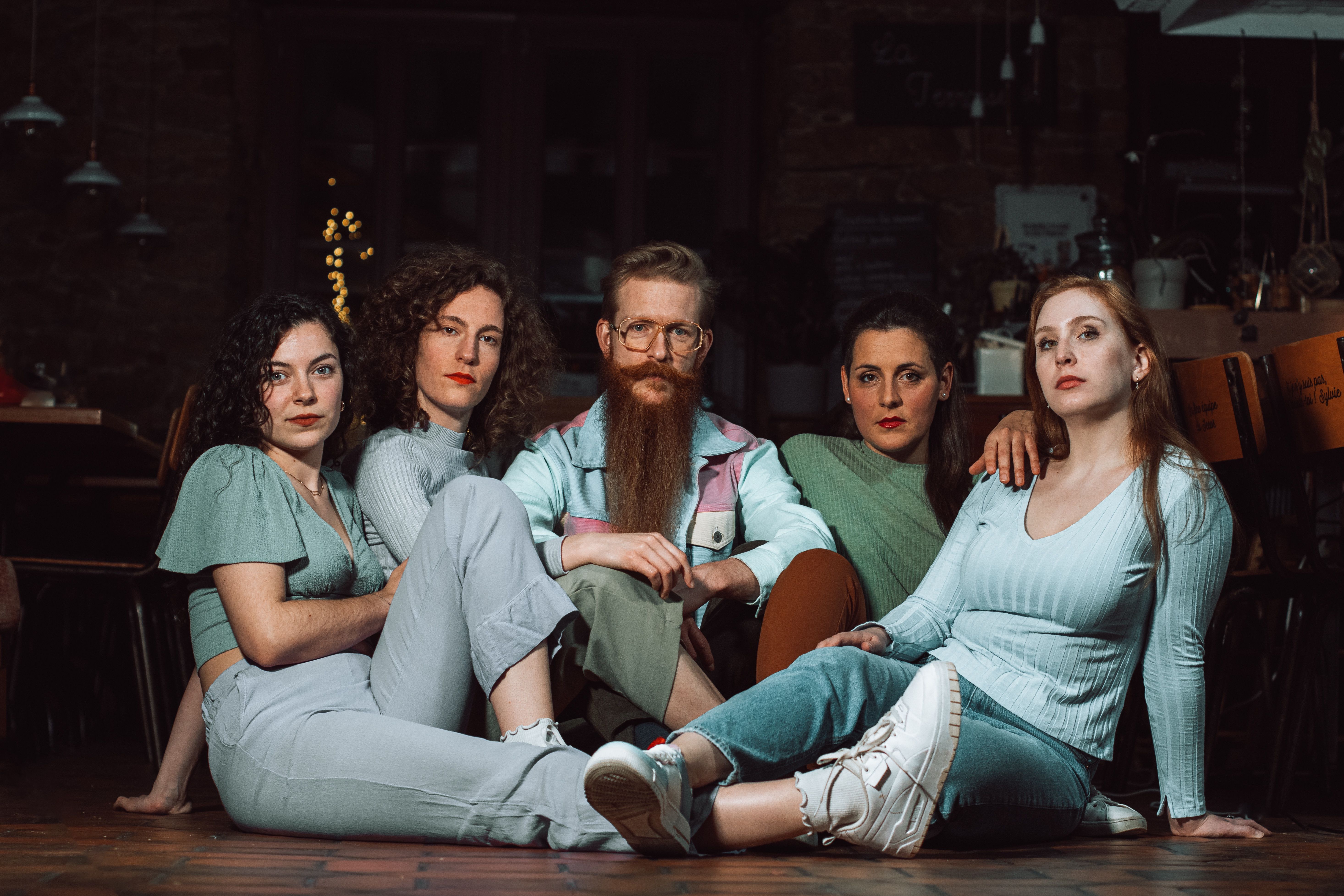 Nancelot Interview Image by Bastien Bard
"Writing a piece of music can be very trivial. It's like tidying up the apartment. Or pumping up the bike."
Video
