Published
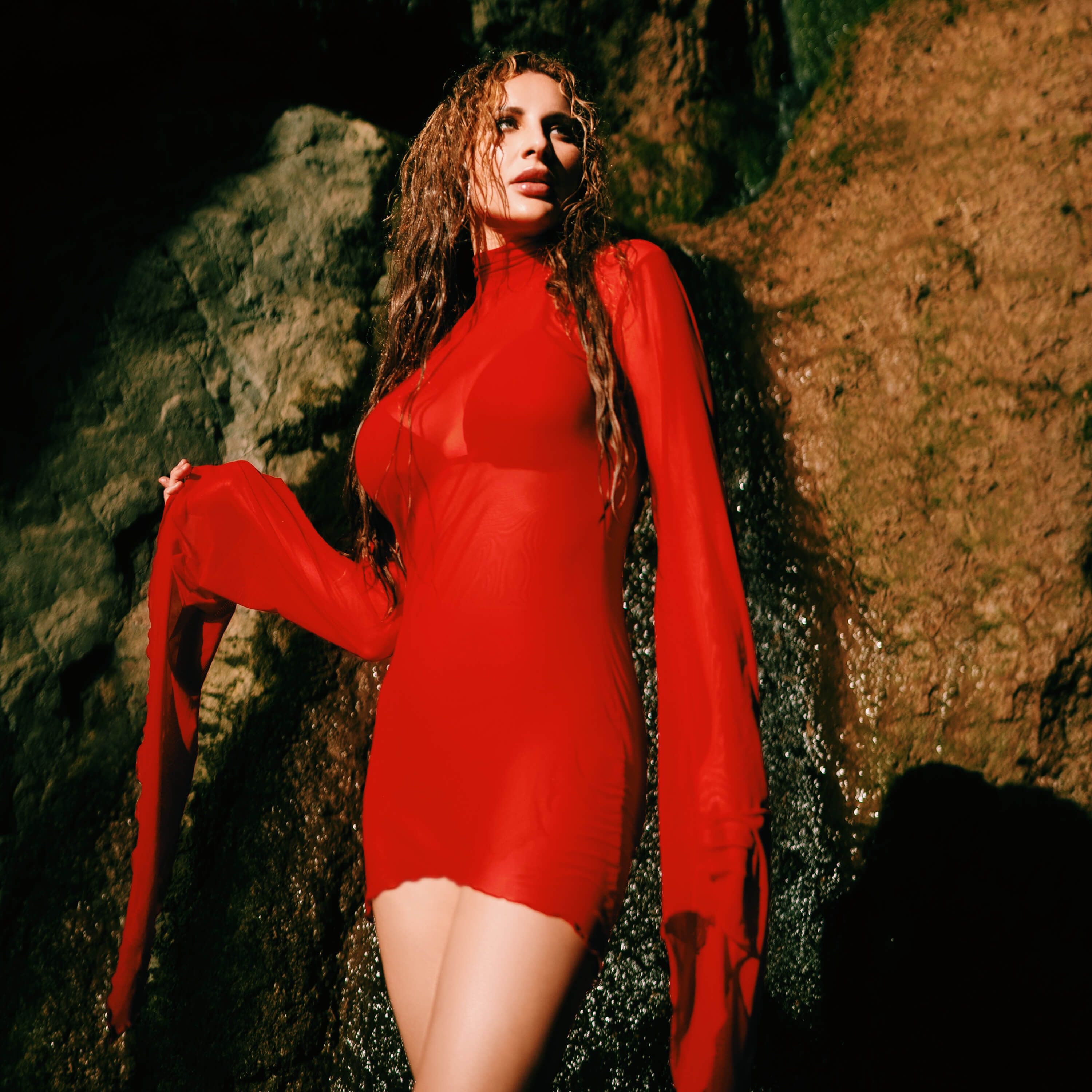
Name: Natisa Gogol
Occupation: Singer, songwriter
Nationality: Ukrainian
Current release: Natisa Gogol's latest single "Into The Wild" is out now.
If you enjoyed this Natisa Gogol interview and would like to find out more about her music, visit her on Instagram, and Facebook.
Do you think that some of your earliest musical experiences planted a seed for your interest in your voice and singing? How and when did you start singing?
It was present from birth; it was genetically inherited from my father. If I consciously recall, I probably started being aware of it around the age of three. At that point, it was clear enough that there was never a question of what I would pursue.
As time went on, this path only became more evident. Each year, I sang more and more, and there was never a consideration of doing anything else. Neither I, my parents, nor my surroundings ever questioned it.
If you're also playing other instruments, how does the expressive potential of these compare to your own voice?
I play the piano and keyboard. I graduated from music school as a classical pianist. I adore classical music and play Chopin. I'm not particularly adept at accompanying myself on all my songs, but I do accompany myself on some.
Combining singing and playing is challenging; it's easier to excel at one at a time. However, as part of my concert program, I do play the piano. There are songs I love performing on the piano because they help me feel and understand the music more deeply, grasping its structure from within.
Unlike many performers without musical education who rely on intuition, I understand many technical aspects and how everything is constructed. This knowledge certainly helps. Without it, my perception of music would be much more superficial.
Singing is an integral part of all cultures, and traditions. Which of these do you draw from – and why?
Above all, I'm particularly drawn to African-American jazz because I grew up with it. I also love folk music, including Ukrainian folklore, and blues. But African-American jazz was fundamental in shaping me as a singer.
Other influences came from various sources, but I would highlight jazz as the primary one.
What were some of the main challenges in your development as a singer/vocalist? Which practices, exercises, or experiences were most helpful in reaching your goals – were there also “harmful” ones?
Like any vocalist, I eventually faced the problem of vocal cord strain. I once lost my voice and couldn't sing for a long time. Resting my voice helped, as is widely known.
In everyday life, consistent practice, even minimal, is crucial—about half an hour to an hour a day to avoid overstraining the vocal cords, in my opinion. A critical realization I recently had is that this should be enjoyable, not work, because vocal cords are emotionally dependent and closely tied to psychology. When you are mentally tense, your vocal cords tighten, preventing you from singing.
The psycho-emotional state of a singer is vital. If everything is tense, the vocal cords can't relax, and the sound can't be full.
How do you see the relationship between harmony, rhythm and melody? Do you feel that honing your sense of rhythm and groove has an effect on your singing skills?
Harmony and rhythm in a song are inseparable and interdependent. Refining rhythm enhances professionalism and skills, and this requires constant effort. Listening to the right music, such as rhythmic, beat-driven genres like blues, helps in this regard.
Regarding vocal style, rhythm is crucial. Without a sense of rhythm, a voice may lack style and interest.
A pure voice without rhythm feels flat and uninteresting.
What are the things you hear in a voice when listening to a vocalist? What moves you in the voices of other singers?
As a vocalist, I am particularly moved by vocal range, timbre, technique, melismatics, technical nuances, and power. These elements are essential to me, but I understand that many people prioritize other aspects, like the performer's charisma, stage presence, and personality, which can sometimes outweigh vocal skill.
Achieving a balance is key for maximum impact. Vocalists focus on vocals, so for me, vocal quality is paramount. However, even the best vocal performance won't work if it lacks soul and isn't heartfelt. You must invest your soul into your singing.
How would you describe the physical sensation of singing? [Where do you feel the voice, do you have a visual sensation/representation, is there a sense of release or tension etc …]
Physically feeling the voice in the body is an intriguing concept.
Physical tension translates to vocal tension, making it difficult to sing easily. Therefore, it's essential to release all physical tension and relax before performing to overcome stage fright.
Additionally, there's a profound satisfaction when singing naturally. For a singer, it's crucial to sing regularly, as not doing so can even lead to illness. The throat chakra, the fifth chakra, relates to self-expression, making it vital to sing and be heard as much as possible.
What kind of musical settings and situations do you think are ideal for your own voice?
For me, an ideal pre-performance routine involves eating a piece of boiled meat, as taught by my vocal instructors, to ensure good vocal production. Also, not singing the day before a concert prevents lactic acid buildup on the vocal cords.
Many artists take a day of silence before a performance, practicing yoga, meditating, and staying alone to rest their voice and body. This preparation, along with regular rehearsals, helps maximize vocal performance.
Warm-ups are beneficial, and I still use the same warm-ups from my student days, sometimes accompanying myself on the piano, singing a cappella, or following YouTube instructors. There are favorite warm-ups perfected over the years. As a former vocal coach on a well-known TV project, I know how to warm up before a performance.
We have a speaking voice and a singing voice. Do these feel like they are natural extensions of each other, ends on a spectrum or different in kind?
Speaking like you sing is a technique for pop singers, practiced by stars like Michael Jackson. This method aligns with natural vocal habits and is crucial for pop performers.
From whispers to screams, from different colours to dynamics, what are the potentials and limits of your voice? How much of your vocal performance can and do you want to control?
I mix various styles like academic singing, rap, jazz improvisation, pop, and soul, experimenting with my voice to enhance my artistry.
There are many techniques I use, but I feel I haven't fully explored them all, so I continue to learn. I particularly love using a mix of chest voice and head register, which is my strong suit. This technique allows me to hit high notes and is a unique aspect of my singing style.
When you're writing song lyrics, do you sense or see a connection between your voice and the text? Does it need to feel and sound “good” or “right” to sing certain words? What's your perspective in this regard of singing someone else's songs versus your own?
Lyrics should fit the music effortlessly and be easy to sing. Some words sound awkward and unsuitable for songs, while others are more musical and flow better. Songwriters and singers know this and select words that sound pleasant. However, professional vocalists should be able to sing anything, though choosing appealing words helps the audience enjoy the performance more.
Previously, it was easier for me to sing others' songs, which involved mimicking other performers' vocal skills. Now, I find it easier to sing my own songs, as they allow me to truly express myself. Covering others' songs doesn't showcase one's identity as effectively as original work does.
Strain is a particularly serious issue for many vocalists. How do you take care of your voice? Are the recipes or techniques to get a damaged voice back in shape?
Tension is a significant issue for vocalists, primarily requiring psychological comfort and emotional stability to alleviate internal tension.
How has technology, such as autotune or effect processing, impacted singing? Has it been a concrete influence on your own approach?
Studio effects on vocals haven't significantly impacted me because my voice is rarely processed. We occasionally use auto-tune, but not often.
This technical aid saves time but doesn't fundamentally change my voice, as I strive to sing purely.
For recording engineers, the human voice remains a tricky element to capture. What, from your perspective, makes voices sound great on record and in a live setting?
Recording quality depends on vocal professionalism, flexibility, range, timbre, and emotional expression. A voice can be technically perfect but emotionally lacking, so combining technical and emotional elements is crucial to convey the message effectively.
What makes a voice sound great on a recording is subjective, with no single recipe. Factors like psychological state, physical condition, and mood all play a role. Good health, being well-fed, and positive emotions contribute to a good recording.
However, emotional distress can also result in a powerful, heartfelt performance.
Motherese may have been the origin of music, and singing is possibly the earliest form of musical expression, and culture in general. How connected is the human voice to your own sense of wellbeing, your creativity, and society as a whole?
A voice is an influential tool, especially for those whose profession relies on it, such as speakers, singers, and broadcasters.
Socrates said, "Speak so that I may see you," indicating that voice reveals more about a person than their words. Therefore, the voice is a powerful instrument of influence.