Published
Name: Neil Luck
Occupation: Composer, producer, performer
Nationality: British
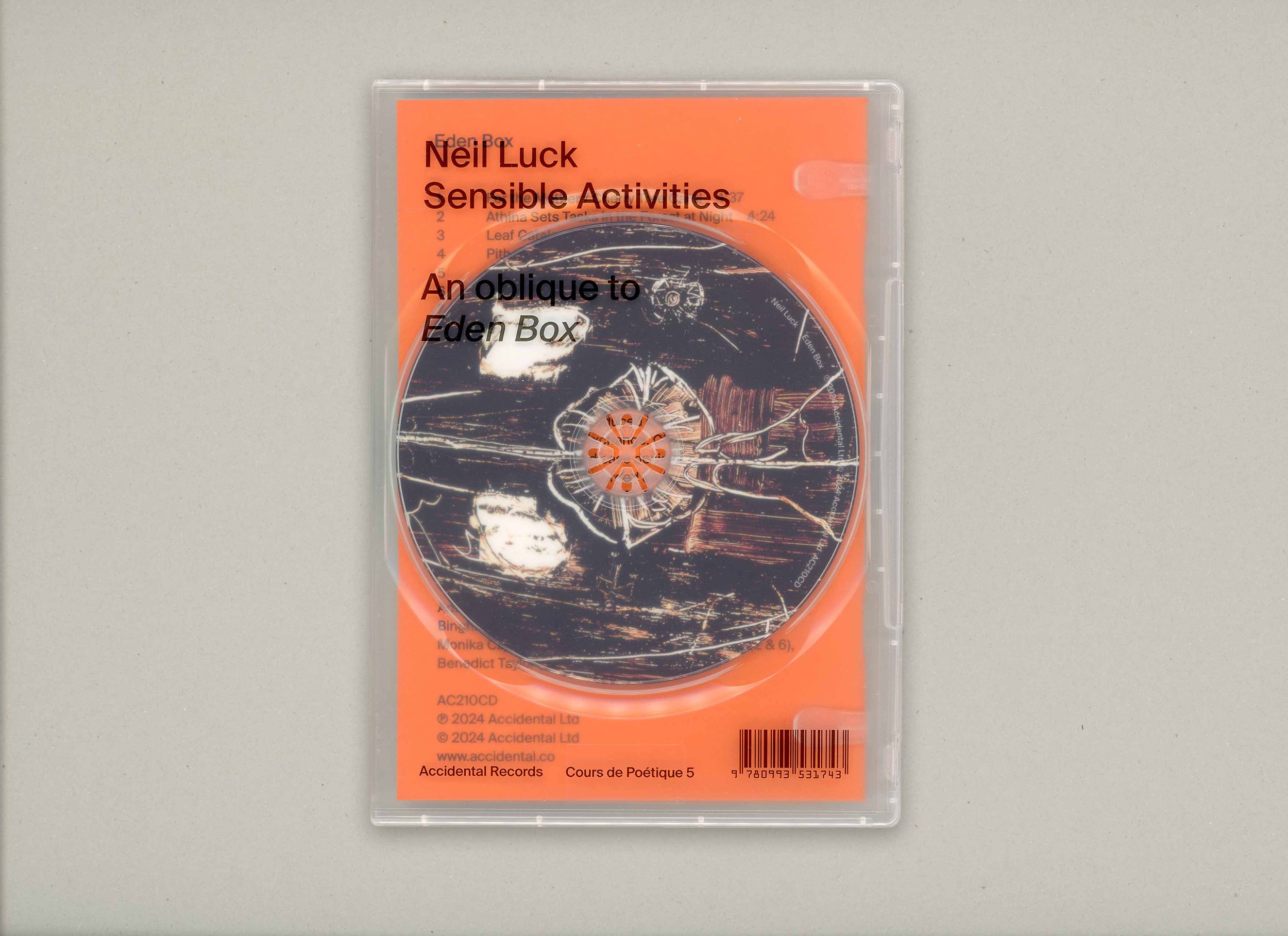
Recent release: Neil Luck's new album Eden Box is out via accidental.
Recommendations on the topic of sound: Well in connection to the answer above, I just finished reading Russell Hoban’s novel Riddley Walker. It’s about a distant post-nuclear holocaust future, set in Kent England, where human civilisation is essentially back to iron-age technology. The story is great, but it’s written in an invented, mangled, phonetic form of English that only makes sense if you hear each word carefully when reading. It means the pace of reading really slows down, and as readers (or lookers) we have to rely on our inner ears to grasp what’s going on.
If you enjoyed this Neil Luck interview and would like to stay up to date with his music, visit his official homepage. He is also on Instagram, and twitter.
When I listen to music, I see shapes, objects and colours. What happens in your body when you're listening? Do you listen with your eyes open or closed?
Occasionally I think I experience something similar, with certain pieces of music or types of musics, but only in super focused listening environments.
I have a thing about writing music in states of almost-sleep, a state of exhaustion when things start to loosen up a bit, dreams start to leak in, and less obvious ideas appear. I also find listening in that state interesting, and can get me towards a kind of synesthesia with visualised colours, but also images and memories.
Outside of that though, I think I respond quite emotionally to music, I like to let it do something to me. An album I put out in 2021 called Downturn Fantasies plays with this world a lot; the tracks are settings of my dream diary entries, but all aiming for a sort of weird logic of colour, shape, weight, density rather than a more typical musical structural logic.
How do listening with headphones and listening through a stereo system change your experience of sound and music?
Well, they’re really fundamentally different experiences for me, and I feel like headphone listening is somehow prioritised these days, and a lot of music is produced with this in mind. Certainly I know a lot of musicians who mix on headphones pretty much exclusively.
Perhaps partly because of this, hearing music on a great stereo system can feel like a treat, and sometimes a revelation. It’s also communal, collaborative, physical, and actually literally loud and quiet. So for me it’s a much richer experience. I should get a better stereo.
What I do love about headphone listening is the potential chaos of listening to music on the go, in the city, in the throng of things. I’ve never used noise cancelling headphones, but I enjoy how more dynamic music can be masked and infiltrated by environmental sounds, or how your attention be drawn from music listening to something urgent, like a busy road, or a bright light, or an attractive person.
Tell me about some of the albums or artists that you love specifically for their sound, please.
Recently I love Sugai Ken’s work.
It’s sort of quite abstract electroacoustic work, but the logic of how one sound relates to another is super mysterious, and kind of non-intuitive, but also usually totally (for me) perfect and poised. I find it extremely sensual.
I’d say the same for Yes Indeed - a UK band (Laurie Tompkins and Otto Willberg) whose approach to combinations of sounds is distinctly strange and illogical, but just works like some kind of magic.
Lastly, lately I can’t help but be seduced by the American jazz guitarist Julian Lage. It’s pretty straight-ahead music, but his touch on the electric guitar is really totally beautiful and idiosyncratic.
There can be sounds which feel highly irritating to us and then there are others we could gladly listen to for hours. Do you have examples for either one or both of these?
It’s a tricky question, and super specific. But one sound I can’t stand is knocking on doors. The sound itself is so penetrative and sudden. Super localised, and also has all these associations of urgency, thriller movies, seances, angry neighbours.
I recorded a little bit about it for a radio show a few years back.
One sound-world I got really deep into the last few years is scanning of shortwave radio frequencies. I find that world so rich and complex and unpredictable, full of microscopic insectoid details of static and noise, bleeps, electrical ticks, bits of music, conversations. I could spend all night there.
Are there everyday places, spaces, or devices which intrigue you by the way they sound? Which are these?
Yeah I’m really into internal head sounds! Like, zoning into the sound of your eyelids opening and closing, or the sound of the bones in your neck moving; this sort of almost anechoic totally private world.
I recently published a book called Sensible Activities that is partly about exploring this world, thinking about it in quite cinematic terms, but away from things like amplification and external sound technology.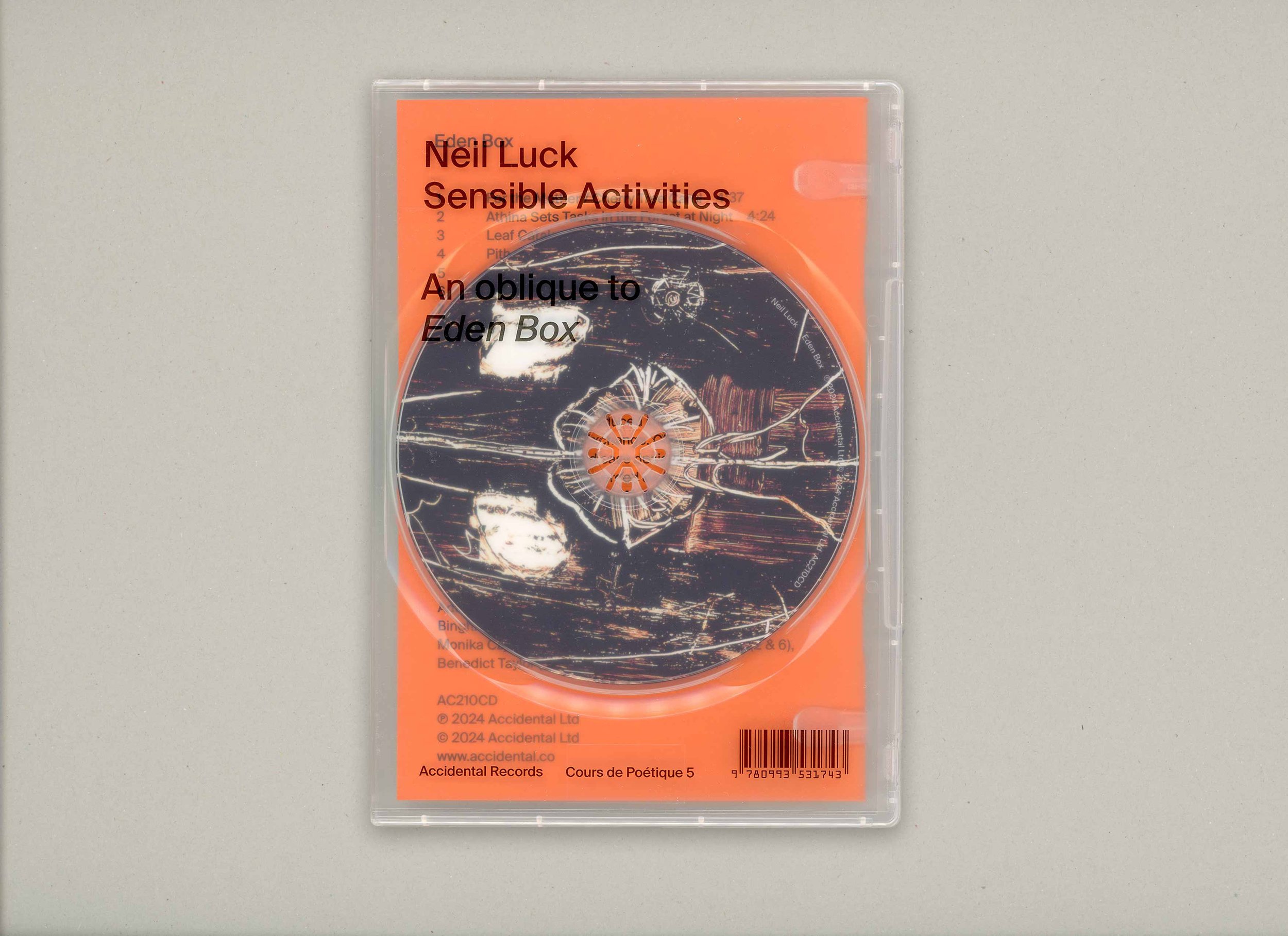
Have you ever been in spaces with extreme sonic characteristics, such as anechoic chambers or caves? What was the experience like?
Somewhere recently I was just totally bowled over by was one of Japanese architect Tadao Ando’s children’s library reading rooms, specifically the one in Kobe, Japan.
It was constructed as a concrete cone with a small skylight slicing off the tip. Maybe 6-7 metres tall, and about 3 metres in diameter it had this insane, perfect flutter echo, but was intended specifically for silent, focused reading.
The acoustic was so conspicuous that it just engendered a very focused and quiet way of being in there.
What are among your favourite spaces to record and play your music?
I like performing in spaces that function as part of the work in some way. That’s only really possible when you build a performance from the ground up. So not necessarily the ‘best sounding’ space conventionally, but one that resonates in sympathy with what is happening there.
It doesn’t happen as often as I’d like but I’ve lucky in the past working with my group ARCO in an old Lithuanian amphitheatre-like Government buildings, a half-built shop in Aarhus to stage a ritual with pro wrestlers and a death metal band, this mad octagonal library in London to make a sort of midsummer ritual, and most recently performing with resonant furniture dragging setting various churches into reverberation, ha!
In terms of recording I just like places with unusual sonic grains, and also spaces where it’s possible to do and capture stuff quickly and instinctively. The album I just put out this year on Accidental Records, Eden Box, features heaps of recordings of things made outside and in a fairly adhoc manner. Not field recordings necessarily, but performances, impulse responses, voices messages, sampled animal sounds, leaf blowing etc,
Do music and sound feel “material” to you? Does working with sound feel like you're sculpting or shaping something?
Yeah actually it does. Or rather composing feels like this to me.
In terms of live performance I like the process of developing a work over time, through various live iterations and tests. Putting it in front of an audience and kind of stress-testing, cutting, adding, making more complex or simple, chipping away, getting to the heart of something. That can be if it’s something I’m performing myself, or something written for other people.
Sound, song, and rhythm are all around us, from animal noises to the waves of the ocean. What, if any, are some of the most moving experiences you've had with these non-human-made sounds?
Again, I think this recent book Sensible Activities connects to this a lot. So I really am excited about being ‘moved’. There’s various activities in there that are really about connecting with these sorts of sounds in (for me) weirded ways.
Probably my favourite is called “Ghost”, that involves internalising and looping the first few measures of “Unchained Melody” (à la the pottery scene in the movie of the same name) in your head, clicking on the offbeats, and gradually letting environmental sounds creep into the song, articulating the melody, hitting a rhythm, matching a dynamic curve etc.
That’s another sound world I can spend ages in.
Neil Luck Interview Image by Athina Vahlar
Many animals communicate through sound. Based either on experience or intuition, do you feel as though interspecies communication is possible and important? Is there a creative element to it, would you say?
I don’t have a strong intuition about it. I guess humans tend to filter all thinking through this technology we call language, and for the last few hundred years primarily and increasingly through the technology of written and printed language. This probably shifts us further and further away from being able to understand the world through different logics, and more into this closed anthropocentric way of seeing literally anything and everything.
Horse whispering is an interesting practice in that it seems to be as much visual, tactile, and emotional as parsing or reading sound. There’s probably a lot to learn from that. Maybe we should be spending more time with horses.
We can surround us with sound every second of the day. The great pianist Glenn Gould even considered this the ultimate delight. How do you see that yourself and what importance does silence hold?
I take anything Glenn Gould said with a massive pinch of salt, have you ever heard his thoughts on free improvisation, on experimental music? Ha!
I’m not actually sure what he means by this comment, but I think it’s glorious that he saw it as a great delight, the man was an obsessive musician and scholar clearly.
I’m not a big fan of always having music on, especially when I’m out and about. For me it’s more about just keeping ears open and present and aware. That’s super rich for me, rather than curating how I listen always. Being able to stumble upon the overheard conversation, the serendipitous event, the unintentional performance etc.
Seth S. Horowitz called hearing the “universal sense” and emphasised that it was more precise and faster than any of our other senses, including vision. How would our world be different if we paid less attention to looks and listened more instead?
I think we’d live slower existences.