Published
Name: Nero
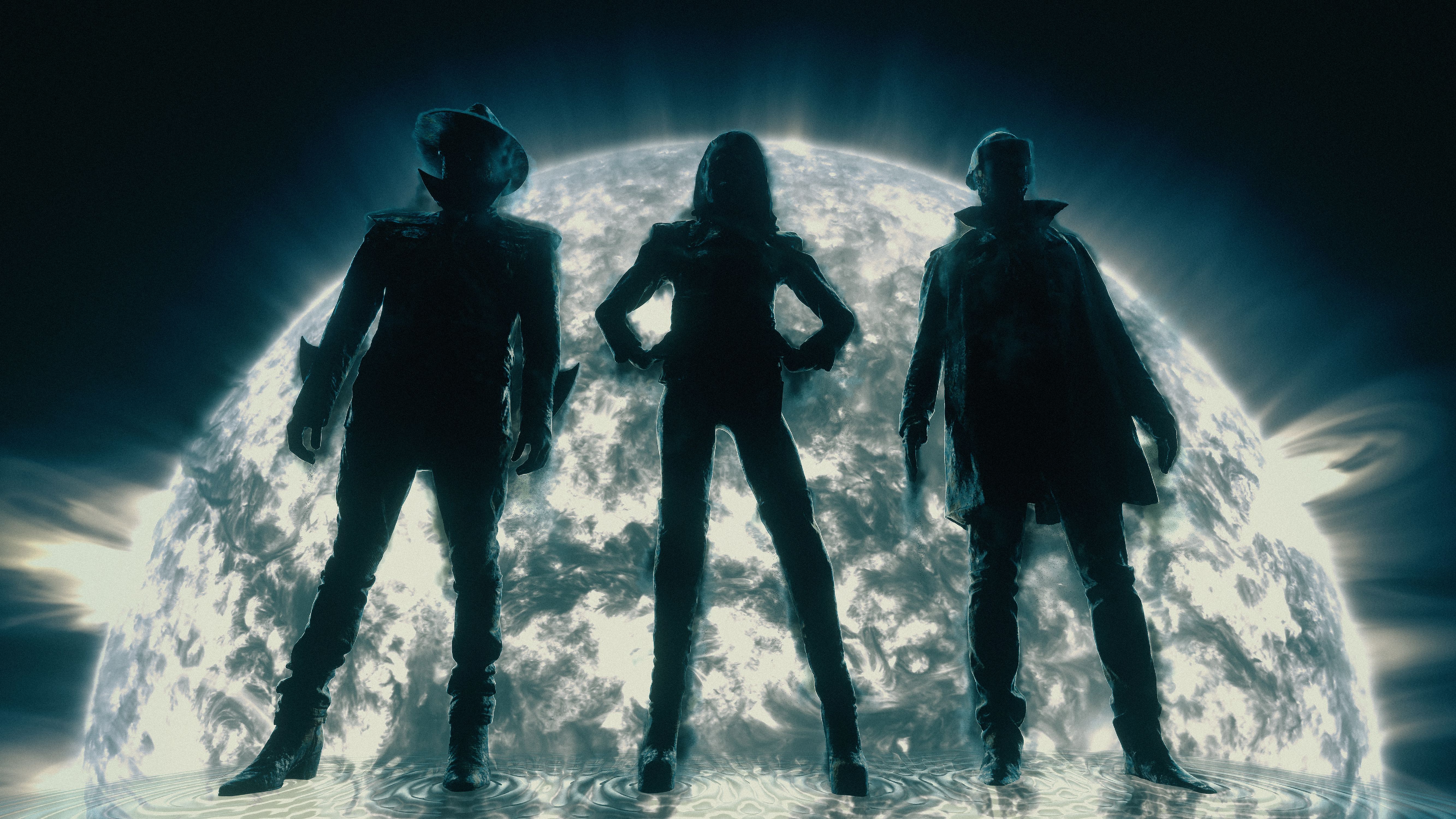
Members: Joe Ray, Daniel Stephens, Alana Watson
Interviewees: Joe Ray, Daniel Stephens
Nationality: British
Current release: Nero's Into The Unknown is out via 2808.
Recommendations:
J: Strange Days - an underrated sci fi movie from 1995 we both love.
D: I’ve always found the Caspar David Freidrich painting ‘Wanderer above the Sea of Fog’ very inspiring ... and emotive.
If you enjoyed this Nero interview and would like to know more, visit the trio on Instagram, Soundcloud, Facebook, and twitter.
What was the first time you were consciously impressed by technology – in and outside of music?
J: As a kid I was into video games, from Street Fighter to Civilization 2 and point and click adventure games. I remember wanting to be a game coder and playing around with trying to make a simple game in BASIC ... then I got into music, took up the guitar etc …
Later I discovered dance music and realized music production was some kind of combination of the 2 skills, like music creation but with kind of a coding mentality. I had this basic piece of software called Cool Edit and started chopping loops around, which was the start of me getting into production.
When it comes to arranging, sound design, performing, composing, etc – what are currently concrete topics and aspects that interest you and where you want to improve or simply challenge yourself?
D: I’m always interested in the writing and production process - why some songs seem to write themselves and some are more challenging to capture.
I think one can quite often have a strong melody or progression but without having a clear idea of the sounds/ timbres that will serve it best.
I sometimes try to push myself to have a stronger concept of what I want to do and hear before even sitting down at a computer.
Do you keep up with recent developments in terms of gear and software? If not, why not? If so, what are you looking for?
D: Yes, I’m somewhat of a synth fanatic and therefore I’ve always got half an eye on new or upcoming analogue and software synthesizers.
How and for what reasons has your music set-up evolved over the years and what are currently some of the most important pieces of gear and software for you?
D: I’d say our setup and process hasn’t changed an awful lot in the last decade or so. We’ve added to our synth collection over the years.
We have a Yamaha CS80, Roland Jupiter 8, Roland VP-330, Minimoog Voyagers, Moog One and a Sequential Prophet X. I’d love to get a Schmidt Synthesizer.
Jean-Michel Jarre maintained that, despite the advances in virtual technology, we are still "analogue animals made out of blood and bones who need buttons and knobs to touch.” In how far is this statement true or false for your own music?
D: I particularly like the tactile nature of analogue equipment. It definitely spurs creativity. So I’d agree totally with Jean-Michel there.
What are examples of production tools/instruments that you bought for a specific purpose?
D: I bought a horn sample library when we were writing Into the Night.
We wrote a disco / funk sounding horn section part and then chopped it up.
Late producer SOPHIE said: “You have the possibility with electronic music to generate any texture, and any sound. So why would any musician want to limit themselves?” What's your take on that?
J: Limitations mean you’re not trapped in the paradox of choice ... sometimes I’ll have a melody in my head and realise it could then be made into any sound.
I’m actually jealous of bands where each person has a specific instrument, and that’s it.
From the earliest sketches to the finished piece, tell me about the production process for your current release, please.
D: Joe and I will often start ideas separately. When one of us comes up with something that we’re both feeling, we send the project file to the other one.
I live in London and Joe now lives in Lisbon but we try to meet up in person as much as realistically possible. When we do, we will do a solid week or so together in the studio. Those tend to be the most productive periods.
What does your own way of working with sound look like? Do you find using presets lazy?
J: I use a lot of samples, manipulate them and sometimes then layer them with synths to add some extra crispness.
No, I think presets are a great starting point, but only in combination with other things.
Richie Hawtin, speaking about semi-modular equipment, has stated that a deeper understanding of sound synthesis can lead to “life lessons that go beyond what we can hear.” Can you relate to that statement?
D: There’s definitely something very satisfying about understanding the science and architecture of a synth. Being able to hear a synth (or other) sound and know how to replicate it is pretty rewarding.
I’ve never allowed myself to get into modular synths, though. I think I’d end up getting obsessive and spending far too much money. I also don’t think I have the patience that’s needed.
What were some of your most positive collaboration experiences? How did this "human element" enhance your solo approach? Did you record via filesharing or in the same room and if so, what did the recording process look like?
D: We’ve not really collaborated that much. We knew Skrillex very well before we collabed on the “Promises and Holding On Remixes” and that makes it much easier.
With Zhu we had a session first where we just played each other music and chatted before actually working on a different day.
When we wrote “Renegade” with RL Grime it was during lockdown and so was more a case of passing the project back and forth.
On this album we collaborated on some tracks with a couple of great writer/ producers (Francis Novotny and Adam Dowbnia) who we were friends with before the album work began. It actually felt very natural and refreshing bringing them into the NERO circle. Before this album we’d never worked or written with anyone on NERO tracks.
To some, the advent of AI and 'intelligent' composing tools offers potential for machines to contribute to the creative process. What are your hopes, fears, expectations and possible concrete plans in this regard?
J: I think there’ll be so much good music around, we’ll be totally saturated and become numb to it - and so we’ll yearn for the direct human experience of live music. Perhaps even a return to a lot of instrument based music.
Have you used AI or generative music tools for your own productions? If so, in which way and what did they add?
J: I used AI to create a vocal sample I had in my head - I used an online AI generator, typed in the lyrics I was hearing and the style of track (male, with a soul kind of feel), then found the one closest to what i was wanting from the 20 or so loops I created.
Then I used an AI extractor (RIPX) to isolate the vocal - then I adjusted the pitch in Ableton to mirror the notes I was wanting. It created the feel of a chopped up sample, but without there being an actual sample in the first place
What is a production related question that you would like to ask yourself – and what's your answer to it?
J: Q. Why do you spend so much time staring at Ableton when there’s a beautiful world out there to explore? A: I’ve no idea *tear running down his cheek.”