Published
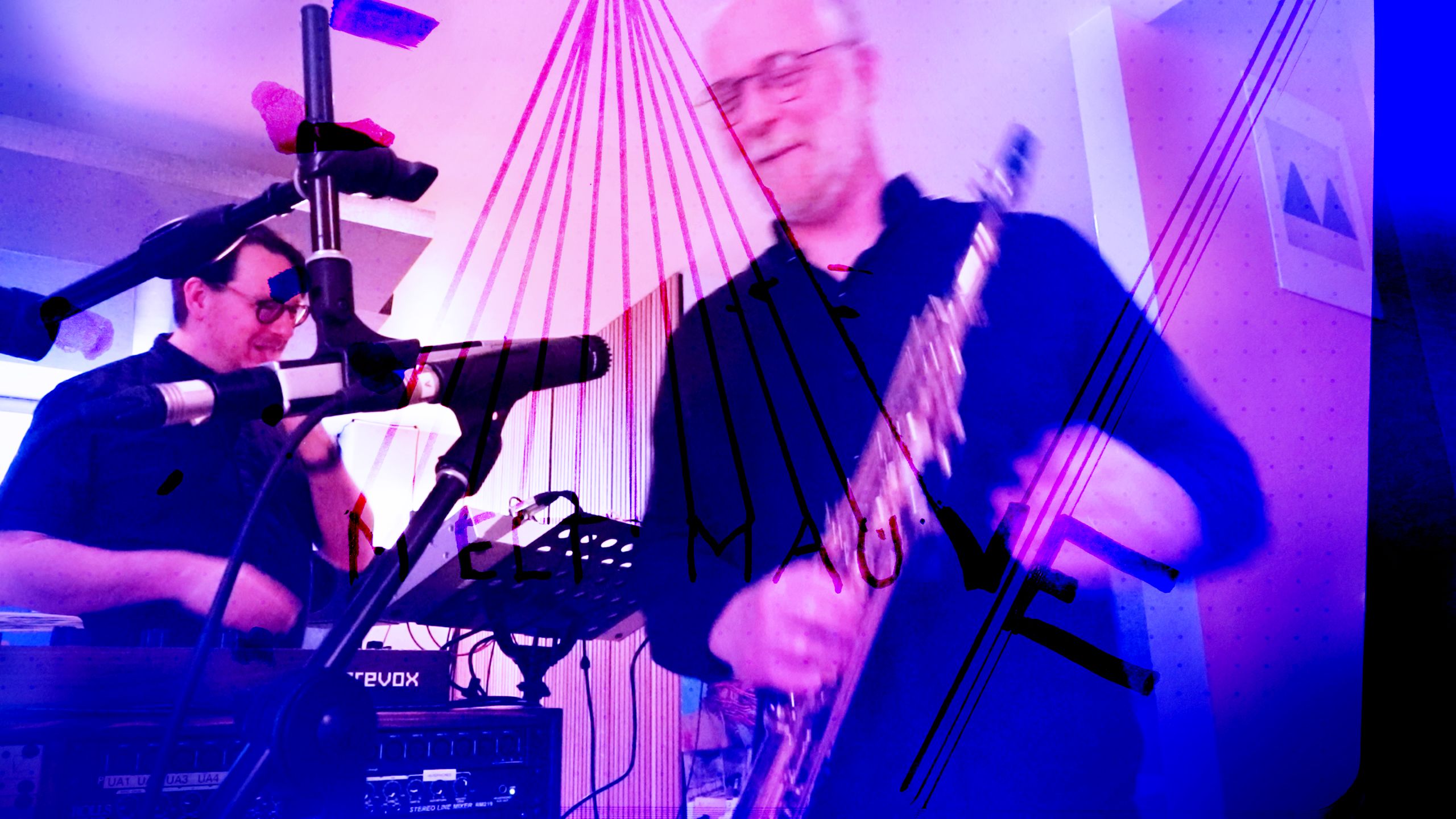
Names: Nicolas Bernier, David Caulet
Nationality: Canadian (Nicolas Bernier), French (David Caulet)
Occupation: Saxphonist, improviser (David), composer, electronic music performer (Nicolas)
Current release: Nicolas Bernier and David Caulet team up for the Melt Mauve I EP.
Recommendations:
Nicolas: I love recommendations! It could of course be a million things, but this time it will be the puppet plays of Kid Koala which are really engaging, playful and one-of-a-kind.
David: This year, as I mainly work with sample and collage with my electronic stuffs, I would like to share Les hauts de plafond. I really like their visuals proposals too!
[Read our Kid Koala interview]
If you enjoyed this Nicolas Bernier and David Caulet interview and would like to stay up to date with their music, visit David Caulet on bandcamp and Nicolas Bernier's homepage.
How did this particular collaboration come about?
We are both interested in the dichotomy between freedom and structure. As a saxophone player, David was more active in the free improv jazz scene in France. As a sound art performer, Nicolas was more in the technological art scene where technology can be restraining in performing in the immediacy.
We thought we would give a try and blend our approaches together.
What did you know about each other before working together? Describe your creative partner in a few words, please.
We didn’t knew much to be honest. We met because David moved from France to undertake a PhD in sonic creation at Université de Montréal … and I think we just liked our mutual vibe.
When we made a first session together, we stopped after 30 seconds, we looked at each other with astounded faces: we knew that something was happening, that we had a sound that was not common neither on the jazz nor on the electronic music side.
What do you generally look for in a collaborator and what made you want to collaborate with each other specifically?
There are so many types of collaboration and they can all be interesting. Even when you work with the devil himself, you will learn things and progress, which is the essence of collaborating.
But some aspects will certainly help: mutual respect; engagement; a non-stressful attitude but still with the will of pushing forward; openness to the other ideas; willingness to try things … but the lucidity to understand when things need to be fixed; etc.
A successful collaboration is probably not that much about being the best musician, but more about sharing a common sensitivity, a common and singular vibe that is beyond our personal/individual competence.
Tell me a bit about your current instruments and tools, please. In which way do they support creative exchange and collaborations with others?
In order to be free, David has a determined idea: when he plays the saxophone, he only plays the saxophone, nothing else (he is also creating electronic music projects, but he makes a clear distinction between his acoustic and electronic music playing).
Nicolas, on the other hand, is playing the electronic part on a modular synthesizer. There are two main interesting elements in his approach: Firstly, the saxophone is often trigging the synthesizer and secondly, the synth is thought as a performance instrument, not as a generator like we often see.
So Nicolas is really active on the synthesizer, always reacting to the gestures of David. So the dialogue between the saxophone, the electronics and the humans is quite rich, evolving, imperfect, human.
Before you started making music together, did you in any form exchange concrete ideas, goals, or strategies? Generally speaking, what are your preferences when it comes to planning vs spontaneity in a collaboration?
No… and this is the point: to let the strategies first reveal themselves and then adapt and create new strategies and build on what happened.
Like we we’re saying in the first question, David is more on the spontaneity side and Nicolas more on the planning side of things. So finding some kind of equilibrium is probably a keyword of this collaboration.
Describe the process of working together. What was different from your expectations and what did the other add to the music?
We think it is simply the blend of our sonic worlds that is defying expectations. Soprano sax and masses of weirdly filtered sounds are not necessarily a blend one would think of.
Then, everything happens in the moment of listening. This is where the magic happens, when it’s not about PLAYING, but more about LISTENING. Listening not to yourself, but to what is happening, knowing when to play or NOT play.
Is there a piece which shows the different aspects you each contributed to the process particularly clearly?
Probably that the first piece of our first record is laying the ground: we can sense that there is a lot of listening, that the synth isn't only reacting to the saxophone, but that the synth is played by a human being (as opposed to trigging sequences for instance).
For info, we also have a second record coming soon on the new micro-label, Label formes • ondes.
Decisions between creatives often work without words. How did this process work in this case?
Haha, that is so true! Well, partly true here as we leave the space for the music to happen (or not).
On the other hand, we can both be intense talkers. When we do sessions, we probably talk most of the time and then quickly play some music. But we often talk about other things than music and we like to believe this non-musical talking is metaphysically participating to our musical conversation.
What are your thoughts on the need for compromise vs standing by one's convictions? How did you resolve potential disagreements in this collaboration?
To collaborate means to put yourself away to let this virtual entity burgeon.
When you are younger, you can have some difficulties doing that, but it is easier as you get older to put your ego aside and accept that the collaboration is not entirely, but just partly yourself.
Was/Is this collaboration fun – does it need to be?
It’s really fun and easy! We both feel really free and we understand this niche we want to be in: the influence of jazz, pop, free, experimental and electronic music packed in this bubble of a musical rollercoaster ride.
In the meantime, we don’t want this post-modernist attitude to be heard, we want the music to be fluid. It’s pretty rare that we can just jump with someone and immediately obtain this complex aesthetic mixture. So yes, fun it is!
Fun fact (and link to your previous question): we can talk about our love of Cindy Lauper for 10 minutes, and then play some noise for 10 minutes … and in both our minds it kind of make sense! Those kinds of collaborations where you feel those weird connections and where there is not really any friction are quite rare!
Do you find that thanks to this collaboration, you changed certain parts of your process or your outlook on certain creative aspects?
100%. We both learn a lot from the way the other is approaching his art. This is really rich!