

Name: Nicolas Bonard
Nationality: Swiss
Occupation: CEO of Montreux Jazz Festival Media Ventures
Recent release: The 2025 edition of the Montreux Jazz Festival is underway. Until July 19th, it will again host a wealth of artists from a plethora of genres and scenes. For more information, visit the festival's official website.
For many festivals and labels, the current music industry looks like a place of risks, fears, and challenges. At the Montreux festival, you appear to see things differently - your focus is on opportunities.
I completely agree, and I think it's a mindset, fundamentally. There are undeniably challenges out there – challenges on a macroeconomic level. We won't be able to influence them directly. So the question is: How do we transform them into opportunities?
About five, six years ago, I was not yet working for the festival. I was working for another company, but I was on the festival advisory board. At the time, we came to the conclusion that we had to transform the underlying model. We had to figure out a way of addressing all these challenges around us and futureproof the festival.
Like any event, Montreux's financial risk is concentrated on two weeks. It doesn't exist before, it does not exist afterwards. So how do you mitigate that across the whole year? How do you annualize the business at least to some degree, both in terms of revenue streams, but also exposure? And if you do decide to amplify your efforts, how do you blow it out, outside, beyond the the physical region?
That last question sounds like it's key because Montreux, despite its worldwide recognition, was in many respects hyper-local.
That's right. So how do we kind of push it out?
Our approach was to use the festival's unique audiovisual collection to achieve those goals. Which has long been part of our missive - building a collection. Today, we have over 1,000 performances, probably the largest privately held audio visual collection in the world, and probably Switzerland's greatest cultural legacy, weirdly. We are working with UNESCO on this and I think we have an obligation to preserve these documents. We're working on crazy ways of restoring some of the tapes by means of X ray beams generated through synchrotrons. Kind of science fiction.
So we created a separate company called Multimedia Ventures, which I run, and which is basically a production, distribution and commercial platform. We also changed the way all the concerts were filmed. We are now filming them all for mobile digital devices and combine this with cinematic lenses to be a lot more immersive - more compatible to how music is consumed today.
In sync with this, we completely optimized our social media platforms, getting the product right, amplifying it through live streaming and striking deals with record labels, and distributors like Mercury Studios, to get the content out to a much wider audience.
And that's just the new stuff. You also have the legacy of the existing footage.
Yes, the back catalogue. You know, it's 8000 concerts which we need to somehow tap into.
We wanted to no longer look at the festival as an event. The festival needed to become content, and video, and branch out into other festivals around the world.
Today, it's all these things at once. Now we need to manage that.
So the festival rests on different pillars. How much of the overall weight does the festival itself still hold?
The festival still remains a big component of our year, but we are increasingly using it to leverage other events spread out across the year.
Understanding your audience, I think, is key. Because we have multiple audiences. First, we have the local audience. About 300,000 people come to the festival every year and 70% of them are under the age of 30. So it's a young demographic. The ones buying tickets are older, however.
And then there is the digital audience which is very different and on average between 15 to 34 year old. On Instagram, they're mostly from Switzerland, but then if you go on YouTube, we get a lot of visitors from the UK, North America and Germany.
Montreux is small. You have the the sea on one side and the mountains on the other, so you cannot extend too far beyond the city borders. That means you need to live with certain limitations from the get-go.
But these limitations force you to think differently.
You know, who would have thought in 1967 that this sleepy lakeside town would become home to an international festival merely on the strength of one man's vision – and that this festival would still be there 60 years later?
I do believe that had it been easier, had those challenges had not been there, the story would have turned out very different. It's about beating the odds.
The physical limitations forced us to look beyond. To a degree, this is part of the Swiss DNA. Not to get too nationalistic about this, but Switzerland is a small country, so we are forced to look outside if we want to develop.
You mentioned there are now various Montreux festivals across the globe. What kind of experience are they aiming at? A local one or the original one?
Well, it's kind of both. The idea is to emulate the experience through a local promoter or local partner. The music mix will obviously be locally sourced. However, what we try to replicate is the engagement with the local community, through master classes, and presentations.
It's also about connecting with some of the local talent through our artist foundations, to identify and support young artists. The jam sessions have become sort of a key element at the festival and that's also replicated. Those elements are very important.
And all of that will factor into something like the Montreux Jazz Festival in Rio, for example. We curate it, but it's locally driven.
You also said that the content is now produced differently for mobile phones. What does that mean exactly?
Basically, if you watch a concert that was filmed for television on your mobile phone, the singer is going to be really small because it's a wide angle. On a mobile phone, you're going to have to be much closer to the singer, more in the crowd. The singer has to be the main element. So that means being a lot more immersive, you need much stronger close ups and a more cinematic approach to give the images a sense of granularity. You don't want it to be too much like television, it should not be too perfect.
It also means using directors who are musicians, because they are able to anticipate the dynamics of a performance – to know in advance what is going to happen and to change the camera focus accordingly.
And you're offering these recordings free of charge on Youtube?
We made the decision of streaming on YouTube free of charge, because the foundation's mission is getting the music out to as many people as possible.
That said, after COVID, we all experienced a sense of live streaming fatigue. For a while, everybody was live streaming themselves in their kitchen and in the end, people were looking to experience things for real again.
So the value of the live stream is elsewhere. It's not necessarily in the live stream itself. What it does give you is amplification, the reach and that notoriety you need to get a maximum amount of viewers. Everybody watching and talking about your festival, talking about your brand - that's where the value is. Not in pay per view.
You don't think that if you would make at least a significant chunk of the archive available in a Netflix-style model, that it would work?
I I've been having this conversation a lot, but I don't think it would work.
You have the costs: the infrastructure cost for the service alone would be such that I don't think we could get it back through subscriptions only. I don't think the model is there yet, and we simply can't afford it. Even if we wanted to.
An interesting aspect of making so much content available online is that you're giving people the opportunity to put their phones away during the concert because they can revisit the performance later. And that allows them to really live the moment again.
I hadn't thought about it that way, but I think it's true!
A number of times we're sitting at the mixing desk and all you see is a forest of phones. Visually, that's pretty cool, but when you think about it, they may not even be filming the artists at all ...
Do you have any ideas on why people do not want to watch full length concerts online, but they are actually paying a lot of money for live concerts which are actually less immersive – objectively speaking - than the streaming world would be.
That's an interesting way to put it. One aspect is that when you're consuming music on mobile devices, people are often doing different things whilst they're on the subway, on the train, on the bus. Therefore, their attention span is shorter. That's why it's important to complement this experience with more editorially led content through interviews, behind the scenes footage and the kind of material which complements the performances.
Generally speaking, however, the average consumer's budget for entertainment has shrunk. Therefore, they have to make choices. Do I go to see Taylor Swift and pay 200-300 euros for it, fly there but get to see something spectacular? Or do I go and attend a festivals with a strong brand mantra or targeted to a specific genre?
What's no longer on the card is the generic playlist festival experience. In the UK, over the last couple of years, 75 festivals had to either shut down or delay. And part of the reason is that they weren't able to differentiate themselves from the rest.
I suppose that is one aspect behind programming Montreux for such a broad target audience?
This year, we had to put one of the main stages outside, because the convention center was being refurbished. So you had the Herbie Hancock audience in the same building with a French rap night for 18-20 year old kids and then at the entry, those two audiences mixed.
I think that's what you need today. You have to break down the barriers.
Is there a limit to what you would program?
I don't think there's any limit. If we're talking about selling tickets, of course, there is always a limit, because a death metal band will possibly not sell 5,000 tickets in Switzerland. But then, we can program them for one of the free stages.
On the free stages, you'll have all kinds of music, from electro, various DJs, up to rock, and flamenco. It's on the paid stages where things are more challenging.
I guess that's what jazz means, ultimately: Unbiased listening.
Yes, the terms jazz has given us the opportunity for ultimate freedom, rather than limiting us.
We have this debate all the time, you know, should we change the name? We tried quite changing the logo and took the word jazz out. But it doesn't look right.
And at the end of the day, it I think it's gone beyond that. The term “Montreux Jazz Festival” has become and a mark of authenticity.

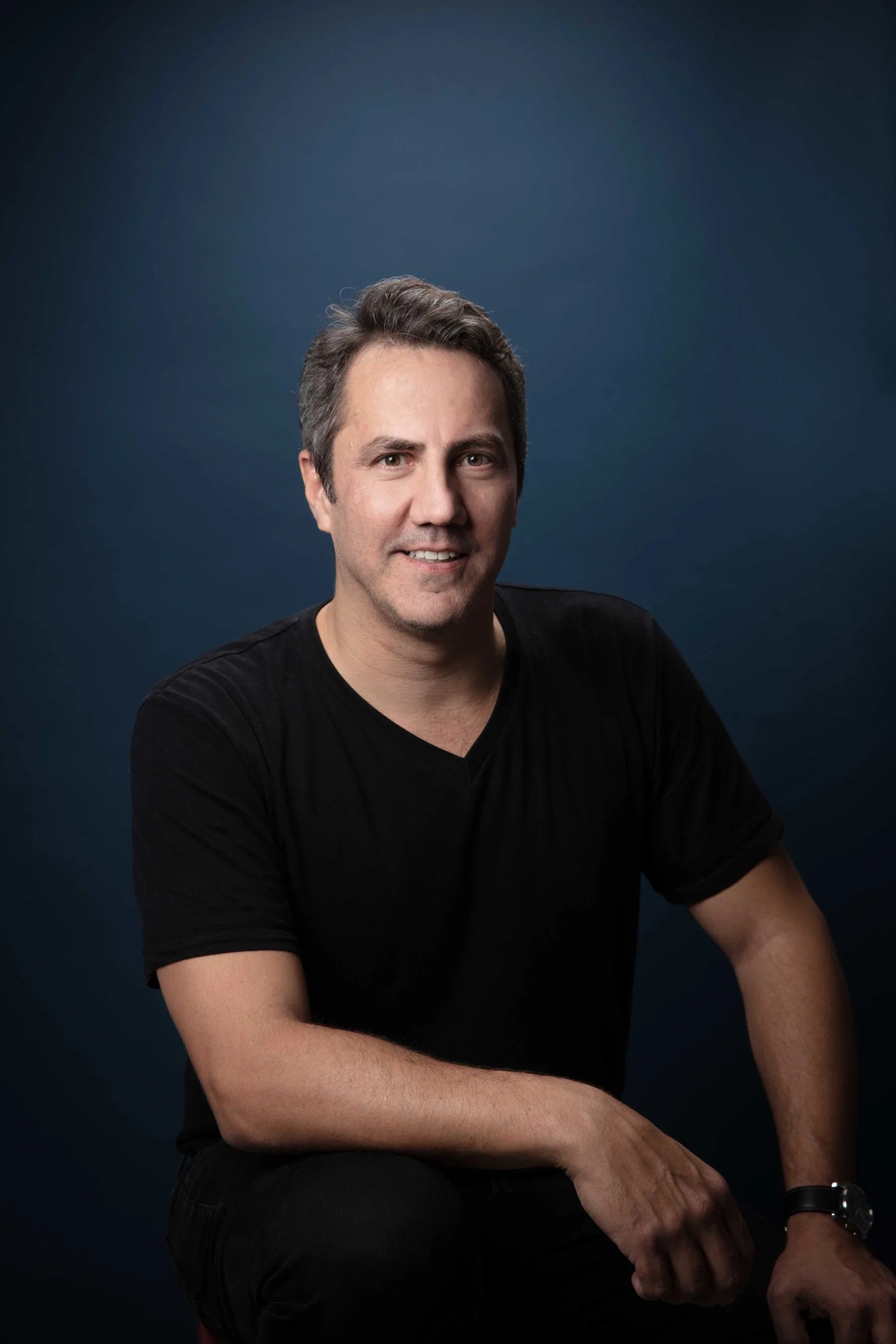 Nicolas Bonard Interview Image (c) the artist
“You have to break down the barriers.”
Video
