Published
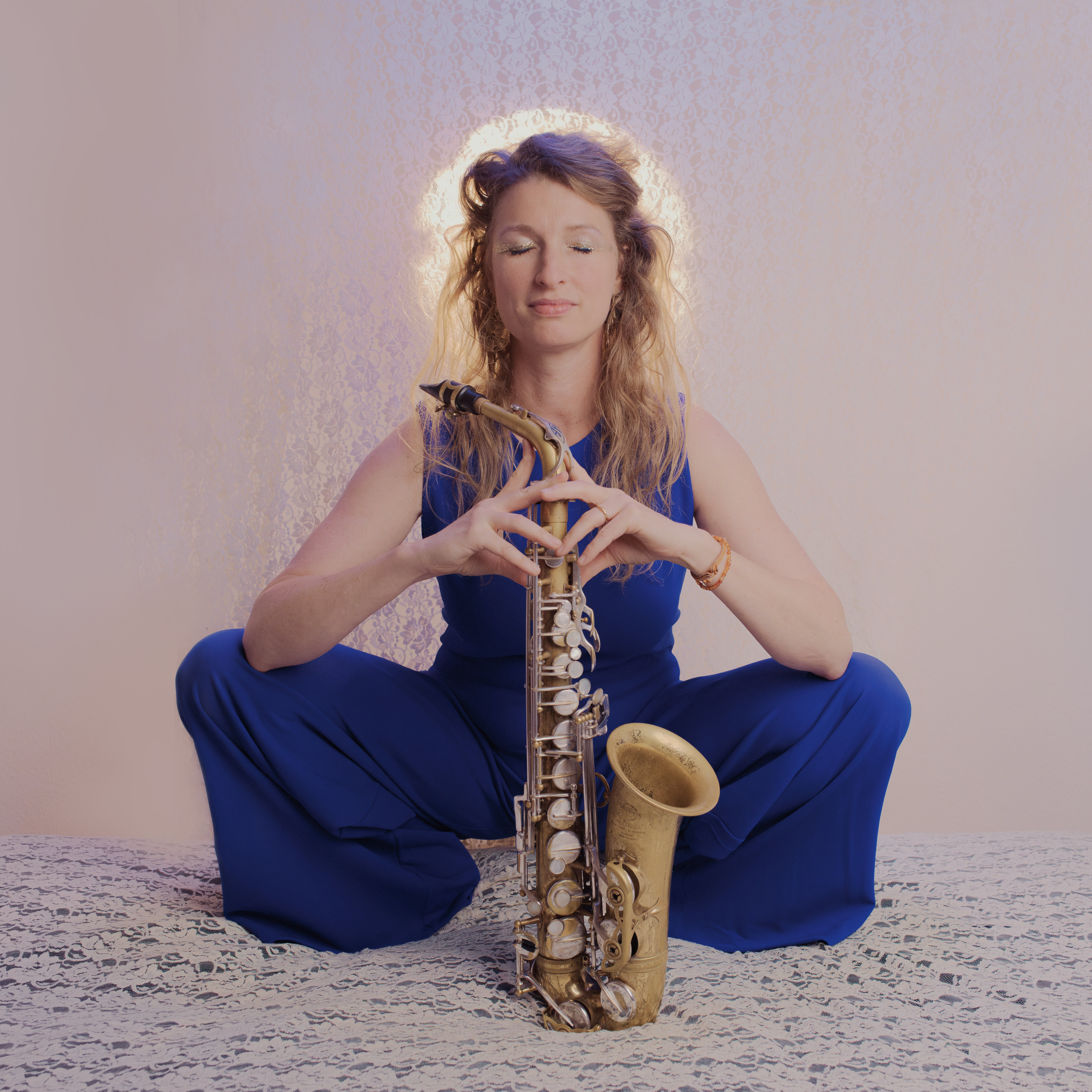
Name: Nicole Johänntgen
Nationality: German
Occupation: Saxophonist, composer, improviser
Current release: Nicole Johänntgen's new album Labyrinth II, featuring Jon Hansen (tuba) and David Stauffacher (percussion, drums) is out via Selmabird. She will also release her third solo recording on LP and CD in the Fall of 2025.
Recommendation for Bern, Switzerland: I recommend visiting the Münsterplattform in Bern. Beautiful place, nice vibe and inspiring place.
Topic I rarely get to talk about: A thousand things, but just now. As an artist, you are often confronted with criticism. Here and there you can deal with it well, but I've had a few such scenarios in the last 6 weeks where I didn't know how to react. That's why I took part in a session with a coach.
One sentence from this session helped me tremendously. “Behind every criticism is a need”. I would like to share this with you. It helps me personally on all levels.
If you enjoyed this Nicole Johänntgen interview and would like to know more about her music, visit her official homepage. She is also on Instagram, and Facebook.
What were some of the musical experiences which planted a seed for your interest in jazz?
I was still in diapers and couldn't see the keyboard yet, I was probably 2 years young.
We had a piano at home. My brother, who was seven years older, was already playing the piano. I remember trying to press the keys with my hand and fingers. I liked the sounds that came out. They were just a few sounds, but I really liked them. The freedom to improvise is my grain and my life source for making music all my life. This experience was the foundation.
Later I started playing classical piano myself and in between I invented songs. For myself alone. My father had founded the Joe Fuchs Band back then. My brother played keyboards in it. And by the time I came to the saxophone, I had already been playing there after just one year.
At the Joe Fuchs concerts there was an instrumental part, a dinner part and a party part. Especially in the first instrumental part there were a lot of swing pieces and that's where I learned my first improvisations live with the band.
What does the term jazz mean today, would you say?
For me, jazz means freedom in music. For me it means playing music freely in feeling. And differently every time.
Jazz is also an adventure. Whether you're playing alone or with others, it's a conversation at a high level. Are you listening? What do you make of it?
For me, this form of expression is ideal, because I don't have to search for words, but let the sounds develop by themselves. That is something very exciting.
As of today, what kind of materials, ideas, and technologies are particularly stimulating for you?
I have started to explore my saxophone more and more over the last few years. I love the rhythm, the beat and have started looking for ways to add percussive elements to my playing.
I also try to incorporate other elements such as circular breathing or other sound effects that come out of my saxophone into my improvisational playing. It's not that easy because the effects are very form-dependent. If you are rather tired on a particular day, this is directly reflected in the effects. Then certain techniques work less well than usual. It's a good mirror for yourself.
I still go for walks a lot to compose and get inspired by scents, colors, forests, water, etc.
Where do most of your inspirations to create come from – rather from internal impulses or external ones?
My inspiration doesn't flow at all times of the day. When I compose, it's usually in the morning. Most ideas for projects, songs etc. come to me when I'm half asleep or in the morning. Sometimes they just come.
I definitely get a lot of ideas for songs every time I go for a walk in the woods. Fresh air as well. Water also inspires me. Reverberant spaces are real sources of inspiration for me.
Which current social / political / ecological or other developments make you feel like you need to respond as an artist?
Music is always a reaction to what is happening around us. I can't isolate myself from what's happening outside. That's why I think that improvisation is definitely about the state of the world. I don't compose a piece with an image, but out of a feeling that is present to me at the moment.
Of course, I could respond to our situation even more compositionally, but it's the little things that prompt me to write a new piece of music. The scent of a rose or the image of a kingfisher or the smile of a child. But every improvisation also contains socio-political elements.
Music has become a lot more global, and incorporating elements from other parts of the world or the musical spectrum is commonplace. Do you still think there are city scenes with a distinct, unique sound? How does your local scene influence your work?
This is a very good question. In fact, a lot of things get mixed up. There are also Brazilian rhythms here and there in my music.
The question now inspires me to walk around the city with my recording device and make recordings. Of course there is traditional music here, but this question triggers more in me: what does the city you live in actually sound like?
But the real answer to the question is that I find it incredibly exciting to mix sounds and to be on the path of the unknown again.
What role do electronic tools and instruments play for your creative process?
I played with other musicians who are playing electric bass and keyboards with effects for a long time. That was and is fun.
Now I'm more on the acoustic side. But I'm also open to using effects. But even there, I'm currently using my own effects box, which is already in my saxophone.
Thanks to technological advances, collaboration has become a lot easier. What have been some of the most fruitful collaborations for you recently and what approaches to and modes of collaboration currently seem best to you?
My most fruitful collaborations at the moment are my trio Labyrinth with tuba and percussion but also my Henry Quartet and my Robin Quintet. Not to forget, an important project for me is playing solo. I have learned an incredible amount from everything in the last 5 years.
There is no harmony instrument in Henry and Labyrinth. That makes everything very delicate but also more intense.
Playing solo without a fellow musician is also a fine art. It's worth giving both a try.
Jazz has always had an interesting relationship between honouring its roots and exploring the unknown. What does the balance between these two poles look like in your music?
Super nice question. That's what it's all about for me. The tension between risk, awareness, knowledge and dealing with the now, the then and spontaneous ideas.
It's a balancing act.
How much potential for something “new” is there still in jazz? What could this “new” look like?
There are always new developments.
Let's come back to this question in 20 years' time. We will then see how strong these developments are.
For many artists, life-changing musical experiences take place live. How do you see that yourself?
Playing live is everything for me. If I couldn't play live, then I would be missing something very important. Namely the magic that happens when you play for an audience. The energy that arises is incredibly infectious.
Every live concert is magical. If you come to several of my concerts, you'll know what I mean.
How, would you say are your live performances and your recording projects connected at the moment? How do they mutually influence and feed off each other?
That's another good question. At the end of the day, I'm involved in all my projects. So that the basic color in all projects is saxophonic.
But if Henry is more jazz/swing based, Labyrinth might be more South American but also Eastern European in color and Robin is more worldly.
Only my solo program is impossible to categorize.
Ímprovisation is obviously an essential element of jazz, but I would assume that just like composition, it is transforming. How do you feel has the role of improvisation changed in jazz?
Improvisation is a body language. Every person has a different one.
And I would only say for myself that my improvisation has changed with every year of my life. All events, whether positive or negative, are reflected in my improvisation. I can't draw conclusions about everyone. It is a moment of awareness but also of letting go.
I can't say that improvisations have become louder or more expressive now, because I wasn't there for all the solos that were played in the 60s, for example. But improvisation changes with age, experience, life circumstances. It is the reflection of your soul.
What, would you say, are the key ideas behind your approach to improvisation?
I play a solo to tell a story. To paint a picture. Tomorrow it will look different. And that's exactly the moment I'm interested in. It can also be just one note.
I try to experience the moment intensely and wait and give and wait and play. I allow time to play a part. This is an essential factor, especially in solo concerts.
In the band, time is not independent but is shaped by my bandmates. Ideally, they react to it and create new impulses. I love improvisation!
Are there approaches, artists, festivals, labels, spaces or anyone/-thing else out there who you feel deserve a shout out for taking jazz into the future?
Every mention of jazz in the media has the potential to reach new people who will become jazz fans. And experiencing jazz live is good for you. Not just because of the music, but also because of the people who form a kind of community - you're not alone.
Clubs, concert series, festivals are important because you can hear jazz live and, last but not least, social media platforms allow us to discover new artists within a very short space of time.
I've probably forgotten a lot, but these are important players in the jazz world.
The Montreux Festival intends to preserve its archive of recordings for future generations. Do you personally feels it's important that everything should remain available forever - or is there something to be said for letting beautiful moments pass and linger in the memories of those that experienced them?
It's a good thing to archive the music and make it accessible. It is important that access is provided in a contemporary way. In addition to physical access, online access is also possible.
This alone still needs to be supported by good advertising campaigns. Because everything is only useful if we know that it exists.