Published
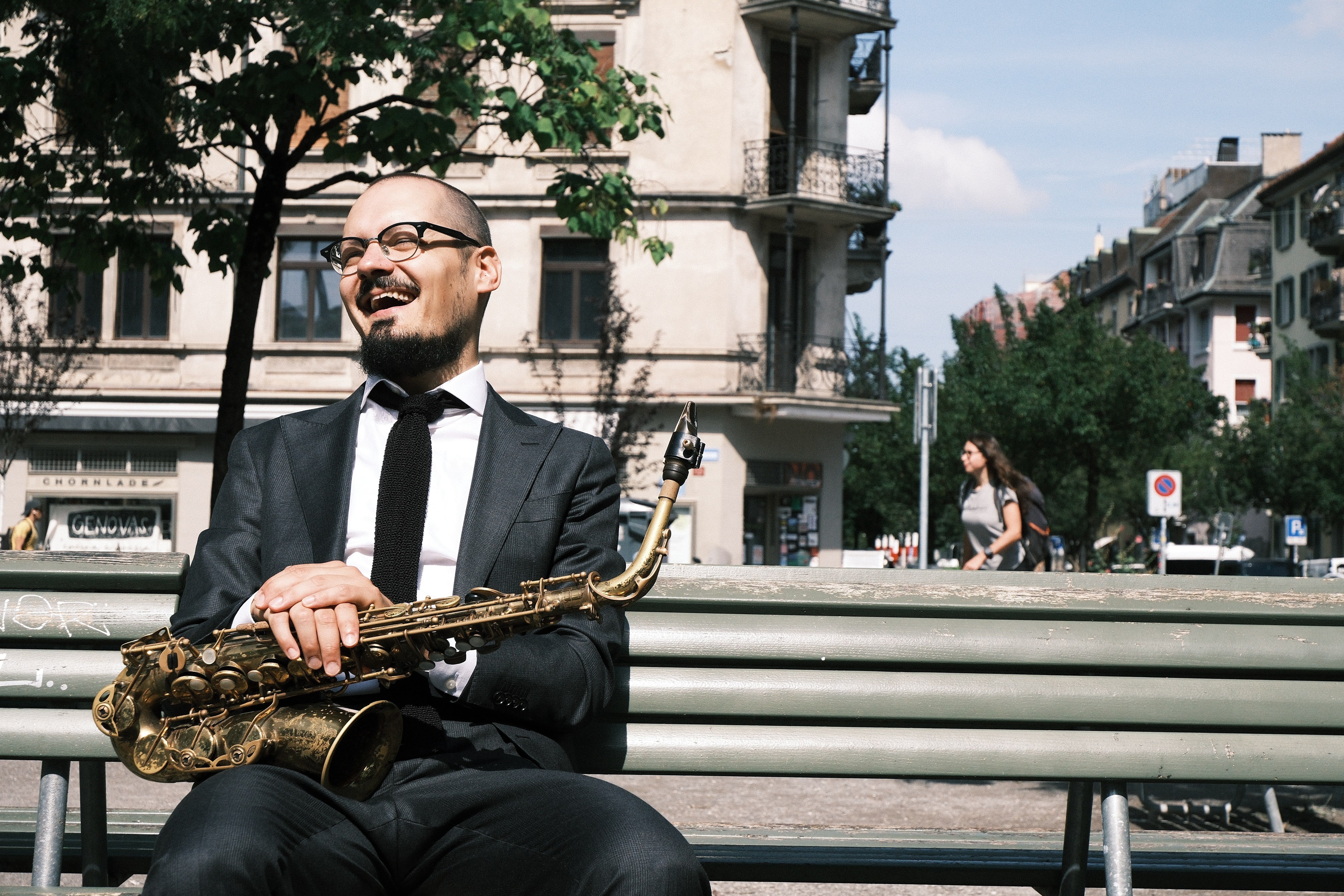
Name: Niculin Janett
Nationality: Swiss
Occupation: Saxophonist, composer, improviser, multi-instrumentalist
Current release: Niculin Janett's new album Toxicology Report is out via unit. Next to Niculin on sax, it features Rich Perry (tenor sax), Jay Anderson (bass), Philipp Leibundgut (drums), and Dimitri Howald (guitar).
Recommendation for Zurich, Switzerland: Just wait until the sun’s out take a walk along the river Limmat towards the lake. That’ll do nicely.
Topic I am passionate about but rarely get to talk about: Hockey. Specifically one random team, the Stars (from Dallas, TX, of all places). I became a fan of them as a wee little boy, and have continued to follow them to this day. Only thing is, nobody else around me is a fan of the Dallas Stars, so I’m left to my own devices when it comes to being mad at the coach for their most recent bad game.
If you enjoyed this Niculin Janett interview and would like to stay up to date with his music and current live dates, visit his official homepage. He is also on Instagram, Facebook, and bandcamp.
When did you first consciously start getting interested in musical improvisation? What was your first improvisation on stage or in the studio and what was the experience like?
My dad, who is a musician himself, got me to try to improvise quite early, when I was twelve or thirteen years old. He’s a big jazz fan and through him I got to know all the classic records like Coltrane’s A Love Supreme or Duke Ellington’s vast catalog.
We sometimes played little gigs together, and he gradually started to play jazz-standards with me where I got my first experiences with improvisation.
Tell me about your instrument and/or tools, please. What made you seek it out, what makes it “your” instrument, and what are some of the most important aspects of playing it?
It’s been so long, I feel like I’m foggy on the details. But I honestly think my prime fascination with the saxophone as a child was the fact that it had so many buttons … It just looked cool to me.
The record that got me hooked on the instrument musically was a live-take of “Work Song“, played by Cannonball Adderley and his band on the record Cannonball in Europe.
His expressivity und just the incredible musicianship quite literally blew me away.
How would you describe your own relationship with your instrument – is it an extension of your self/body, a partner and companion, a creative catalyst, a challenge to be overcome, something else entirely?
I would say it’s an intimate, yet uncomplicated friendship. My horn and I, we understand each other very well. But sometimes there are small disagreements and confusions. The relationship grows and develops constantly.
A fine instrument is letting you play your music with every expression you desire, without it getting in your way. The ideal instrument is doing that, while also adding a few sprinkles of its own personality.
I play a vintage Selmer Mark VI that’s more than 50 years old. And it has a few quirks that make it unique, which makes me like it that much more.
Do you feel as though there are at least elements of composition and improvisation which are entirely unique to each? Based on your own work or maybe performances or recordings by other artists, do you feel that there are results which could only have happened through one of them?
To me composing is improvisation in slow-motion, or the other way around, improvisation is composing in real time.
The biggest difference of course is the fact that you can’t take back your improvisation, whereas you can rework your composition a thousand times before showing it to the world.
“Rêveries Dansantes“ is a suite I composed for strings and saxophone that incorporates both composition and improvisation. There, these two areas of musical expression are overlapping constantly.
When you're improvising, does it actually feel like you're inventing something on the spot – or are you inventively re-arranging patterns from preparations, practise or previous performances? What balance is there between forgetting and remembering in your work?
I do feel like I'm inventing. But not on the spot. It’s a process that goes on and on every moment I play, whether that’s in the practise-room or on stage. Figuring out the things I want (or don’t want) to play is ultimately what distinguishes my style from others.
I think it’s a constant subconscious decision-making process. I have hundreds of little musical ideas saved in my brain. And while improvising, they come out, often as reactions to what is happening around me. So we have these “pre-made“ elements, and then the really creative thing happens in between, where I try to connect these known elements with new ideas coming to me in the moment.
I think it is important on stage to try to kind of forget the things one practised, but to try to remember what felt good while practising. Does that make sense?
Artists from all corner of the musical spectrum, not just “free jazz” have emphasised the importance of freedom in their creativity. What defines freedom for your improvisations?
Total freedom, I guess, would be to instantly be able to play every idea, without any technical problems.
But I’m not sure if that would make the music better. I’m a big believer in that mistakes are an integral part of musical creation.
And being in total command all the time can defeat that. And possibly make the music boring. To me at least.
Taking your recent projects, releases, and performances as examples, what, would you say, are the key ideas behind your approach to improvisation?
I think it’s very important to have some kind of an initial intention in mind.
That can come from anything. A musical idea from the piece you're playing, an input from another musician, a feeling or mood in the moment … But it needs to have intent, and you have to try to keep pursuing it, at least for a moment.
This is something that I experience in particular with my Quartet feat. Rich Perry. Basically about 80% of the music we play with this band is improvised. And all the players in the band play with great intent and purpose from the initial idea onward.
In your best improvisations, do you feel a strong sense of personal presence or do you (or your ego) “disappear”?
I wouldn’t say that I disappear. But if I’m really into it and the improvisation goes well, it’s when I’m able to really stay focused on the present moment. It’s going great when I can keep working on developing an idea without interrupting my “flow“.
I don’t want to lose the sense for my presence, because my sound is very rooted in that. I have to be able to feel myself and my body to be able to produce my strongest sound. So, “disappearing“ would be counterproductive, I think.
What I feel to also be very important is a certain lack of self-importance. I’m at my best if I don’t take myself too seriously and am able to do what I do with a certain kind of humouristic approach: Don’t be too serious. It makes you stiff and less flexible to react.
What are some of your favourite collaborators and how do they enrich your improvisations?
My favorite collaborators are the musicians that have me most relaxed while playing, yet keep challenging me with interesting ideas and inputs. Usually it’s musicians that I’ve been playing with for a long time.
I made a duo recording with Joscha Schraff on Piano a few years where we played jazz-standards. No prior arrangements, just completely off the cuff, anything-can-happen kind of music. It came out great because we both are so comfortable with each other playing.
It’s that kind of blind understanding of each other.
In a live situation, decisions between creatives often work without words. From your experience and current projects, what does this process feel like and how does it work?
In my experience, this comes from either just mutual understanding and knowledge of the musical language you’re using, or knowing the musicians you're playing with. Ideally both at the same time, of course.
I gravitate towards musicians that keep their own ideas alive while they are reacting to inputs from others. So you’re not just jumping from one idea to the next, but keep a coherent thought process alive while improvising.
It’s very satisfying if you’re able to do that.
Stewart Copeland said: “Listening is where the cool stuff comes from. And that listening thing, magically, turns all of your chops into gold.” What do you listen for?
Anything that adds fresh stuff to what I’m already doing. A rhythm, a motive, a groove, a sound or pitch.
Without listening to what’s happening around you while playing, you’re just making air vibrate without giving it any kind of real purpose.
As a listener, do you also have a preference for improvised music? If so, what is it about this music that you appreciate as part of the audience?
I’m gravitating towards music that meshes a high level of melodic creativity with a strong rhythmic presence.
A good example of that is the new record by Miguel Zenón, Vanguardia Subterranea. It’s a live-recording (usually that’s my favorite kind of recording anyways) that has incredible energy.
I know that if I would’ve been in the audience, I would’ve lost my marbles (in a positive sense).
In a way, we improvise all the time. In which way is your creative work feeding back and possibly supporting other areas of your life?
It blesses me with a tolerance for awkwardness, I think.
Weird things happening to you are challenging, but when you’re open to improvisation, you’re able to get comfortable with them and make them something unique and beautiful.