Published
Name: NIGHT TAPES
Members: Max Doohan, Sam Richards, Iiris Vesik
Nationality: British (Max, Sam), Estonian (Iiris Vesik)
Current Event: NIGHT TAPES recently performed at 2024's Reeperbahn Festival. For more information about the Estonia spotlight of the event, go here.
Current release: In June, NIGHT TAPES released their assisted memories EP via Nettwerk.
Recommendations: We’d recommend Invisible Cities by Italo Calvino. It’s this beautifully surreal book that explores imagination and the human desire to create, through descriptions of fictional cities. It’s poetic, almost dream-like—much like the world we try to build with our music.
If you’re looking for something ethereal and boundary-pushing, James K’s “Blinkmoth (July Mix)” is an immersive journey worth diving into. It blends dreamy, experimental electronics with a deeply atmospheric feel, creating a soundscape that feels both otherworldly and intimate. There’s a fluidity in her work that merges delicate vocals with textured layers of sound, making it feel like a mix of ambient, trip-hop, and avant-pop—all wrapped in a hazy, introspective mood. It’s perfect for those moments when you want to get lost in something abstract yet emotionally resonant, where each listen uncovers new details and hidden corners.
If you enjoyed this NIGHT TAPES interview and would like to know more about the band and their music, visit them on Instagram, Soundcloud, Facebook, and tiktok.
Where does the impulse to create something come from for you? What role do often-quoted sources of inspiration like dreams, other forms of art, personal relationships, politics etc play?
I think the impulse to create is something that feels almost instinctual, like a kind of quiet urge that nudges us to translate the inner world into sound. Dreams definitely play a big role for all of us though; they blur the line between the abstract and the tangible.
Experiences that emotionally resonate the most often manifest in unexpected ways subconsciously. Being able to draw from this creatively is often a great starting off point for new material.
For you to get started, do there need to be concrete ideas – or what some have called a 'visualisation' of the finished work? What does the balance between planning and chance look like for you?
There’s rarely a clear visualization when we start. Instead, it's more like diving into a fog with only the faintest outline of something in the distance.
The balance between planning and chance is a recurring question for us. Sometimes you get lucky, and something beautiful happens out of nowhere, while other times, the process requires more nurturing, some sculpting and deliberate attention to detail.
Many of our tracks have taken years to truly put together, whilst others have been finished in a matter of days.
Is there a preparation phase for your process? Do you require your tools to be laid out in a particular way, for example, do you need to do 'research' or create 'early versions'?
We do like to create some form of groundwork before diving in. It’s very often as simple as one of us creating a vibe in the studio—setting up instruments, finding the right synth patches etc.
That initial part of the process is often very individual, as we all initiate songs in different ways.
When we take those ideas and explore them for the first time collectively, we try and time it so that we can be as spontaneous and creative as possible. Iiris will often have lyrical ideas to hand and it is a regular occurrence for us to record the very first ideas she has.
Do you have certain rituals to get you into the right mindset for creating? What role do certain foods or stimulants like coffee, lighting, scents, exercise or reading poetry play?
Yeah, the vibe of the room plays a big part. We’re fans of dim, soft and outrageously warm lighting. Coffee plays a roll for sure, although we are massive proponents of Redbush tea!
We also all love reading. Iiris is constantly collecting and drawing ideas from the books she reads.
What do you start with? And, to quote a question by the great Bruce Duffie: When you come up with a musical idea, have you created the idea or have you discovered the idea?
It’s definitely more of a discovery than creation, in the sense that we feel like the ideas are already out there, floating in the ether.
We rarely start from a pre determined chord progression. It’s more likely that we’ve taken an obscure sample from a mid 90s tape cassette, run it backwards through a few delay pedals, and reacted to the ensuing result. You don’t want too much agency over the first initial ideas - you want something that’s challenging and easy to respond to.
Apparently, AI images form in a similar way. The initial image is pure noise, but gradually, little by little, form is built from the blurry, nascent shapes that begin to coalesce. It’s much the same way with music. We just follow that creative process until we see what emerges
When do the lyrics enter the picture? Where do they come from? Do lyrics need to grow together with the music or can they emerge from a place of their own?
Lyrics often come later in the process. We’ll usually let the music dictate the mood, and then we respond with words that feel right for that sonic landscape. Sometimes a phrase will pop into our heads mid-jam, or a feeling will demand articulation in a specific way.
For us, the lyrics need to grow alongside the music to feel cohesive. They’re like two sides of the same coin. So while they can come from separate places, they ultimately have to intertwine for everything to click.
What makes lyrics good in your opinion? What are your own ambitions and challenges in this regard?
Good lyrics make you feel something and resonate to our personal stories. They don’t have to be overly complex or poetic—sometimes the simplest words hit the hardest. Our ambition is to capture emotion in a way that resonates without feeling forced.
The challenge, though, is not overthinking it. Sometimes we can get caught up in trying to be profound when, really, the raw, instinctual lines are often the ones that connect the most.
Many writers have claimed that as soon as they enter into the process, certain aspects of the narrative are out of their hands. Do you like to keep strict control or is there a sense of following things where they lead you?
There’s definitely an element of surrender in the process. We start with an idea, but it evolves, and often it surprises us. So, we like to follow the thread and let the music tell us where it wants to go.
There’s always a moment where you have to relinquish control, and that’s usually where the magic happens.
Often, while writing, new ideas and alternative roads will open themselves up, pulling and pushing the creator in a different direction. Does this happen to you, too, and how do you deal with it? What do you do with these ideas?
That happens all the time. It’s like opening one door, and then five more appear. Sometimes we chase those new ideas and see where they lead, but other times we’ll bookmark them for later if they feel like they might take us too far from the original intent.
It’s all about finding a balance between staying focused and remaining open to exploration.
There are many descriptions of the creative state. How would you describe it for you personally? Is there an element of spirituality to what you do?
The creative state feels like a kind of flow, where time dissolves, and you’re fully present in the moment. It’s hard to describe, but it feels like you’re tapping into something bigger than yourself.
So yeah, there’s definitely an element of spirituality to it. It’s like you’re a vessel for something that’s already out there, waiting to be heard.
When you're in the studio to record a piece, how important is the actual performance and the moment of performing the song still in an age where so much can be “done and fixed in post?“
The performance is still crucial. Even though we can edit and refine things in post-production, there’s a certain energy and emotion in a live performance that can’t be replicated.
We aim to capture that feeling in the studio and then use post-production to enhance it, not replace it.
Once a piece is finished, how important is it for you to let it lie and evaluate it later on? How much improvement and refinement do you personally allow until you're satisfied with a piece? What does this process look like in practise?
Letting a piece breathe for a while before coming back to it is important. Sometimes you can get too close to a track and lose perspective, so stepping away helps.
As for refinement, we’ll tweak things until we feel like the song has said all it needs to say. But we also try not to over-polish it. There’s a fine line between perfecting something and losing its soul.
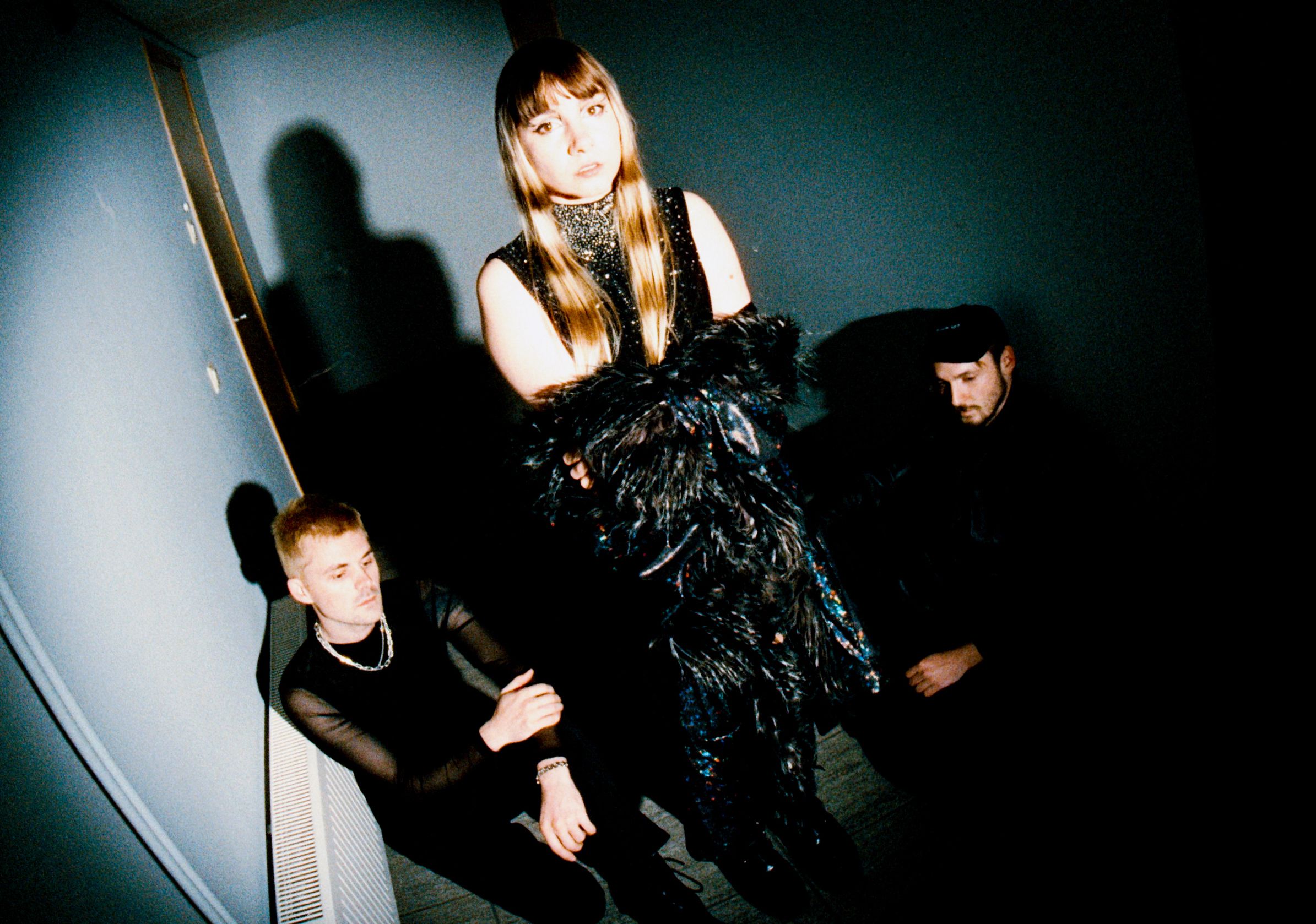
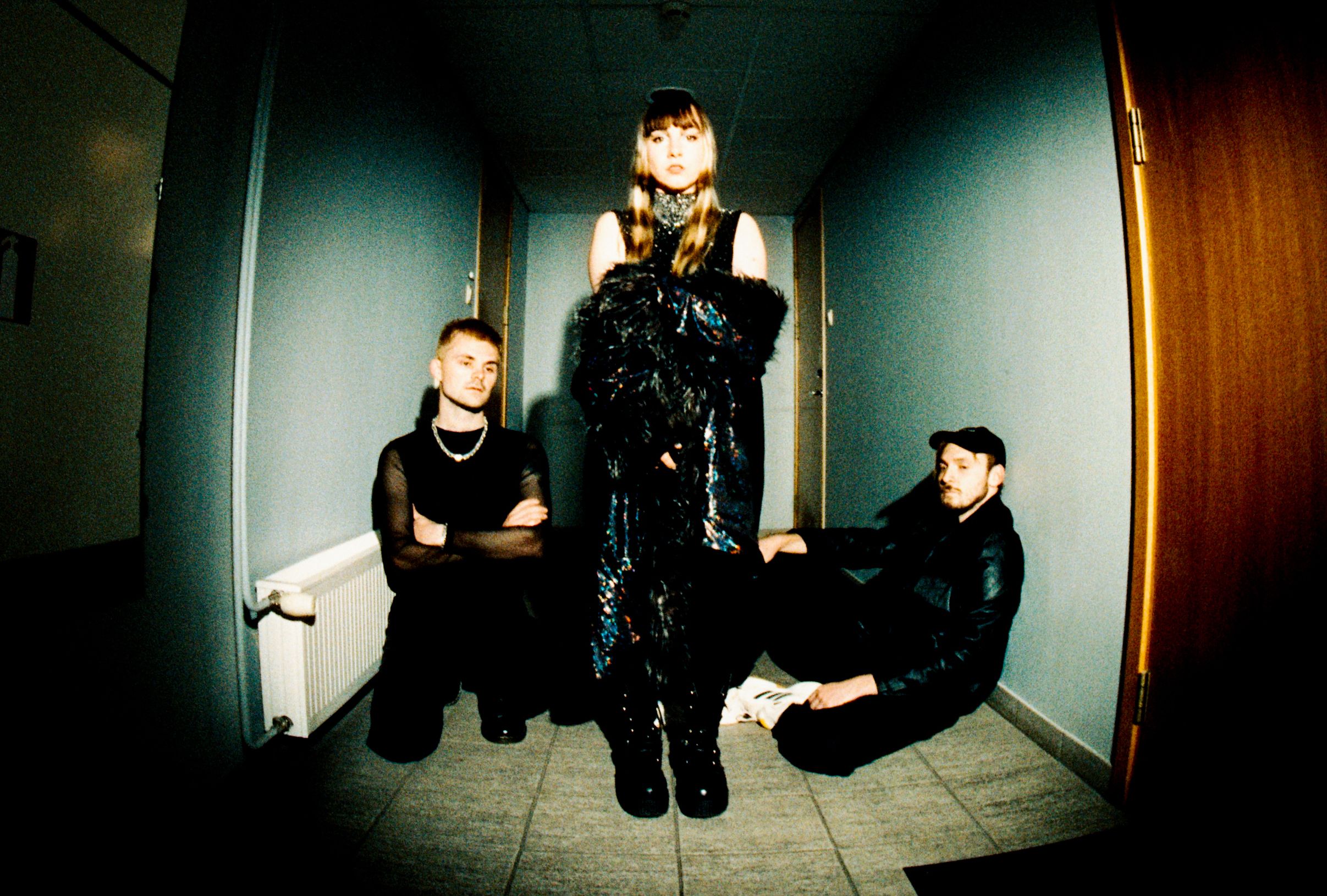
Night Tapes Interview Image by Marii Kiisk
Even recording a solo song is usually a collaborative process. Tell me about the importance of trust between the participants, personal relationships between musicians and engineers and the freedom to perform and try things – rather than gear, technique or “chops” - for creating a great song.
Trust is everything. When we’re in the studio, we have to be vulnerable and open to each other’s ideas. It’s that trust that allows us to experiment freely and push boundaries.
We’ve built a strong relationship where we feel comfortable suggesting wild ideas or even scrapping things that don’t work, and that freedom is what lets us create something truly honest.
What's your take on the role and importance of production, including mixing and mastering for you personally? In terms of what they contribute to a song, what is the balance between the composition and the arrangement (performance)?
Production is definitely a core element, The songs are ingrained with production and as the boys mix the songs themselves most of the time then mixing often becomes another lever of production - very much ingrained in what the sing is going to be.
After finishing a piece or album and releasing something into the world, there can be a sense of emptiness. Can you relate to this – and how do you return to the state of creativity after experiencing it?
Yeah, that’s real. There’s a moment of stillness after the release, like you’ve given so much of yourself to something, and now it’s out there on its own.
We try to refocus by diving into new ideas or even taking time away from music to recharge. Also usually we dive deep into marketing, social media and other promotion related plans. So it feels really nice to play and rediscover the songs though live setting.
Music is a language, but like any language, it can lead to misunderstandings. In which way has your own work – or perhaps the work of artists you like or admire - been misunderstood? How do you deal with this?
Everyone will interpret music in their own way, and that’s kind of the beauty of it.
We don’t mind if people misunderstand our work. In fact, we welcome different interpretations because it means the music is alive, evolving beyond what we initially intended.
Creativity can reach many different corners of our lives. Do you personally feel as though writing a piece of music is inherently different from something like making a great cup of coffee? What do you express through music that you couldn't or wouldn't in more 'mundane' tasks?
These two things are incomparable and just because you can draw a parallel doesn’t mean you should.
We love coffee and respect everyone who are passionate about it but we don’t feel like comparing music with coffee. Love both.