Published
Part 1
Name: Nightmarer
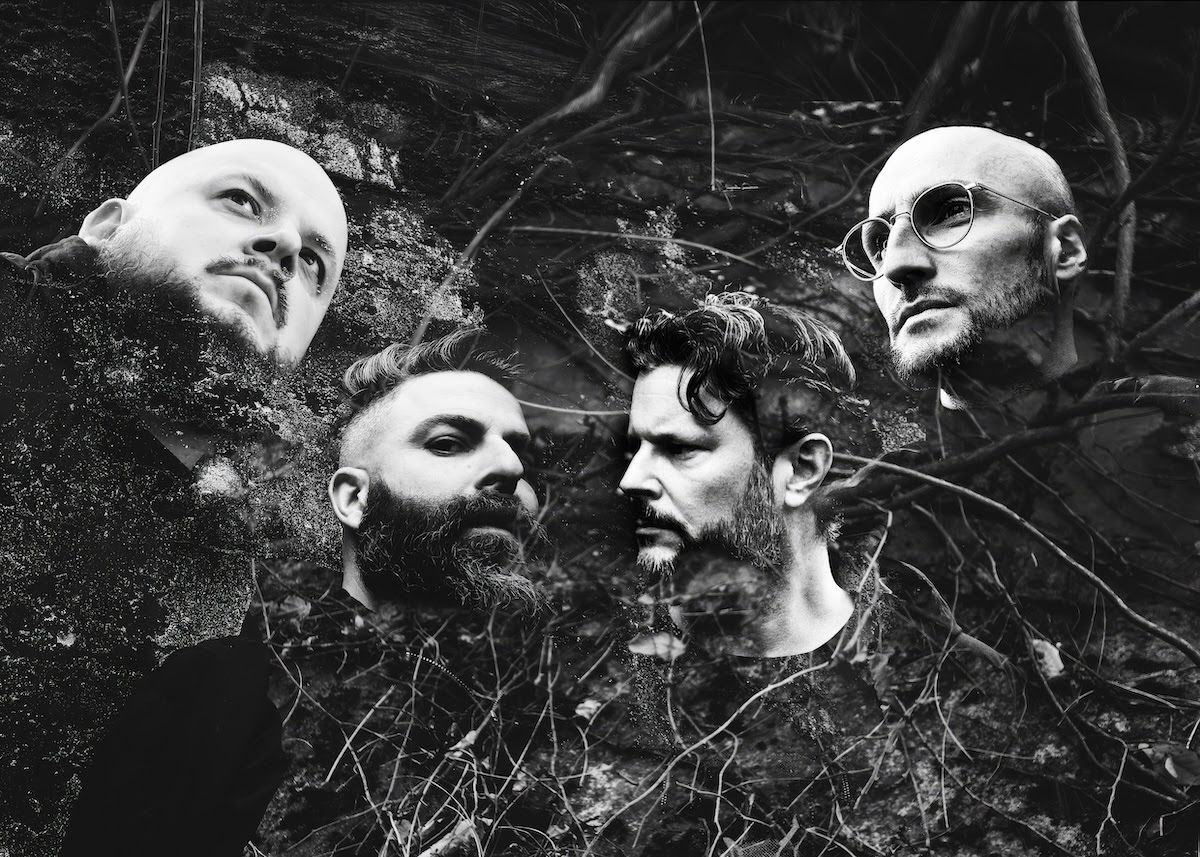
Members: John Collett (vocals), Simon Hawemann (guitars), Brendan Sloan (bass), Paul Seidel (drums), Christian Kolf (vocals)
Interviewees: Paul Seidel, Simon Hawemann
Nationalities: American (John Collett), Australian (Brendan Sloan), German (Paul Seidel, Simon Hawemann, Christian Kolf)
Current release: Nightmarer's new single “Shame Spiral” is out now. It is taken off their upcoming Hell Interface EP, slated for release January 30th 2026. Pre-order the LP via their bandcamp store.
Recommendation for Berlin:
Paul: Teufelsberg in Grunewald is a great hill in western Berlin that offers a nice view over the entire city. It also features an abandoned Cold War listening station that has since become a site of urban art. And beyond that, you’ll find no shortage of darkness to marvel at in Berlin, that much I can promise.
Recommendations for Portland, OR, USA:
Simon: Go to Vista House outside of for a stunning view over the Columbia River. Fall is the best time to do that. It's often grey and gloomy out here, so the dark vibes are ever present.
Topics we're passionate about but rarely get to talk about:
Simon: Sorry to disappoint, but all my passions are music-adjacent. ;)
Paul: I love running, and I’m passionate about taking black-and-white photographs of architecture, transforming structures into abstract shapes and patterns.
If you enjoyed this Nightmarer interview and would like to stay up to date with the band and their music, visit them on Instagram, and bandcamp.
When was the first time you noticed you were drawn to darker themes and moods in music, literature or the movies?
Paul: I’ve always been a rather melancholic and reflective person, even if my open and humorous nature might suggest the opposite. And although I’m a big fan of well-crafted pop music, the perfidiously polished gloss of the mainstream music industry has always annoyed me.
The transition from being techno-leaning to getting into grunge, then crossover and rock, and ultimately the more extreme realms of metal, was a natural process of exploration for me, one that ran parallel to my personal development and a growing aversion to conformity.
My first encounter with horror happened when I was very young and had to spend the night at a neighbour’s place. They happened to be watching Critters on TV, which gave me nightmares for weeks, but also showed me that there are layers of reality out there that I hadn’t yet experienced.
Beyond that, though, I’ve always found that everyday reality can be horrifying enough on its own.
Simon: It was pretty similar for me. Nirvana / grunge was a big gateway into heavier and darker-themed music for me, besides some other mainstream metal stuff like Metallica.
I started hanging out with a bunch of punk, goth and metal kids in high school and quickly realized that I was always most drawn to the most extreme bands my friends were listening to. I got so consumed by it that I quickly became the guy in my circle of friends who would show everyone the next, even more extreme and even darker music.
I was never big into horror, but I watched The Shining at a very young age and it had a pretty profound impact on me. The visuals are inspiring to me to this day.
“Darkness” is, of course, not strictly speaking a term related to sound. What constitutes darkness to you, especially in instrumental terms?
Simon: It's all about tension for me. Notes that rub against each other, uncomfortable spacing, unpredictable timing. All the things that create confusion and unrest.
Paul: Especially in the realm of music and songwriting, I think that a sense of uncertainty, misunderstanding, or lack of meaning can become a deeply cathartic experience, one that invites us to confront the accompanying emptiness or the absence of clarity. It can function both as a process of insight and as an act of accepting the things that confuse us and call our expectations into question.
Decoupling an instrument from its musical framework can go a long way, for example how a blast beat can turn predictable rhythms into a field of audible texture. Or how a semi-tone chord can turn from a simple riff into distorted industrial noise.
How would you describe the physical sensation and possible attraction of being exposed to darkness in music?
Paul: Tension, anger, aggression, dissonance: all of these states carry an inherent longing for release, a desire to eventually return to some kind of inner quiet. And the longer that tension is sustained, the more meaningful and satisfying its resolution becomes.
I think, ultimately, it comes down to familiarity. The fascination lies in the unknown, the overwhelming, and in the things that draw us in and demand that we engage with them fully. There’s something powerful about enduring an experience that, beyond the initial impact, may reveal itself as deeply rewarding.
Simon: When all the above is applied in the right way, this dark and (in)tense music ironically creates a state of euphoria in me that can border on an almost spiritual experience.
Does your interest in darker musical themes extend into extra-musical fields such as fashion, or politics?
Paul: Fashion is political, just as being political becomes fashion. Both can be dark and concerning, but people gravitate towards light and conformity as an easy solution for when they want to belong and feel at ease.
Anything that falls outside fashionable norm is often rejected at first, but the real art lies in resisting that mindset and developing a language in one’s own work that emerges precisely at the fracture lines of constructed conformity. I think it’s essential for us as human beings to engage with these darker themes. In a way, we’re forced to, since we’re confronted daily with the consequences of our societal failures.
Our interest as a band lies in making these experiences comprehensible through our language, reflecting them back, and allowing them to become part of that complex shared reality.
Who/what are currently artists, labels or even genres which draw you in because of their darker approaches, aesthetics and sound(s)?
Simon: A major inspiration in that regard would be Khanate for me.
We were lucky enough to have their vocalist Alan Dubin do a feature on our debut full length, lending his haunting and downright psychotic voice to the song 'Death'.
Listening back to our new material, the solo work of Mat Ball (of the band Big Brave) seems to have left somewhat of a lasting impact on my guitar playing as well.
I'm not usually one to listen to "guitar only" records, but the dark, deserted and barren vibes of his music, coupled with the way he uses feedback to create drones and dynamics, has really drawn me in.
Some of that has undoubtedly found its way into the sounds I pulled out of the instrument this time.
Lastly, I revisited a lot of my old screamo and chaotic hardcore influences throughout the year, like early Envy, Coalesce, Gaza and 'You Fail Me' era Converge.
Paul: I’ve always been a big fan of electronic music, and in recent years I’ve been able to rekindle that love. As a result, I constantly try to integrate electronic–industrial elements into Nightmarer’s songs whenever it makes sense.
I’m a huge admirer of artists like Lorn, Ital Tek, or Lapalux and their sound worlds, that seem to come from another planet.
But I’m equally drawn to more eccentric bands like Finland’s Oranssi Pazuzu or our Swiss friends in Abraham.
What were some of the first performances or releases when you became active in exploring truly dark places in your music yourself?
Paul: I was definitely a musical child of the late 90s and early 2000s and completely immersed in bands like Deftones or Slipknot. Teenage angst meets nu- or death metal.
Things became much more intense once I discovered bands like Ion Dissonance later in the decade, along with my first encounters with black metal and dissonant classical music by Schönberg or Scriabin.
I still remember exactly how I ended up drenched in sweat after hearing Ion Dissonance for the first time (on a mixtape CD that Simon had kindly burned for me, thanks for that!).
I have had a hard time explaining that listening to death metal calms me down. When you're performing a piece with a darker energy, does it tend to fill you with the same energy or feeling – or are there “paradoxical” effects?
Paul: The performance itself is an integral part of the experience and a way of almost "laying oneself into" this darkness and growing through it, beyond the initial framework of simply listening.
The shared experience of this rising, overlapping, accumulating energy, which eventually towers over the audience (and the band itself) like a tidal wave and pours over everyone involved, has something genuinely sublime to it.
And as I mentioned earlier: being held in suspense, being put through the musical wringer, being forced to endure this energy only to finally be released from it … there’s something deeply calming in that.
Simon: As mentioned earlier, the paradoxical effect this music can have for me is creating a feeling of heightened euphoria that is probably the closest I will ever get to what other people might experience as spirituality.