Published
Name: Nikki Sheth
Nationality: British
Occupation: Field recordist, sound artist, composer
Current release: Nikki Sheth is one of the artists contributing to harkening critters, an epochal, 33-track-encompassing compilation which "tunes in to the plethora of vocalizations, mechanical emanations, and any other acoustics phenomenon produced by animals." The album is available from forms of minutiae.
If you enjoyed these thoughts by Nikki Sheth and would like to know more about her music, visit her official homepage. She is also on Instagram, Soundcloud and twitter.
For a deeper dive, read our earlier Nikki Sheth interview.
What sparked your interest in animal sounds? Are there any memories or experiences with these sounds that you can share?
I have been interested in environmental sounds from a young age, spending a lot of time in the garden with my grandma and I have always been drawn to nature. I studied performance and composition at University and was increasingly drawn to the use of field recordings in my practice.
I’m lucky to now be travelling the world to record different species and environmental sounds.
What makes animal sounds interesting, inspiring, or just plain beautiful to you? Is there anything that continues to impress you about them?
Each sound is so unique and you never know what you are going to record.
I like the unpredictability and sense of surprise, but I also have to go in without any expectations as I always seem to find something unexpected.
Did or do you do any research on animal sounds? If so, what were some interesting findings?
I often do my own research or collaborate with wildlife conservationists who can share their knowledge with me.
I think what is interesting is the memories that are evoked with different sounds and I love hearing about the sounds people are most drawn to.
What did your first field recording set-up look like – and how has it changed over time?
The first one I took seriously was with a Tascam and a pair of DPAs I was lucky enough to borrow from a mentor. I often still use this set up, although my Tascam has seen better days.
When I was studying for my PhD I had access to lots more equipment so I experimented more with different microphones and recorders, but now I just tend to use what is available.
Have animal sounds been a direct inspiration on some of your other creative projects – if so, in which way?
Definitely. Animal sounds feature in pretty much all my pieces in some form. I love revealing the sounds to audiences who may have not heard these types of sounds before, especially the more subtle sniffing, grunting and vocalising.
My piece ‘Nocturnal Insights’ is a great example of this, it uses so many vocalisations and sounds that are often unrecognisable or processed and I get a lot of positive feedback and questions about the sounds.
Tell me about your contribution to harkening critters, please. What were your considerations going in? When, where and how was it recorded?
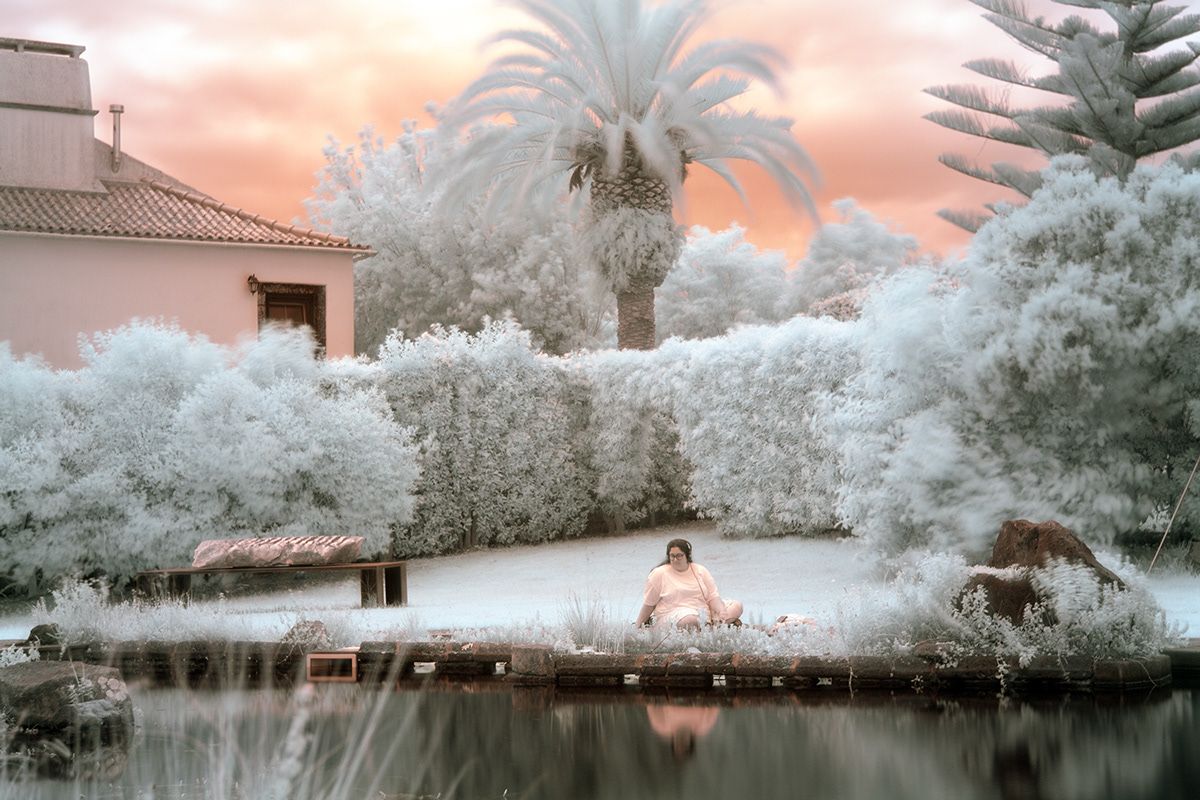
At the time I was asked to contribute to the album I had just returned from the Azores in Portgual where I was field recording for two weeks for a research and development project titled ‘Soundscapes for Wellbeing’.
I had recorded various sounds to use in collaboration with a movement coach for a commission we were working on and I thought it was a great opportunity to share the sounds of the Perez Frogs. If there are two species I have really loved recording in recent years it’s frogs and bats, due to the variety of different sounds you can capture depending on species. It was recorded in the afternoon at the Jose do Canto Botanical Gardens just before closing time.
The biggest consideration was trying to have minimal impact and disturbance on the pond. Since then, I have used the recordings to create a soundscape composition titled ‘Chiroptera’ that features these sounds captured in the Azores.