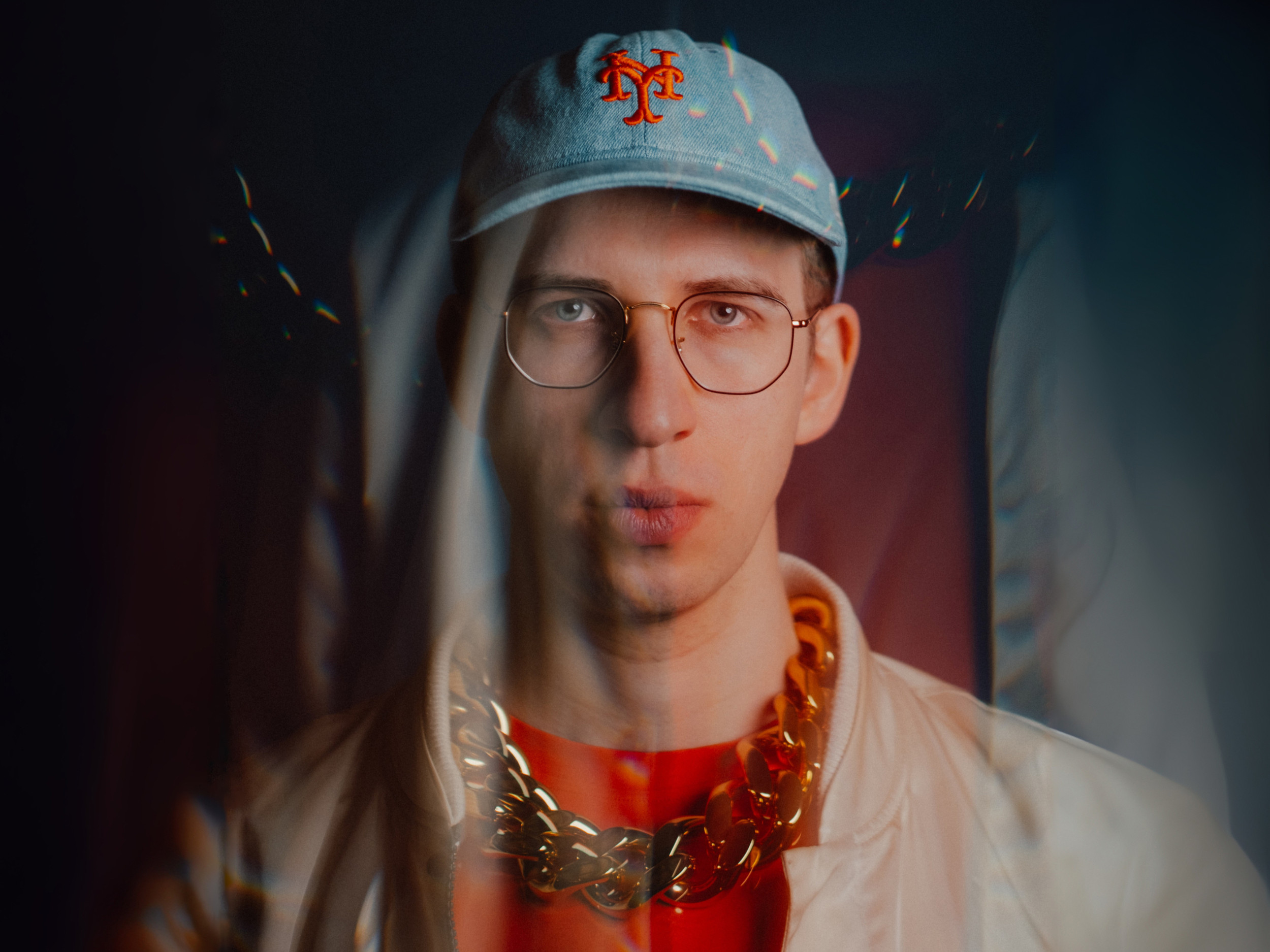
Published
Name: Nils Kugelmann
Occupation: Multi-instrumentalist, composer, improviser
Nationality: German
Recent event: Nils Kugelmann's trio will play at Ronnie Scott's September 3rd 2025. Find out more and buy tickets on the location's website.
Recent release: The new Nils Kugelmann Trio album Life Score is out via ACT. His duo album Under the Same Stars with Shuteen Erdenebaatar, is slated for release September 12th 2025 via Motema.
Recommendation for Berlin, Germany: I’m currently living in Berlin. Taking a walk along the Spree on a mild summer evening is really a wonderful experience.
Topic I am passionate about but rarely get to talk about: I love video games. When a game world is really well-crafted and inspiring, it can truly captivate me and resonate with me on a deep emotional level.
If you enjoyed this Nils Kugelmann interview and would like to stay up to date with his music, visit his official homepage. He is also on Instagram, Facebook, and bandcamp.
When did you first consciously start getting interested in musical improvisation? What was your first improvisation on stage or in the studio and what was the experience like?
For me, it was somehow the natural way to connect music with improvisation from the very beginning. When I got my first electric piano, I immediately started experimenting and improvising. Out of this love for improvisation, a love for composition gradually developed.
My first experiences with improvisation on stage were with our school big band. My first time in the studio was with three school friends from back then. That was super exciting, because it’s a big difference whether improvisation only exists in the moment or is recorded “for eternity.”
By now, though, I’ve gotten used to it.
Tell me about your instrument and/or tools, please. What made you seek it out, what makes it “your” instrument, and what are some of the most important aspects of playing it?
My main instrument is the double bass. It took me quite a long journey to decide whether this instrument was really the right one for me. Because I truly love drums and would have loved to become a drummer. At the same time, I would also have liked to be a pianist.
As a bassist, I’m neither of those two, but I am precisely the mediator between piano and drums. And I think that’s exactly what I love so much about the bass. I have a very rhythmic role, I’m the drummer’s best friend, and at the same time I’m closely connected with the harmonies and melodies of the piano.
In the piece “Turtles and Cocktails“ you can see me somehow switching between supporting and connecting the piano and then the drums throughout the whole piece:
Beyond that, I just love feeling those deep notes on stage and being responsible for them.
With my trio I play bass exclusively, but in a duo with the pianist and composer Shuteen Erdenebaatar I also get the chance to play the very rare and wonderful contra-alto clarinet.
How would you describe your own relationship with your instrument – is it an extension of yourself/body, a partner and companion, a creative catalyst, a challenge to be overcome, something else entirely?
My bass is like a good, long-time friend to me, supporting me in giving the music on stage the best possible foundation.
Do you feel as though there are at least elements of composition and improvisation which are entirely unique to each? Based on your own work or maybe performances or recordings by other artists, do you feel that there are results which could only have happened through one of them?
I definitely think that, even though there are of course countless musicians in the world, it is possible to find your own individual and unique voice.
Music, to me, is always strongly connected to the people who create it. The “precondition“ is that people are authentic and not just trying to sound like someone else.
But if this authenticity is there, then uniqueness in music is just as possible as the uniqueness of human beings themselves.
When you're improvising, does it actually feel like you're inventing something on the spot – or are you inventively re-arranging patterns from preparations, practice or previous performances? What balance is there between forgetting and remembering in your work?
I would say that most of my improvisations truly arise in the moment. I also believe that it’s not about forgetting everything one has ever played or practiced. And it’s also not about avoiding, at all costs, playing something one has played before.
To me, it’s much more about enjoying the music in the moment and then playing exactly what I feel like playing right then. Often, that’s not even a conscious decision anymore, it just happens in the flow. Of course, this naturally means also repeating or processing certain things sometimes, and I find that very natural.
Forgetting and remembering ideally happen at least one layer beneath the conscious level of playing. But sometimes I actually see it as an advantage to forget how I played something before.
Artists from all corners of the musical spectrum, not just “free jazz,” have emphasized the importance of freedom in their creativity. What defines freedom for your improvisations?
For me, the wonderful freedom in jazz already begins before improvisation. I can compose whatever I want. I can do whatever I want on stage. I can improvise as much as I want, or not at all. This fundamental freedom in my music, which jazz somehow gives a home to, is what I find most beautiful.
And what’s especially great for me, and what helps me grow, is that there are no mistakes. Whatever happens, happens – and maybe with a mistake you can start something new and beautiful in improvisation, or maybe not.
Taking your recent projects, releases, and performances as examples, what, would you say, are the key ideas behind your approach to improvisation?
One concept that I find very exciting is when composition and improvisation work very closely together.
For example, I really enjoy improvising while my fellow musicians orient themselves towards something composed. Or the other way around, of course. You can hear this particularly well on my newest trio album Life Score.
A good example is the title track “Life Score.”
After the theme comes the piano solo, and the drums, bass, and the piano’s left hand are playing more or less something fixed. Only the right hand of the piano has complete freedom and can really take off.
In your best improvisations, do you feel a strong sense of personal presence or do you (or your ego) “disappear”?
Ideally, I’d say self-awareness diminishes and it becomes the pure flow of music and interplay that drives everything as if by itself.
What are some of your favourite collaborators and how do they enrich your improvisations?
There are my wonderful two trio partners, Luca Zambito and Sebastian Wolfgruber.
Playing trio music with them is truly a gift for me. We’ve been playing together for a long time, and by now they’ve become much more than fellow musicians – they’re friends. And that’s one of the main inspirations: the absolute mutual trust I feel as soon as we play.
On top of that, they bring the music to life so beautifully, can take many liberties, and yet always respect my compositions. That’s wonderful.
Besides my trio, I very often play with the amazing pianist and composer Shuteen Erdenebaatar, both in her quartet and in a duo project, which is my second main project alongside the trio. Shuteen’s love for pure beauty in music and its power to move people connects us, and it’s deeply inspiring, concert after concert.
In a live situation, decisions between creatives often work without words. From your experience and current projects, what does this process feel like and how does it work?
I’d say a key factor here is trust. The more concerts you play with a project, the deeper the musical communication becomes and the clearer the mutual cues get.
As a listener, do you also have a preference for improvised music? If so, what is it about this music that you appreciate as part of the audience?
As a music lover, apart from jazz I currently listen mostly to film and video game music.
The main reason are the emotions I can feel and the images I can see within myself. Most of the time, I’ve also seen the films or played the games, so the emotional connection to the setting or story is an additional factor alongside the music itself.
When I listen to jazz, what excites me most, besides the emotional side of the music, is the interplay of the musicians. A perfect example: when a solo is really taking off and then suddenly the band catches some kicks together within the solo, and it still continues with the solo afterwards – I find that brilliant.
Despite the wildness of the moment, the band stays together, almost magically.
In a way, we improvise all the time. In which way is your creative work feeding back and possibly supporting other areas of your life?
What I’ve learned in jazz is: things will work out somehow, even if you don’t yet know what’s going to happen. Over time, I’ve transferred this sense of ease into other areas of life as well.
A very concrete example is when I’m traveling by train with my double bass. When the train arrives, I know it’s always going to be stressful, since of course there’s no official place for a double bass and you always have to find solutions depending on the situation.
When the train is pulling into the station and the stress is about to begin, I now just think: the next few minutes are simply improvisation – it’ll work out somehow.