Published
Name: Niton
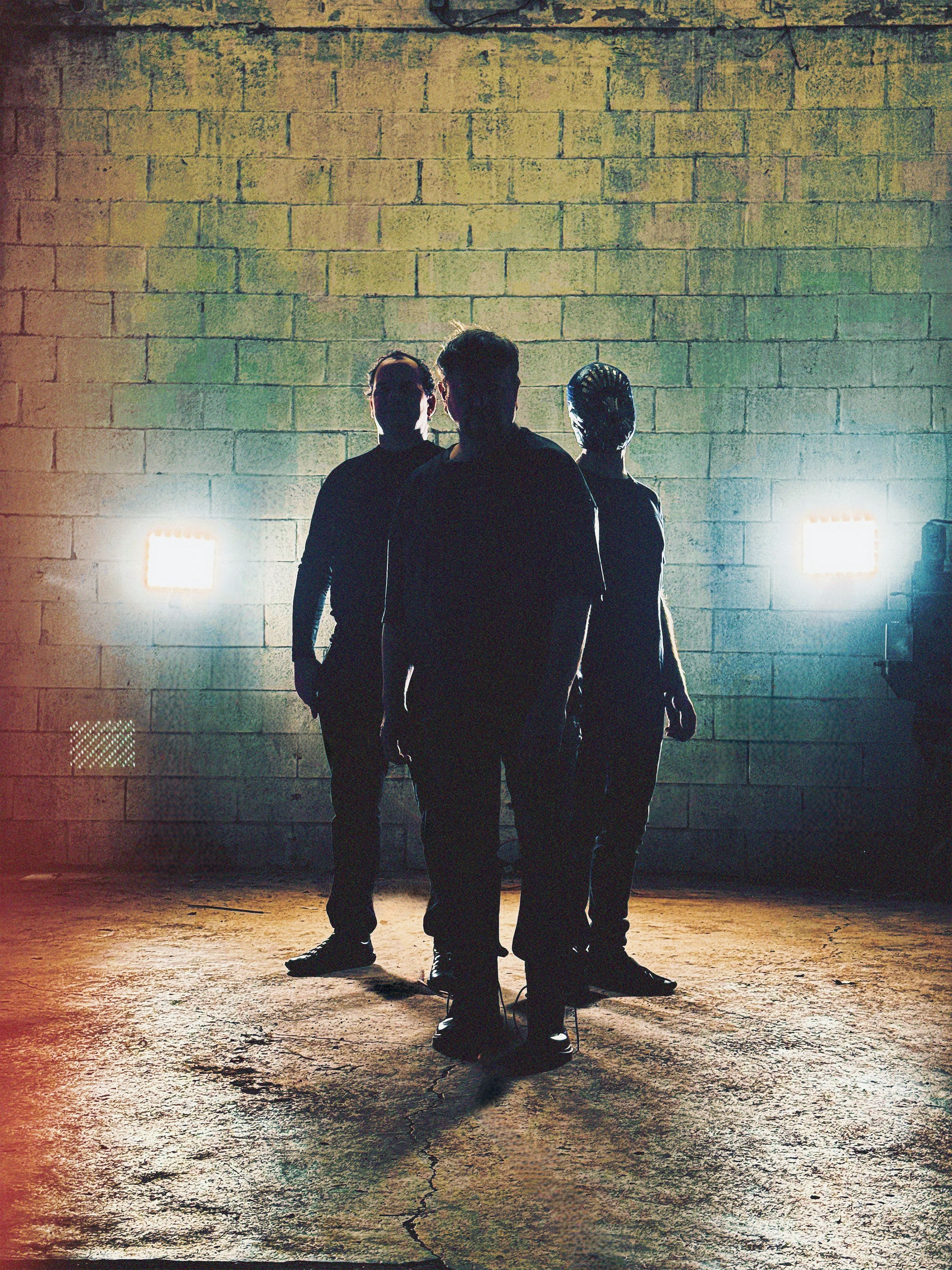
Members: Zeno Gabaglio, Luca Xelius Martegani, El Toxyque
Nationality: Swiss
Current release: Niton's new album 11 is out via shameless rocks. It features a range of guests, including Meryem Aboulouafa, Vanni Bianconi, Julian Sartorius, Boris Hauf, John Butcher, Peter Kernel, Olivia Louvel, Béatrice Graf, andy_bluvertigo, Andy Moor, and Achille Ateba Mvondo. Recommendations: Book: Codex Seraphinanus by Luigi Serafini; Music: Open by Necks
[Read our Julian Sartorius interview]
[Read our Peter Kernel interview]
[Read our Peter Kernel Simone Aubert interview]
[Read our Olivia Louvel interview]
[Read our Andy Moor interview]
[Read our creative profile of The Necks]
If you enjoyed this Niton interview and would like to know more about the band, visit their official homepage. They are also on Instagram, and Facebook.
For a while, it seemed as though the model of the bed room producer would replace bands altogether. Why do you like playing in a band rather than making music on your own?
According to Gestalt psychology, ‘The whole is more than the sum of its individual parts’. We like to think that by playing together, we achieve more than we would by adding up the singular work of each of us.
And this is because the dynamic of musical interaction in the group - strongly dialectical - also pushes us to do things that we would never do on our own.
For the album ‘11’, we decided to multiply this virtuous effect of collective musical action by inviting eleven guests to collaborate on ten tracks.
What, to you, are some of the greatest bands, and what makes them great?
Mentioning groups we love – from different eras and styles, but rather close to our poetics, such as Harmonia, The Necks or Tangerine Dream – we find in the idea of collective breathing a distinctive and founding element.
As if playing together were also an exercise in the search for organicity involving the whole group.
[Read our Tangerine Dream interview]
[Read our Harmonia's Roedelius interview]
Before you started making music together, did you in any form exchange concrete ideas, goals, or strategies? Generally speaking, what are your preferences when it comes to planning vs spontaneity in a collaboration?
The answer is both ‘yes’ and ‘no’. We started, twelve years ago now, from a purely extemporary and improvisational basis, whereby we said absolutely nothing to each other before we played, and listening to each other was the only formal and structural guide.
In the course of time, we also started to appreciate the use of predefined schemes - concepts, musical ideas, structures - and thus a pre-programmed interaction.
But if we play like this for an extended time, then we feel the need to return - even briefly - to the deep and sincere feelings of pure improvisation.
There are many potential models for creativity, from live performances and jamming/producing in the same room together up to file sharing. Which of these do you prefer – and why?
Precisely the record that is being released these days - ‘11’ - has seen both approaches adopted: that of instantaneous and extemporaneous creation resulting from the performative interaction between Niton and some of the invited guests, but also the creation resulting from a long and reasoned exchange - made up of drafts, corrections, revisions, reconsiderations - between the group and the other guests.
Both modes of creation have elements of fascination, which is why we have chosen not to deprive ourselves of either of these possibilities.
How do your different characters add up to the band's sound and in which way is the end result – including live performances – different from the sum of its pieces?
The subjective characters of the three members of the Niton group are intimately linked to the instruments they use.
El Toxyque - with its amplified objects, always different and always innovative - brings with him a certain madness and unpredictability, as well as out-of-the-ordinary sounds.
Luca Xelius Martegani's analogue synthesizers offer characteristic elements such as mechanical pulsations or visionary pads, connoting them with a reference to the entire history of electronic music but also with an original projection into the future.
Zeno Gabaglio's cello - although electrified and effected - offers clear references to classical music, in both a harmonic and melodic sense, but with postmodern traces that emphasise a clear detachment from classicist visions.
The sum of these parts leads to a result that is a betrayal - but also an unusual synthesis and transcendence - of the original musical contexts to which they belong.
Is there a group consciousness, do you feel? How does it express itself?
In Italian, the opposite of consciousness can be expressed by the term “incoscienza”, which means “unconsciousness” but also “recklessness” and “irresponsibility”.
In these enlarged meanings we feel closer to a group unconsciousness than to a group consciousness, because we often find ourselves embarking on musical paths that can be considered reckless and irresponsible, compared to the aesthetic and commercial expectations that surround us.
Tell me about a piece or album which shows the different aspects you each contribute to the process particularly clearly, please.
Rather than a song or an album, what clearly shows the different aspects of the musical work in Niton is a video from 2022 - taken from the concert celebrating the band's 10th anniversary - that lies hidden on YouTube.
There is no title, it is not an actual piece and without this link no one can get to it:
What is your sense of ownership like as part of the collective songwriting process? What is the balance between the lyrics, melodies and harmonies, and the groove in terms of your sound?
The musical result of our playing is equally divided into three (or four, if we work with a guest) subjectivities, and the balance between the various parts is the result of very different processes: it can come about in the instantaneous sensation of improvisation or through arrangement planning, or even in post-production editing.
Whether in the course of an entire performance or across an entire record, we nevertheless like to search for the variety of expressive modes: there will be rhythmic and percussive moments but also others that are relaxed and meditative, there will be words and lyrics but also pure instrumental flow, there will be research around noise but also harmonic/melodic abandon.
Perhaps this is why some find it difficult to apply a fixed label to the music we make ...
What tend to be the best songs in your opinion – those where you had a lot in common as a band or those where you had more differences? What happens when another musician take you outside of your comfort zone?
It is difficult to say which is the best track we have produced: they are like children, and even the most grumpy or unaffective child always gives us reasons to love them.
After three records produced solely as a trio, the decision to work on the album ‘11’ - on which there are only shared tracks with guests - was precisely to take us out of our comfort zone. And we have to admit that in none of the ten collaborative experiences have we ever experienced unpleasant situations, but only stimuli to expand our musical vision.
But maybe we should also ask our guests: they might tell you that the unpleasant part of the whole process was the Niton band!
What are your thoughts on the need for compromise vs standing by one's convictions? How did you resolve potential disagreements?
You cannot play together if everyone stays on their own positions. One of the fundamental lessons of improvisation - which makes it a social as well as an aesthetic value - is to learn to resolve divergences simply by playing together.
And in any case, your question touches on a central point in the actions of a band that does not primarily aspire to the mainstream: compromises. To which point must poetic coherence - which each of us feels - remain inflexible towards the needs of communication to others, be they band members or potential listeners?
Obviously, the search for a convincing answer will occupy us for the next ten years at least.
Do any of the band's members also have solo projects? If so, how do these feeds into the band's creative process?
Yes, Zeno Gabaglio has a solo career and often composes for theatre and movies, Luca Xelius Martegani has his own Xelius Project, El Toxyque has several alter egos, in particular Mr. Henry, and we think it is very important that each of us has a creative outlet outside of Niton.
All experiences beyond the band will, over time, feed and enrich Niton's sound and ideas.
In a live situation, decisions between band members often work without words. From your experience and the performances of your current tour, what does this process feel like and how does it work?
For us it is very natural, we can play without looking at each other. Listening is enough: we have worked a lot on this and sometimes we have chosen space setups where it was physically impossible to look at or talk to each other during a concert.
If you improvise - but also if you work with predefined structures - and you feel the need to constantly communicate with other musicians, it means that you are not listening enough.
Deep listening is crucial in the music we make.
How has the interaction within the group changed over the years? How do you keep things surprising, playful and inspiring?
On the one hand, we changed ourselves as persons, and this had inevitable influences on the music we make, on the way we interact with each other.
On the other hand, for an electro-acoustic group like ours, even a small technical change (an upgrade in instrumentation, a revised setup) is enough to steer the overall sound in new and different directions.
We are like an ecosystem that undergoes - sometimes even searches for - countless variables.
Most bands eventually break up. What makes you stay together? What are essentials for a successful band?
We are friends, and that makes all the difference in the world.