Published
Name: Noiseshaper
Nationality: German
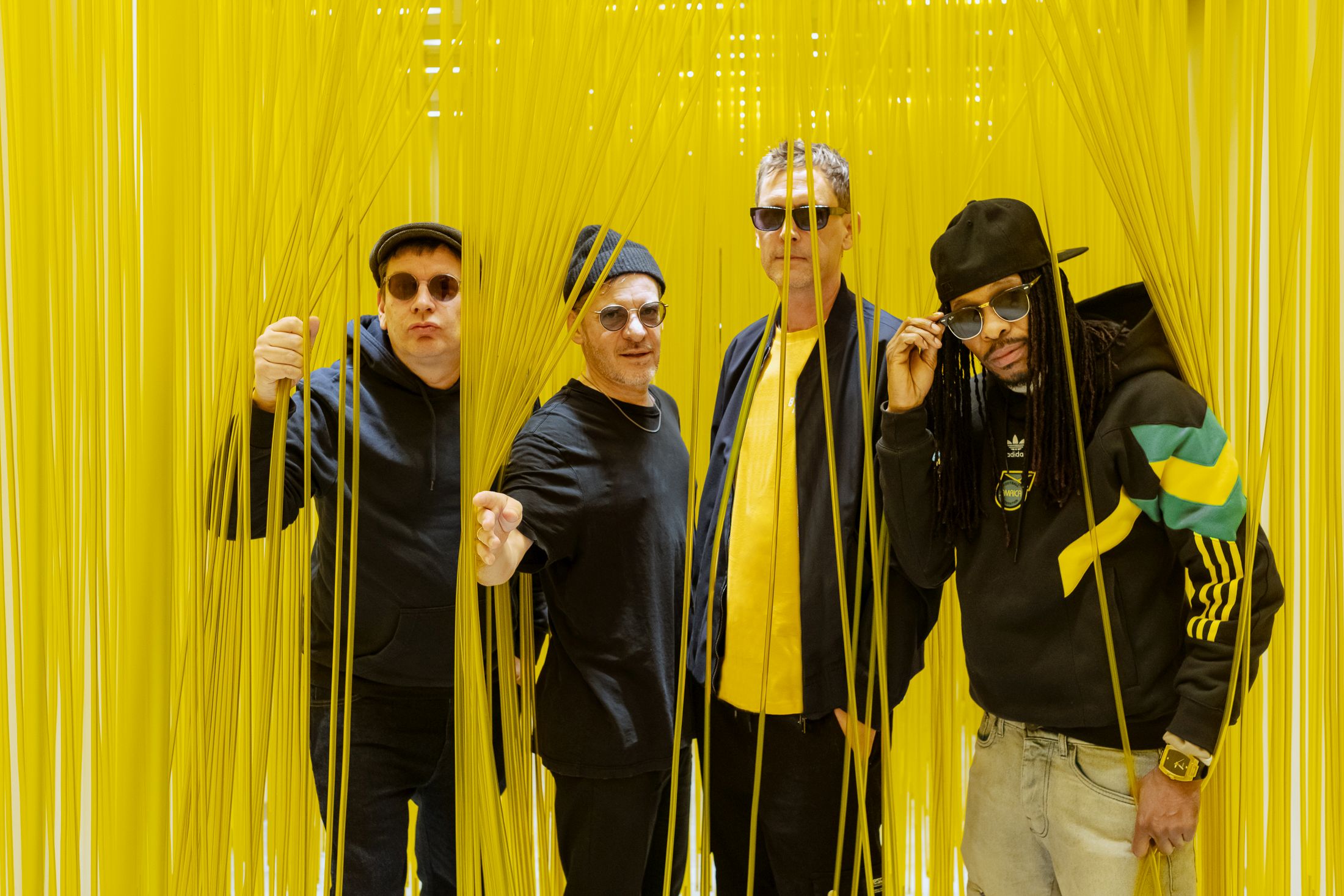
Members: Axel Hirn, Florian Fleischmann, Clemens Handler, Simple Straw
Current Release: Noiseshaper's new album Welcome the Unknown is out August 8th 2025 via Echo Beach. Check out three tracks off the album ahead of its release.
If you enjoyed this Noiseshaper interview and would like to know more about the duo and their music, visit the band's official homepage. They are also on Instagram, and Facebook.
The path to becoming a producer is a process - but from many interviews, I am under the impression that there are nonetheless one or a few defining moments. If this was the case for you – what were they and why were they so incisive?
We started out in the late ’90s, back when CDs, vinyl, and record shops were still a big part of the music world - and you really needed a label to get anywhere.
We sent out a bunch of demo CDs to labels around the globe, just hoping someone would listen. When Different Drummer Records (UK) got back to us and said they wanted to release our album, that was definitely a defining moment. We were huge fans of the Rockers HiFi sound back then, so to be taken seriously by their label meant a lot.
It felt like we were on the right path.
Tell me about one or two of your early pieces that you're still proud of (or satisfied with) in terms of production – and why you're content with them.
“The Only Redeemer” was our first single, and even though it’s a bit rough and lo-fi, I’m still proud of it.
The combination of the bassline and Vido’s soulful reggae voice really helped define our sound early on.
Another one is “Rough Out There.” On that track, we were able to highlight the intimate, emotional quality of our late singer Juggla (RIP) and build a warm, soulful atmosphere around it.
It still feels special to me.
In how far, would you say, was your evolution as an artist connected to the evolution of your music set-up and studio? Were there shared stepping stones?
I’d say the biggest part of the evolution has been how we interact with modern DAWs.
Editing is on a completely different level now compared to the early days. Things that used to take an hour - like cutting up a sample - can now be done with the press of a button. That’s been a game changer in terms of speed and workflow.
That said, our actual setup, used on our new album Welcome the Unknown, hasn’t changed all that much over the years. It’s always been a mix of samplers, drum machines, synths, an electric guitar, and a bass.
Our first record was made without any plugins - just real hardware, samplers, and a mixing desk. These days, it’s more of a hybrid setup, combining analog synths with software plugins.
So while the tools evolved, the core of how we work has stayed pretty consistent.
There are artists who can realise their ideas best with a traditional – or modified – piano interface, others with a keyboard and a mouse, yet others by turning knobs or touching screens. What's your preferred and most intuitive/natural way of making music and why?
Since we’re a producer team and our music is rooted in dub, our creative process usually starts with a beat and a bassline. That’s our foundation.
Typically, Flo and I are working on building the rhythm and tweaking some knobs, while Clemens is experimenting with bass ideas. When something starts to catch our ear, we zone in on it and develop it further. Once the bassline feels right, we start layering in other elements - chords, dub effects, synths, and textures.
Sometimes it’s a fully collaborative process with all of us in the room; other times, it’s just me exploring an idea, and then we refine it together later on. So rather than a single instrument or interface, it’s more about the dynamic between us - and anything can spark the initial idea.
Tell me about the space of your current studio/workplace and how you've set it up to optimise creativity.
There’s not too much glamour to it - it’s a kind of home studio and the room is acoustically treated and functions well for what we do.
The main setup includes a DAW running across three screens, with a midi keyboard right in front of me and a movable side rack that holds my synths, drum machines, and a preamp for guitar, bass, and vocal recording.
Vocals are usually recorded in a small booth in the cellar. So while the space isn’t huge, it’s well-optimized and everything is within reach.
From the earliest sketches to the finished piece, tell me about the production process for Welcome to the Unknown, please.
For this album, we started with a few rough sketches I had made during the lockdown period (e.g. “Reality in the Dark”). Flo and Clemens had also been working on some ideas together (e.g. "Cyberwar", "Smile Fi Mi Sunshine"), so we brought everything into the studio and began developing the tracks as a team.
Once the basic instrumentals were shaped, we sent them out to our vocalists. Some of the vocals were recorded remotely, while others were tracked in my studio.
After that, we moved into the editing phase - reworking song structures, tightening arrangements, and clearing out unnecessary layers to give the music more space. These sessions are sometimes collaborative, but often I’ll dive in solo and then bring the results back to the group.
We’ve always preferred to work on full albums rather than standalone tracks, so once all the songs felt more or less finished, I mixed the entire album in one go. That helps us keep a consistent sound and vibe throughout the record.
Late producer SOPHIE said: “You have the possibility with electronic music to generate any texture, and any sound. So why would any musician want to limit themselves?” What's your take on that?
In the context of our music, especially at the beginning of the creative process, any sound, texture, or unexpected noise can be a spark of inspiration. At that stage, we try to stay open to everything. But as a track develops, things naturally become more defined and focused
Personally, I’m actually a fan of limitations - especially when it comes to gear. I’d rather work with one synth that I know inside out than have a room full of gear I only scratch the surface of.
Limiting the tools can really help sharpen the ideas and push you to be more creative with what you have.
Tell me about your aesthetic preferences for picking effects like reverb, delay, compression, chorus etc … - what was the role of these effects in the production of your current release?
Since we’re working in dub, reggae, and dub house, effects like delay, echo, and reverb are essential - they’re part of the genre’s DNA. We’re definitely not shy about layering echoes.
On this album, I also used a bit more chorus and phasing effects than on previous releases, I guess.
The current production process allows for fast and infinite variations. Can you tell me about how you deal with this potential for the infinite and what ultimately decides on how many iterations to create and which version to release?
We’re a team, and we really trust each other’s ears and instincts, which helps us come to decisions pretty quickly.
We also share a kind of philosophy: if it sounds right, it is right - and less is more. That mindset helps us avoid getting lost in endless versions.
Tell me about the role collaboration played in your recent productions – and how you see the potential for machines as collaborators compared to humans.
Collaboration plays a big role in our production process, especially when working with singers. Their voices, words, and emotions always lift the music to another level - it’s something only a human can bring.
On Welcome the Unknown, six tracks - including the title track - were voiced by Simple Straw, a Jamaican singer based in Berlin, with whom we’ve collaborated before. We also reunited with Jackie Deane, another longtime collaborator.
One track, “This Is Love,” featuring Jackie, became a soulful dub house tune.
We used the same dub house riddim again - something that’s quite common in reggae and dub, where different "versions" are built on the same instrumental foundation - for Silk Sheets, featuring Bernard Fowler (Rolling Stones, Tackhead), who took it in a more classic club direction. Same foundation, two different vibes.
We’re not interested in collaborating with machines. For us, the human element is essential.
Production, as opposed to live performance, can be a lonely process and feedback from listeners isn't always tangible. What is it about it that gives you satisfaction?
I actually enjoy being alone and getting lost in the process - whether it’s creating sounds or mixing. There’s something really satisfying about that focused, solitary space.
And with Noiseshaper, I get the best of both worlds: the creative solitude of studio work, and the collaboration that comes with being part of a team.
We can watch videos on production, take producer courses, and exchange deep insights on gear forums. Amidst these options to improve one's chops/skills, how do you keep things playful?
I don’t really see it as a struggle. I’ve always loved making music - and I still feel that same passion. When I want to learn something new or explore a technique, it comes from genuine curiosity, not pressure.
I’ve been doing this for a while now, so I don’t get caught up in every random “compressor 101” video. I just follow what feels inspiring and relevant to what I’m working on.
AI is already capable of making something most people would recognise as music. I am curious, though, and will keep this question somewhat broad on purpose: What do you think that means?
I’m not sure what the future holds or how people will consume music in the years to come. In our own production process, there’s barely any AI involved - aside from one short spoken sentence.
As a musician, the answer is simple: I love making and producing music. Whether it’s alone or with others, using electronic gear or real instruments, in a recording session or playing live - it’s the act of creating that drives me.
So the idea of having AI do all of that for me? Honestly, where would be the fun in that?