Published
Part 1
Name: Sophie Griffon aka Odalie
Nationality: French
Occupation: Producer, composer
Current release: Odalie's Puissante Vulnérabilité is out via mesh. Also available is an EP with three remixes by Llyr, Claire Days and Sebastien Veyan.
Gear Recommendations: Rings by Mutable instruments; OTO machines pedals - “BAM”, “BOUM” and “BIM”
If you enjoyed this Odalie interview and would like to stay up to date with her music, visit her on Instagram, Soundcloud, and Facebook.
The views of society towards technology are subject to constant change. How would you describe yours?
I find technology fascinating as a tool, but I don’t see it as a goal. For me, it has to remain as a tool, and maybe that’s something that we forget as a society. Sometimes, I get the feeling that technology is seen as a new God that we can relate to if we are atheist, and I think that’s a dangerous path to follow.
For example, I’m really worried by the idea that technology can resolve the economic and climate crisis we’re living in right now. Science-fiction films and entertainment can lead to this idea and it worries me.
I don’t know if you’re familiar with the concept of Pharmakon; for me, every technology is Pharmakon, denoting remedy, poison, and scapegoat.
What were your very first steps in music like and how would you rate the gains made through experience - can one train/learn being an artist/producer?
My very first step in music was by creating music for my reports I did as a journalist. My first encounter was with treating sound as clay; I was modelling ambience to put in the background for reports I was doing. I started on a computer because I had only access to computer facilities and did not have access to traditional instruments. I really started with electronic music, mainly recording things because I was familiar with microphones because of my radio background.
I’m a living example that you can learn and work hard to be able to produce music. I had a lot of things to say but I couldn’t really express it with words, so I started to make music to express all these ideas and feelings. I was listening to a lot of music as a teenager, mainly from film composers.
When I needed more knowledge, I went to a public music school in my town in France. There was a course on electronic music and I learned everything from my teacher. We had to audition and I had music that wasn’t mixed great, and I was ashamed to make him listen to it. I said to him “That’s not good right? I don’t really belong here,” and he said “Techniques are something you can learn, ideas you cannot.” I made something really original I think, with a lot of inventive and strange ideas, and this reflected well for my audition.
After that, I worked 3 to 4 years to learn everything about mixing, producing, harmonies, rhythms; I didn’t even know how to program drums at first. I released my first EP and I’m still learning everyday and I hope I continue to have that urge to learn for the rest of my life.
Making music, in the beginning, is often playful and then becomes increasingly professionalised. How important is playfulness for you today and if it is important, how do, concretely, you retain it?
If there is no playfulness, I can’t make anything.
I’m always giving myself little challenges and games; ‘this time I’m trying to do drums as waves’, or ‘I know I have difficulties to put bass at the forefront, this track will be focused on this’ or ‘I was curious about the concept of serendipity, how can I put this into my music production?’ Sometimes it’s more funny things like what if I make a track with only Rings, sounding like leaves falling from trees.
I listen to a lot of music all the time and I get inspired by other artists. I'm fond of mixing genres, trying an impossible blend of things; I love challenges.
Which other producers were important for your development and what did you learn from them?
In the music school I was in, there were only 3 producers in our electronic music class; we had time together every week to criticise the work of others, and vice versa.
I learnt so much from other people; my two roommates are also producing music and we help each other to make our ideas better and move forward with it.
In the broader sense, I learned a lot from music I was listening to, for example, the Jon Hopkins album Immunity made me want to work with a cellist, which is one of the milestones of my music today.
[Read our feature on the cello]
[Read Theresa Wong's expansive thoughts on the cello]
After that, I discovered Ólafur Arnalds, who is my favourite composer now. I really wanted to be able to express feelings as he does. I’m touched by who he is as much as his music, which is something I try to show with my music as well; who I really am, with authenticity.
[Read our Ólafur Arnalds interview]
Following that, the work of Max Cooper and his incredible sound design; I immediately loved the details, and his production skills are incredible.
[Read our Max Cooper interview]
Also I play modular synths, so I listen to a lot of composers specialised in this, like Jonathan Fitoussi or Caterina Barbieri; really minimal music, all about timbre and progressions. Those are big inspirations for me.
I’m trying to blend everything, I don’t know if it always works, but I try so that’s enough! 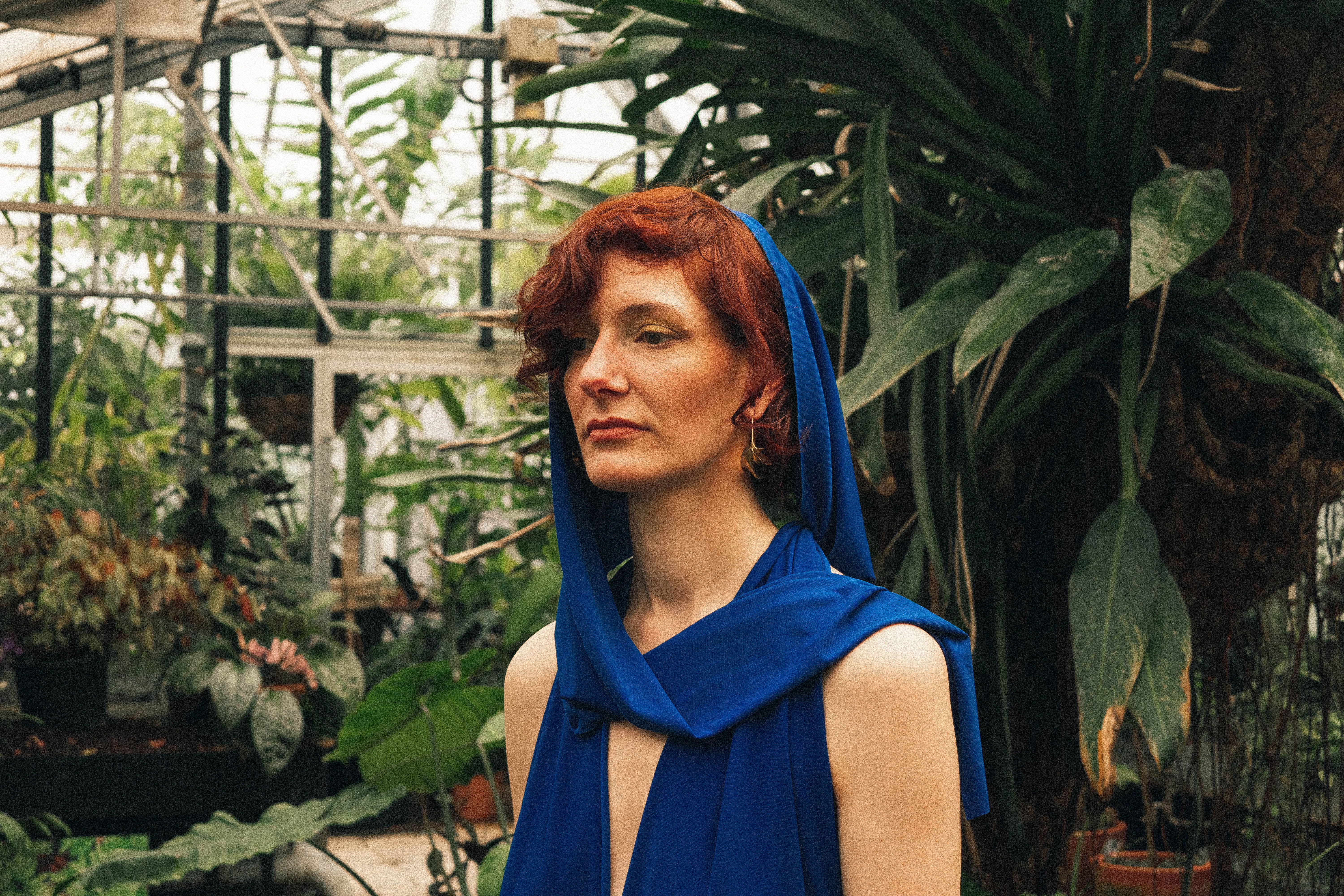
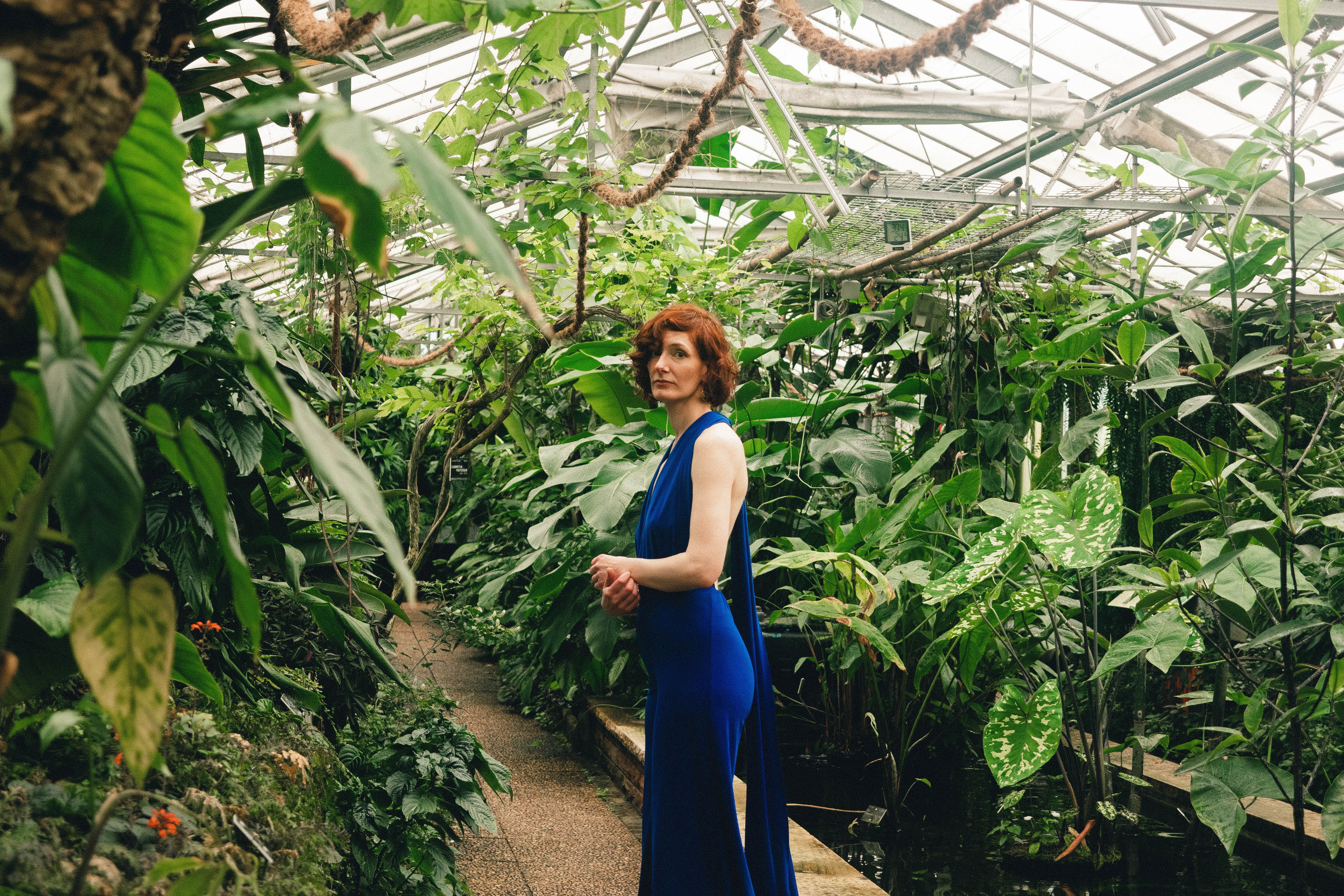
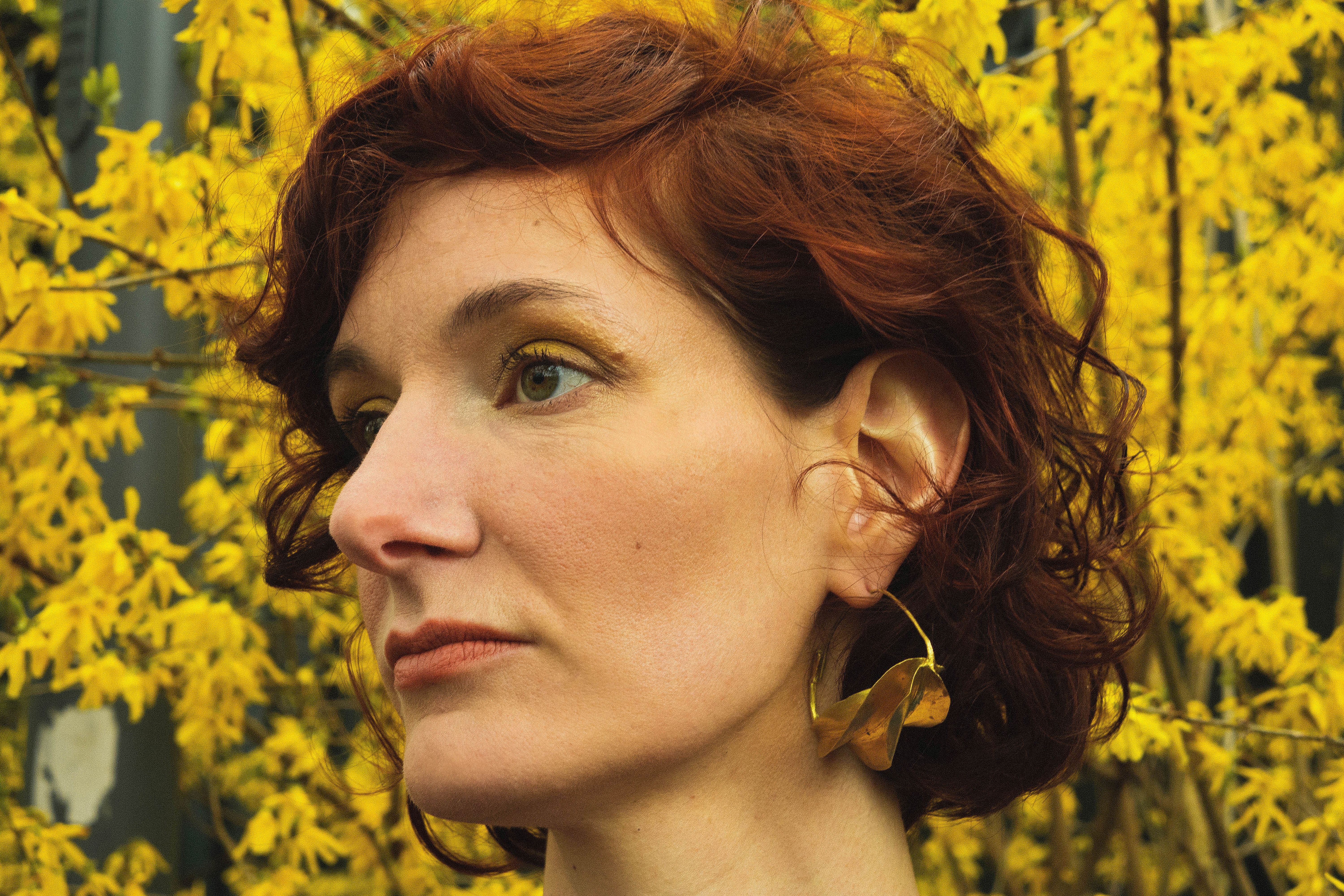
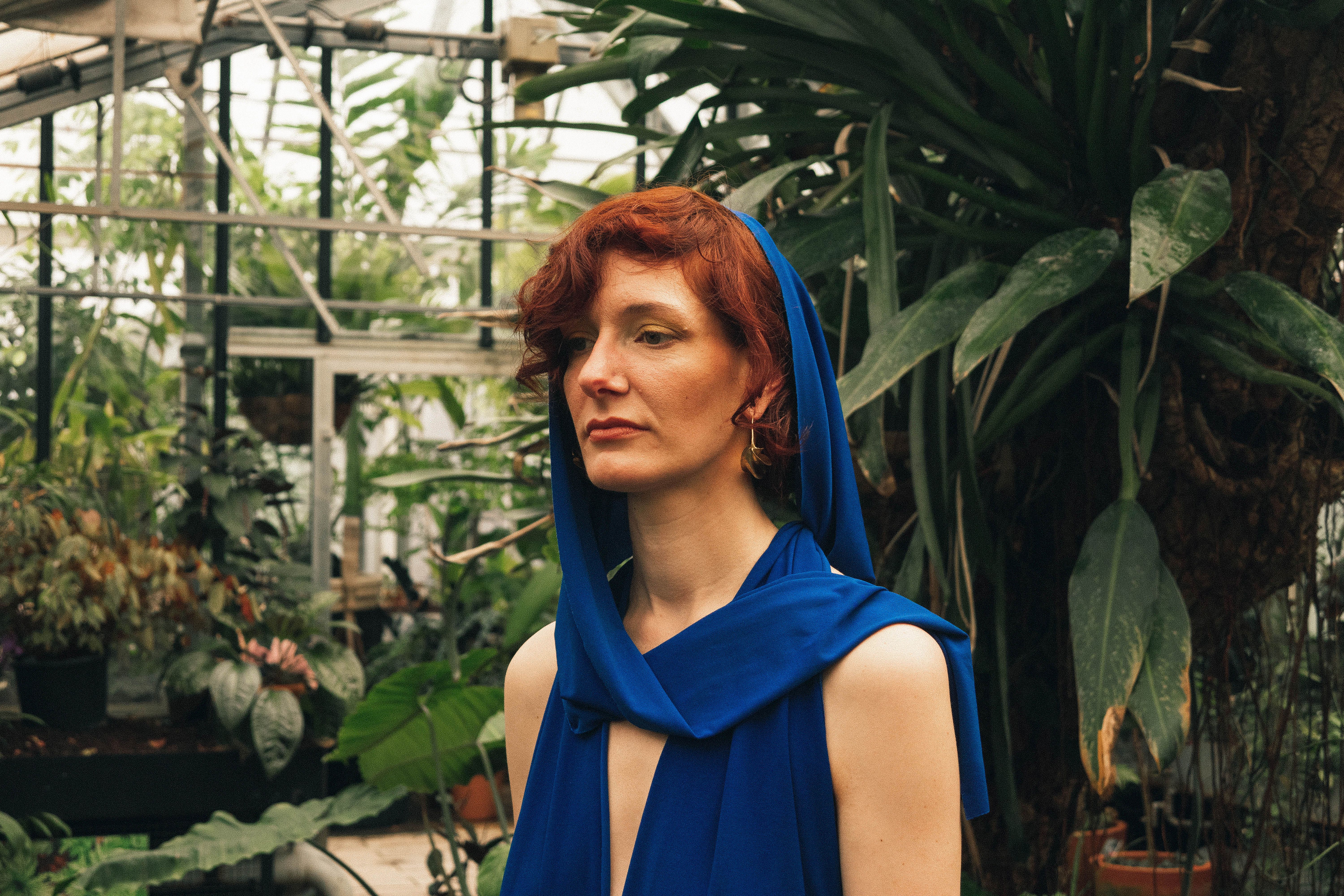
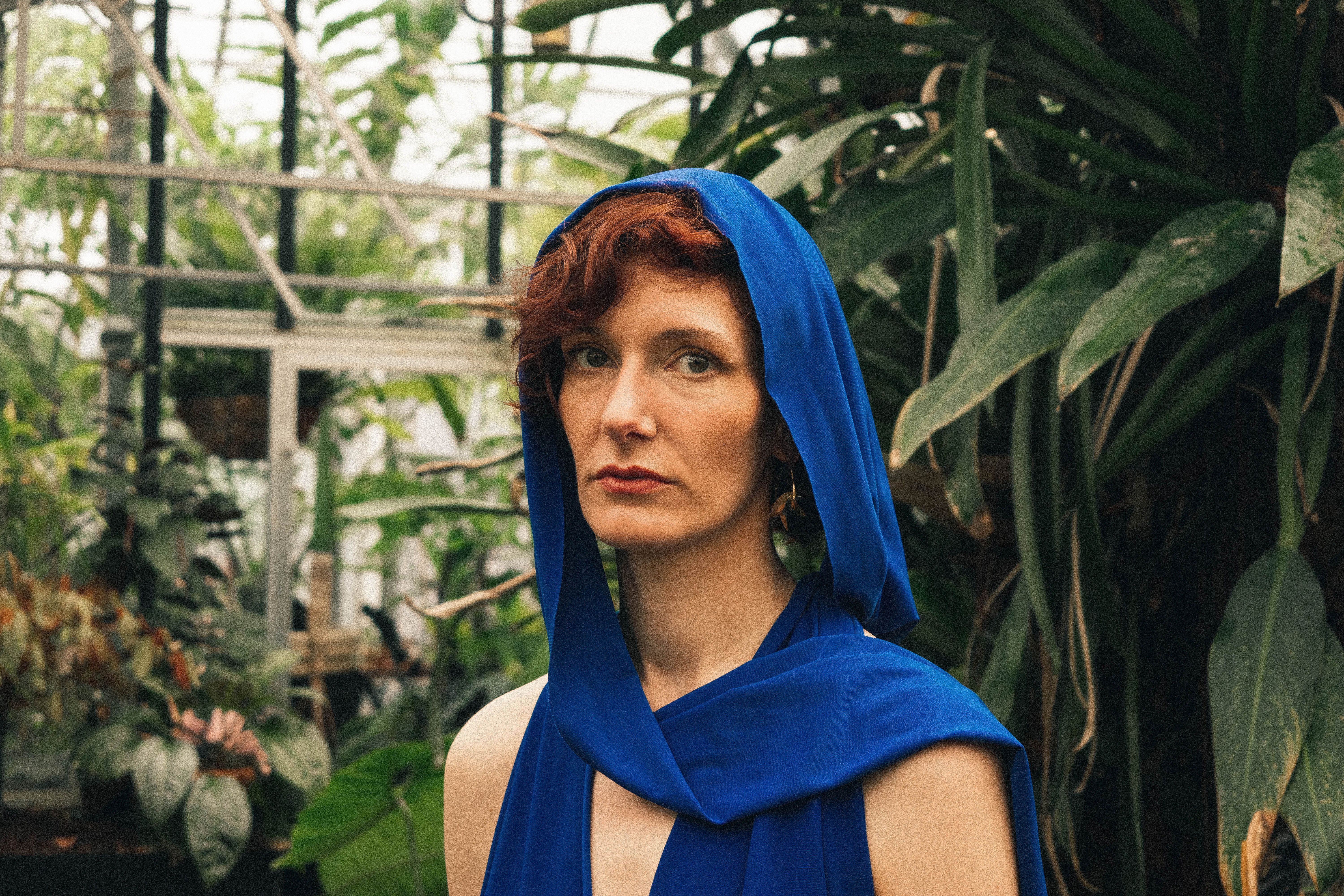
Odalie Interview Image by Clara Bey
How and for what reasons has your music set-up evolved over the years and what are currently some of the most important pieces of gear and software for you?
My teacher in music school made me try modular synths around 4 to 5 years ago and I loved it immediately. I think the geeky part mixed with the intuition of turning knobs is really my thing. Right now, I create everything with two instruments: my modular synth and a Prophet 6.
[Read our feature on the Prophet 6]
My favourite module is Rings from Mutable Instrument and the 4MS Dual looping delay. I treat the sound I make from my synths with a lot of software, namely using Soundtoys Decapitator, Puigtec EQ, Fabfilter Q3, Fabfilter Reverb, but I don’t produce synths with plugins anymore. The primary sounds come almost all from these two synths for the melodic parts, and reverb pedals are really important in my setup: BigSky by Strymon and BAM by OTO.
Sometimes for drums I will use Slate+Ash Cycles, and I have a bank of wood and water samples that I use everywhere. I created a bank of clicky sounds I made with Operator years ago. It was an exercise I did for myself to reproduce Alva Noto sounds using only Operator from Ableton. I kept it as samples and they’re everywhere in my music now.
[Read our Alva Noto interview about the Mathematics of Music]
[Read our Alva Noto interview about the Connections between Image and Sound]
[Read our Alva Noto interview about his Creative Process]
Have there been technologies which have profoundly influenced, changed or questioned the way you make music?
Surround Sound systems, definitely.
My first encounter with spatial audio was in a dome, for a workshop developed for producers and visual artists that is happening in Lyon with an organisation called AAD that works a lot with the digital arts. I’m fond of these surround sound projects because the centre of my music is working with space, that’s the first thing I always think about; where are all the elements sitting in space?
I’ve worked with the Envelop software from Ableton and Spat revolution from Flux immersive, but never tried Atmos for now. The fact that I was able to put sounds into systems with 20 speakers made me reevaluate my mixes in stereo with totally new ideas.
I can’t wait to experience surround sound systems in live again or for the diffusion of my music.
Late producer SOPHIE said: “You have the possibility with electronic music to generate any texture, and any sound. So why would any musician want to limit themselves?” What's your take on that and the relevance of limitations in your set-up and process?
Limitations with tools are a good thing for me; I need limitations to be able to produce something because if I don’t, I get lost in the possibilities and never make music.
I can spend hours looking at every new softwares, gear, in a really geeky way; looking at reviews of modules on Youtube. I really have to separate this time when I’m writing music because as it gets in the way of producing.
I think there’s a vertigo a lot of music producers experience. In my studio, there is almost no Internet connection. I work in a basement and I think It’s a really good thing for me as it keeps me focused on my intentions.
On the other hand, what I find interesting in this sentence is the fact that we don’t want, as producers, to limit ourselves in terms of creativity. I’m fond of SOPHIE’s works and I think she was an example I want to follow.
I think the limitations in creativity come from the music industry that wants to class everything in little boxes, to put it in the right Spotify playlists for example. I’m trying to not listen to these mermaids and get drowned into the “Sound of today” in electronic music. I do my own thing, hoping people can connect with it because it’s honest and it’s me.
It will certainly take time but I feel that in the long term, it’s better to keep my authenticity and my sound and not try to tone down what makes my music special and weird.