Published
Name: Otto A. Totland
Nationality: Norwegian
Occupation: Composer, pianist
Current Release: Otto A. Totland's new album Exin, co-produced by Nils Frahm, is out June 14th via Frahm's Leiter imprint.
[Read our Nils Frahm interview]
If you enjoyed this Otto A. Totland interview and would like to stay up to date with his music, visit his official homepage.
Where does the impulse to create something come from for you? What role do often-quoted sources of inspiration like dreams, other forms of art, personal relationships, politics etc play?
For me, each piece of composition starts and evolves differently. I often sit and just play something random, then I see and hear an interesting pattern on the keys. Then I suddenly have the start of something that got my curiosity and attention.
I sit patiently with that new discovery for a while, playing it repeatedly, trying out small variations that slowly expands the pattern and idea. Then, out of that, I have a new concept and idea that gets stuck in my head and that I keep getting back to explore and expand.
I start many piano pieces this way and it can take months before those initial ideas turn into a complete piece.
For you to get started, do there need to be concrete ideas – or what some have called a 'visualization' of the finished work? What does the balance between planning and chance look like for you?
That is maybe a good idea, to form some kind of visualization of the finished piece.
I usually have an initial short idea, more like a seed. Without any clear visualization of where I will end up, that seed leads the way.
I think it’s very healthy to try different approaches as a creative process. I will try to be more aware of that myself.
Is there a preparation phase for your process? Do you require your tools to be laid out in a particular way, for example, do you need to do 'research' or create 'early versions'?
The process is too unpredictable for me to have any structure or routine beforehand that would help in any way.
I guess it reflects how I navigate life in general. I think that is common for many people working creatively; the way we create and the way we navigate life has many similarities to the way we work. For me, at least, that’s the case.
Do you have certain rituals to get you into the right mindset for creating? What role do certain foods or stimulants like coffee, lighting, scents, exercise or reading poetry play?
I know that I work best sober. It can feel inspiring and fun when I create stimulated on something. My most valuable creations arise from my sober mind. Though I have fun creating stimulated too, of course.
Also, when I’m performing, I do that best totally sober. It took me some time to figure that out.
What do you start with? And, to quote a question by the great Bruce Duffie: When you come up with a musical idea, have you created the idea or have you discovered the idea?
Right, that is an interesting question that I ask myself. Is this truly my creation or am I just the first person to discover it? Is it something floating in higher consciousness that I was given access to and now claim ownership of?
I don’t know – I usually refer to them as discoveries rather than my own creations. But I do believe they are a little bit of both. I can’t even say how inspired my creations are versus my own unique expression.
So, my answer just confirms how lost I am in understanding this myself.
Many writers have claimed that as soon as they enter into the process, certain aspects of the narrative are out of their hands. Do you like to keep strict control or is there a sense of following things where they lead you?
It’s the blend of both. Certain aspect of the creative process demands logic and hard thinking. Even when I create something very emotional, I do, at certain points, stop and take control. This happens often when I must figure out smaller details and make specific decisions.
I don’t want my ego mind to step in and stand in the way, as it usually does when it insists of being present.
Otto A Totland Interview by Erik K. Skodvin
Often, while writing, new ideas and alternative roads will open themselves up, pulling and pushing the creator in a different direction. Does this happen to you, too, and how do you deal with it? What do you do with these ideas?
Yeah, the presence of small accidents that I implement, often turns out to be the best parts of my creations. Sometimes I have ideas that demand that I improve my playing skill before I can implement them satisfactorily. It’s very rewarding when I stick with those and make it work.
I grow with my creations; they are my teacher.
There are many descriptions of the creative state. How would you describe it for you personally? Is there an element of spirituality to what you do?
I do believe that the creative state is closely related to the meditative state. And when I think about meditation, I think entering a space where mind and thinking don’t dominate.
I am spiritual in the sense that I think feeling separate is an illusion. The illusion of separation. The creative state is love
Once a piece is finished, how important is it for you to let it lie and evaluate it later on? How much improvement and refinement do you personally allow until you're satisfied with a piece? What does this process look like in practise?
This is a very good question that I’ve thought a lot about myself. I usually get most excited about my newest creations. That makes it hard for me to determine their “quality” compared to my other creations.
For me to gain a realistic impression of its “quality”, it is essential that I let it lie and evaluate much later. Sometime my excitement for it increases, other times it dissolves.
I don’t like to explain this with the word quality. In short; it takes a long time before I more objectively perceive my creation for what it is.
When you're in the studio to record a piece, how important is the actual performance and the moment of performing the song still in an age where so much can be “done and fixed in post?“
I’ve made 4 solo piano albums now. I want my takes to be ‘one shots’ and then live with some mistakes. Keeping the editing to a minimum.
Now that we can perfect everything, I more than ever, appreciate the fully analogue, the small flaws and inconsistencies. Everything human that A.I. is too smart to do.
Even recording a solo song is usually a collaborative process. Tell me about the importance of trust between the participants, personal relationships between musicians and engineers and the freedom to perform and try things – rather than gear, technique or “chops” - for creating a great song.
People inspire me more than anything. I take everyone’s input seriously.
I do care about what people think. Though I don’t always agree.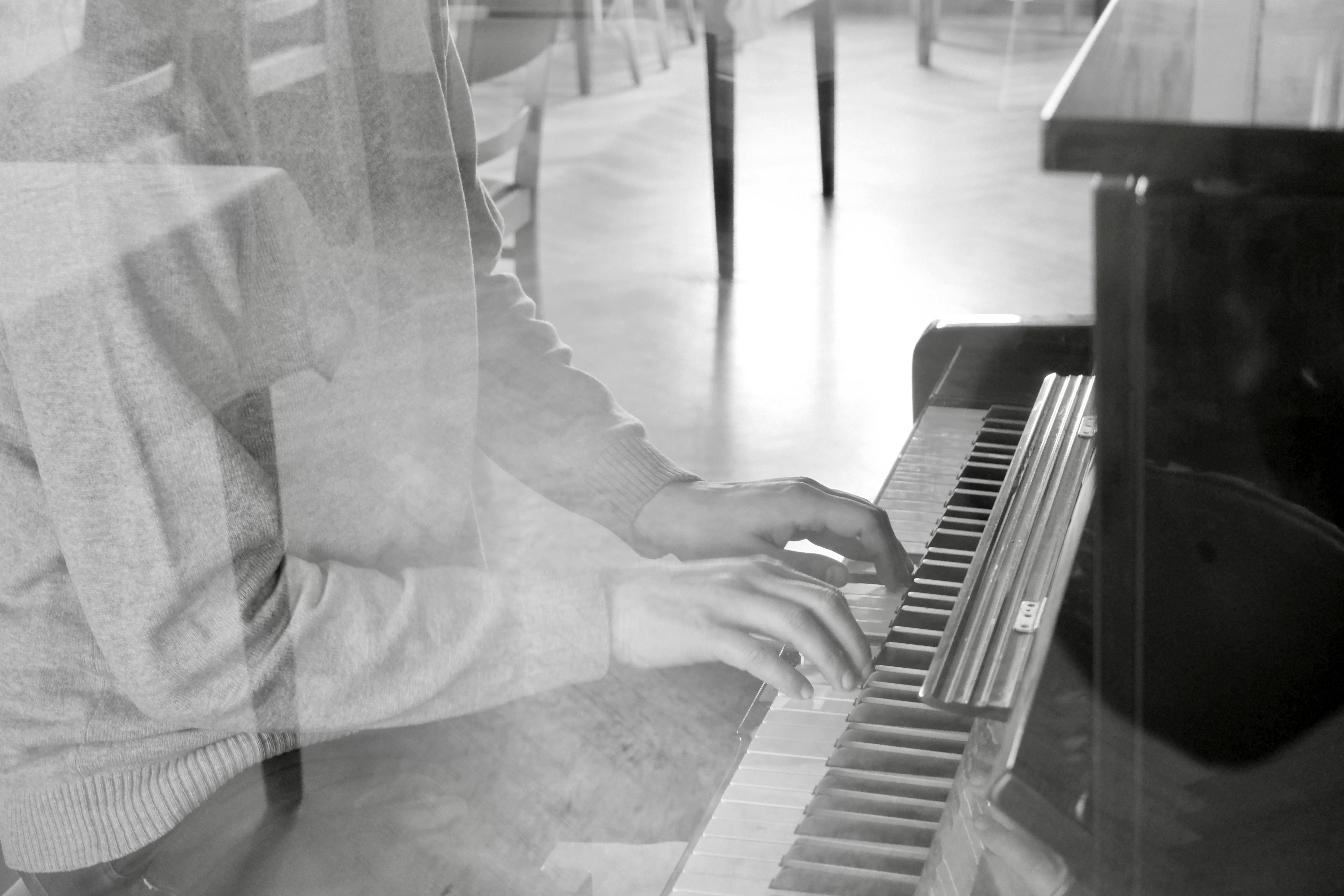
Otto A Totland Interview by Erik K. Skodvin
What's your take on the role and importance of production, including mixing and mastering for you personally? In terms of what they contribute to a song, what is the balance between the composition and the arrangement (performance)?
Of course, those elements are important. But they are independent of the ideas and compositions.
Production, mixing and mastering will not save a bad idea or performance alone, but they have such an important impact when they work together. They demand different skills.
After finishing a piece or album and releasing something into the world, there can be a sense of emptiness. Can you relate to this – and how do you return to the state of creativity after experiencing it?
I believe taking a long break from my instrument is an important part of the creative process. I have definitely felt that sense of creative emptiness. I’m not afraid of that.
After making an album, I have poured so much of myself into that, it takes a long time before that creative hunger returns. I value and appreciate those “in between” periods too.
Creativity can reach many different corners of our lives. Do you personally feel as though writing a piece of music is inherently different from something like making a great cup of coffee? What do you express through music that you couldn't or wouldn't in more 'mundane' tasks?
Every sense can be explored artistically and creatively. A masterfully crafted cup of coffee can be considered a creative creation.
With instrumental music, I express something timeless and universal, that I don’t fully understand myself. Others can point out details about my own creations that I wasn’t aware of.
I express in music something we have in common but may not necessarily be conscious of.