

Name: Owen Underhill
Nationality: Canadian
Occupation: Composer, flutist, conductor
Current release: Owen Underhill's new album Songs and Quartets performed by Quatuor Bozzini is out via Collection QB.
If you enjoyed this Owen Underhill interview and would like to know more about his music and upcoming live dates, visit his official homepage.
The borders between producers, sound artists, and even songwriters are becoming increasingly blurry. What does being a composer mean today, would you say?
A composer is a creator, and also a collaborator. Most of my music involves direct artistic interactions with other collaborators including performers, choreographers, designers, cross-cultural artists, and various communities.
In addition, I am a conductor of contemporary music and that increases the breadth of my creative world as I regularly perform and interact with other composers on their compositions.
Many people perceive classical music and contemporary composition as having high barriers of entrance, both for listeners and musicians. What have your own experiences been in this regard?
For myself, I do not compose in a way that I imagine any barriers to having meaningful experiences listening to the music.
I do understand that ‘contemporary composition’ is considered a specialty field which may not be discovered or valued by many.
That being said, I do regularly encounter listeners who are new to contemporary music who have rich and profound experiences with new music.
As of today, what kind of materials, ideas, and technologies are particularly stimulating for you?
I search for aesthetic connections to my interests that cross time and cultures. This has included early music and poetry from the sixteenth and seventeenth century which has a mystical, spiritual and emotional clarity which I admire and have an affinity for.
Examples in the newly released Bozzini CD Songs and Quartets include ‘The Retreat’ based on the mid-seventeenth century poetry of Henry Vaughan …
… and ‘What is our Life?’, a poem written by Walter Raleigh in the early 1600’s while he was imprisoned in the Tower of London awaiting execution.
I have added a countertenor and sackbut to the string quartet in those works, which references renaissance and early baroque performance and also creates a new sound world with the string quartet.
For more information go here.
Where do most of your inspirations to create come from – rather from internal impulses or external ones? Which current social / political / ecological or other developments make you feel like you need to respond as an artist?
I am interested in many things, and this is reflected to the diversity of my composition.
Much of my music is inspired by other art forms, particularly poetry and the visual arts. I also respond in my work to the natural world and to my own life experience. I strongly believe that one’s own artistic journey cannot be easily separated from important events that happen in one’s own life.
For example, in 1997, I had a daughter born with profound special needs who we still care for. The first major work I wrote following her birth is named after her – String Quartet #3 The Alynne, and it does speak to her fragility, the adventure and danger of her birth, and the extraordinary first months for her, myself, and our family.
This work can be heard on a Bozzini Quartet CD on the Centrediscs label.
Tell me a bit about the sounds & creative directions, artists & communities, as well as the colleagues & creative hotspots of your current hometown, please. How do they influence your music?
Vancouver is a very rich intercultural musical milieu in a Pacific Rim city. It is a very supportive artistic environment where different communities often work together. I have felt privileged to be a part of this unique eco-culture, and have particularly valued connections that have stretched my own artistic experience.
A good example is the number of works I have written involving Chinese traditional instruments, often in collaboration with western instruments. I am honoured to have been invited into this cross-cultural collaboration which has become an important part of my practice.
Two examples of this work on youtube coming from collaborations with the Little Giant Chamber Ensemble of Taiwan are:
Homecoming Ode:
Slender Gold:
These two works are based on my interests in rare forms of historical Chinese calligraphy.
Composing has always had an interesting relationship between honouring its roots and exploring the unknown. What does the balance between these two poles look like in your music?
I guess I feel that it is compatible to explore past traditions and to work towards creating something fresh and new.
It really comes down to the freshness of approach.
How much potential for something “new” is there still in composition? What could this “new” look like?
I think there is infinite potential for creating something ‘new.’ For me ‘new’ is not necessarily linked to new technologies or to a progress-oriented growth paradigm.
By responding to one’s environment and to issues and experiences of the contemporary world, a composer can create work that is effectively ‘new’ and ‘relevant’, and also connected to the past.
What role do electronic tools and instruments play for your creative process? What does your creative space / studio look like and what tools does it contain?
I try and imagine and create directly for my sound world. I like unusual combinations of instruments and also like composing for standard ensembles like string quartet or choir.
I do, however, like to compose at the piano as a way of shaping and voicing the music. I have appreciated working then by entering in my composition to score through notation software (Sibelius), and listening and evaluating it as part of my compositional process.
It is my impression that adding a conceptual, non-musical dimension to one's work is almost a prerequisite for commissions and grants. How do you view this tendency and how “conceptual” is your own approach to writing?
I don’t consider ideas or concepts to be non-musical. Everything can become musical.
Over time, I have learned to trust and work more intuitively, so I am less inclined to work with structural or conceptual approaches that globally define the composition.
Working with long forms, complex concepts or new vocabulary is potentially more challenging today because they require us to remember things that happened perhaps minutes ago – while most of us are finding it hard to focus even on what's happening right now. Both as a composer and as a listener yourself, how do you deal with this?
Good question.
I have always been interested in juxtaposition of contrasting ideas in my composition – i.e. extremes of dynamics in close proximity, intense and calm overlapping or back to back etc. This probably came from my early work in classical studio electronic music.
Now, I feel more able to create longer through-lines in my music that reconcile and contain these dichotomies.
How, would you say are live performances of your music and your recording projects connected at the moment? How do they mutually influence and feed off each other?
I enjoy recording music – both my own and the music of other composers I conduct. That gives the music a life above and beyond live performance. So, I like to be simultaneously involved with concert making and recording.
I have learned a lot from the precision and challenge of recording, and I also think good recordings also should reflect the spontaneity and unique qualities of live performance experience.
Are there approaches, artists, festivals, labels, spaces or anyone/-thing else out there who you feel deserve a shout out for taking composition into the future?
For composers, my former teacher Rudolf Komorous and my friend Linda Catlin Smith, and two composers I recently did concerts of with my group Turning Point Ensemble – Kaija Saariaho and Heiner Goebbels.
[Read our Linda Catlin Smith interview]
The Montreux Festival intends to preserve its archive of recordings for future generations. Do you personally feels it's important that everything should remain available forever - or is there something to be said for letting beautiful moments pass and linger in the memories of those that experienced them?
Tough question.
That is for the future to decide, but I believe in the legacy of recording music, so that it might speak to others in the future.

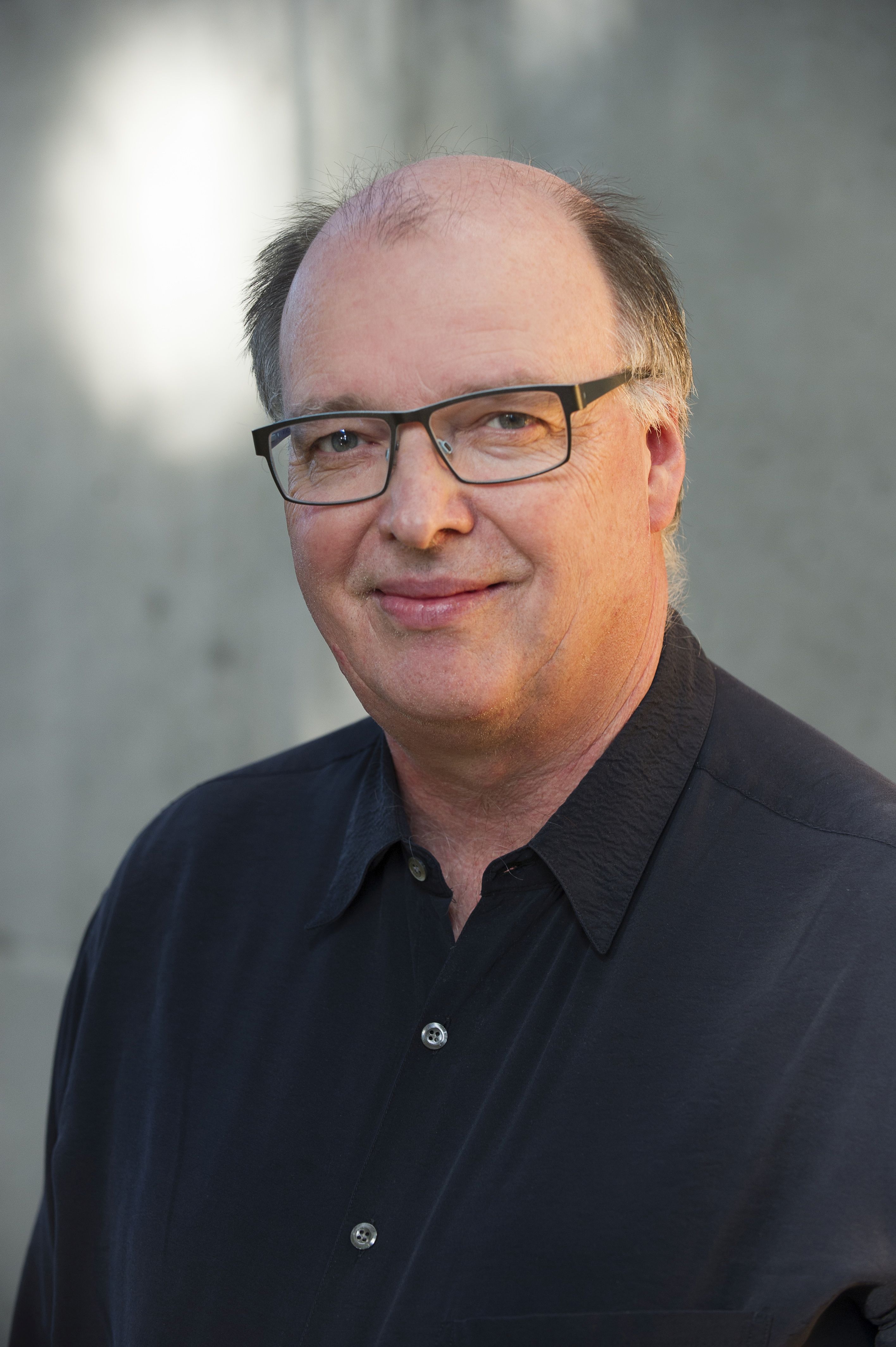 Owen Underhill Interview Image by David Cooper
“Everything can become musical.“
Video
