Published
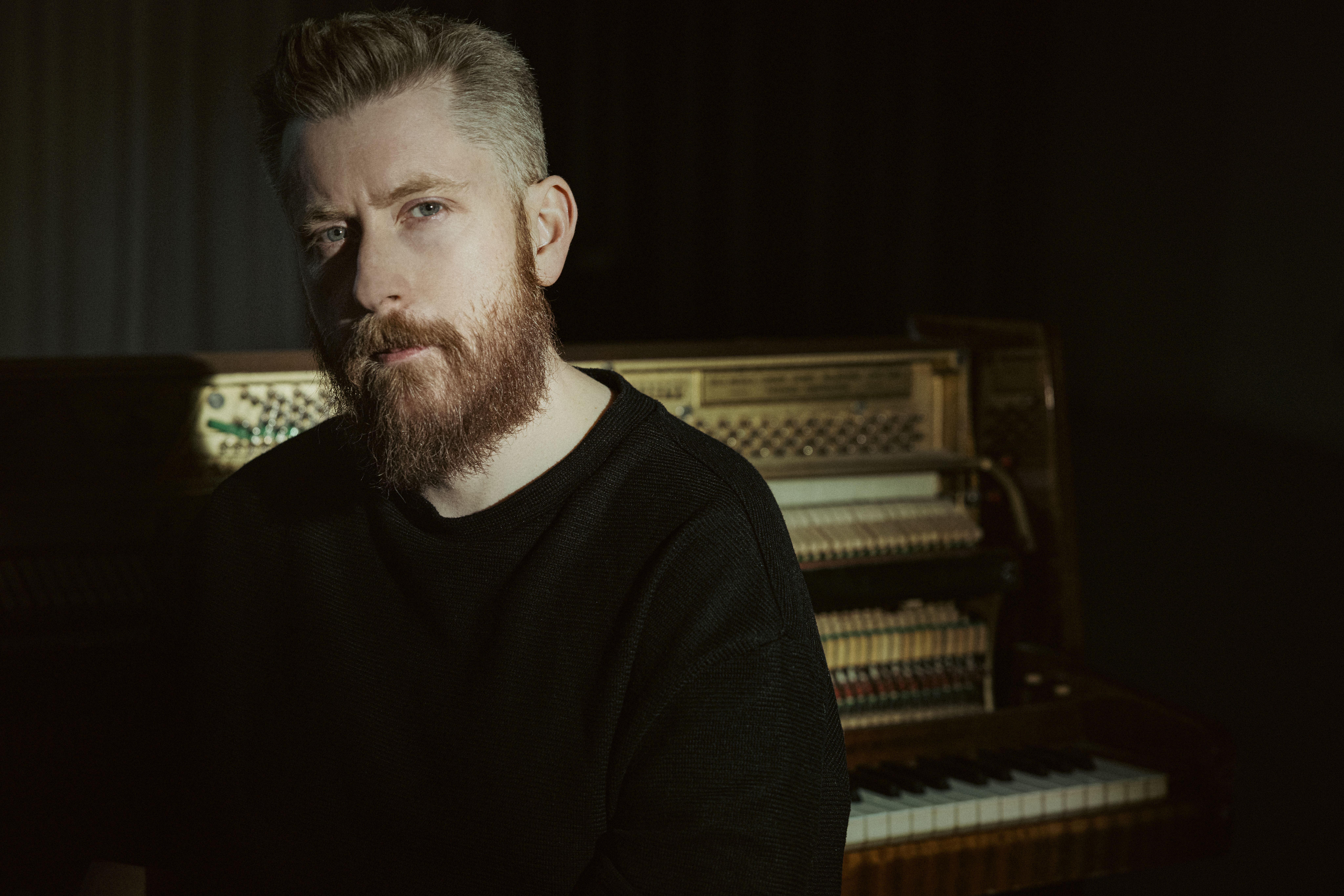
Name: Øystein Skar
Nationality: Norwegian
Occupation: Composer, pianist, producer
Current release: Øystein Skar's new single "Stok" is out via Moderna. His debut full-length solo album Hem will follow May 9th 2025.
Recommendations for his hometown of Oslo: Visit Tim Wendelboe! It is a coffee roastery, espresso bar, and coffee training centre here in Oslo. If you are into coffee.
Topics that I rarely get to talk about: I used to play billiards very seriously, but unfortunately, I no longer have time for it. However, I still think it’s a fantastic game to play.
If you enjoyed this Øystein Skar interview and would like to know more about his music, visit his official homepage. He is also on Instagram, and Facebook.
The borders between producers, sound artists, and even songwriters are becoming increasingly blurry. What does being a composer mean today, would you say?
I find this question both easy and difficult to answer. To me, a composer is simply someone who expresses something through music. Genre and working methods matter little in this regard—it’s about the art, process, message, and meaning behind it.
For me, it’s often not necessarily about the audience or listener either; rather, it’s about my need to say something out loud, to express something, and to put words to feelings—even if no one other than me is listening.
My new single “Stok” was, for instance, all about the inner process. For me, it was more about listening than playing—exploring that mindset. I feel it wasn’t even about composing music.
Many people perceive classical music and contemporary composition as having high barriers of entrance, both for listeners and musicians. What have your own experiences been in this regard?
I sometimes agree, but fortunately, a lot has changed in this area, and I think that even more will change in the future.
I sometimes experience a sense of distance myself, though I’m not entirely sure why.
As of today, what kind of materials, ideas, and technologies are particularly stimulating for you?
There are so many things that inspire me!
If I have to mention something specific, I really appreciate Ableton Live as a tool—there’s something about the openness it allows, and the community around it consists of many good friends and colleagues who have shown me fascinating ways to use the program.
For instance, check out Kristoffer Lislegaard's new album—he is a true master of Ableton and creates beautiful experimental electronic music with it.
[Read our Kristoffer Lislegaard interview]
When it comes to materials, I like to explore interesting preparations for the piano while also recognizing that every instrument I come across is unique and can be inspiring in itself.
I am particularly drawn to reverbs and acoustics as tools; for me, they can transform rooms and spaces, transport the listener to different places, and have a significant impact. I also, of course, draw a great deal of inspiration from other people, books artists, and a bunch of plugins.
[Read our Thomas Lemmer interview which deals in depth with Reverb]
Where do most of your inspirations to create come from – rather from internal impulses or external ones? Which current social / political / ecological or other developments make you feel like you need to respond as an artist?
Before, I found much of my inspiration in the world around me, but lately, it has come from within. I’m in a phase where I deliberately shield myself from external influences—not out of arrogance (it's the opposite), but to create the mental space needed to explore something deeper and more personal.
My latest album, Hem, set for release in May, is rooted in an inward journey. It’s about opening up, observing, and seeking understanding. The album explores fundamental questions: Who am I? What does it mean to be an artist to me? What does it mean to be human to me? What truly matters?
At the same time, I find myself increasingly skeptical of the direction both the physical and digital worlds are taking. In many ways, the process behind this album has been a quiet form of personal activism—a subtle response to the outside world.
Music has become a lot more global, and incorporating elements from other parts of the world or the musical spectrum is commonplace. Do you still think there are city scenes with a distinct, unique sound? How does your local scene influence your work?
There are certainly urban music scenes with distinct and unique sounds. However, in a world that has become so interconnected through digital technology, I find that musical landscapes are also becoming increasingly similar. This is both a positive and a negative development—though, for the most part, I see it as a good thing.
I live in Oslo, Norway, which has a fantastic music scene, and I have been influenced by both the Nordic electronic scene, nordic jazz, and Norwegian folk music. This connection to folk music is also personal, as I come from the Norwegian countryside, where it holds a strong presence.
There are many exciting and inspiring artists here who blend experimental music with folk traditions—for example, my friends in Erlend Apneseth Trio. I highly recommend checking them out!
[Read our Erlend Apneseth interview about the Hardanger Fiddle]
Composing has always had an interesting relationship between honouring its roots and exploring the unknown. What does the balance between these two poles look like in your music?
For me, everything is about exploring the unknown, as that is what I find most fascinating.
History, I feel at least, always shines through regardless in some form or way.
How much potential for something “new” is there still in composition? What could this “new” look like?
From a broad outsider perspective, it may seem as though most genres and artistic expressions have already been explored. It's so much information coming out all the time.
However, I believe there is still a huge potential for new forms of expression. The possibilities are endless, as each individual is unique and has their own artistic voice.
Personally, I am interested in AI. Like many others, I approach it with skepticism and a sense of apprehension. Yet, I also recognize its potential to enable new creative possibilities. It will be fascinating to see how this technology evolves and influences artistic expression in the future - but I am skeptical.
What role do electronic tools and instruments play for your creative process? What does your creative space / studio look like and what tools does it contain?
I used to have a lot of gear in my studio, but 6-7 years ago, I did a major cleanup, selling much of my equipment and synthesizers, and embracing a completely minimalist setup. Good for my brain but that was a huge mistake!!
I have always been a big fan of minimalism, so I need a tidy studio. But now, I find myself investing in equipment again, feeling torn between these two directions. Last year, I bought a Steinway upright piano with an incredible sustain—you can hear it on my single, “Embla.” The piano is the cornerstone of everything I do.
In addition, I have a collection of microphones, preamps, a Mellotron, and several synthesizers. I also just got my old Elektron Machinedrum back from repair and have started using it again—I plan to incorporate it into my live performances this summer!
[Read our feature on the Elektron Machinedrum]
It is my impression that adding a conceptual, non-musical dimension to one's work is almost a prerequisite for commissions and grants. How do you view this tendency and how “conceptual” is your own approach to writing?
That’s a difficult question! It has been widely debated here in Norway as well. I find it to be a complex topic, and it’s not something I focus on too much.
I prefer to set boundaries for myself to create within, and in that sense, you could say I’m “conceptual.” However, I hope I’m not perceived that way.
But I personally like concepts a lot, like some of the Steve Reich stuff, I find them interesting. But for me, it has to be freedom also.
Working with long forms, complex concepts or new vocabulary is potentially more challenging today because they require us to remember things that happened perhaps minutes ago – while most of us are finding it hard to focus even on what's happening right now. Both as a composer and as a listener yourself, how do you deal with this?
Unfortunately, it has become more and more difficult. I try to read books and meditate. Additionally, I focus on training my memory and concentration, and being mindful of what disrupts it—I often say that I focus on focus.
I find it deeply unsettling when I read research on what this technology is doing to us, and I hope and believe there will be a reaction within the next ten years, where people will seriously reevaluate their use of technology.
For many artists, life-changing musical experiences take place live. Few works these days, however, are performed beyond their premiere. What, do you feel, does this mean for composers, and the music they write, and how does this reality influence your own work?
I understand what you're referring to, but I don’t have a clear answer.
Personally, I’m not so affected by this, as I primarily work with music that exists somewhat outside the framework you mention.
How, would you say are live performances of your music and your recording projects connected at the moment? How do they mutually influence and feed off each other?
This is extremely important, and right now, I’m in the process of adapting the music I’ve composed for the album format into a live setting. The two aspects influence each other, and I’m really looking forward to beginning the live process after having spent so much time in composition.
For me, it’s always a bit difficult to let go of the expression I had on the album. I’ve spent a huge amount of time refining every detail, so on one hand, I want to give the audience the exact experience I originally envisioned. On the other hand, it’s liberating to approach it with a fresh perspective.
At the moment, I haven’t fully decided on the balance for the new live performances, but I’m working on it …
To some, the advent of AI and 'intelligent' composing tools offers potential for machines to contribute to the creative process. What are your hopes, fears, expectations and possible concrete plans in this regard?
For me, this is a complex issue, and I’m unsure how I feel about the different aspects of it—I think many people feel the same way. The challenge is that the technology is so new and advanced that we are discussing things none of us truly have expertise in. At least that is the case for me.
My hope is that AI will make us appreciate human creativity and expression even more, ultimately adding value to what it means to be human. My fear, of course, is that we will continue distancing ourselves from our own nature, eventually reducing artistic creation to the mere press of a button.
At that point, we wouldn’t really be creating art anymore—we would have stopped expressing ourselves altogether, and that is an incredibly sad and deeply unsettling thought.
Are there approaches, artists, festivals, labels, spaces or anyone/-thing else out there who you feel deserve a shout out for taking composition into the future?
In Norway, I think the Ultima Festival in Oslo, Festspillene, and the Borealis Festival in Bergen are doing a lot of exciting things.
However, there are so many great initiatives, artists, festivals, and people out there that it feels wrong to single out just three.
The Montreux Festival intends to preserve its archive of recordings for future generations. Do you personally feels it's important that everything should remain available forever - or is there something to be said for letting beautiful moments pass and linger in the memories of those that experienced them?
I’m unsure. Personally, I’ve gained immense joy from listening to preserved music, so I tend to lean towards the idea that everything should be archived, allowing future musicians to choose for themselves where to draw inspiration.
At the same time, I do understand that this probably would take up an enormous amount of space somewhere.