Published
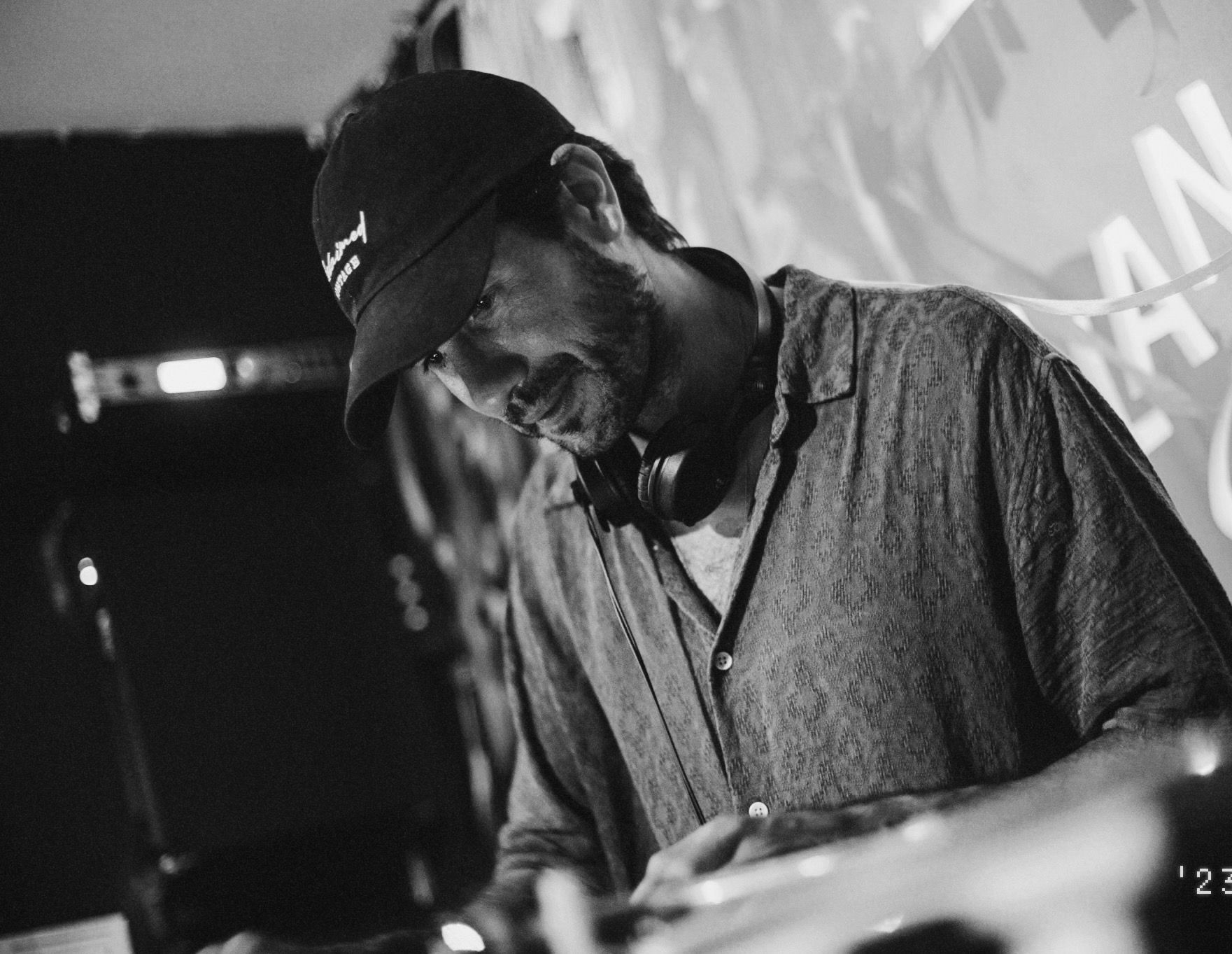
Name: Victor Hernandez Agüero aka Panøram
Nationality: Uruguayan, Spain-based
Occupation: Producer, DJ,
Current release: Panøram's new Visions EP is out via Visions Of Paraiso.
Global Recommendation: I was born in Bilbao. Then, from the age of 3, I lived on the Canary Islands, and now I’m living in Ibiza. I’ll tell you about three places :)
Bilbao – Guggenheim Museum: Always a great place to discover innovative exhibitions.
Fuerteventura – Cotillo Village: Enjoy the freshest fish along the coast in this charming fishing town.
Ibiza – Bar Anita: A classic Ibicencan spot where you can feel the old spirit of Ibiza while enjoying a coffee.
Topic I am passionate about but rarely get to talk about: My biggest passion is music, but I also love other things, like interior design, fashion, walking in nature, reading, football and spending time with family and friends.
If you enjoyed this Panøram interview and would like to stay up to date with his music, visit him on Instagram, Soundcloud, and bandcamp.
The path to becoming a producer is a process - but from many interviews, I am under the impression that there are nonetheless one or a few defining moments. If this was the case for you – what were they and why were they so incisive?
I first got in touch with music production around 2012.
Back then, I was collaborating with friends in their studio sharing ideas and learning from them. That said, I still didn’t know how to use all the tools properly to produce good music. During the pandemic I had more time to learn and dive deeper into this world, and I fell in love with it.
Another important point was my desire to grow as an artist. I had been DJing and clubbing for a long time, and I felt the motivation to take the next step. Nowadays, I think it’s essential to create your own sound in order to truly make a difference.
Tell me about one or two of your early pieces that you're still proud of (or satisfied with) in terms of production – and why you're content with them.
Every piece I create is special to me—I always put a lot of love and work into each one.
But if I have to choose right now, I’d say that on my first EP, the track “1.984” makes me especially proud. I feel the whole production came together really well: all the elements blend perfectly and it creates a beautiful journey.
Another track I’d highlight is “Visions A1.” I think the combination of the vocal and the drum moments can create a really special atmosphere in an underground club.
In how far, would you say, was your evolution as an artist connected to the evolution of your music set-up and studio? Were there shared stepping stones?
I felt a big improvement when I switched to bigger speakers. Finally I could really feel the low frequencies and was super important for me to mix good the kick with the bass. Sounds basic but helped me a lot.
Another important step was introducing new analog elements like the Roland JU-06A and the Minimoog Analog Bass.
But to be honest, the most important jump didn’t come from the gear. It came slowly, step by step, through the hours of work it takes to develop your own sound and master the technical process.
There are artists who can realise their ideas best with a traditional – or modified – piano interface, others with a keyboard and a mouse, yet others by turning knobs or touching screens. What's your preferred and most intuitive/natural way of making music and why?
Normally I start working with just a keyboard and a mouse. I feel comfortable with that setup.
But I’m thinking about getting an analog drum machine. I think it could help me be more intuitive and natural in my workflow.
Tell me about the space of your current studio/workplace and how you've set it up to optimise creativity.
For me, the workspace is really important. I like having organic elements around—wood, plants, colors, and natural light. These things usually make me feel good and inspired.
But sometimes my best creative moments happen at night, with less light and more darkness.
From the earliest sketches to the finished piece, tell me about the production process for the Visions EP, please.
The process of creating this first EP was a beautiful journey. I was still in a deep learning phase, so it took me a long time.
Late producer SOPHIE said: “You have the possibility with electronic music to generate any texture, and any sound. So why would any musician want to limit themselves?” What's your take on that?
I totally agree. One of the reasons I love electronic music is the infinite range of sounds you can create.
I appreciate the past and the classic ways of doing things, but I try not to limit myself. I’m always looking to introduce something new into my tracks to keep evolving.
Tell me about your aesthetic preferences for picking effects like reverb, delay, compression, chorus etc … - what was the role of these effects in the production of your current release?
All those effects are important for creating a special sense of atmosphere,space and movement.
I use all of them, but with different emphasis and intensity.
Producers work with sound in a very direct way for very long stretches of time. What are some of its qualities that you appreciate now more than before, and how do you try to bring these to the fore in your work?
One of the things I appreciate is when you hear tracks that use just a small set of elements but still flow really well and never become boring. I’ve learned that less is more.
Another thing I value now is the mixing stage. I can feel how certain decisions make a track feel faster or slower, for example, the way you mix the hi-hats can change the vibe of the track.
The current production process allows for fast and infinite variations. Can you tell me about how you deal with this potential for the infinite and what ultimately decides on how many iterations to create and which version to release?
I’m an perfectionist and sometimes I need time to decide which version is better. But in the end, you have to take a risk and accept that the track is done, because there’s always something you could change.
I was a clubber before becoming a DJ and producer, and if a track makes me dance or makes me close my eyes, that’s important, I need to feel it.
Tell me about the role collaboration played in your recent productions – and how you see the potential for machines as collaborators compared to humans.
Collaboration is really important, you can learn a lot from it.
I think human collaboration is especially valuable for finishing the process of an EP, for example with mastering, mixing, or artwork. I know you can do all of this yourself with machines nowadays, but I prefer working with humans, both for the creative input and to support the industry.
We can watch videos on production, take producer courses, and exchange deep insights on gear forums. Amidst these options to improve one's chops/skills, how do you keep things playful?
I like personal courses, online is not for me.
Last month, I took one about mixing. It’s important to never stop learning in this job.
AI is already capable of making something most people would recognise as music. I am curious, though, and will keep this question somewhat broad on purpose: What do you think that means?
Yes, I think AI can do it right now. I would like there to be rules requiring people to state whether a track was made by AI or a human. AI can be helpful, but for me, the human touch is key.
It also depends on the artist, some can make music with AI and still put their name on it, while others use ghost producers to create music for them. To me, that feels fake and like a big lie, but I respect all the options.
Creativity can reach many different corners of our lives. Do you personally feel as though producing a piece of music is inherently different from something like making a great cup of coffee? What do you express through music that you couldn't or wouldn't in more 'mundane' tasks?
I think through music you can express deeper feelings.
It’s incredible how a song can change depending on the moment you’re in life. It can become more melancholic or more joyful, and you can also express past feelings or experiences.