Published
Name: Paradoxant
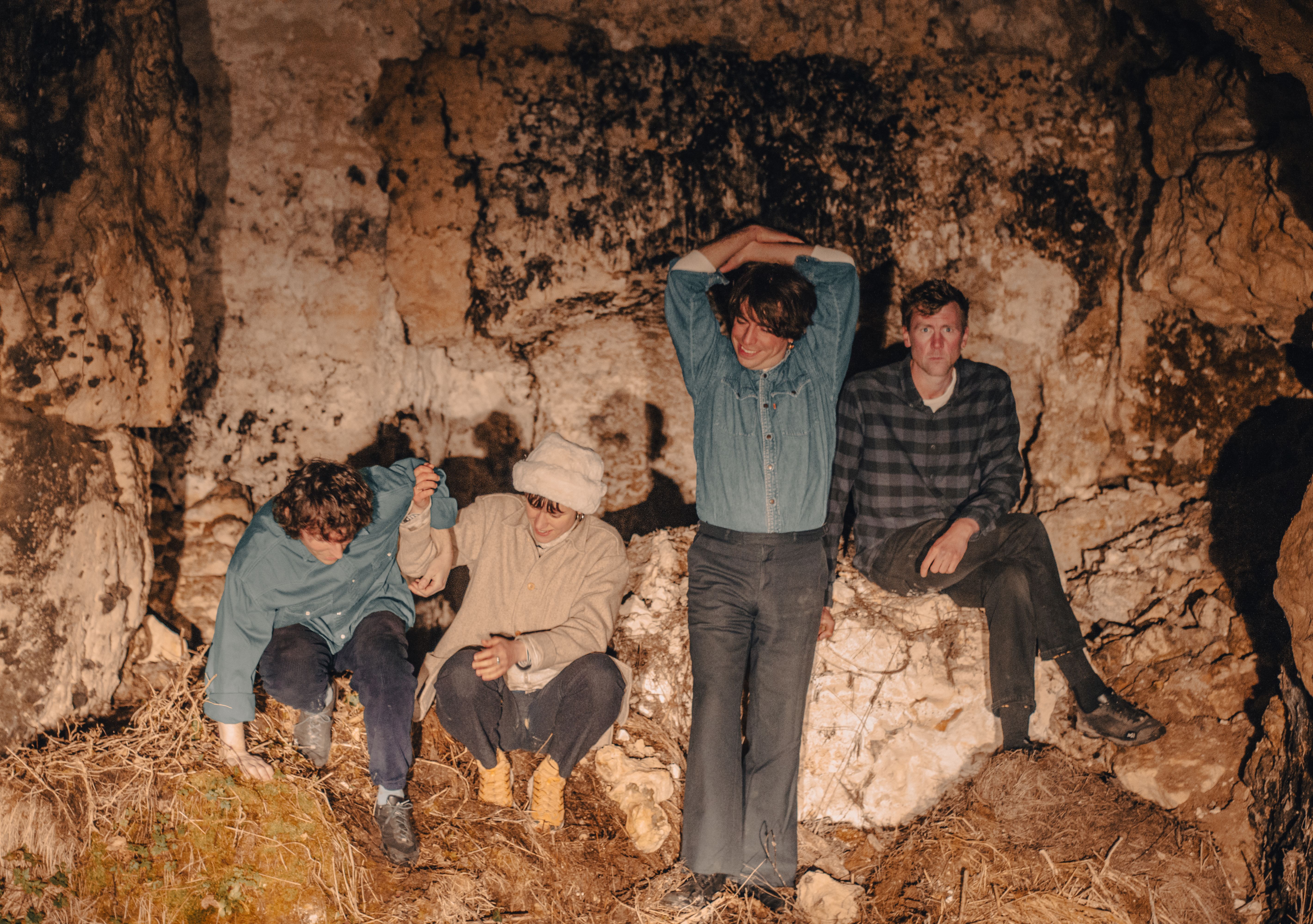
Members: Antoine Meersseman, Romain Benard, Lou Wéry, Clément Marion
Interviewee: Antoine Meersseman
Nationality: Belgian
Current release: Paradoxant's new album Deux is out via Humpty dumpty.
If you enjoyed this Paradoxant interview and would like to stay up to date with the band and their music, visit them on Instagram, Facebook, and bandcamp.
When it comes to experiencing the sensation of “energy” as as a listener, which albums, performances, and artists come to mind?
I think of the creative energy of Genesis P. Orridge, an artist I admire greatly.
Her multiple projects (Psychic TV, Throbbing Gristle) often display an energy that is radical, sometimes poetic, sometimes political.
[Read our Psychic TV's Edley ODowd interview]
[Read our Throbbing Gristle's Cosey Fanni Tutti interview]
There can be many different kinds of energy in art – soft, harsh, healing, aggressive, uplifting and many more. Which do you tend to feel drawn to most?
I think I particularly like it when a song is on the borderline between two energies: when you don't know whether the song is happy or sad, whether you should dance or stay calm.
I have had a hard time explaining that listening to death metal calms me down. When you listen to a song with a particular energy, does it tend to fill you with the same energy – or are there “paradoxical” effects?
Yes, it's true that extreme music can be very relaxing.
I'm thinking, for example, of Fuck Buttons' first album, Street Horrrsing, which I listened to a lot when it came out. Its drones clearly had a meditative quality.
In as far as it plays a role for the music you like listening to or making, what role do words and the voice of a vocalist play for the transmission of energy?
I wasn't a big fan of “singers” before discovering Future Islands' album In Evening Air.
At the time, Samuel T. Herring had a truly mesmerizing vocal energy (in addition to his dancing, which made him famous!).
I remember watching this video over and over again in 2010, an unforgettable vocal performance.
When it comes to experiencing the sensation of “energy” as as a creator, how would you describe the physical sensation of experiencing this energy? [Where do you feel it, do you have a visual sensation/representation, is there a sense of release or a build-up of tension etc …]
With my former band (BRNS), I realized that I really enjoyed shouting and that it made me feel physically better. It releases a lot of tension.
In the song “Jamais sans Personne” by Paradoxant, I shout a somewhat silly slogan throughout the entire song.
It's a kind of joke, but it feels really good to sing!
When it comes to composing / songwriting, are you finding that spontaneity and just a few takes tend to capture energy best? Or does honing a piece bring you closer to that goal?
Often, we record a first take without thinking, and the sound is a bit rubbish. In many cases, the studio work consists of recording things while trying to recapture that initial feeling.
But often we don't succeed. It requires ‘letting go’ of the first take. Or keeping it even if it sounds lo-fi. Most of the time I choose the second option.
I'm thinking of the guitar I composed in the intro to “Modern Lie.”
I tried to do it better 30 times, but I couldn't get the same groove back!
How much of the energy of your own music, would you say, is already part of the composition, how much of it is the result of the recording process?
It's a bit unusual because I compose the basics of the songs alone, behind a computer. That's not how I would define good creative energy.
Often the takes I record at that point end up in the final mix. I keep a lot of bass lines and synths that I think work well with the energy of the moment; I don't systematically redo everything.
But I find that, overall, the records have something rather artificial. Composition and sound recording form a whole, something like the little chemistry experiments you do at home.
For Deux, what kind of energy were you looking for?
The previous album had a rather lo-fi feel to it: on ‘DEUX’ I wanted it to sound quite polished. I wanted a modern energy, something quite in-your-face, going a little bit to the extremes.
With Daniel Bleikolm (who mixed the album), we really put distortion and spring reverb on as many elements as possible!
One of the most successful tracks in terms of production, in my opinion, is ‘Les Abîmes’!
How do you capture the energy you want in the studio?
The most important thing is to get good drum takes! Energetic takes in a nice room.
After that, the rest will fall into place naturally.
What role do factors like volume, effects like distortion, amplification, and production in general for in terms of creating the energy you want?
It definitely makes a difference. On quite a few tracks, there's a mix of drum machines and drum recordings.
So we decided to really “wet” the drums, like on the outro of “Rêve bizarre,” where the drums are super distorted.
On “Temps libre,” we reamped a drum recording from our demo.
Each song has a strong bias. My demos were already really fun, but Daniel really took them to the next level. He's a sound wizard!
In terms of energy, what changes when you're performing live on stage, with an audience present, compared to the recording stage?
Since the album is quite polished, it took a lot of work to make it work well live.
We decided to make the set much more rock-oriented than the album, playing in a fairly classic configuration: guitar, bass, drums, keyboard. We worked hard to make the set both fun and powerful.
We've just come back from a 10-day tour in France and Germany and we're really happy with the result. We try to do something very direct, with a few moments of madness during the set!
How does the presence of the audience and your interaction with it change the energy of the music and how would you describe the creative interaction with listeners during a gig?
We make music that's a little weird, but we don't want it to sound experimental to a snobby audience.
The goal is for the set to be fun, with lots of musical “jokes,” and to get the audience to come along with us.
What kind of feedback have you received from listeners or concert audiences in terms of the experience that your music and/or performances have had on them?
The other day after a concert in Biel, Switzerland, a very excited guy came up to me and said that he thought he was going to see a pop band, but that we were actually a punk band!
I couldn't have asked for a better compliment.
Would you say that you prefer to stay in control to be able to shape the energy or do you surrender to it and allow the music to take over? Who, ultimately has control during a live performance?
There are certain songs, like “Sometimes” for example, where we let ourselves go and do something very intense.
I think his circus-like side drives us a little crazy!
The energy that music is able to generate can be extremely powerful. How, do you think, can artists make use of this energy to bring about change in the world?
Fascism isn't far off, we're watching genocide unfold before our eyes.
Artists are being told to shut up, I think we need to speak up even more!