Published
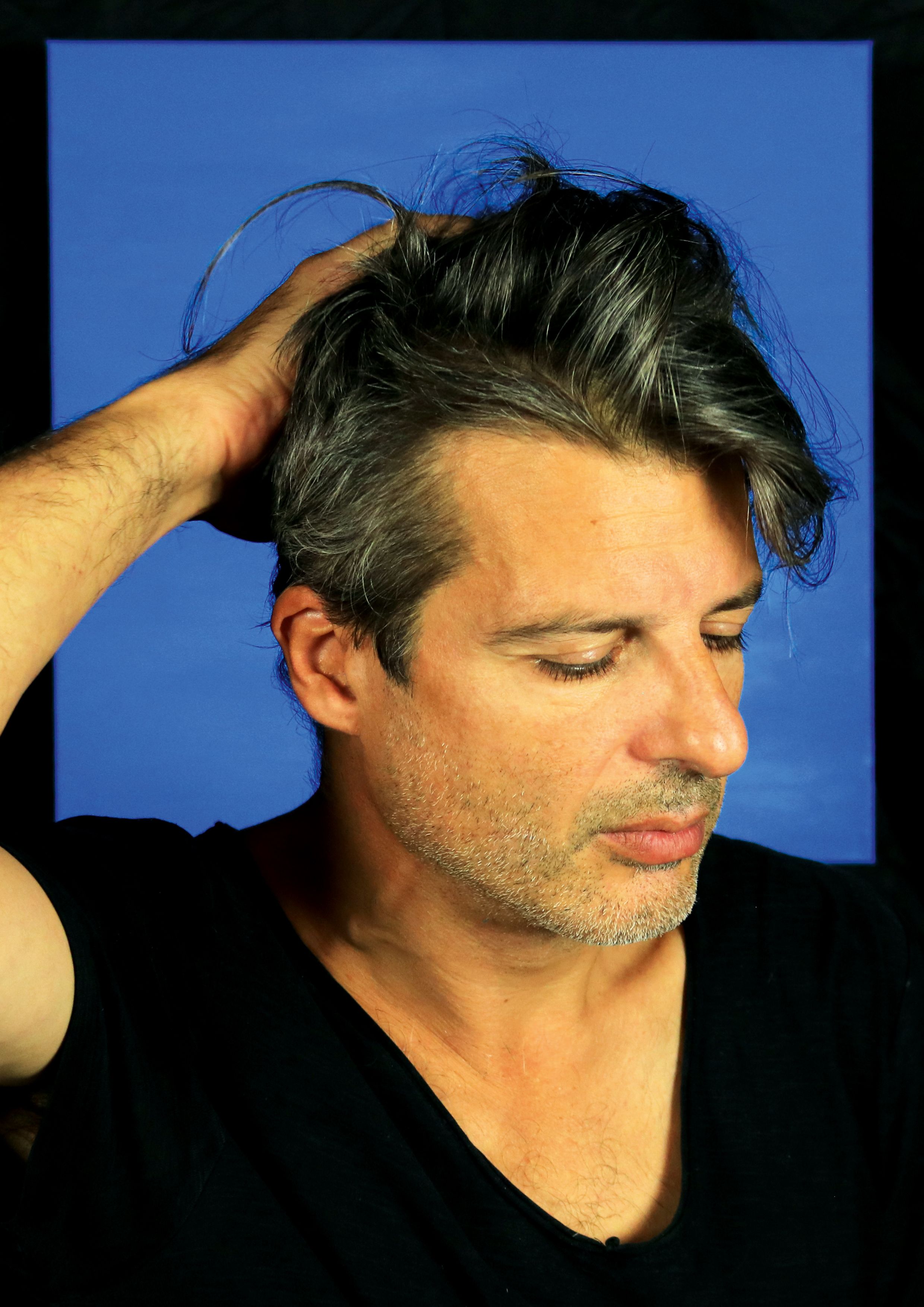
Name: Patrick Christensen aka PC Nackt
Nationality: German
Occupation: Composer, producer, multi-instrumentalist, performance artist
Current Release: PC Nackt's Angabe der Person is out via Naked Rec. The record release party which is also the inaugural night of his new label Naked Rec will take place at Deutsches Theater Berlin on June 9th 2024.
Recommendations: Everything by American composer Moondog. The life of this man was a complete piece of art!
Erich Fromm: To have or to be, a book that inspired me to believe in the positive potential of every moment!
If you enjoyed this PC Nackt interview and would like to stay up to date with his music, visit him on Instagram, and Facebook.
Where does the impulse to create something come from for you? What role do often-quoted sources of inspiration like dreams, other forms of art, personal relationships, politics etc play?
I've always had this drive to create. Not just works of music but also poetic bubbles of encounters between people.
Each fantasy becoming alive seems to show that everything could always be different - a glimpse of opportunity, hope and power. Making this sense of self-efficacy tangible and inspire people to regard themselves as creators, not as victims of circumstances, is probably my greatest motivation in inventing - alongside my own joy in doing.
For you to get started, do there need to be concrete ideas – or what some have called a 'visualisation' of the finished work? What does the balance between planning and chance look like for you?
There are both: the planned work and the unplanned, given moments of the mysterious flow. I love the unplanned pieces with gratitude, but without an overall idea of reason they would lead nowhere!
A music theatre like "Der Einzige und sein Eigentum" @DeutschesTheater is made up of a "best of holy chaos" and consciously constructed stretches that give the whole thing the form and structure it needs to communicate as intended.
Is there a preparation phase for your process? Do you require your tools to be laid out in a particular way, for example, do you need to do 'research' or create 'early versions'?
There is a time of meandering, in which I wait for the moment when I am confident that I have the right creative impulse to realize my idea. This lurking for the moment usually lasts much longer than the time at the piano and runs constantly in the background during my everyday life as a father or on the sofa.
This can look like a phase of inactivity to outsiders. But in reality, it is an invisible charging towards eruption.
Do you have certain rituals to get you into the right mindset for creating? What role do certain foods or stimulants like coffee, lighting, scents, exercise or reading poetry play?
I generally avoid ritualized processes.
Apart from the constant, curious exploration of the world through life, art, science and philosophy, there are no explicit actions before creating.
What do you start with? And, to quote a question by the great Bruce Duffie: When you come up with a musical idea, have you created the idea or have you discovered the idea?
I usually get started by making assertions and imagining certain states that I want to achieve with a certain set of tools, instruments or groups of people.
Apart from these assertions, I don't feel that I ever had a truly original idea. My doing seems to contemplate cultural history and feels like a contemporary approach to concepts herited.
Many writers have claimed that as soon as they enter into the process, certain aspects of the narrative are out of their hands. Do you like to keep strict control or is there a sense of following things where they lead you?
In the state of WORKING, which is about achieving specific goals, I'm quite controlled, although all doors remain open to chance. After all, supposed mistakes can eventually produce great things!
On the other hand, when I'm in the state of PLAYING, which is about being alive, I'm curiously looking for unconscious progression, in order to discover new spaces.
Often, while writing, new ideas and alternative roads will open themselves up, pulling and pushing the creator in a different direction. Does this happen to you, too, and how do you deal with it? What do you do with these ideas?
To get things done efficiently but with a magical quality, the trick is to find the right balance between determination and openness.
I‘m constantly alert neither to get lost in options, nore to dismiss unexpected routes which make my idea stronger.
There are many descriptions of the creative state. How would you describe it for you personally? Is there an element of spirituality to what you do?
In my experience, when you do something with dedication, focus and passion, you always reach states of spirituality and thoughts of philosophy!
Art has always been my path to the questions of existence, music my access to experiencing the unknowable.
Once a piece is finished, how important is it for you to let it lie and evaluate it later on? How much improvement and refinement do you personally allow until you're satisfied with a piece? What does this process look like in practise?
I like to trust my first impulse and since I don't shy away from mistakes, I easily accept a piece as the product of a particular moment. That's different when it comes to compiling, for example, an album like Angabe der Person. The latter is about the big arcs and about mentally stepping away from the microscope.
For this shift in perception, it helps me to leave things lying around as well as changing location. For this, I go on my boat and listen to everything uncarefully through bad speakers, with sunglasses on.
When you're in the studio to record a piece, how important is the actual performance and the moment of performing the song still in an age where so much can be “done and fixed in post?“
I myself don't like records constructed in the box as much as recordings in which unique moments between people have been captured. This certainly has to do with my love of records from the 50/60/70s (Miles Davis, Beatles). That's why I always try to play pieces in one go and hit the perfect moment in front of the microphone.
After that, it can be fun to program contexs that change everything around such a performance, as long as the human element of the original performance remains perceptible at the core.
Even recording a solo song is usually a collaborative process. Tell me about the importance of trust between the participants, personal relationships between musicians and engineers and the freedom to perform and try things – rather than gear, technique or “chops” - for creating a great song.
I run my own great studio in Berlin,Neukoelln, the "ChezCherie" with everything I need to be happily creative by myself.
But still, running a label and releasing music naturally requires teamplay - and as creating art and having a life is basically the same in my case, trust and a deep personal relationship with the people I work/live with is eminent! I need to know where people are coming from and why they are doing what they are doing to fully appreciate their feedback, suggestions and even love.
With these few people's approval in my back, I can confidently share my ideas with the world.
What's your take on the role and importance of production, including mixing and mastering for you personally? In terms of what they contribute to a song, what is the balance between the composition and the arrangement (performance)?
Production, and arrangement should never be actually experienced by the listener. I want music to sound authentic and pure, as if there could have been no other possible way for this piece to sound or be arranged. Mozart, Gil Evans, Georg Martin, Quincy Jones … all composers / producers / arrangers who outlast time were great masters at that.
It requires a lot of skill and taste to achieve that sensation of naturalness - that's one of the many things I'm constantly working on!
After finishing a piece or album and releasing something into the world, there can be a sense of emptiness. Can you relate to this – and how do you return to the state of creativity after experiencing it?
The way my life is organized (composing, performing concerts, running a label ...), there are not really valleys or peeks of energy - I am busy creating all the time.
There are constantly multiple projects running simultaneously and each day seems an equally rich opportunity to become creative. So, no post-peak-depressions for me. :)
Music is a language, but like any language, it can lead to misunderstandings. In which way has your own work – or perhaps the work of artists you like or admire - been misunderstood? How do you deal with this?
To me, music is a narrative-free zone. It aims to ressonate and create certain emotional states of conciousness, not to provide information.
So there can't really be neither an understanding, nor a misunderstanding of music, only bad timing: if the music’s energy doesn't fit the audiences‘ in a particular moment or place, it will fail to connect and not create a moment of togetherness.
Creativity can reach many different corners of our lives. Do you personally feel as though writing a piece of music is inherently different from something like making a great cup of coffee? What do you express through music that you couldn't or wouldn't in more 'mundane' tasks?
Leading a joyful and sustainable life is an artform and requires the same qualities as beeing succesfull at anything else. I can't distinguish between personal relationships, making a good breakfast or writing an opera - the personal attitude, love or hate, will always define the outcome.
As a performer, I see my strength in showcasing the power of passion, dedication, confidence, optimism and love.