Published
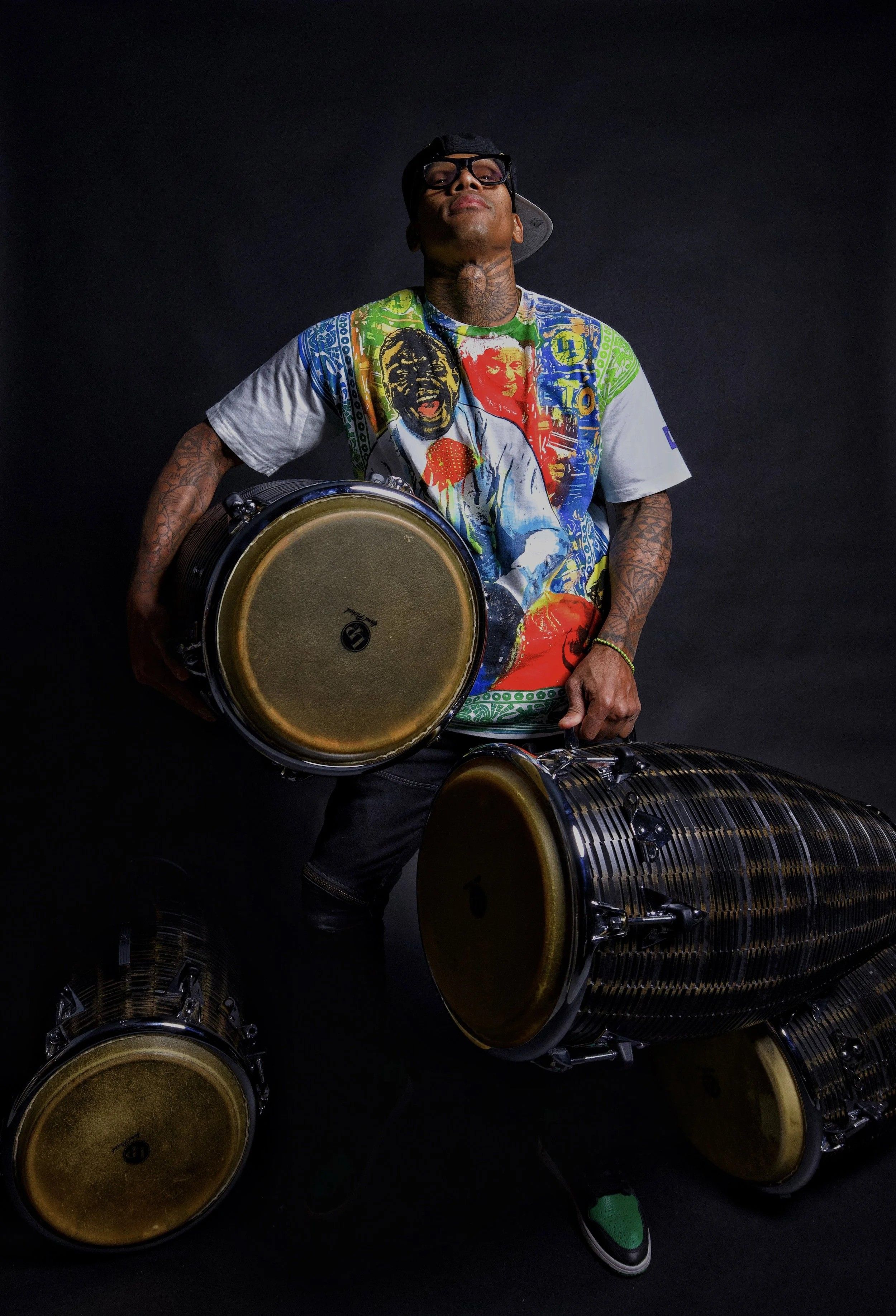
Name: Pedrito Martinez
Nationality: Cuban
Occupation: Percussionist, vocalist, composer, improviser
Current release: Pedrito Martinez teams up with Michael League and Antonio Sánchez for their album Elipsis, out via GroundUP.
If you enjoyed this Pedrito Martinez interview and would like to stay up to date with his music and upcoming live dates, visit his official homepage. He is also on Instagram, and Facebook.
When did you first consciously start getting interested in singing? What was your first performance as a singer on stage or in the studio and what was the experience like?
I became consciously interested in singing quite early, almost naturally, through my immersion in music rather than as a separate decision. Singing was always present around me, so it felt less like choosing an instrument and more like discovering something that was already there.
My first experiences singing on stage and in the studio were deeply emotional. I remember feeling exposed and vulnerable, but also free. It was the first time I realized how direct and honest the voice can be as a form of expression.
If you’re also playing other instruments, how does the expressive potential of these compare to your own voice?
Other instruments give me structure, texture, and rhythm, but the voice feels different—it carries intention in a more immediate way.
Instruments extend my ideas outward, while the voice feels like it comes directly from within. There’s a physical and emotional proximity with the voice that no instrument can fully replace.
Singing is an integral part of all cultures and traditions. Which of these do you draw from – and why?
I draw heavily from Afro-Caribbean, Afro-Cuban, jazz, and popular music traditions. These cultures use the voice not just melodically, but rhythmically and spiritually.
Singing in these traditions is about storytelling, community, and identity, and that resonates deeply with who I am and how I understand music.
What were some of the main challenges in your development as a singer/vocalist? Which practices, exercises, or teachers were most helpful—and were there also harmful ones?
One of the biggest challenges was learning patience and trusting my natural voice instead of forcing it to sound like something else. Breath control, body awareness, and listening were crucial. Working with teachers who emphasized healthy technique and authenticity was very helpful.
Harmful experiences usually came from trying to over-sing, pushing range or volume without proper support.
What are the things you hear in a voice when listening to a vocalist? What moves you in the voices of other singers?
I listen for truth, phrasing, and intention. A technically perfect voice doesn’t move me as much as one that carries honesty, vulnerability, and a clear sense of identity.
What moves me most is when a singer sounds fully present and emotionally committed.
How would you describe the physical sensation of singing?
Singing feels like vibration moving through my body—chest, throat, head, and even the spine. When it’s flowing well, there’s a sense of release and grounding at the same time.
Tension usually signals that something is disconnected, either physically or emotionally.
We have a speaking voice and a singing voice. Do these feel like natural extensions of each other?
Yes, I see them as part of the same spectrum. Singing is an extension of speech—just more intentional, heightened, and musical.
The closer my singing feels to natural speech, the more honest and sustainable it becomes.
How do you see the relationship between harmony, rhythm, and melody? Does rhythm affect your singing?
They are inseparable. Rhythm, in particular, is fundamental to my singing. Honing my sense of groove and time has deeply affected my phrasing, articulation, and freedom as a vocalist.
Rhythm gives the melody its shape and direction.
What are the potentials and limits of your voice? How much control do you want?
The potential of my voice lies in its character and adaptability. Its limits remind me to stay honest and creative within my range.
I aim for balance: enough control to serve the music, but enough openness to allow spontaneity and emotion.
Singing allows whispering, screaming, revealing secrets, confronting truths. How do you relate to the audience?
Singing creates a unique freedom—it allows me to communicate things that words alone cannot.
I see the relationship with the audience as a shared emotional space. The more honest I am, the more open that connection becomes.
Tell me about the vocal performances on Elipsis.
I focused on clarity, warmth, and rhythmic intention.
I wanted my voice to feel grounded and human, highlighting phrasing and storytelling rather than virtuosity.
When writing lyrics, do you sense a connection between voice and text?
Absolutely. Words need to feel right in the mouth and body. Certain phrases only work if they resonate vocally and emotionally.
Singing my own lyrics feels more personal, but interpreting someone else’s songs allows me to bring my own voice and perspective into a shared story.
Strain is a serious issue. How do you take care of your voice?
I prioritize rest, hydration, proper warm-ups, and listening to my body.
When the voice feels strained, the best remedy is often silence, gentle exercises, and patience—never forcing recovery.
How has technology impacted singing?
Technology like autotune and effects can be powerful tools, but they shouldn’t replace expression or identity.
I use technology creatively, not as a crutch, always aiming to preserve the natural character of the voice.
Recording the human voice is tricky. What makes a voice sound great on record and live?
Great vocal recordings capture intimacy and presence. Mic choice, environment, and performance mindset matter greatly.
Live, it’s about connection, energy, and responsiveness.
How connected is the human voice to your wellbeing, creativity, and society?
The voice is deeply tied to my sense of self and wellbeing.
Singing helps me process emotions, connect with others, and participate in a collective cultural dialogue. It’s one of the most human forms of expression we have.