Published
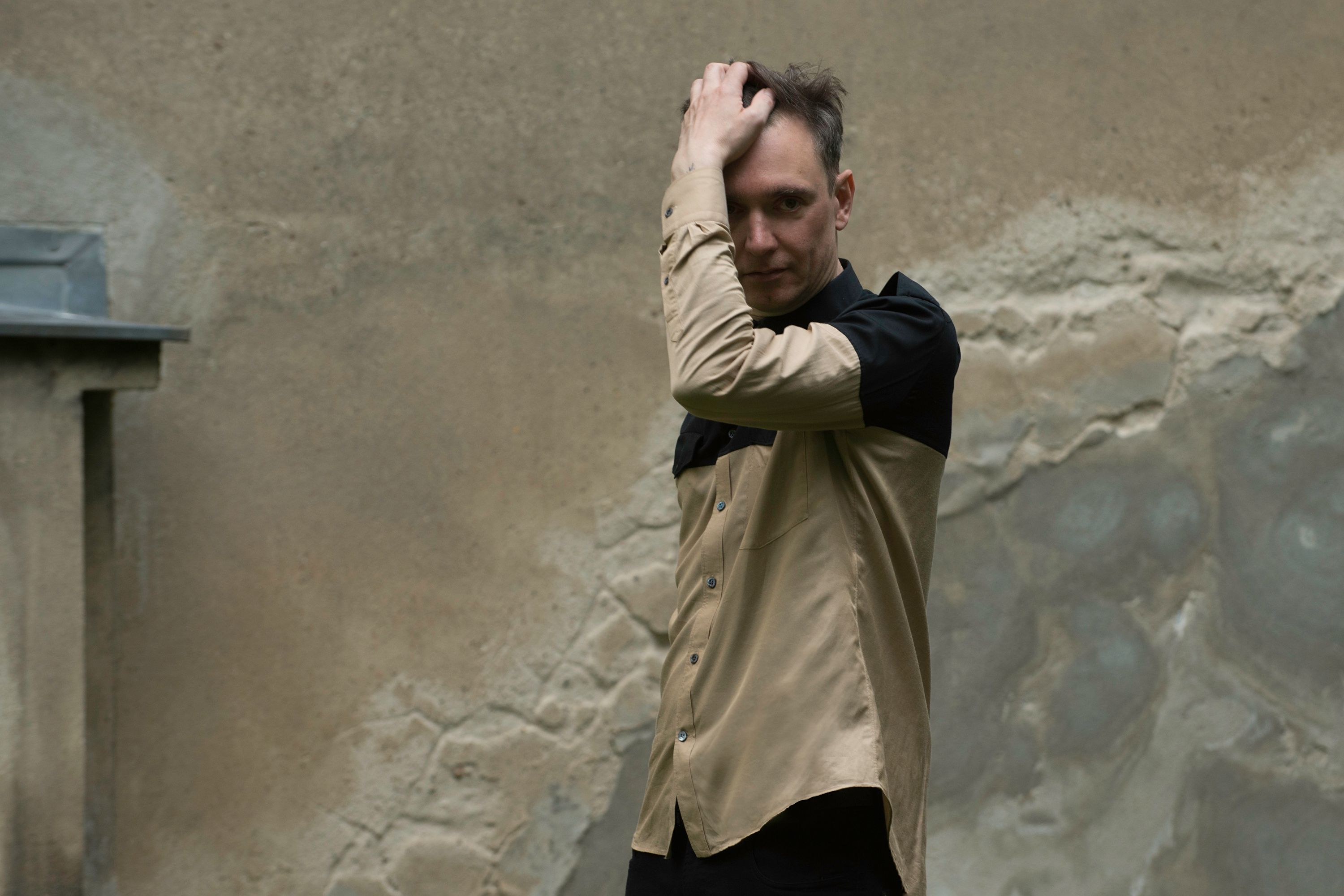
Name: Peter van Hoesen
Nationality: Belgian
Occupation: Producer, composer, mastering engineer, DJ, label founder at Time to Express
Current release: Peter van Hoesen's Prime Directive EP is out via Reclaim Your City. (Also available on Soundcloud)
If you enjoyed this Peter van Hoesen interview and would like to know more about his music and upcoming live dates, visit him on Instagram, Soundcloud, and bandcamp. For more information on his mastering services, visit Memento Mastering.
Debates around production tend to focus on gear. What, though, were some of the things you learned by talking to colleagues or through performing and/or recording with other musicians? What role does community play for your interest in production and getting better as a producer?
It is true that many producers and musicians tend to focus on gear but that is not the focus for me.
Gear comes and goes. In the end I believe that if equipment and tech are your focus then you are missing the point as a creative person. It is important to have all the necessary tools at hand, but it is not a goal in itself. In my opinion the gear is there to support the art. As a result I tend to steer away from discussions about technical issues when meeting with colleagues. There are two exceptions to that rule, people whom I have know a long time and whose advice I tend to follow.
I do not really hang out on forums so I can’t really say that community (whatever that means) plays a big role in my personal development. The act of repetition combined with constant studying is what works for me. Just doing stuff over and over again is how I try to improve myself.
Would you describe yourself as a very “technical” person with a natural affinity for technology, gadgets, electronic circuits, software, etc …? What is your relationship with technology in- and outside of music?
No, not really. Again, I am interested in technology but only in the context of helping me to create.
For instance, in the case of my mastering studio I am interest in technology in order to serve my clients in the best way possible. If I am convinced that a piece of software or a hardware processor really helps me to improve the quality of my mastering work then I will acquire it immediately.
But in the end it always is about serving a bigger purpose, which is the music itself.
The word “production” as a separate item from “composition” suggests a creative processes with different stages. Do you see it that way – or are all the steps towards a piece of music always integrated and connected for you?
I think it could be both, depending on the moment and the people involved. It is not a black or white thing in my opinion.
For instance, certain tracks of mine were composed and mixed in one movement. Others were created using several steps, in different stages. But in the end these stages are always connected, one thing following another. Any way you tend to look at it, it all connects.
I feel it is important to try and distance yourself from discussions which tend to go towards a binary view of the world. Production versus composition, hardware versus software, there are so many of these topics out there which are reduced to this binary proposition. This perspective eliminates so much richness and variation,
I find it uninteresting to think like this. Do not choose between A or B, have them both.
In how far, would you say, was your evolution as an artist connected to the evolution of your music set-up? Were there shared stepping stones?
I had the good fortune to be able to make a living creating and performing music. This allowed me to gradually acquire certain instruments and pieces of equipment. This collection definitely shaped my music along the way.
However I believe the biggest moments of progress were made during difficult times, when I had to question myself and my music. When one arrives at these moments you need to confront certain truths about why one is creating and what for. Finding answers to these questions and living up to them is where the biggest stepping stones lie for me.
Improving and growing as an artist is a mental process, not a hardware one.
There are artists who can realise their ideas best with a traditional – or modified – piano interface, others with a keyboard and a mouse, yet others by turning knobs or touching screens. What's your preferred and most intuitive/natural way of making music and why?
It changes over time. There was a period when it was all digital. After that it became a hybrid affair for many years, which then developed into a deep fascination for hardware. This went on for quite a while, to the great detriment of my bank account.
Recently I moved into a much more fluid state, my preferences are changing quite a bit these days. It does seem like it is linked much more to the project at hand rather than to a philosophy about how one should be creating music. I can make music on an iPad on Monday, record it through the tube processors on Tuesday, and then add sounds from a modular setup on Wednesday.
In the end it is all the same, what matters is if it satisfies me and if it touches people somehow.
Tell me about one or two of your early pieces that you're still proud of (or satisfied with) in terms of production – and why you're content with them.
The first release on Time To Express, Trusted EP, comes to mind.
It was made with limited means in a not-so-good sounding studio. I managed to create the sound I was after, and that is still to this day the biggest satisfaction linked to that EP.
I am still happy when I play these tracks. Obviously they also mark the beginning of a long chapter, so that is another reason why I choose this EP.
Tell me about the space of your current studio/workplace and how you've set it up to optimise creativity.
My entire studio has recently been redesigned purely for the purpose of mastering. It has been acoustically optimised, streamlined and conceived with only this goal in mind. This means that producing music requires a couple of extra steps these days.
For instance I need to create a small setup in case I want to use hardware. This setup then sits on the side, maybe for a week or two. That is enough time for me to extract what I need from it. Lately I have been composing exclusively in the digital realm, so that simplifies the process. I enjoy creating the sounds digitally and then running them separately through the analog mastering to add extra colour and body.
Everything then goes back into the computer for the final mix, mainly using Bitwig. In the computer realm everything is optimised so that I can move quickly. I have different Bitwig templates set up for different types of work. This allows me to work without too many unnecessary interruptions.
Overall I feel that the recent change has had a very beneficial effect on my creativity. The studio feels more purposeful, with less instruments around there are less distractions. Whenever I feel as if I need to use a specific instrument I will take it out of storage and hook it up and play around with it until I have what I need. Then it goes back to storage.
Late producer SOPHIE said: “You have the possibility with electronic music to generate any texture, and any sound. So why would any musician want to limit themselves?” What's your take on that?
100% in agreement with this statement. To each their own but to be honest I do not understand why one would not try and create something new with all these possibilities at hand.
This is something I have always felt with regards to synthesizers. Back in the day developers were trying to emulate acoustic instruments with synths. I do not understand the motivation for this approach. I would rather try and find a sound which has not been made before, or at least one which I came up with myself.
But that is just me. I completely get it why people are still making acid techno, it can be fun to do. But it's not for me.
Do you see a benefit in getting an external producer on board for your studio work? Do you see a benefit in recording or refining at least parts of your music in an external studio?
Sure, that could have all sorts of benefits. Having a trained outside ear is a good way to improve, provided that this person has not other interest than to improve your creativity. I think it is the same with mixing and mastering, the outside ear can always bring something new and refreshing to the table.
But I guess in many cases it is a question of cost. For electronic music I have the impression there are no real production budgets available to most artists. As far as I know budgets for outside involvement are usually oriented towards mixing and mastering, less towards production.
Have you used AI or generative music tools for your own productions? If so, in which way and what did they add?
I have experimented with some of the tools, mainly to see what is out there. I believe it is important to stay up to date on these developments.
However I have not yet integrated any of these tools into my workflow, there simply was no need for it. This might change in the future depending on the project and the state of the technology. It it helps me create then I will keep an open mind towards it.