Published
Names: Philip Samartzis (PS), Michael Vorfeld (MV)
Nationality: Australian (Philip Samartzis), German (Michael Vorfeld)
Occupation: Percussionist, improviser (Michael), Sound artist, scholar, curator (Philip)
Current release: Philip Samartzis and Michael Vorfeld collaborate on Air Pressure, based on Samartzis's recordings from trips to Antarctica. The album is out now via Room40.
If you enjoyed this interview with Philip Samartzis and Michael Vorfeld and would like to know more about their music, visit Philip's homepage on the site of RMIT University and the official homepage of Michael Vorfeld.
For a deeper dive, we recommend our Philip Samartzis interview about the role of art in activism.
Your most recent album on room40 makes use of field recordings from journeys into the Antarctic. What were your main personal motivations to not just dream about but actually go to these places?
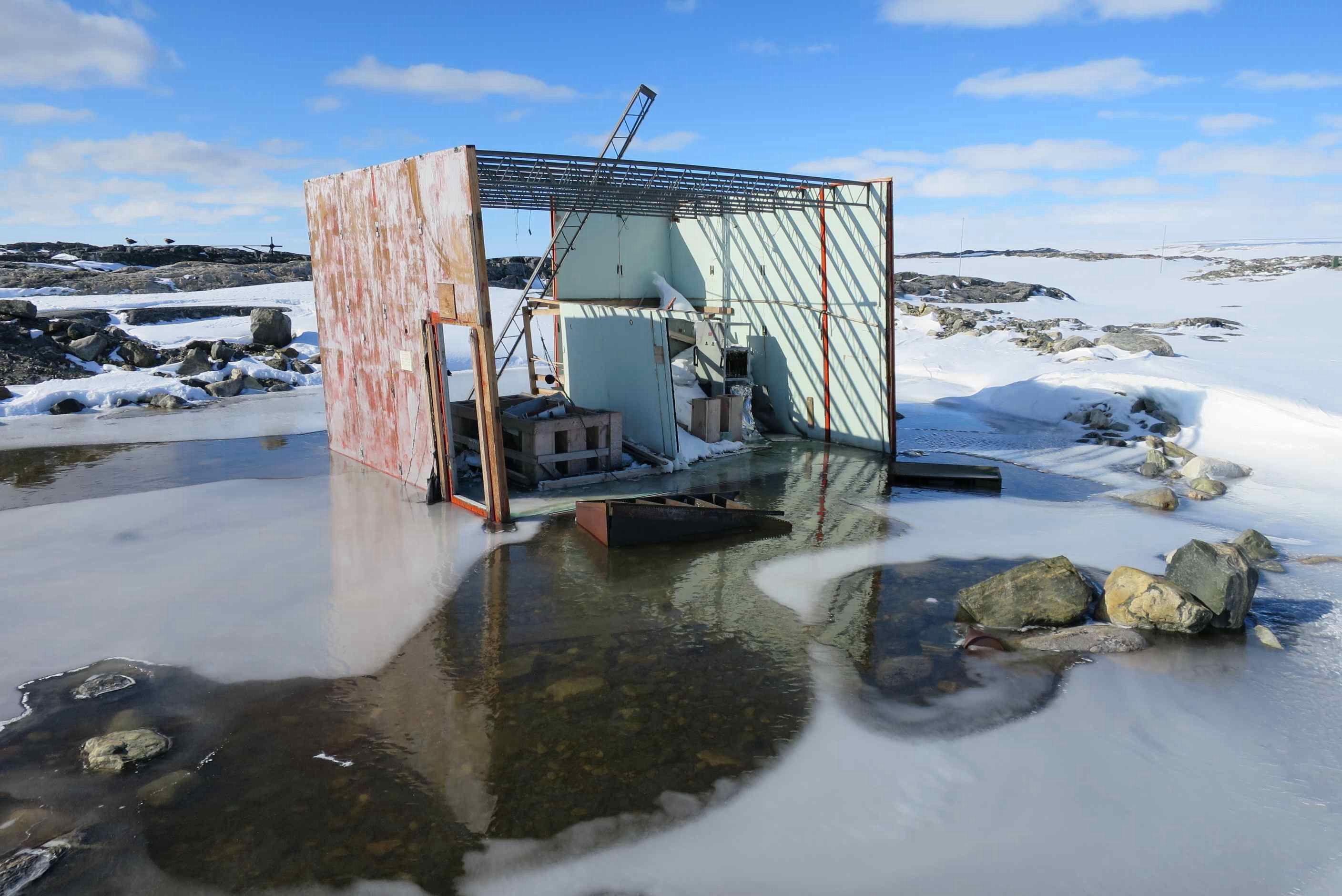
PS: I travelled to Antarctica driven by a fascination with its unique and often inaccessible soundscapes. As a sound artist and researcher, I wanted to capture the natural and human-made sounds that define this remote, extreme environment.
From the hum of wind brushing against glaciers to the eerie creaks and groans of melting ice, each sound reflects Antarctica’s harsh climate and shifting landscapes. Through these recordings, I aim to highlight the fragility of this environment and make the impacts of climate change more tangible.
For me, documenting Antarctica’s soundscapes offers a way to connect others to this mostly inaccessible polar region, using sound to deepen understanding and foster a sense of urgency about the rapid transformations affecting it.
Capturing recordings of wind, the way I understood it, is actually quite complex. How did you approach it in terms of your choice of equipment and setting it up?
PS: Recording wind in Antarctica requires a precise approach with the right equipment and setup. The wind is a key part of the soundscape, and capturing it means selecting microphones that can handle extreme conditions while reducing distortion. I use high-quality windshields to cut down on noise interference, ensuring I capture the wind's true sound without the rustle of the equipment itself.
Choosing the right location is also essential. I look for spots where the wind interacts uniquely with the environment, such as crevices, ice fields, or structures. These interactions offer varied sound textures, enhancing the story of the landscape. I position microphones carefully, sometimes placing them low to pick up subtle wind currents or higher to capture stronger gusts. Air Pressure is a culmination of these techniques drawing particularly on recordings of air turbulence and structural stress.
To record the sounds of glaciers and icebergs, I use hydrophones, which are designed to capture underwater sounds. This allows me to listen to the internal cracking and shifting within the ice, providing a fuller picture of the environment. Setting up in such harsh conditions means ensuring the equipment is secure against strong winds, often using creative anchoring methods such as freezing mic stands into the environment.
Air Pressure is based on recordings from 2010 and 2016. What did it feel like to listen back to them as part of the more recent improvisations for the album?
PS: These recordings exist as moments in time and revisiting them has generated a mix of nostalgia and reflection. Integrating them into new projects like Air Pressure felt like bridging past and present, allowing me to reinterpret and reshape their significance in collaboration with Michael.
The evolving context of these recordings added depth to the performances, highlighting changes in my artistic perspective over time. The process offered a fresh lens through which to engage with and reinvigorate the familiar to advance creative boundaries.
MV: I felt that Philip consistently reworks his recordings to create new mixes, suggesting there's never a final version. This approach means I can collaborate with a fresh and evolving piece, even if it's based on older recordings. I never feel like I'm playing along with a static, finished work that restricts reinterpretation. His dynamic process ensures each performance feels innovative and open to new interpretations.
Air Pressure is not just a collection of field recordings, it also contains “musical responses.” When, how and why did the idea behind this approach come up?
MV: As I recall, the idea of collaborating by exchanging audio files and merging Philip's field recordings with my instrumental music arose during the Covid pandemic. Just before Covid hit, Philip had invited me to participate in a major exhibition at the Murray Art Museum Albury, showcasing some of my visual work and my audiovisual project, Light Bulb Music. I even secured travel funding from the City of Berlin, where I live. Unfortunately, Covid restrictions prevented me from travelling to Australia, so the exhibition went ahead with my artwork, but without me being there.
I vividly remember hearing the first piece Philip sent me. The intensity and depth of the sounds felt as if I were listening to music. Despite being natural soundscapes, the recordings had such a compelling narrative that they seemed like a musical composition. It was gratifying to add my instrumental layer to this piece, complementing its natural voice.
Later, once travel restrictions eased, Philip was invited to a festival in Berlin. We seized the opportunity to collaborate in person, combining field recordings and instrumental music. Being together allowed for immediate feedback and discussion, contrasting with the earlier, remote collaboration.
Ultimately, we created a cohesive work through two distinct yet unified approaches to sound production.
What do you still remember about the improvisation sessions?
MV: The term "improvisation" usually implies a musical piece created spontaneously in real time. However, since I had the chance to revisit Philip’s recordings multiple times, which remained consistent with each listen, I approached the process in a more compositional manner. My recordings alongside Philip’s sounds could also be iterated in various versions. This approach might be better described as "compovisation," blending composition and improvisation.
Moreover, my technique on percussion and stringed instruments focuses less on traditional rhythmic patterns and harmonies and more on creating rhythmic structures and sound events that incorporate a wide range of noises. Philip’s recordings, rich in open rhythms and diverse sounds, deeply inspired me. I immediately recognized the potential for collaboration, as our acoustic worlds complement each other well, despite being distinct.
This partnership seamlessly merges our differing approaches to sound production, offering listeners a unique and harmonious experience.
Even the most intense work of art can sometimes fall flat. What's your take on this difference between experience and the art created from that experience after this journey?
PS: The difference between personal experience and its interpretation through art lies in how it’s conveyed to others. Art’s strength is its ability to distil and share complex emotions, offering new perspectives and evoking empathy. It can universalize personal experiences, making them accessible.
However, a weakness is that nuances might be lost or misrepresented, and biases can affect accuracy. Balancing authenticity with creativity is key to making art that resonates effectively.
MV: While creating an art piece can be intense and the outcome isn't always satisfying, this collaboration has been different. As my own toughest critic, I found both the process and the final result of this joint effort to be intensely rewarding and powerful.
Listening back to our work has been especially gratifying, marking this collaboration as a particularly fulfilling artistic experience.