Published
Name: Louis Wyzgowski aka Pocket
Nationality: Scottish
Occupation: Producer, arranger
Current release: Pocket's “Another Night in London,” featuring GBNGA, is out via Helix.
Recommendations: Most likely most of your readers will be aware of him already, but mk.gee’s new record Two Star and the Dream Police. It’s the coolest sonic palette on a record I’ve heard in so long. The guy is just a wizard. I don’t have much to say about it other than get the whole album on.
And secondly, my friends ‘rEDOLENT’ - they’re a band based out of my hometown Edinburgh, who make really cool records that feel like a mix of indie pop and alternative or ambient electronic in some cases. Such a tight unit and absolutely rip live. Couldn’t recommend a band more, if you’re looking for something catchy they’re the one.
If you enjoyed this Pocket interview and would like to stay up to date with his music and work, visit him on Instagram, and Soundcloud. Support him directly on Patreon.
Do you think that some of your earliest musical experiences planted a seed for your interest in production and technology?
When I was young my dad used to have various Boss and Tascam 4 track recorders around the house. I would tinker with them and try to record little songs. My interest in music production came initially from wanting to record myself playing drums and guitar, recording covers of bands I liked at the time.
My interest in making electronic music only came when I was about 15 and my friend showed me Fruity Loops Studio. Had never considered pursuing production in that way, but something about the ability to do it all myself within the box spoke to me.
That, paired with a Prodigy CD I got from my brother one Christmas, sealed the deal.
What were your very first active steps with music technology and how would you rate the gains made through experience?
I learned about DAWs from a close friend. I had recently been getting into various kinds of electronic music and liked the idea of trying to recreate the songs I was enjoying and figure out how I would make my own.
It was a LOT of trial and error. I was and am completely self taught, so it was a case of figuring out what everything did based on how it sounded. I didn’t know what EQ or compression was for the first 6 months or something, so everything sounded awful. But I would find my own ways of getting things to sound how I wanted.
I think that’s genuinely the most valuable tool a producer can have in their set, the idea of exploration over structured learning. I learned so much more via play than I think I could have learned in an educational environment. I was using bass patches as chord synths and learning synthesis by ear so everything sounded a bit weird.
Were/are you interested in the history of production and recording? If so, which events, albums, artists, or insights stand out for you?
Early on I was only focused on what was right in front of me. I had no point of reference about the process of making music so I was really just doing what felt right in the moment.
Now however, I'm really into the era of stereo mixes that were happening in the 60s and 70s. I'm a big Beach Boys fan and have been listening to the Pet Sounds stereo mix a lot. I think there’s huge potential for it to have applications in modern electronic music.
I’m interested in seeing how more ambient and ethereal styles could be changed by deciding on space to mix out stereo, putting all the individual elements in a room or in their own respective ‘physical’ space. There’s something really satisfying about that, I think we collectively gave up on it too early.
I also think the fascination with ‘lofi’ or tape inspired mixes is cool. More than anything I enjoy the ones that feel intimate. I think a lot of what's missing when people try to emulate that in more of an electronic format is that they just crush everything under low pass filters and vinyl emulation plugins. But I love the warmth and closeness you can get out of tape recordings.
It kinda goes hand in hand with the stereo mixes in the sense that it’s just another way to get things sounding like you’re there in the room while it’s being recorded.
Making music, in the beginning, is often playful and about discovery. How do you retain a sense of playfulness and how do you still draw surprises from tools, approaches, and musical forms you may be very familiar with?
I download a lot of new plugins fairly frequently to try and feel that as often as possible. So much of it is just using parts of your tools that you’re less likely to turn to instinctively. A lot of times I'll just ask myself what the least likely thing I should do right now is, then I'll do that.
I bought these cards called ‘oblique strategies’ by Brian Eno and Peter Schmidt a little while back. They’re essentially idea helpers that give you vague and interesting creative directions, for example “Look closely at the most embarrassing details and amplify them” or even things like ‘do the washing up’. Things that get you out of your head are often the best way to push yourself into new directions in my opinion.
Generally, I find sometimes you just need to use your tools in ways they weren’t intended to get new results.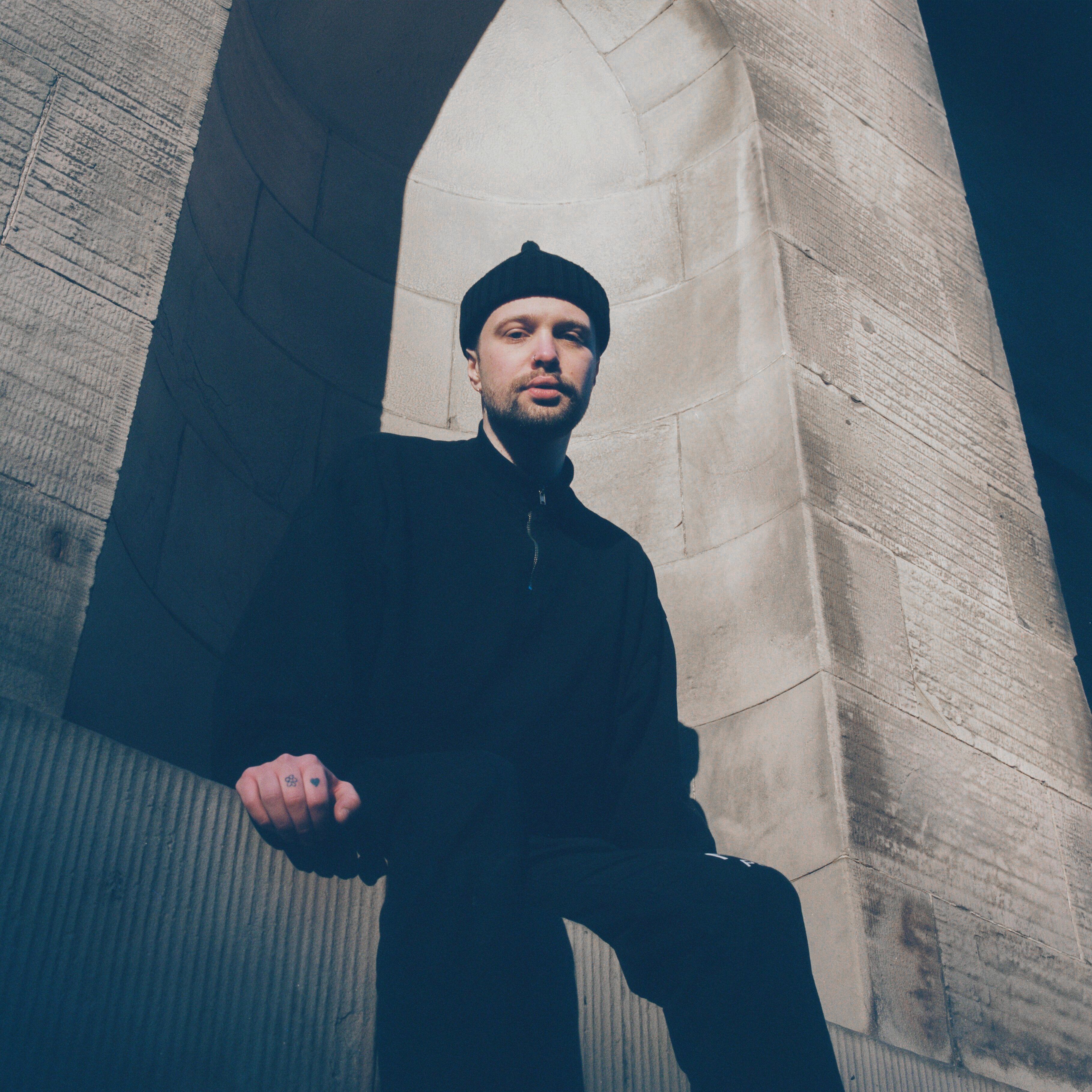
Pocket Interview Image (c) the artist
How and for what reasons has your music set-up evolved over the years and what are currently some of the most important pieces of gear and software for you?
I haven’t really updated my setup since I started, apart from getting new computers over the years. I make everything with just my laptop and headphones.
I would eventually like to make the switch and work in a space that’s more fleshed out but I've always been a big fan of the simplified way. I like being able to access everything I need wherever I am. I would genuinely say my most important piece of gear is my phone. I record so much into my voice notes that it ends up in the final song, be that vocals or percussion. It’s the most easy to access and gives you the chance to put ideas down wherever and whenever.
Already as a little kid, I was drawn to all aspects of electronic/electric music but I've never quite been able to put a finger on why this is. What's your own relationship to electronic sounds, rhythms, productions like – what, if any, are fundamental differences with “acoustic” music and tools?
I've always been a huge fan of both, but I think what drew me to electronic music was the potential for ingenuity. When I first started diving into dance music and electronic music as a whole I was in awe because I'd never heard many of those sounds before.
I think being able to be a one person band and craft entire worlds within your laptop is such an amazing thing. You can hear a sound you like and learn how to make it then and there. You could create entire sound design projects for film using the same skills you learned making beats.
I think it has far more potential for wider applications and for those who like to lose themselves in the adventure of it there’s no better way to get those ideas down.
Late producer SOPHIE said: “You have the possibility with electronic music to generate any texture, and any sound. So why would any musician want to limit themselves?” What's your take on that and the relevance of limitations in your set-up and process?
As a huge SOPHIE fan and admirer, I always loved her ethos. I think it’s true, and going back to what I said before, you can create these otherworldly sounds anywhere if you want to.
So much of what makes electronic music great in my opinion is escapism. It’s not that different from a video game or a book. You can start a song with one sound you like and end up moving through hundreds of ideas, soundscapes, textures, worlds over the course of a day and you’re only limited by what you can imagine. It sounds corny but it’s true.
I think there’s something to be said for how timeless an acoustic instrument is and that’s electronic artists still regularly use them in their productions. But sometimes there’s an itch there to take those more well known sounds and take them somewhere new - and you truly can't do that without technology.
From the earliest sketches to the finished piece, what does your current production workflow/process look like?
It’s messy, always has been. I probably finish like 1 in 30 ideas. It really comes down to how I feel about the idea in the moment. If I love it, I'll most likely finish it within a couple of days. Everything that doesn’t make me feel anything in the moment just gathers dust.
I have never had any specific workflow but for the most part it's always intuitive based on what feels authentic to me at the time.
Rhythm, sound design, melody/harmony, something else – when do the different elements of a piece come into play for you?
I think they’re all at their best when they’re working together. I spend a lot of time on rhythm these days. I’m super inspired by Burial, that's one of my heroes, so I think a lot of my rhythmic sensibility came from him.
It's so much more than figuring out the exact swing percentage and more so just doing everything by feel. I think if the groove sits nicely in the pocket then that's all that matters.
I think when working with melody you can get so much with so little. One of my closest friends, Duskus, is a big example of this. He creates such memorable melodies with 4 or 5 notes and always makes sure he’s not overcomplicating it.
I think sound design plays a huge role in that too, if your melody is really simple you can kind of mask that with sound design. The right combination of a simple melody and well made sound is unbeatable.
In relation to sound, one often reads words like “material”, “sculpting”, and “design”. How does your own way of working with sound look like? Do you find using presets lazy?
There’s room for different kinds of production when it comes to this. I come from a sound design heavy background so it’s always been a part of my process, but more and more, as time goes by, I'm turning to using simpler sounds and quite often presets.
My view on it has changed with time, when it comes to the sound designing yourself vs using presets argument. At what point are you making music to impress other producers and forgetting to make music that can be enjoyed by everyone?
A good song is a good song, and that’s exactly why so many songs that are based almost entirely on samples are still so great. The song comes first ultimately, it really depends on what serves it best. That may be a heavily designed bass sound in one case, or a simple square wave pluck in another. It’s just a case by case problem.
What, to you, are the respective benefits of solo work and collaborations and do you often feel lonely in the studio? Can machines act as collaborators to you?
For the longest time I didn't want to collaborate too much because I was so set on proving myself. Some part of me believed that if I was working with others, then people might not fully understand what I could do. But nowadays it's so far from the truth. I collaborate a lot on other artists’ projects and aim to have my friends way more involved in my future records.
I think there are SO many benefits of collaboration. Firstly just having fresh and new ideas that you wouldn’t usually come up with yourself. And I think there’s so much to be said about the energy you get in a room of collaborators that isn’t present when you’re on your own. Something about your friends hyping you up and everyone getting super gassed when you come up with something cool. That’s the best feeling in the world.
I don't think a machine can truly be a collaborator, because for me, the basis of collaboration is in relationships. It doesn’t really matter what someone brings to the table in terms of physical contributions, but the companionship in that moment is the most important thing. Someone to say ‘I don't like that’ or ‘that’s the one’ or ‘what if we did this weird thing?’ Machines unfortunately can’t offer us friendship yet, but when they do, then maybe it’ll be different.
If you could make a wish for the future directly to a product developer at a Hard- or Software company – what are developments in tools/ instruments you would like to see and hear?
I love plugins and hardware that throw conventions out the window.
I would love to see more soft synths that are based around exploration and play, with less labels and knobs that tell you exactly what they do. I think it's fun for us to be able to pick up a piece of software or a hardware instrument that we don’t have any knowledge on but it instantly sounds great and has an intuitive workflow. Something that is enjoyable for beginners and professionals alike.