Published
Name: Porcelain
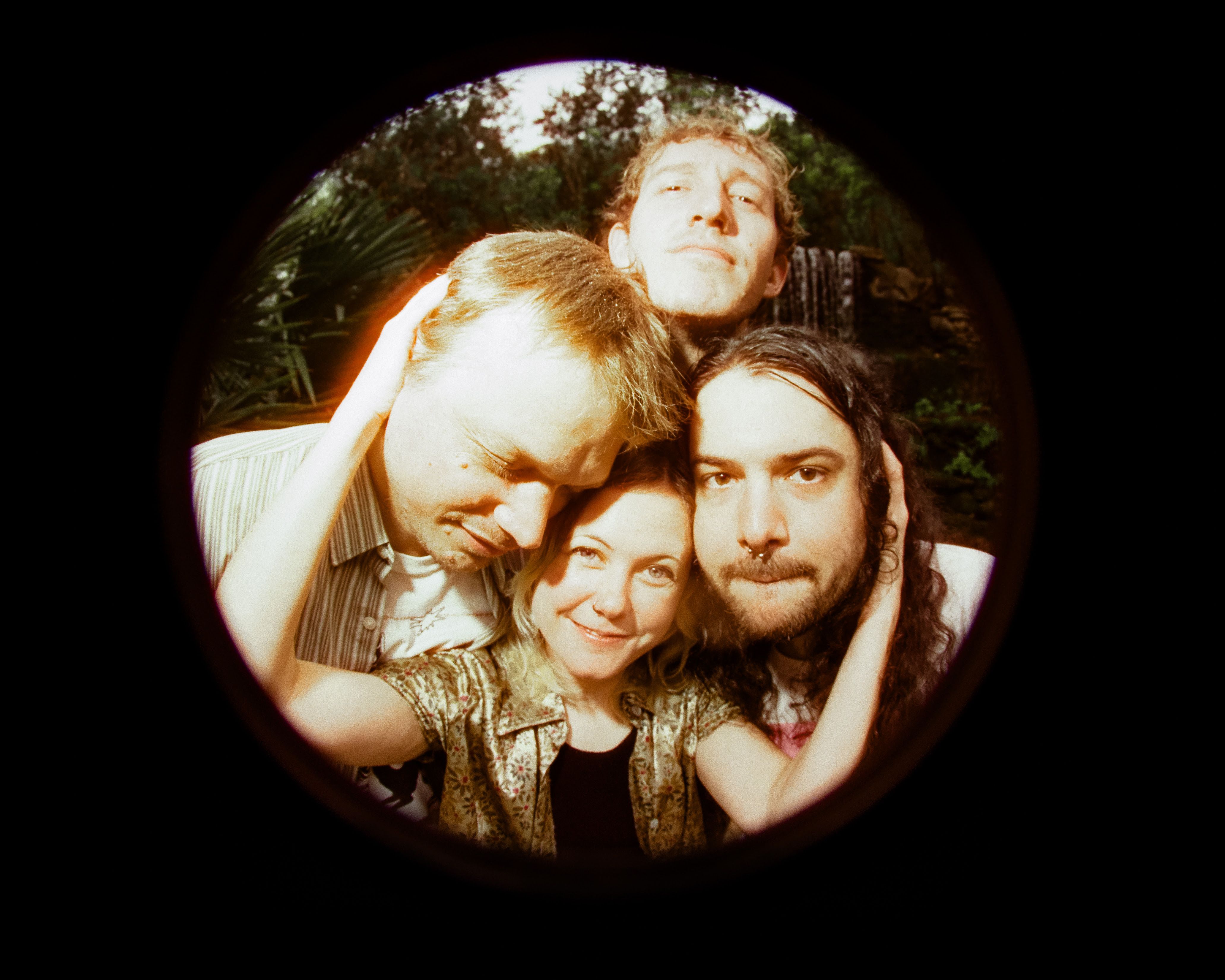
Members: Steve Pike (vocals, guitar), Ryan Fitzgibbon (vocals, guitar), Jordan Emmert (bass), Eli Deitz (drums)
Interviewees: Steve Pike, Jordan Emmert
Nationality: American
Current release: Porcelain's new single “Harmony” is out via TODO. Pre-order the limited 7'' vinyl edition here.
Recommendations for Austin, Texas, USA:
JE: Austin is hot most of the year so you really can’t go wrong with Barton Springs or Deep Eddy.
Topics we are passionate about but rarely get to talk about:
JE: I actually feel like I talk about all of the things that I’m passionate about entirely way too much, to the point that I usually just end up boring people, so I’ll just end it here.
If you enjoyed this Porcelain interview and would like to stay up to date with the band, visit them on Instagram, and bandcamp.
When was the first time you noticed you were drawn to darker themes and moods in music, literature or the movies?
JE: Probably when I was a teenager. I lived in a small town for awhile that was isolated and I was an outcast at my school. I was weird, emotional, and looking to find darker and sadder music. Nirvana was my gateway band.
SP: Yeah, for me it’d have to be within music as a teen. Just searching for things that resonated with me, or music that I thought adequately expressed some of the youthful angst I felt.
And as it goes, the first time I heard Nirvana it just struck a chord. Not to completely steal Steve’s answer, but that band truly opened the door to so much other heavy music and art, neither of which were exactly readily available to a kid growing up in rural Texas.
“Darkness” is, of course, not strictly speaking a term related to sound. What constitutes darkness to you, especially in instrumental terms?
SP: I associate it with tone, phrasing, and dissonance.
But darkness doesn’t necessarily mean ugly or gross, there’s beauty hiding in the darkness. Take a night time stroll in nature, you’ll find beauty in the wind, the moonlight, and the stillness.
How would you describe the physical sensation and possible attraction of being exposed to darkness in music?
SP: Comforting, warm; a sense of belonging and understanding.
I’m chronically depressed, so finding art that can resonate and make me feel less alone in a world that stigmatizes mental illness.
Does your interest in darker musical themes extend into extra-musical fields such as fashion, or politics?
SP: Fashion, no. I don’t really put any thought into it. I’m more of a utilitarian when it comes to that stuff.
Politics in music will always go hand in hand in my opinion.
Who/what are currently artists, labels or even genres which draw you in because of their darker approaches, aesthetics and sound(s)?
SP: Chat Pile is one at the top of the list for me.
Some other bands that I enjoy that really explore darker tones would be Sumac, Khanate, Sunn O))), Portrayal of Guilt, Kowloon Walled City, and Young Widows, to name a few.
JE: Seconded on Chat Pile and Portrayal of Guilt; two bands that definitely seem to reflect the world that we’re livin’ in.
What were some of the first performances or releases when you became active in exploring truly dark places in your music yourself?
SP: Watching old footage of Nirvana.
JE: This is just going to turn into a Nirvana fandom interview. But yeah, I stumbled across Nevermind first, then my buddy Birk gifted me In Utero for like my 16th birthday. I really hadn’t heard anything quite that abrasive up until that point.
From that record, I kind of just pulled at the Steve Albini thread, discovering more records he’d engineered (the Pixies’ Surfer Rosa, the Breeders’ Pod, some Jesus Lizard records, Slint’s Tweez [which in turn lead me to Spiderland], PJ Harvey, Songs Ohia) or projects Albini had played in (Big Black and Shellac).
I’d say this was kind of my main introduction to exploring music that was “darker”, but in hindsight probably just less conventional than what was playing on the radio at the time.
I have had a hard time explaining that listening to death metal calms me down. When you're performing a piece with a darker energy, does it tend to fill you with the same energy or feeling – or are there “paradoxical” effects?
JE: I guess it just depends on the day? Sometimes the music takes over, and you’re just trying to get something out of your system, and other times you feel right at home, totally at peace.
Ideally though, when we’re really pouring ourselves into a performance as a band, and all on the same wavelength, everything else just kind of falls away, and you feel truly present in that moment. That’s nice.
And yeah, I guess that could also be considered “paradoxical” to some of the chaos that can ensue over the course of one of our live sets.
Tell me, if applicable, about the concrete lyrical themes that you felt drawn to for your current single, “Harmony.”
SP: "Harmony" (the A-side and first single of the 7” we’re putting out with TODO) is a song about loss and how we cope with it.
You tend to lose people more the older you get, and how we process that grief gets more important each time. Giving the space to reflect on how we feel in those moments is healthy and often gets overlooked.
“Torch” (the B-side and second single) is very much a song of anger and frustration surrounding the genocide in Gaza. I wrote it after feeling numb to the bombardment of images being shared, and the sheer loss of life being carried out and feeling helpless, like there was nothing I could do to stop it.
Tell me about the creative process for your current release, please.
JE: The creative process didn’t really deviate too much from our writing process for the first record, with the exception that there was some intent to kind of push beyond what we’d done on the first record musically, as to cover some new territory sonically with these tracks.
Our musical process is pretty collaborative these days; someone will bring a guitar riff or an idea to practice, and we’ll just build on it from there. For “Harmony,” I believe Ryan (guitar, vox) came up with the initial harmonic piece that’s played throughout the intro and verses, and then we kind of just built the song around that.
And for “Torch,” I believe that song stemmed from that opening pull-off riff, which Steve brought to practice and we just banged out an arrangement from there. Steve handled the lyrics and vocal melodies on each song, Ryan added in some harmonies, and that was basically it.
We feel like this 7” should serve as a good bridge between the first LP and what we’re putting together for LP2.
For your most recent release, how did you realise your goals in terms of the production, including effects for your current release?
JE: For this batch of songs, we really just wanted to lean into just sounding how we do as a live band, and to hopefully capture that same live energy as best we could in a recording setting.
With that in mind, we recorded and mixed these songs with our good friend Bryan Dalle Molle, who in addition to being a great studio engineer, also was running live sound at Hotel Vegas here in Austin at the time, so there was plenty of familiarity in terms of how we sound live, as well as ample context from a performance standpoint for when we were recording.
We just handled tracking at his house and our practice space, and then had the tracks mastered by Matthew Barnhart at Chicago Mastering Service.
Exploring darker themes in the music often goes hand in hand with the accompanying artwork. Tell me a bit about this relating to “Harmony.”
JE: So the accompanying artwork for this release is a picture that Ryan took of some flowers while she was visiting New Zealand. Which I guess is a bit of a dichotomy from the lyrical content of the songs.
I don’t want to weigh in on what all that should mean and potentially skew someone else’s interpretation (I also have no good answers), so I’ll just say that to me, it’s a beautiful picture.
I would love to know a little about the feedback you've received from listeners or critics about what they thought some of your darker songs are about or the impact it had on them – have there been “misunderstandings” or did you perhaps even gain new “insights?”
JE: Thankfully no misunderstandings yet (that I’m aware of). But it's a trip to hear someone’s interpretation of lyrics written about something entirely unrelated to that interpretation, or the meaning they’ve attributed to those lyrics.
Sometimes there’s some insight in that interpretation, sometimes there’s not, but either way, it’s usually interesting.
Throughout the history of art, there have been artists who did not want to exorcise their demons, afraid they might lose their creative spark. What's your take on that?
JE: I guess there’s the thought that the creative process can be fueled by tension and conflict. I’d say that oftentimes the creative process and resulting art may be a means for some to try and exorcise their demons, but sometimes maybe it's just not enough.
I’d also say that hindsight is 20/20, but my official take is that I’m definitely not a psychologist.