

Name: PRAED
Members: Raed Yassin (synthesizers, electronics, vocals, samples), Paed Conca (clarinets, electric bass, samples)
Current release: PRAED's new album Al Wahem is out via Ruptured/Annihaya. The albums features a large ensemble composed of Raed Yassin (synthesizers, electronics, vocals, samples), Paed Conca (clarinets, electric bass, samples), Pascal Semerdjian (drums), Ayman Zebdawi (drums, darbouka, riq), Mayssa Jallad (vocals on “Al Wahem”), Amr Said (keyboard on “Assarab”), Rasheed Helal (violin), Razan Qassar (violin), Mahdi Almahdi (viola), and Abdul Jawad Hretani (cello).
If you enjoyed this PRAED interview and would like to stay up to date with the band, their music and upcoming live dates, visit their official homepage. They are also on Instagram, Facebook, Soundcloud, and bandcamp.
Where does the impulse to create something come from for you? What role do often-quoted sources of inspiration like dreams, other forms of art, personal relationships, politics etc play?
The insanity of reality right now means that everything around us can be an intense source of inspiration.
For you to get started, do there need to be concrete ideas – or what some have called a 'visualisation' of the finished work? What does the balance between planning and chance look like for you?
A sound or a melody is always some kind of starting point, maybe a rhythm or a beat.
Is there a preparation phase for your process? Do you require your tools to be laid out in a particular way, for example, do you need to do 'research' or create 'early versions'?
The research period is continuous and never really stops.
We constantly create early versions of the pieces, which continue to develop over time.
Do you have certain rituals to get you into the right mindset for creating? What role do certain foods or stimulants like coffee, lighting, scents, exercise or reading poetry play?
No.
For Al Wahem, what did you start with? If there were conceptual considerations, what were they?
In the beginning, we felt that we wanted to work with drummers and percussionists as a starting point.
Then the melodies followed, and the development unfolded from there.
Tell me a bit about the way the new material developed and gradually took its final form, please.
It was a very long process.
As we mentioned before, the album began with percussionists and drummers. The melodies were written, and the electronics and synths were recorded in Berlin. Later, additional melodies and arrangements were developed.
In the end, the vocals were added, followed by the mix to give it its final shape, and then the mastering.
Many writers have claimed that as soon as they enter into the process, certain aspects of the narrative are out of their hands. Do you like to keep strict control or is there a sense of following things where they lead you?
Writing follows a different process.
Since there are two of us involved, the creative dynamic works differently, there’s a lot of back and forth and an exchange of ideas to reach a certain point.
Once a piece is finished, how important is it for you to let it lie and evaluate it later on? How much improvement and refinement do you personally allow until you're satisfied with a piece? What does this process look like in practise?
For us, the piece is always alive and never 100 percent finished.
As we perform it live, it continues to develop, there are two lives for each piece, with one that keeps evolving through live performances.
What's your take on the role and importance of production, including mixing and mastering for you personally? In terms of what they contribute to a song, what is the balance between the composition and the arrangement (performance)?
We think it is a very important relationship.
Music and the accompanying artwork are often closely related. Can you talk about this a little bit for your current project and the relationship that images and sounds have for you in general?
The artwork for this album is by Hatem Imam, an artist we have collaborated with extensively.
We always have discussions that guide the creation of the final artwork.
After finishing a piece or album and releasing something into the world, there can be a sense of emptiness. Can you relate to this – and how do you return to the state of creativity after experiencing it?
For a group as specific as PRAED, live performance helps to move beyond this phase.
I would love to know a little about the feedback you've received from listeners or critics about what they thought some of your songs are about or the impact it had on them – have there been “misunderstandings” or did you perhaps even gain new “insights?”
So far, the feedback has been great, especially after our performances.

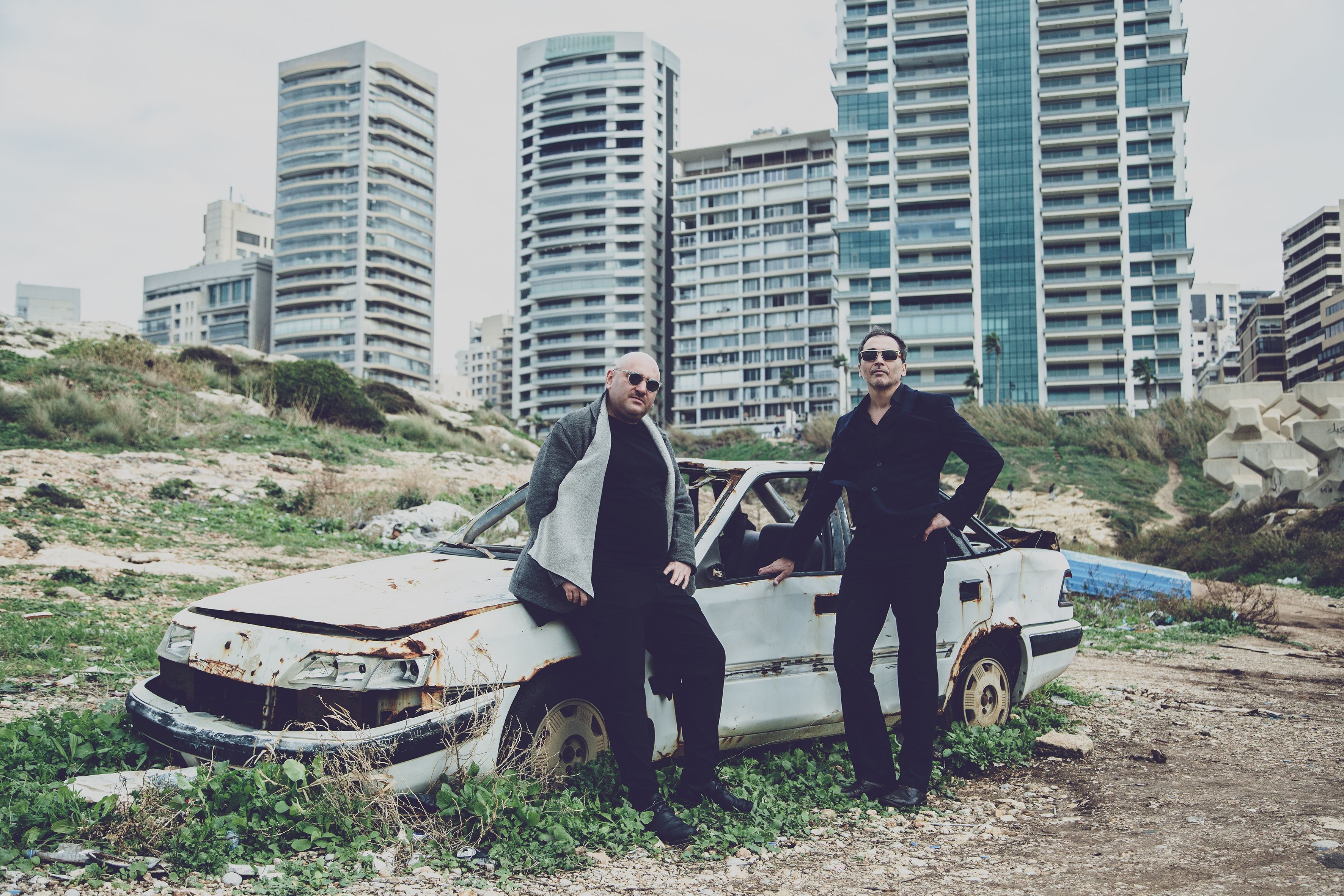 PRAED Interview Image by Tony Elieh
“A piece is always alive. It is never 100 percent finished.”
Video
