Published
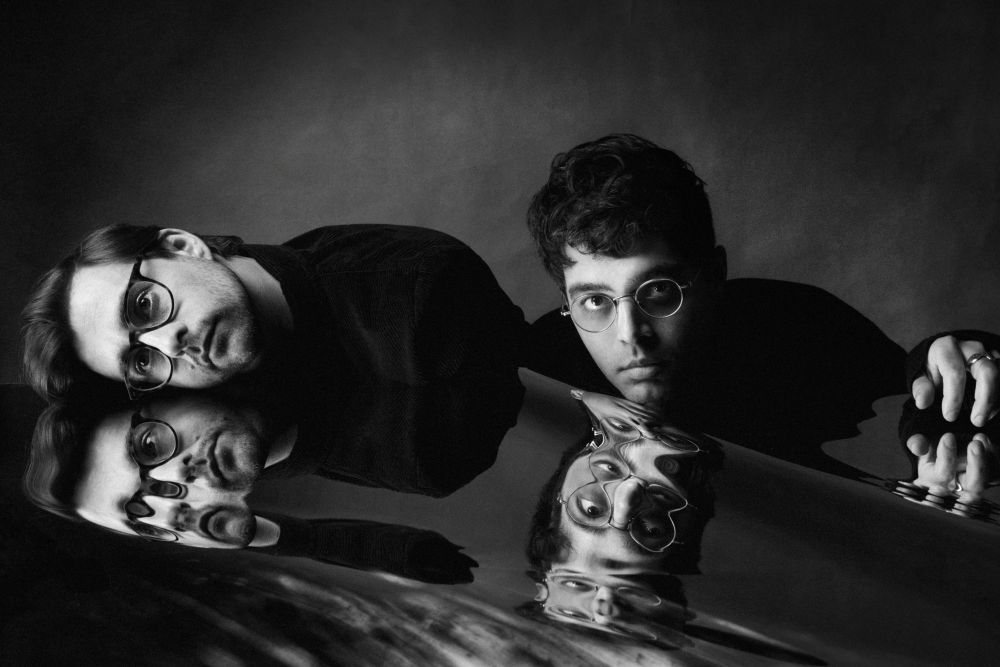
Name: Rafiq Bhatia
Nationality: American
Occupation: Composer, guitarist, producer, improviser
Current Release: Rafiq Bhatia's new album Each Dream, A Melting Door, featuring Chris Pattishall on grand piano, is out February 21st 2025 via Anti-.
If you enjoyed this Rafiq Bhatia interview and would like to know more about his music, visit his official homepage. He is also on Instagram, Soundcloud, and bandcamp.
When did you first consciously start getting interested in musical improvisation? What was your first improvisation on stage or in the studio and what was the experience like?
To be honest, it’s hard for me to remember, because I’ve been improvising from the time I started making music.
My first instrument was the violin, and I was taught primarily through the Suzuki method, which involves learning classical repertoire by ear. As a result, I was always following my ear on the instrument, improvising in between periods of practicing.
My earliest experiences with the guitar were similar, and my first few little bedroom recordings also involved quite a bit of improvisation. So it’s been a part of my relationship with making music for as long as I can remember.
Tell me about your instrument and/or tools, please. What made you seek it out, what makes it “your” instrument, and what are some of the most important aspects of playing it?
Most people might say that my instrument is the guitar, but as my practice develops it feels less tied to any particular instrument or tool. Over the past decade or so, I moved further and further away from the guitar and towards a sculptural, studio-based process involving working with audio as material.
But lately, it’s come full circle as I’ve started playing the guitar through a computer, allowing me to merge my studio practice back into the way I approach my guitar practice. After all, the guitar remains the source of sound that I have the most finely grained and intuitive, in-the-moment control over.
I would say the most important aspect of playing any instrument is listening, because “playing” music is a two way street, even when you’re doing it alone. There’s a live sound engineer I’ve worked with who often talks about how temperature and humidity affect the propagation and perception of sound in a space, and physical factors like these obviously extend to playing any sort of instrument.
Even things like transistors in effects pedals aren’t immune to variations—it’s all breathing and changing and the goal is to be in tune with how it expresses in the moment and not locked into a fixed expectation of it.
How would you describe your own relationship with your instrument – is it an extension of your self/body, a partner and companion, a creative catalyst, a challenge to be overcome, something else entirely?
If we’re talking about the guitar itself, I notice it the most when it’s not there—there’s a certain incompleteness or instability I feel, like some part of me is absent.
But it’s also something I’m listening to, that feels outside of myself—maybe that’s something like our brains becoming aware of the bodies in which they reside during mindfulness meditation?
Do you feel as though there are at least elements of composition and improvisation which are entirely unique to each? Based on your own work or maybe performances or recordings by other artists, do you feel that there are results which could only have happened through one of them?
In my view, improvisation is a form of composition that is inextricably tied to the moment in which it is created. That can allow it to speak profoundly to a moment in time, or at least more naturally, like conversing freely instead of reading pre-written remarks.
But there are also obviously limitations on how much the brain can process in a given moment. Sometimes those limitations can serve the music, but their existence is by definition a constraint.
When you're improvising, does it actually feel like you're inventing something on the spot – or are you inventively re-arranging patterns from preparations, practise or previous performances? What balance is there between forgetting and remembering in your work?
At its best, improvisation feels like a total adventure.
This is where listening is critical, because if I listen closely enough I usually find at least something about what I’m hearing that surprises me, that I’ve never heard before. I try not to think and to just be present, listening, responsive, unencumbered.
Artists from all corner of the musical spectrum, not just “free jazz” have emphasised the importance of freedom in their creativity. What defines freedom for your improvisations?
I think it can be hard to feel free without feeling supported, or feeling trust in your collaborators or in your instincts, or at home within the music you’re making. For this reason, I don’t necessarily believe that freedom arises from a lack of musical parameters or constraints (and indeed, there is a lot of structure involved in the underpinnings of so-called “free jazz”).
One thing that helps me feel free is to focus on making sure that anyone else that I might be playing with feels supported, or nourished musically if you will, and I think I gravitate towards collaborators with a similar orientation, on and off the bandstand.
Maybe before we think too hard about freedom we should start by focusing on kindness.
In your best improvisations, do you feel a strong sense of personal presence or do you (or your ego) “disappear”?
I never seem to remember those experiences all that well—perhaps because I feel so present within the moment and the music that there’s no part of my brain that’s focused on trying to bottle or retain the memory for later.
But also, I think that depends how you define “best”—for me, that makes me think of the moments where my playing feels the most honest or most personal.
Who are some of your favourite collaborators and how do they enrich your improvisations?
Chris Pattishall is one of my best friends and closest collaborators. We met as teenagers growing up in North Carolina, bonding over shared interests in jazz, surrealism, and abstract hip hop.
I think one of the reasons why we work so well together now is that we didn’t always collaborate—in fact, there was a decade-or-so period where we were going in pretty divergent directions musically.
One of the things that inspires me about Chris is that he’s always searching, always curious and learning about something. It could be a five hour long Wim Wenders film, a book about orchestration, or the architecture up the block (he’s always looking up, while most of us stare straight ahead).
All of that is reflected in his playing, which grows more fascinating as you focus in.
In a live situation, decisions between creatives often work without words. From your experience and current projects, what does this process feel like and how does it work?
There’s an interview excerpt from David Lynch that’s been making the rounds after his passing where he says, “As soon as you finish a film, people want you to talk about it. And it’s, um, the film is the talking.” In improvisation, the sound is the talking.
If everyone is really listening, the intentions communicate through the music as it comes to life, and the direction is as clear as day. It’s such a beautiful, healing feeling.
Stewart Copeland said: “Listening is where the cool stuff comes from. And that listening thing, magically, turns all of your chops into gold.” What do you listen for?
Listening involves—or perhaps even necessitates—empathy. I listen for the person behind the sound, and try as an improviser to support that person, to let them feel free in the music and be vulnerable.
I read a beautiful quote from Bill Frisell today that said, “playing music is not about competing … it’s about rescuing each other,” and I couldn’t agree more.
There can be surprising moments during improvisations – from one of the performers not playing a single note to another shaking up a quiet section with an outburst of noise. Can you tell me about such situations from your own performances and how they impacted the performance?
To me, surprise is one of the most vital parts of music because it triggers a more active experience—it jolts us into focus and presence. This question brings to mind a one-off show I played many years ago with two of my favorite improvisers on the planet—Marcus Gilmore and Shahzad Ismaily.
There was a moment in our set where Shahzad fell into a pattern of playing time on the bass with Marcus’ drumming, but as soon as I would start to play, he would abruptly switch into a shrieking, feedback-prone sound! Then, the moment I stopped playing, he’d go back to playing time, as though nothing had happened.
It was amazing, and unlike any approach I’ve encountered in that kind of musical situation before or since. I think it encouraged all of us to be a bit more playful, and to take less for granted.